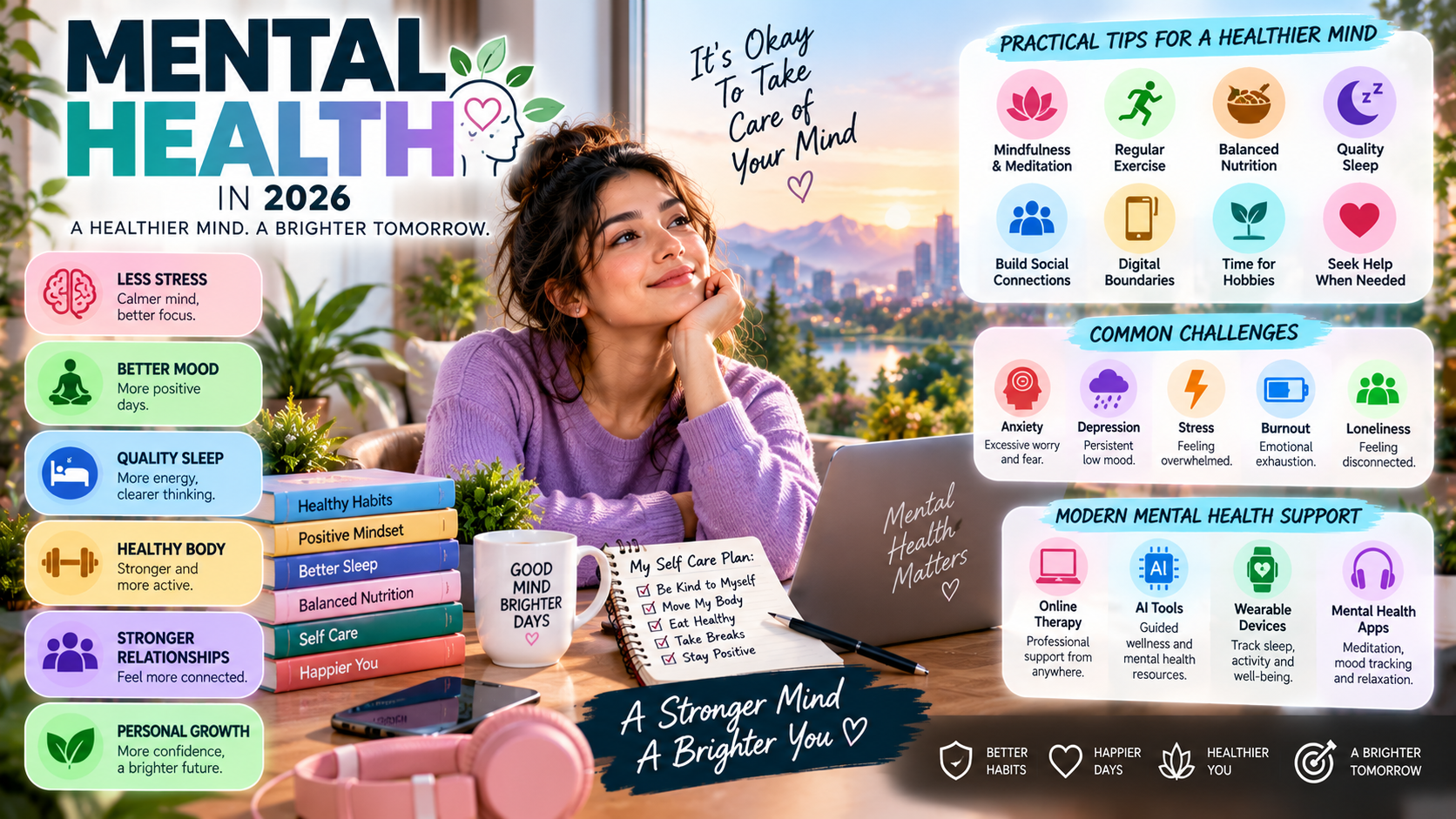
Mental health is an essential part of overall health and well-being. It affects how people think, feel, behave, manage stress, build relationships, and make everyday decisions. In 2026, mental health awareness continues to grow as more people recognize the importance of emotional balance, healthy habits, and access to mental health support.
Work pressure, financial concerns, social media, relationship difficulties, and major life changes can affect a person's mental well-being. Understanding mental health and learning how to manage everyday challenges can help people lead healthier and more balanced lives.
This article explores the importance of mental health, common mental health challenges, practical ways to support emotional well-being, and emerging mental health trends in 2026.
What Is Mental Health?
Mental health refers to a person's emotional, psychological, and social well-being. It influences how individuals handle stress, interact with others, make decisions, and respond to difficult situations.
Good mental health does not mean feeling happy all the time. Everyone experiences sadness, worry, frustration, and stress. Healthy mental well-being involves understanding these emotions, coping with challenges, and seeking support when needed.
Mental health can change throughout life. Personal circumstances, physical health, family relationships, work environments, and social connections can all influence how a person feels.
Why Is Mental Health Important?
Mental health plays a significant role in everyday life. Supporting emotional and psychological well-being can help people function more effectively at home, at work, in education, and in their relationships.
1. Helps Manage Stress
Healthy coping strategies can make it easier to handle deadlines, financial concerns, family responsibilities, and unexpected changes. Managing stress effectively can also support better sleep and concentration.
2. Improves Relationships
Mental well-being can help people communicate more clearly, understand their emotions, establish healthy boundaries, and develop stronger relationships with family members, friends, and colleagues.
3. Supports Physical Health
Mental and physical health are closely connected. Ongoing stress and poor sleep can affect energy levels, daily habits, and physical well-being. Looking after mental health is therefore an important part of a balanced lifestyle.
4. Improves Focus and Productivity
Emotional difficulties can affect concentration, motivation, memory, and decision-making. Taking care of mental health may help people manage responsibilities and maintain a healthier balance between work and personal life.
5. Encourages Personal Growth
Understanding emotions and learning healthy coping skills can help people become more resilient. These skills can support personal development and help individuals respond more constructively to challenges.
Common Mental Health Challenges
Mental health challenges can affect people of different ages and backgrounds. Recognizing common concerns is an important step toward finding appropriate support.
Anxiety and Excessive Worry
Anxiety can involve persistent worry, nervousness, restlessness, or fear about everyday situations. Some people may also experience physical symptoms such as a racing heartbeat or difficulty sleeping.
Relaxation techniques and healthy routines may help with everyday stress. However, persistent anxiety that interferes with daily activities may require professional assessment and treatment.
Depression
Depression is more than temporary sadness. It can involve persistent low mood, loss of interest in activities, changes in sleep or appetite, low energy, and difficulty concentrating.
Depression can affect daily functioning, relationships, and quality of life. Professional support can help individuals understand their symptoms and explore appropriate treatment options.
Chronic Stress
Stress is a natural response to demanding situations. However, prolonged stress can make it difficult to relax and may affect sleep, mood, concentration, and everyday routines.
Identifying stress triggers, taking regular breaks, setting realistic goals, and asking for help can be useful ways to manage stress.
Burnout
Burnout is commonly associated with prolonged workplace or other demanding responsibilities. It may involve emotional exhaustion, reduced motivation, and feeling disconnected from work.
Maintaining reasonable boundaries, taking breaks, getting adequate rest, and discussing workload concerns can help support recovery.
Loneliness and Social Isolation
People can feel lonely even when they are surrounded by others. Loneliness may affect emotional well-being, particularly when someone lacks meaningful social connections.
Regular communication with trusted people, joining community activities, and participating in hobbies can help build social connections.
Signs That Someone May Need Mental Health Support
Mental health difficulties can appear in different ways. Common warning signs include:
Persistent sadness, worry, irritability, or emotional distress.
Major changes in sleeping or eating habits.
Loss of interest in previously enjoyable activities.
Difficulty concentrating or completing everyday tasks.
Withdrawing from family, friends, or social activities.
Feeling overwhelmed by ordinary responsibilities.
Persistent fatigue or a noticeable change in motivation.
Experiencing one of these signs does not automatically mean someone has a mental health disorder. However, symptoms that persist, worsen, or interfere with daily life should be discussed with a qualified healthcare professional.
Practical Ways to Improve Mental Health
Supporting mental health does not always require major lifestyle changes. Small, consistent habits can contribute to better emotional well-being.
1. Maintain a Regular Sleep Schedule
Sleep supports emotional regulation, memory, concentration, and physical recovery. Most adults need around seven to nine hours of sleep each night, although individual needs vary.
Try to maintain consistent sleeping and waking times, reduce late-night screen use, and create a comfortable sleeping environment.
2. Stay Physically Active
Physical activity can support mood, energy levels, and stress management. Walking, cycling, dancing, stretching, and other enjoyable activities can be incorporated into daily routines.
Start with manageable goals and increase activity gradually according to your fitness level and health needs.
3. Eat a Balanced Diet
Nutrition is an important part of overall well-being. A balanced diet containing vegetables, fruits, whole grains, protein sources, and healthy fats helps support general health.
Regular meals and adequate hydration can also support energy levels. No single food can prevent or cure every mental health condition, and nutrition should complement—not replace—appropriate treatment.
4. Practice Relaxation Techniques
Relaxation practices may help reduce everyday stress. Options include deep breathing, meditation, prayer, mindfulness, gentle stretching, and spending time in nature.
Choose an approach that fits your personal preferences and cultural values. Even a few quiet minutes may provide a helpful break during a busy day.
5. Build Strong Social Connections
Healthy relationships can provide emotional support during difficult periods. Talking to a trusted friend, family member, mentor, or support group can help people feel less alone.
Listening without judgment and offering practical support can also make a meaningful difference to someone experiencing emotional difficulties.
6. Set Healthy Digital Boundaries
Social media can provide entertainment, information, and connection, but excessive use may contribute to distraction, disrupted sleep, or unhealthy comparisons.
Consider limiting unnecessary notifications, taking screen breaks, and unfollowing accounts that consistently make you feel distressed or inadequate.
7. Make Time for Enjoyable Activities
Hobbies can provide relaxation, creativity, and a sense of achievement. Reading, gardening, cooking, painting, learning a skill, or spending time outdoors may help create balance in everyday life.
Activities should be enjoyable rather than another source of pressure or competition.
8. Seek Professional Help When Needed
Psychologists, psychiatrists, counselors, and other qualified mental health professionals can help people understand emotional difficulties and identify suitable treatment options.
Depending on the situation, support may include psychotherapy, medication, lifestyle changes, or a combination of approaches.
Seeking help is a positive step toward better health. People do not need to wait until a situation becomes severe before speaking with a professional.
Mental Health in the Workplace
Workplace mental health has become an important concern for employees, managers, and organizations. Heavy workloads, unrealistic deadlines, poor communication, job insecurity, and a lack of work-life balance can contribute to stress.
Employers can support healthier workplaces by encouraging reasonable workloads, respectful communication, adequate breaks, and access to appropriate mental health resources.
Employees can also benefit from setting boundaries, planning tasks realistically, taking breaks, and discussing persistent workplace difficulties with appropriate people.
A supportive working environment can benefit both employee well-being and organizational performance.
Mental Health in Children and Teenagers
Children and teenagers experience emotional challenges related to school, friendships, family expectations, social media, and changes during development.
Parents and caregivers can support young people's mental health by listening carefully, maintaining open communication, encouraging healthy routines, and creating a safe environment for discussing emotions.
Possible warning signs include persistent withdrawal, significant changes in behavior, ongoing school difficulties, or prolonged sadness and irritability.
If these concerns persist or interfere with everyday life, parents should consult a qualified healthcare professional. Early support can help young people develop healthy coping skills.
The Role of Technology in Mental Health in 2026
Technology is changing how people learn about mental health and access support. Digital tools can make information and some forms of care more accessible, although their quality and suitability vary.
Teletherapy and Online Counseling
Teletherapy allows people to connect with qualified mental health professionals through video calls, phone consultations, or other secure digital services.
It may be useful for people who face transportation difficulties, live far from services, or prefer receiving support from home. Availability, privacy, and professional credentials should be checked before using a service.
Mental Wellness Applications
Some applications offer guided meditation, mood tracking, breathing exercises, sleep support, and habit tracking.
These tools may help people develop healthy routines, but they are not substitutes for professional assessment or treatment when a mental health condition requires care.
Artificial Intelligence and Mental Health
Artificial intelligence is increasingly being explored for mental health education, self-guided exercises, and navigation to support services.
However, AI tools can make mistakes and may not recognize serious symptoms or complex personal circumstances. They should not replace qualified professionals, emergency services, or appropriate clinical care.
Users should also consider data privacy before sharing sensitive personal information with digital tools.
Wearable Devices and Digital Monitoring
Smartwatches and other wearable devices can track information such as sleep duration, heart rate, and activity. These measurements may help people notice patterns in their routines.
However, wearable data cannot diagnose a mental health condition. Personal observations should be interpreted carefully and discussed with a healthcare professional when concerns arise.
Breaking the Stigma Around Mental Health
Mental health stigma can prevent people from discussing their feelings or seeking appropriate treatment. Some individuals worry about being judged, misunderstood, or treated differently.
Improving awareness begins with recognizing that mental health is part of overall health. Listening respectfully, avoiding harmful stereotypes, protecting privacy, and sharing reliable information can help create a more supportive environment.
Families, schools, workplaces, healthcare providers, and communities all have a role in making mental health conversations more acceptable.
People experiencing mental health difficulties deserve compassion and access to appropriate care, not blame or discrimination.
When to Seek Urgent Help
Some mental health situations require immediate assistance. If someone may harm themselves or another person, cannot remain safe, or is experiencing a severe mental health crisis, contact local emergency services or go to the nearest emergency department.
If a person expresses suicidal thoughts, take the concern seriously, listen without judgment, and help them connect with qualified support. If there is immediate danger, do not leave them alone if it is safe for you to stay.
Prompt support can be essential during a crisis.
Future Trends in Mental Health
Mental health services are likely to continue evolving as awareness, research, and technology develop. Important areas include:
Greater mental health awareness: More educational programs may help people recognize symptoms and understand when to seek support.
Expanded telehealth services: Online appointments may improve access to qualified professionals in some communities.
Workplace well-being initiatives: Organizations may place greater emphasis on sustainable workloads and supportive working conditions.
Personalized care: Treatment approaches may increasingly consider individual symptoms, preferences, circumstances, and clinical needs.
Responsible digital innovation: Developers and healthcare providers will need to address privacy, safety, accessibility, and the limitations of AI-powered tools.
Early intervention: Schools, families, and healthcare systems may continue developing ways to identify concerns and provide support sooner.
Progress will depend on reliable evidence, qualified care, appropriate funding, and fair access to services.
Conclusion
Mental health is a vital part of a healthy and balanced life. It influences emotions, relationships, physical well-being, productivity, and the ability to cope with everyday challenges.
Healthy sleep, regular physical activity, balanced nutrition, meaningful relationships, relaxation, and sensible digital habits can all contribute to emotional well-being. At the same time, persistent or severe symptoms deserve professional attention.
As mental health awareness grows in 2026, reducing stigma and improving access to reliable support remain important priorities. Looking after mental health is not a sign of weakness; it is an important part of caring for yourself and others.
Frequently Asked Questions (FAQs)
1. What is mental health?
Mental health refers to emotional, psychological, and social well-being. It influences how people think, feel, behave, manage stress, and interact with others.
2. Why is mental health important?
Mental health supports emotional balance, healthy relationships, concentration, daily functioning, and overall quality of life.
3. How can I improve my mental health naturally?
Healthy habits such as regular exercise, adequate sleep, balanced nutrition, relaxation, meaningful social connections, and enjoyable activities may support mental well-being. Persistent symptoms may require professional care.
4. What are common signs of poor mental health?
Possible signs include ongoing sadness, excessive worry, sleep changes, withdrawal from others, difficulty concentrating, loss of interest in activities, and problems managing everyday responsibilities.
5. Can social media affect mental health?
Yes. Social media may provide connection and support, but excessive use, cyberbullying, disrupted sleep, and frequent comparisons can negatively affect some people's well-being.
6. When should someone seek professional mental health help?
Professional support may be appropriate when symptoms persist, worsen, cause significant distress, or interfere with work, education, relationships, or daily activities.
7. Can technology help with mental health?
Digital tools such as teletherapy platforms, meditation applications, and online educational resources can provide useful support. They should be selected carefully and should not replace professional treatment when it is needed.
8. Is mental health the same as mental illness?
No. Mental health describes overall emotional and psychological well-being, while mental illnesses are specific conditions that can affect thinking, mood, behavior, and daily functioning.