TikTok has changed the language of digital marketing. In a media environment where audiences scroll quickly and trends can rise and disappear within days, brands face a unique challenge: how can they capture attention without sounding like traditional advertising?
The answer increasingly comes down to brand voice.
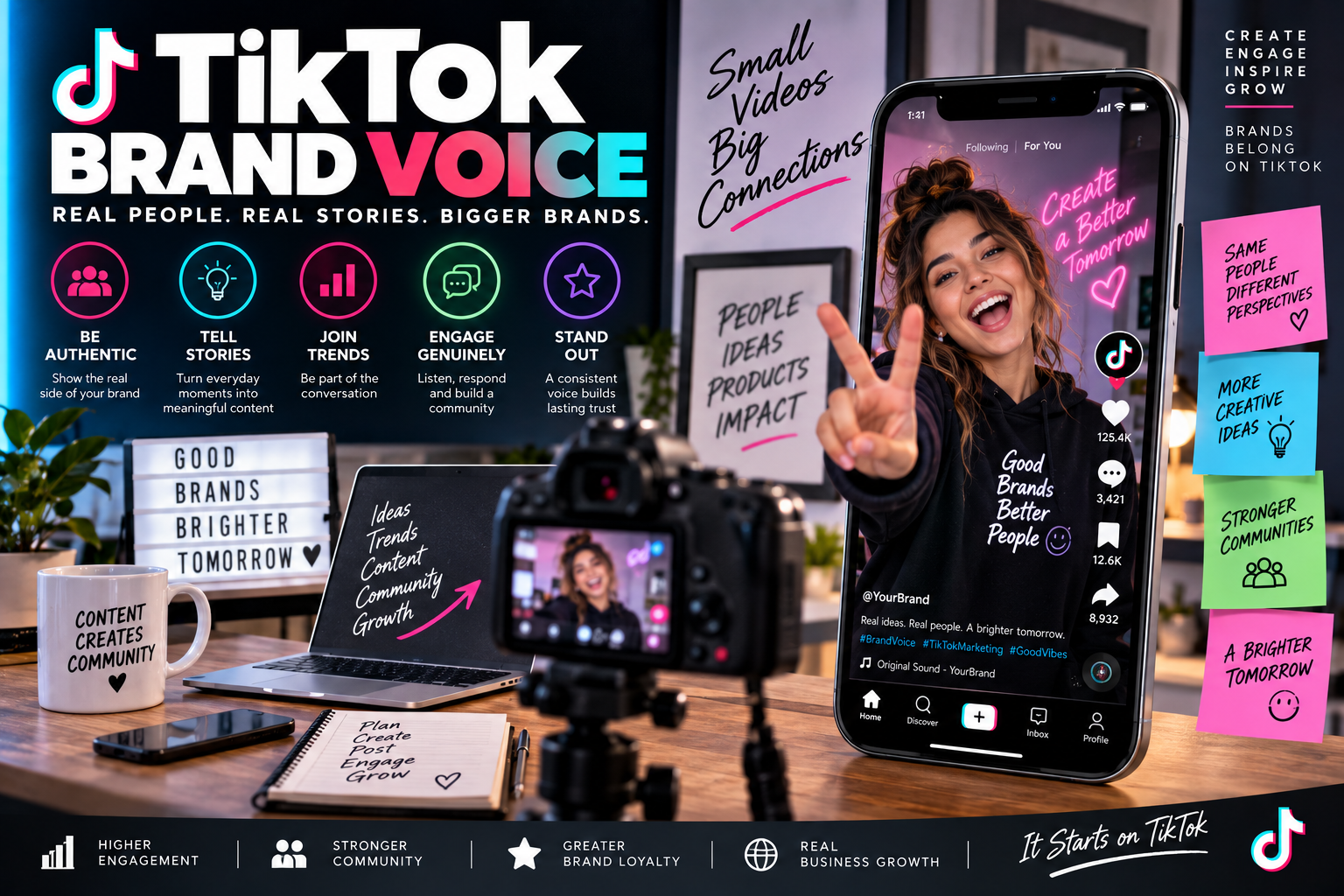
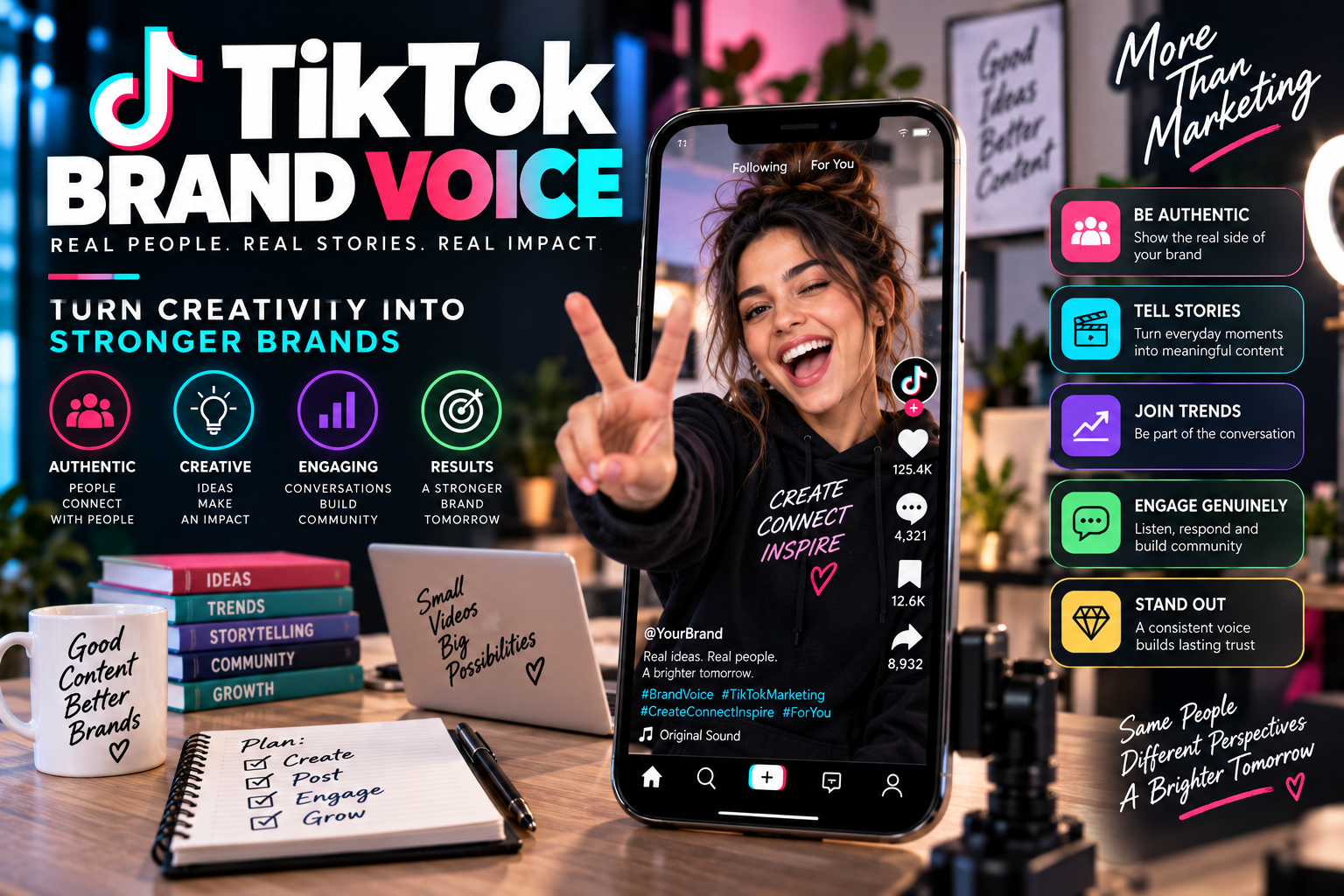
A strong TikTok brand voice gives a company a recognizable personality. It determines whether a brand sounds funny, intelligent, bold, friendly, inspirational, sophisticated, or relatable. More importantly, it helps businesses communicate in a way that feels natural to the platform rather than simply adapting television or traditional advertising campaigns for short-form video.
TikTok has created an environment where consumers expect brands to participate in culture, respond to conversations, understand trends, and show the human side of their businesses. The brands that succeed are often those that understand that TikTok is not simply another advertising channel. It is a community driven by creativity, entertainment, conversation, and participation.
What Is a TikTok Brand Voice?
Brand voice is the personality a company consistently expresses through its communication. On TikTok, that personality appears through video scripts, captions, voiceovers, comments, visual choices, humor, storytelling, trends, and interactions with viewers.
A brand voice should answer a simple question: If the brand were a person, how would it speak?
A technology company might sound curious, intelligent, and forward-looking. A fashion brand could be confident and expressive. A financial company might focus on being knowledgeable and approachable. A food brand could use humor, personality, and sensory storytelling.
There is no universal voice that works for every business. The objective is to create a personality that fits the company's identity while also feeling comfortable within TikTok culture.
Why Brand Voice Matters
TikTok is one of the most competitive environments for capturing attention. Users encounter an enormous amount of content every time they open the app.
A recognizable voice can help a brand become memorable.
If every video has a similar personality, vocabulary, sense of humor, and storytelling approach, audiences can gradually identify the company even before seeing its logo.
Consistency also helps establish trust. A brand that changes its personality completely from one video to another can appear confused or disconnected from its audience.
A clear voice gives creative teams a foundation. They can experiment with different trends and formats while maintaining a recognizable identity.
Authenticity Is the New Advantage
Traditional advertising often emphasizes perfection. TikTok frequently rewards something different: authenticity.
Audiences may respond more strongly to a real employee explaining a product than to a highly polished commercial. They may prefer a behind-the-scenes video over a carefully staged advertisement.
This does not mean professional production is unnecessary. Instead, it means production quality should support the story rather than hide the human element.
Authenticity can come from showing real people, answering genuine questions, acknowledging mistakes, demonstrating products naturally, or explaining how something works.
For brands, the challenge is finding the balance between being polished enough to represent the company and natural enough to belong on the platform.
Building a Distinct Personality
A successful TikTok voice usually begins with a few clearly defined personality traits.
For example, a brand might decide that its voice should be:
Confident but not arrogant
Funny but not offensive
Educational but not boring
Friendly but not overly casual
Trend-aware but not desperate
Professional but still human
These guidelines help content creators make decisions quickly.
They also prevent a common problem: different members of a social media team developing completely different personalities for the same brand.
A company does not need to sound identical in every video. Instead, its underlying personality should remain recognizable.
Talking With Audiences, Not At Them
One of the biggest differences between traditional advertising and TikTok communication is the relationship between brands and audiences.
Traditional advertisements often speak at consumers. TikTok allows brands to speak with them.
Comments can become conversations. Questions can become video responses. Customer reactions can inspire new content. Popular discussions can become opportunities for brands to share expertise.
This two-way communication makes the brand feel more accessible.
A company should therefore treat its comment section as part of its content strategy rather than simply a place to monitor feedback.
The Power of Storytelling
Short-form content may last only seconds, but storytelling remains one of the most powerful tools available to marketers.
A brand can tell the story of how a product was created, explain a problem that inspired a business, introduce employees, show a customer's journey, or reveal what happens behind the scenes.
Effective TikTok storytelling often begins with a strong hook.
Instead of opening with a long introduction, a video might begin with a surprising statement, question, challenge, transformation, or unexpected visual.
The objective is to give viewers an immediate reason to continue watching.
Once attention has been captured, the content should deliver something valuable—whether that is information, entertainment, emotion, or curiosity.
Using Humor Effectively
Humor can make brands more memorable. It can turn ordinary products into entertaining stories and make corporate accounts feel more human.
However, humor should be intentional.
A brand should not copy jokes simply because they are popular. It should understand what kind of humor fits its personality and audience.
Self-aware humor can be particularly effective. Brands can joke about common customer experiences, workplace situations, industry stereotypes, or relatable problems.
But there are boundaries. Humor that damages trust, targets individuals, or creates unnecessary controversy can harm a brand more than it helps.
The best brand humor feels natural rather than forced.
Trends and Cultural Relevance
Trends are an important part of TikTok culture. Popular sounds, formats, challenges, memes, and conversations can provide opportunities for brands to reach new audiences.
But brands should avoid participating in every trend.
A trend is valuable when it makes sense for the company's audience and identity. The strongest brands often adapt a trend rather than copying it directly.
For example, a business could take a popular format and use it to explain a product, demonstrate an industry insight, introduce its employees, or tell a customer story.
This approach allows the brand to be culturally relevant while remaining recognizable.
Educational Content Can Build Authority
Entertainment may attract viewers, but useful information can turn those viewers into followers.
Brands can use TikTok to simplify complex subjects, answer common questions, provide practical tips, explain industry developments, or demonstrate products.
A financial company might explain an investment concept in simple language. A technology company could explain an emerging technology. A fashion brand could demonstrate styling techniques.
The most effective educational content is usually focused. Instead of trying to explain everything about a subject, each video should communicate one clear idea.
This makes the content easier to understand and more likely to be remembered.
Behind-the-Scenes Content
Consumers increasingly want to know the people and processes behind the brands they support.
Behind-the-scenes videos can reveal product development, packaging, manufacturing, office culture, events, research, or everyday employee experiences.
These videos can create a sense of transparency and personality.
They also provide content opportunities without requiring elaborate campaigns.
A simple video showing how a product is prepared can sometimes feel more engaging than a heavily scripted advertisement.
Employees as Brand Ambassadors
Employees can give corporate accounts a human face.
Instead of relying entirely on professional actors or marketing teams, businesses can allow employees to share knowledge, experiences, and perspectives.
An engineer can explain a product. A designer can show how an idea develops. A salesperson can answer customer questions. A company leader can discuss an industry trend.
Employee-generated content can feel more authentic because audiences see real people behind the organization.
However, companies should establish clear guidelines covering confidential information, customer privacy, sensitive subjects, and brand standards.
The goal should be to provide freedom within sensible boundaries.
The Importance of Visual Identity
Brand voice is not limited to words.
On TikTok, visual identity can also reinforce personality. Recurring colors, editing patterns, graphics, characters, locations, props, or presentation styles can make content recognizable.
A brand might use a particular opening sequence, recurring series, visual format, or presenter.
These elements create familiarity without requiring every video to look identical.
The strongest visual identities work alongside the brand's personality rather than distracting from it.
Creating a Content Personality
Brands can strengthen their TikTok presence by developing recurring content formats.
For example, a company might create weekly series such as:
“One-Minute Explainer”
“Behind the Brand”
“Customer Questions”
“Things You Didn't Know”
“Trend of the Week”
“Meet the Team”
“Product Myths”
Recurring formats make content creation easier and give audiences reasons to return.
They also allow brands to experiment while maintaining structure.
Avoiding the Hard-Sell Trap
One of the easiest mistakes for businesses is turning TikTok into a continuous sales channel.
Every post does not need to ask viewers to buy something.
Audiences may follow a brand because it entertains them, teaches them something, inspires them, or makes them feel part of a community.
A healthy content strategy can therefore combine promotional material with educational, entertaining, cultural, and community-focused content.
When promotional messages are surrounded by valuable content, they may feel less intrusive.
Responding to Criticism
TikTok can generate both positive and negative reactions.
A strong brand voice becomes particularly important when dealing with criticism.
Responses should be calm, transparent, and appropriate to the situation. A brand should avoid becoming defensive simply because a comment is negative.
If a customer raises a legitimate concern, acknowledging the issue can demonstrate responsibility.
In some cases, humor may be appropriate. In others, a straightforward and professional response is better.
The important principle is consistency: the brand should remain recognizable even under pressure.
Measuring the Impact of Brand Voice
Businesses need more than views to understand whether their TikTok voice is working.
Important metrics can include engagement, comments, shares, saves, follower growth, profile visits, website traffic, and conversions.
However, qualitative feedback matters too.
Are people mentioning the brand positively? Are they recognizing recurring personalities or content formats? Are comments describing the brand in the way the company wants to be perceived?
A successful brand voice should gradually build familiarity and emotional connection, not simply generate isolated viral videos.
AI and the Future of TikTok Content
Artificial intelligence is likely to influence how brands produce short-form video. AI tools can assist with ideas, scripts, editing, captions, graphics, translation, and content variations.
This could make content production faster and more accessible.
However, increased automation could also create a new problem: sameness.
If thousands of brands use similar AI-generated scripts and visuals, authentic human personality may become even more valuable.
The brands that stand out may therefore be those that use AI for efficiency while preserving human creativity, humor, experience, and perspective.
Building Long-Term Brand Recognition
Virality can be valuable, but it should not be the only goal.
A single viral video may generate millions of views without creating lasting business value.
A consistent brand voice provides something more sustainable. Over time, audiences can learn what to expect from a brand and develop a relationship with it.
Recognition can become an important competitive advantage. When customers encounter a familiar style or personality, they may immediately connect the content with the company.
This is how individual videos can become part of a broader brand identity.
Conclusion
TikTok has created a new environment for brand communication—one where personality, authenticity, creativity, and participation can matter as much as traditional advertising budgets.
A successful TikTok brand voice is not simply a collection of trendy phrases or viral sounds. It is a consistent personality that allows a company to communicate naturally while remaining faithful to its identity.
Brands can build stronger connections by telling stories, educating audiences, using appropriate humor, participating thoughtfully in trends, showing behind-the-scenes moments, empowering employees, and responding genuinely to their communities.
The most successful companies will not necessarily be those that produce the most content. They will be those that understand who they are, who they are speaking to, and why audiences should care.
In the fast-moving world of short-form video, a distinctive voice can transform a brand from another account in the feed into a recognizable personality people actively want to follow.