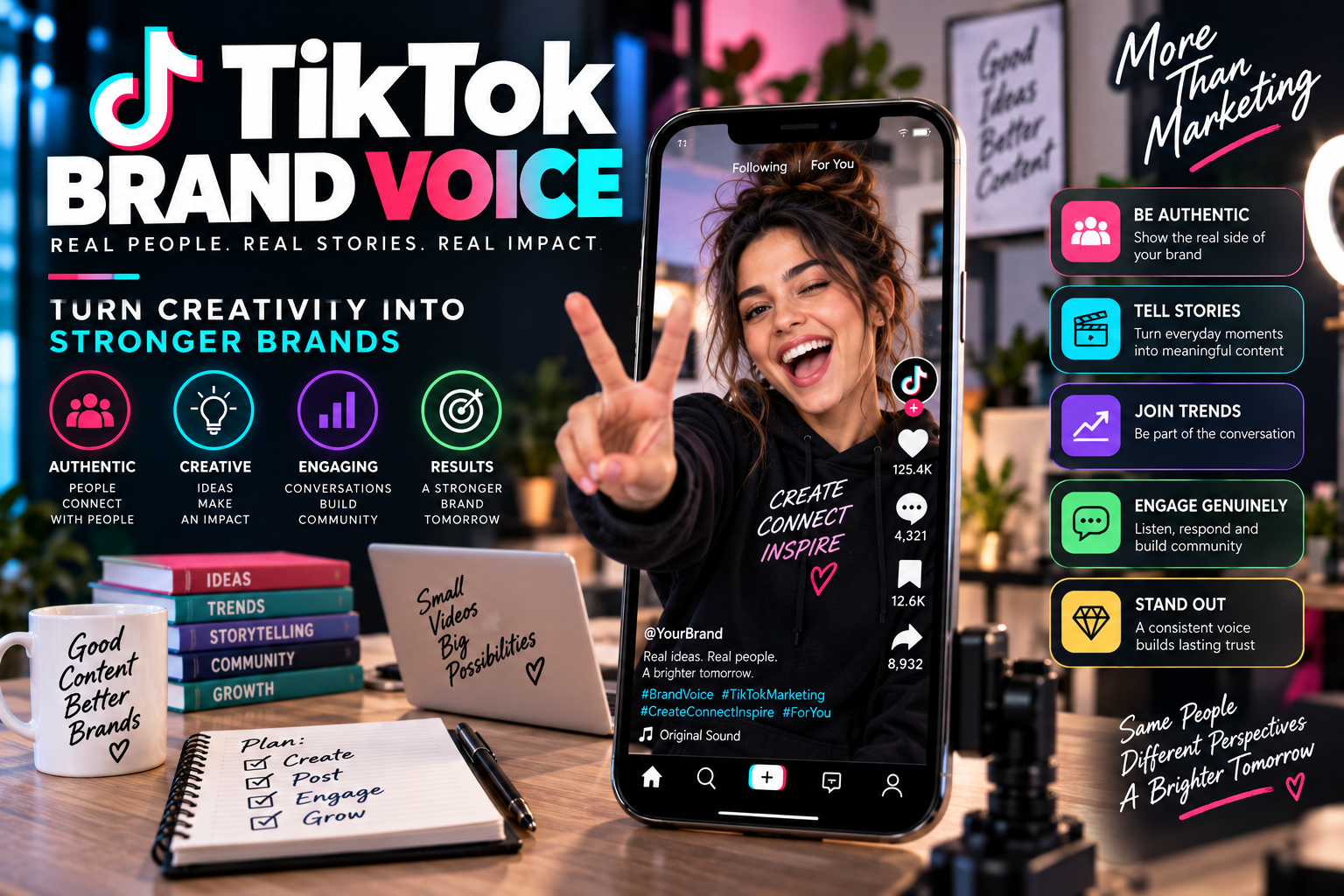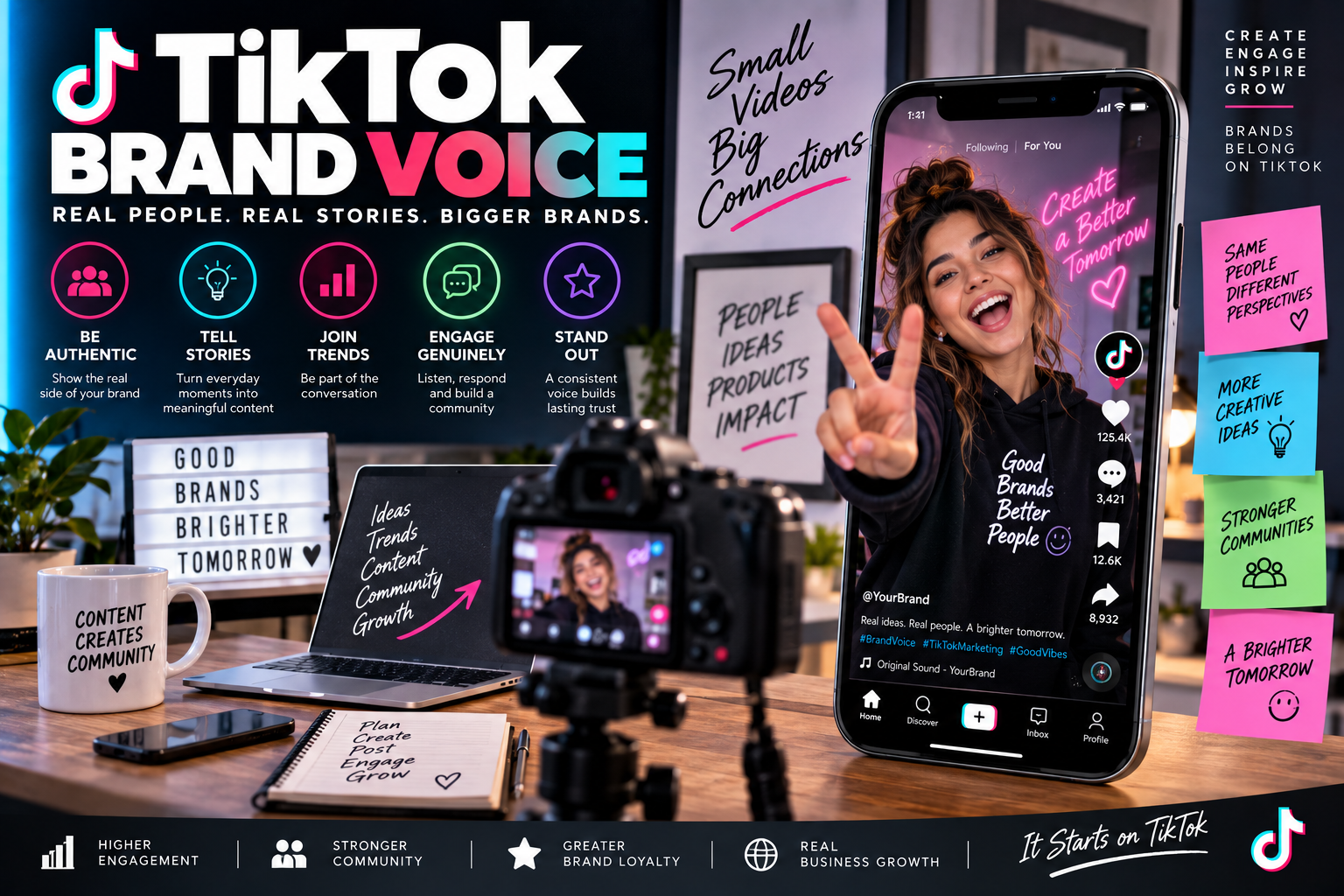
TikTok has transformed the way brands communicate with audiences. Short-form video has created a digital environment where attention is limited, trends move quickly, and audiences increasingly expect content to feel authentic rather than traditionally commercial.
For brands, success on TikTok is not simply about creating attractive videos or following every viral trend. It is about developing a recognizable brand voice that fits the platform while remaining consistent with the company's identity. The strongest brands understand how to communicate naturally, entertain their audiences, participate in conversations, and create content that people genuinely want to watch.
A strong TikTok brand voice can make a company feel more human. Instead of speaking to consumers through formal advertising language, brands can use humor, storytelling, personality, behind-the-scenes content, educational videos, and cultural trends to build stronger relationships with audiences.
What Is a Brand Voice?
Brand voice is the consistent personality and style a company uses when communicating with its audience. It influences the words a brand chooses, the tone of its messages, the way it responds to comments, and the overall personality presented across its content.
Traditional brands may use a formal, professional, or sophisticated voice. On TikTok, however, communication often works differently. Users tend to respond better to content that feels conversational, spontaneous, relatable, and entertaining.
This does not mean every company should become humorous or informal. A financial company, luxury brand, technology business, and fashion retailer may all require different personalities.
The key is adaptation. A brand should understand TikTok culture without losing its core identity.
Why Brand Voice Matters on TikTok
TikTok is crowded with creators, businesses, influencers, celebrities, and organizations competing for attention. A recognizable voice can help a brand stand out.
When audiences repeatedly encounter a consistent personality, they can begin to recognize the brand even before seeing its logo. A particular style of humor, storytelling, editing, language, or recurring character can become part of the brand's identity.
Consistency also builds trust. If a company sounds completely different from one video to another, audiences may struggle to understand what the brand represents.
A strong voice creates continuity while allowing individual pieces of content to remain creative and relevant.
Authenticity Over Traditional Advertising
One of the most important principles of TikTok communication is authenticity. Users often respond differently to content that feels like an advertisement compared with content that feels native to the platform.
Traditional advertising may focus heavily on polished visuals, product descriptions, and direct sales messages. TikTok content can take a more informal approach.
A brand might show how a product is made, introduce employees, answer customer questions, react to a trend, share an unexpected fact, or demonstrate a product in everyday use.
The objective is not necessarily to eliminate selling. Instead, brands can make commercial messages more interesting by placing them inside useful or entertaining content.
Finding the Right Personality
Before creating TikTok content, brands should define the personality they want to communicate.
A brand could be:
Funny and playful
Confident and energetic
Educational and knowledgeable
Friendly and conversational
Inspirational and optimistic
Bold and provocative
Premium and sophisticated
Creative and experimental
The best personality depends on the brand's audience, industry, values, and objectives.
A children's entertainment brand may naturally use playful language, while a professional technology company might combine expertise with approachable explanations.
The important question is not simply, "What is trending?" but rather, "How would our brand naturally participate in this conversation?"
Speaking Like a Human
TikTok rewards communication that feels personal. Brands can improve their content by avoiding unnecessary corporate language.
Instead of writing like a press release, a company can communicate as though it is speaking directly to one person.
Short sentences, conversational expressions, questions, humor, storytelling, and direct explanations can make content feel more natural.
This approach is especially effective in captions, voiceovers, comment responses, and video scripts.
However, sounding human does not mean being careless. Brands should still maintain accuracy, professionalism, and appropriate boundaries.
Understanding the TikTok Audience
A successful brand voice begins with understanding the audience.
Different communities on TikTok have their own interests, language, humor, references, and expectations. A beauty audience may respond to tutorials and transformations, while a business audience may prefer quick insights, practical advice, and industry commentary.
Brands should study how their target audiences communicate and what types of content they engage with.
Comments can also provide valuable information. Customers frequently reveal their questions, frustrations, preferences, and interests directly in comment sections.
Listening to these conversations can help brands create content that answers real audience needs.
The Role of Humor
Humor is one of the most powerful tools available to brands on TikTok. A funny video can generate high engagement and make a company feel more approachable.
However, humor should match the brand. A company should not force jokes simply because humorous content performs well on the platform.
Effective brand humor can come from everyday situations, customer experiences, industry stereotypes, workplace moments, product problems, or playful observations.
Self-aware humor can also work well. A brand that can laugh at itself may appear more relatable than one that constantly presents a perfect image.
The biggest rule is to understand the audience and avoid humor that could damage trust or create unnecessary controversy.
Trend Participation
TikTok trends can provide brands with opportunities to reach larger audiences. Popular sounds, formats, challenges, memes, and creative concepts can help content become more discoverable.
But following every trend is rarely a good strategy.
A trend should make sense for the brand and its audience. If a company participates in something completely unrelated to its identity, the content may feel forced.
The strongest approach is often to adapt a trend rather than simply copy it. A brand can take a familiar format and connect it to its own products, industry, employees, customers, or expertise.
This allows the company to participate in TikTok culture while maintaining its own identity.
Storytelling on TikTok
Short videos may be brief, but they can still tell meaningful stories.
Brands can use storytelling to introduce a product, explain a challenge, highlight a customer experience, show the development of an idea, or reveal what happens behind the scenes.
A simple storytelling structure can include a strong opening, an interesting development, and a clear conclusion.
The opening is particularly important because audiences can quickly scroll past content that does not capture their attention.
Instead of beginning with a long introduction, brands can immediately present a question, surprising fact, problem, transformation, or intriguing situation.
Educational Brand Content
Not every TikTok video needs to be purely entertaining. Educational content can be highly effective when presented in a simple and engaging way.
Brands can explain complicated subjects using short videos, demonstrations, examples, lists, comparisons, or quick tips.
A technology company might explain a new digital concept. A financial brand might discuss basic money principles. A fashion company could provide styling advice.
Educational content can strengthen credibility while giving audiences a reason to follow the account beyond promotional offers.
The most effective educational videos usually focus on one clear idea rather than attempting to explain an entire subject in a single post.
Behind-the-Scenes Content
Behind-the-scenes content can humanize a brand by showing the people and processes behind its products or services.
Audiences may enjoy seeing employees preparing an event, designing a product, packing orders, testing ideas, or solving unexpected problems.
This type of content can make companies feel less distant. Instead of presenting only polished advertisements, brands can reveal the people and work involved in creating their products.
Behind-the-scenes videos can also create storytelling opportunities because they show progress, challenges, mistakes, and achievements.
Employee-Centered Content
Employees can become powerful voices for a brand. Audiences may connect more naturally with individuals than with corporate accounts.
Employees can answer questions, demonstrate products, explain industry concepts, share workplace experiences, or participate in appropriate trends.
This approach can create a sense of authenticity while showcasing company culture.
However, brands should establish clear guidelines. Employees should understand what information is confidential, what topics require approval, and how the company's reputation should be protected.
The goal should be to encourage authentic participation without turning employees into scripted advertising characters.
Brand Voice in Comments
A brand's voice does not stop when a video is published. Comment sections are an important part of TikTok communication.
Responding to comments can create conversations and demonstrate that a brand is listening. A company can answer questions, clarify misunderstandings, thank customers, or use humor when appropriate.
Some comments can even become content opportunities. If several users ask the same question, the brand can create a video answering it.
This turns audience interaction into a source of future content.
The tone of comment responses should remain consistent with the broader brand personality. A playful brand may respond casually, while a more professional company may use a helpful and confident tone.
Consistency Without Repetition
A successful TikTok brand voice needs consistency, but consistency does not mean producing the same type of video repeatedly.
Brands can maintain a recognizable identity while experimenting with different formats.
For example, a company might alternate between educational videos, customer stories, behind-the-scenes content, product demonstrations, trend-based videos, employee content, and responses to comments.
The personality remains consistent even when the format changes.
This balance allows brands to stay recognizable without becoming predictable.
Mistakes Brands Should Avoid
One common mistake is trying too hard to appear "young" or "trendy." Audiences can quickly recognize when a company is using slang or cultural references without understanding them.
Another mistake is turning every video into a sales pitch. If audiences feel that every post is advertising, they may lose interest.
Brands should also avoid copying competitors too closely. Inspiration is useful, but a distinctive voice is more valuable than imitation.
Ignoring comments is another missed opportunity. TikTok is a social platform, and communication should work in both directions.
Finally, brands should avoid sacrificing accuracy or ethics for engagement. A viral video is not worth damaging long-term trust.
Measuring Brand Voice Success
Brand voice is difficult to measure through a single metric. Businesses should examine multiple indicators.
Views can show how widely content is being distributed, while engagement can indicate whether audiences are responding. Comments, shares, saves, follower growth, profile visits, and website activity can provide additional insight.
Businesses should also evaluate qualitative feedback. Are people recognizing the brand? Are comments positive? Do audiences describe the brand using the personality traits the company wants to communicate?
Over time, these insights can help brands refine their voice.
The Future of TikTok Brand Communication
As short-form video continues to influence digital culture, brands will need to become increasingly comfortable with fast-moving conversations and creator-led communication.
Artificial intelligence and new creative tools may make video production easier, allowing companies to experiment with more content. At the same time, increased content volume will make authenticity and originality even more important.
Brands that understand their audiences and communicate naturally will have an advantage over companies that simply produce polished advertisements.
The future of TikTok marketing will likely involve stronger connections between creators, communities, entertainment, commerce, and brand storytelling.
Conclusion
TikTok has changed the rules of brand communication. Success is no longer based only on polished advertising or large marketing budgets. Brands must understand culture, communicate naturally, and create content that provides value to audiences.
A strong TikTok brand voice combines personality, consistency, authenticity, creativity, and audience awareness. It allows companies to participate in conversations without losing their identity.
The most effective brands do not simply ask how they can sell a product through TikTok. They ask how they can entertain, educate, inspire, or connect with people while naturally presenting what they offer.
In an environment where attention is constantly moving, a recognizable and authentic voice can become one of a brand's most valuable digital assets.
Ultimately, TikTok brand voice is about more than words. It is about how a brand makes people feel, how it participates in culture, and how consistently it shows up in the conversations that matter to its audience.