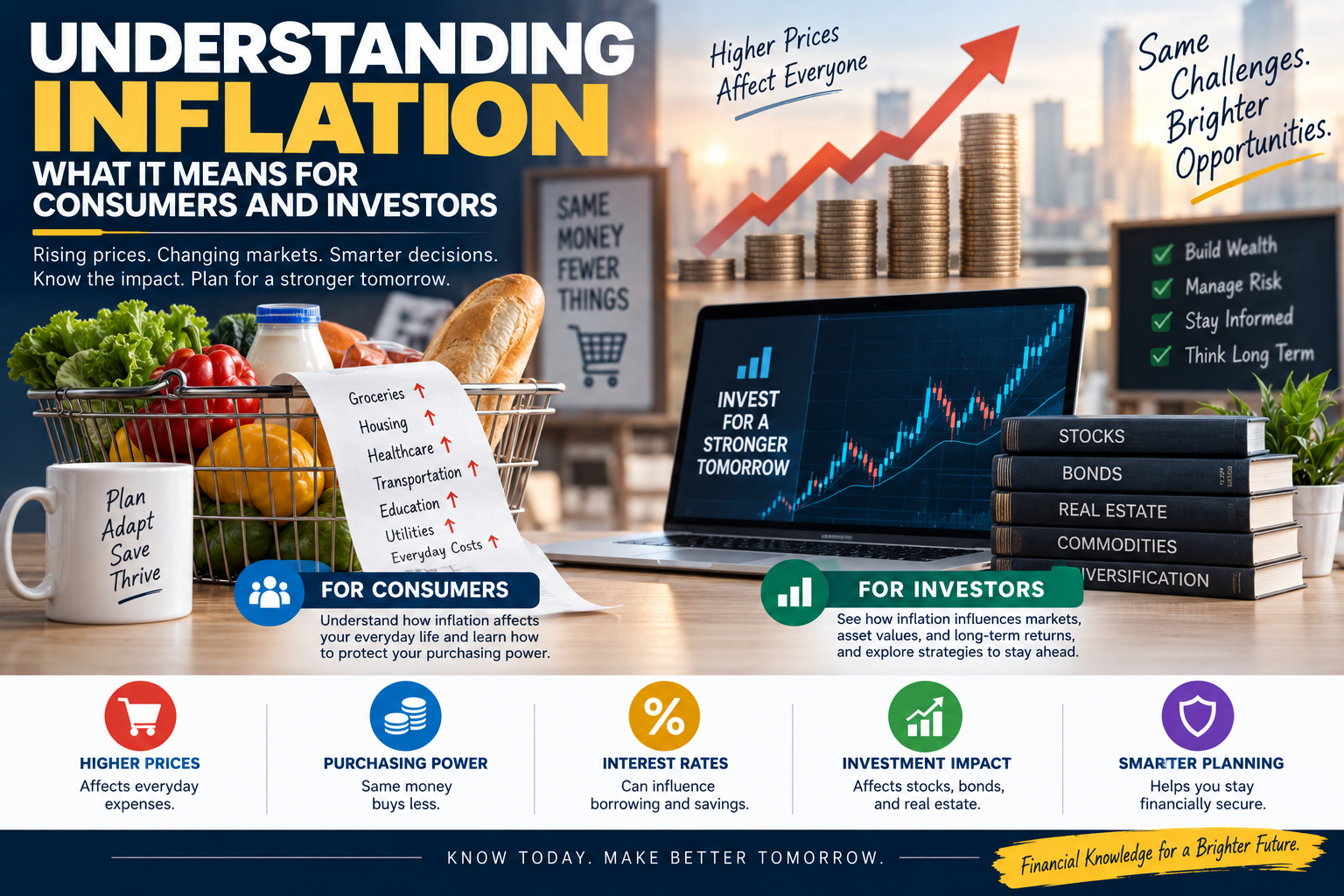
Inflation is one of the most important economic concepts for consumers, businesses, and investors to understand. It affects the price of groceries, housing, transportation, healthcare, education, and countless other everyday expenses. At the same time, inflation can influence interest rates, investment returns, business decisions, and the overall performance of financial markets.
Although inflation is frequently discussed in the news, understanding what it actually means—and how it affects personal finances—can help people make more informed decisions.
Inflation does not simply mean that prices are increasing. It generally refers to a sustained increase in the overall price level of goods and services in an economy, which reduces the purchasing power of money over time.
For consumers, this means the same amount of money may buy fewer goods and services than it did previously. For investors, inflation can change the real value of investment returns and influence which assets may perform better or worse in different economic environments.
Understanding inflation can therefore help individuals plan budgets, manage savings, evaluate investments, and prepare for changing economic conditions.
What Is Inflation?
Inflation is the gradual increase in the general prices of goods and services over time.
Imagine that a household spends $100 on a collection of everyday products. If inflation causes those products to become more expensive, the household might eventually need $105, $110, or more to purchase the same collection.
The important point is that inflation applies to the broader economy rather than just one product.
A price increase for a particular item does not necessarily mean the economy is experiencing inflation. For example, a poor harvest could temporarily increase the price of a particular food. Inflation occurs when price increases become broader and more persistent across many categories of goods and services.
Inflation is usually measured using price indexes that track changes in the cost of a representative basket of goods and services.
Why Does Inflation Happen?
Inflation can occur for several reasons, and different periods can involve different combinations of factors.
Demand-Pull Inflation
Demand-pull inflation occurs when demand for goods and services grows faster than the economy's ability to supply them.
When consumers and businesses have strong purchasing power, they may increase spending. If companies cannot increase production quickly enough, limited supply combined with strong demand can put upward pressure on prices.
This can happen during periods of strong economic growth or when spending increases rapidly.
Cost-Push Inflation
Cost-push inflation occurs when the cost of producing goods and services increases.
Businesses may face higher costs for:
Raw materials
Energy
Transportation
Labor
Components
Rent
Imported goods
Companies may respond by increasing prices to protect their profit margins.
When higher costs spread across multiple industries, consumers can experience broader price increases.
Supply Disruptions
Supply disruptions can also contribute to inflation.
Natural disasters, geopolitical events, transportation problems, shortages, or disruptions in global supply chains can make certain products more difficult or expensive to obtain.
If supply remains constrained while demand continues, prices may rise.
Monetary and Credit Conditions
Interest rates and the availability of credit can influence economic demand.
When borrowing is relatively inexpensive, consumers and businesses may be more willing to borrow and spend. When monetary conditions become tighter, borrowing can become more expensive, potentially slowing spending and investment.
Central banks often use interest-rate policy and other monetary tools as part of their efforts to maintain price stability.
How Inflation Is Measured
Inflation is generally measured by tracking changes in the prices of a broad basket of goods and services.
One commonly used measure is the Consumer Price Index (CPI). It tracks changes in prices paid by consumers for a range of products and services.
Another important concept is the Producer Price Index (PPI), which measures price changes from the perspective of producers.
Inflation statistics can also be examined through different categories, such as food, energy, housing, transportation, healthcare, and other services.
This matters because headline inflation may not reflect every household's personal experience.
For example, a household that spends a large portion of its budget on housing may feel the effects of rising housing-related costs more strongly than another household with different spending patterns.
The Difference Between Inflation and the Cost of Living
Inflation and cost of living are related, but they are not exactly the same.
Inflation measures changes in prices across an economy or a defined basket of goods and services.
The cost of living describes how much money an individual or household needs to maintain a particular standard of living.
Two households can experience the same overall inflation rate but face very different changes in their personal expenses because their spending habits are different.
This is why personal financial planning should consider individual expenses rather than relying entirely on a national inflation figure.
How Inflation Affects Consumers
Inflation can influence almost every part of household finances.
1. Groceries Become More Expensive
Food prices are highly visible because households purchase groceries regularly.
Even moderate increases in food prices can have a meaningful impact on families with limited budgets.
Consumers may respond by:
Comparing prices
Changing brands
Buying in larger quantities when appropriate
Reducing unnecessary purchases
Planning meals more carefully
Looking for discounts
2. Housing Costs Can Increase
Housing is one of the largest expenses for many households.
Inflation can affect construction costs, maintenance, utilities, rents, and other housing-related expenses.
For homeowners, inflation can increase the cost of repairs and renovations. For renters, higher operating and maintenance costs can contribute to increases in rental prices.
3. Transportation Costs Can Rise
Transportation expenses can include fuel, vehicle maintenance, insurance, public transportation, and vehicle purchases.
When energy, labor, or manufacturing costs increase, transportation-related expenses can also rise.
4. Purchasing Power Declines
One of the most important effects of inflation is the reduction in purchasing power.
If your income remains unchanged while prices rise, your money buys less.
For example, if a person earns the same salary for several years while everyday expenses increase, that person may experience a decline in real purchasing power even though the numerical amount of the salary has not changed.
5. Savings Can Lose Real Value
Holding money in cash provides liquidity, but cash can lose purchasing power when inflation is higher than the interest earned on that money.
This does not mean people should avoid cash altogether. Emergency savings and short-term financial needs still require accessible funds.
However, long-term savings strategies should consider inflation.
Inflation and Wages
Inflation can also affect wages.
Workers may seek higher salaries when living costs increase. Employers may raise compensation to attract and retain employees.
However, nominal wage growth does not necessarily mean an improvement in purchasing power.
What matters is the relationship between wage growth and inflation.
If wages increase faster than prices, workers may experience an improvement in real purchasing power.
If prices increase faster than wages, purchasing power may decline.
This distinction between nominal income and real income is important when evaluating financial progress.
How Inflation Affects Businesses
Businesses are affected by inflation in several ways.
Higher costs can increase the price of raw materials, labor, transportation, energy, rent, and other inputs.
Companies then face difficult decisions.
They may:
Increase prices
Reduce expenses
Improve productivity
Change suppliers
Modify products
Reduce profit margins
Invest in automation
Delay expansion
Businesses with strong pricing power may be better positioned to pass higher costs to customers.
Companies operating in highly competitive markets may have less ability to raise prices without losing customers.
Inflation and Interest Rates
Inflation and interest rates are closely connected.
When inflation becomes persistent or remains above a central bank's desired level, policymakers may raise interest rates to reduce demand and slow price pressures.
Higher interest rates can affect:
Mortgages
Credit cards
Business loans
Personal loans
Bonds
Stock valuations
Real estate
Consumer spending
Higher borrowing costs can encourage consumers and businesses to reduce borrowing and spending.
Lower interest rates can have the opposite effect by making borrowing cheaper and potentially encouraging economic activity.
How Inflation Affects Investors
Inflation is particularly important for investors because investment returns need to be evaluated in real terms.
Suppose an investment earns a 7% return over a period while inflation is 4%.
The investor's real return is substantially lower than the headline 7% figure.
This is why investors should distinguish between:
Nominal return: The stated investment return.
Real return: The return after accounting for inflation.
Over long periods, even moderate inflation can significantly affect purchasing power.
Inflation and Stocks
Stocks can respond differently to inflation depending on the economic environment and the characteristics of individual companies.
Some businesses may be able to increase prices and maintain profitability when inflation rises.
Others may struggle because their costs increase faster than their revenues.
Inflation can also influence interest rates, which can affect stock valuations.
Growth-oriented companies can sometimes be particularly sensitive to higher interest rates because the present value of future earnings becomes less attractive when discount rates rise.
Investors should therefore avoid assuming that all stocks will react to inflation in the same way.
Inflation and Bonds
Inflation can be an important concern for bond investors.
Traditional fixed-rate bonds generally provide predetermined interest payments. If inflation rises significantly, those fixed payments can lose purchasing power.
For example, receiving the same amount of interest every year may become less valuable when the prices of goods and services rise.
This is one reason investors often consider inflation expectations when evaluating bonds and fixed-income portfolios.
Some inflation-linked securities are specifically designed to provide protection against changes in inflation, although their suitability depends on an investor's circumstances and objectives.
Inflation and Real Estate
Real estate is often discussed as a potential inflation-sensitive asset.
Property values and rents may increase over time, although performance varies significantly by location, property type, supply and demand, financing costs, and economic conditions.
Inflation can also increase construction and replacement costs, potentially influencing property values.
However, real estate is not automatically protected from inflation.
Higher interest rates can increase mortgage and financing costs, potentially putting downward pressure on property demand and valuations.
Investors should evaluate the entire economic environment rather than relying on a single inflation-related assumption.
Inflation and Commodities
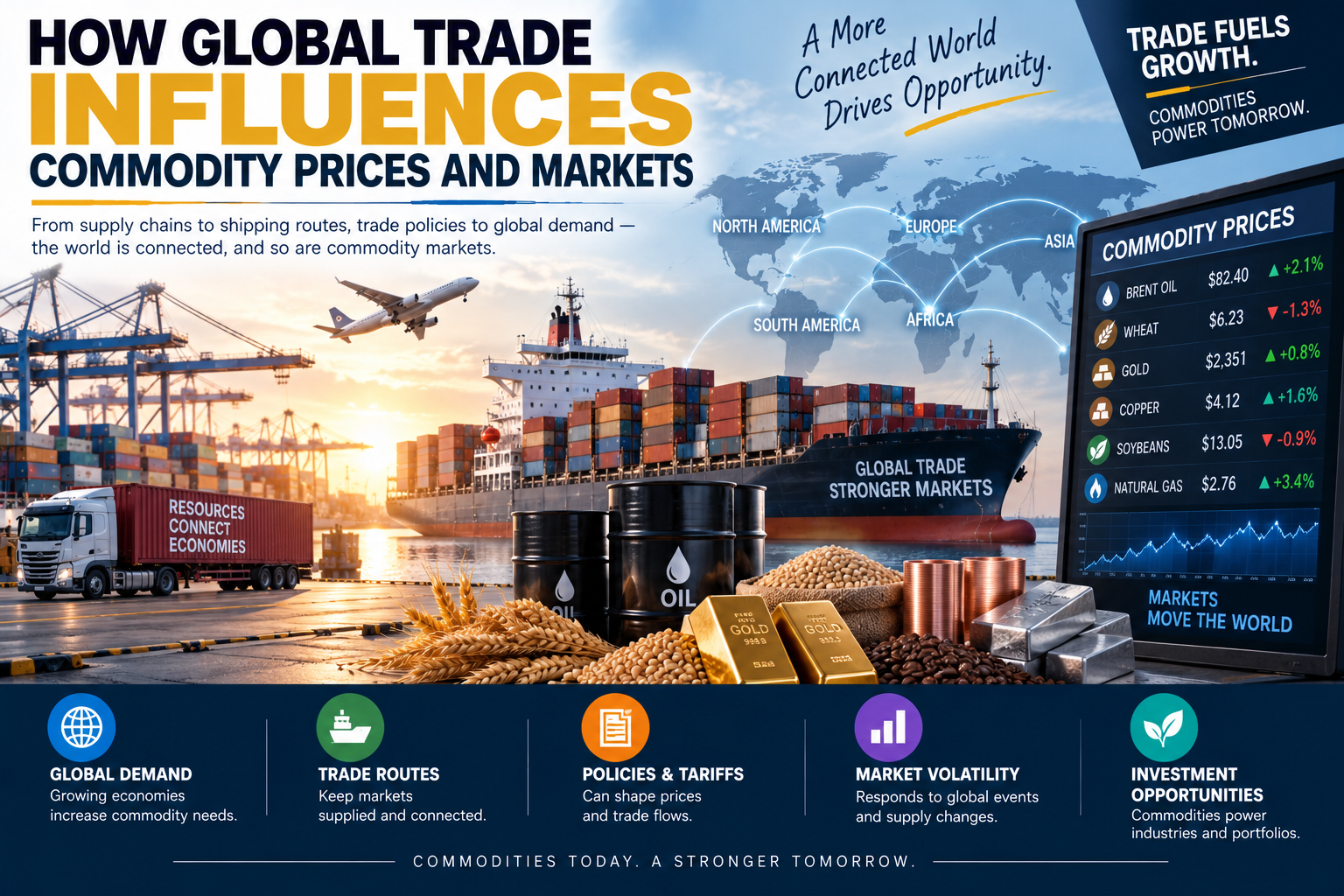
Commodities such as energy, metals, and agricultural products can be closely connected to inflation.
When commodity prices rise sharply, they can increase production and transportation costs throughout the economy.
At the same time, commodity prices can themselves be affected by inflation expectations, supply disruptions, weather, geopolitical developments, and changes in demand.
Commodity exposure can therefore provide diversification in some portfolios, but commodities can also be volatile.
Why Diversification Matters During Inflation
Inflation demonstrates why diversification can be important.
Different assets can respond differently to changing economic conditions.
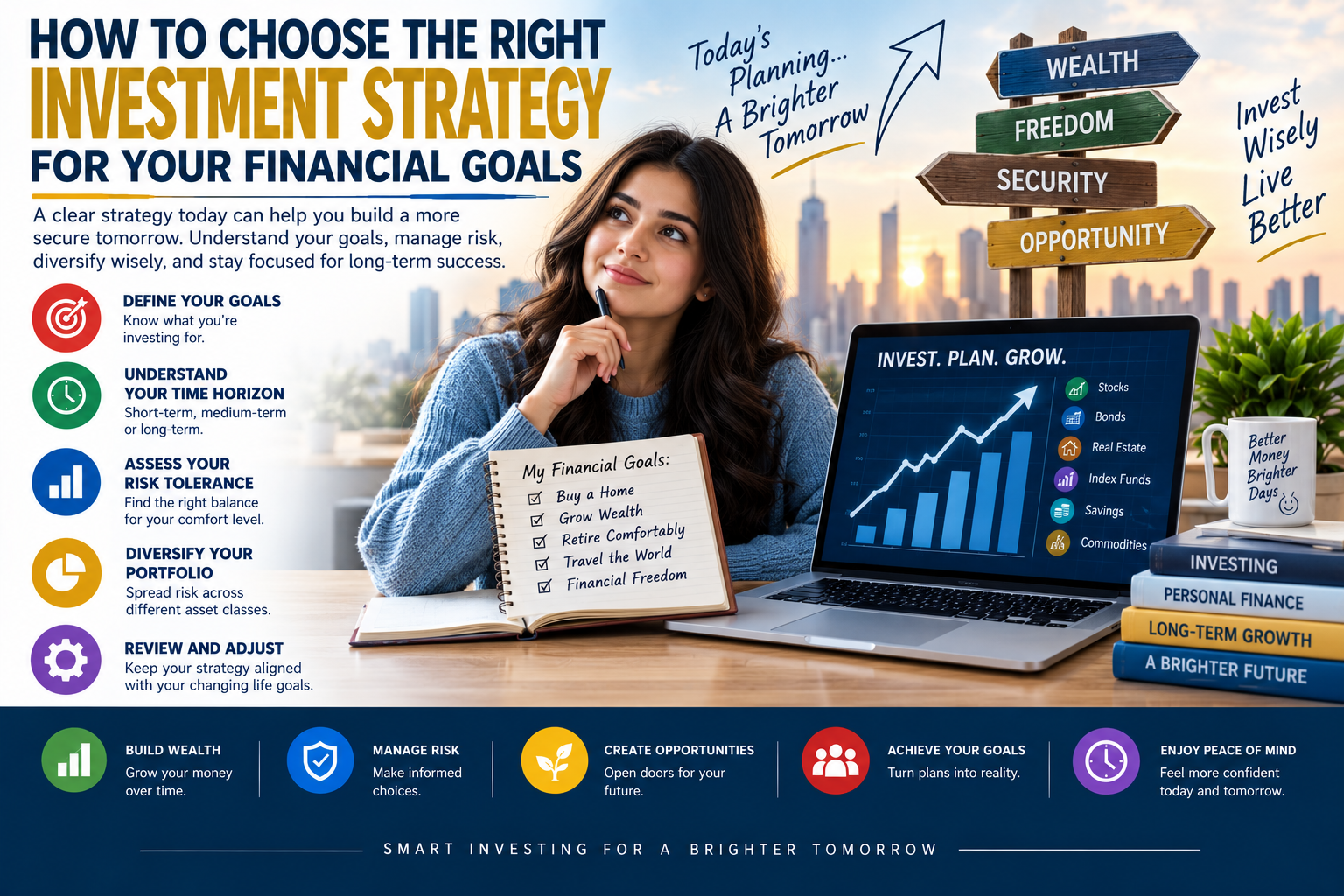
A diversified portfolio may include a combination of asset classes depending on an investor's goals, risk tolerance, time horizon, and financial situation.
Possible categories include:
Stocks
Bonds
Cash
Real estate
Commodities
Inflation-linked investments
Other diversified assets
Diversification does not eliminate investment risk, and no asset allocation guarantees a profit.
The goal is to avoid relying entirely on one type of asset or one economic outcome.
How Consumers Can Prepare for Inflation
Consumers do not have complete control over inflation, but they can improve their financial resilience.
Review Your Budget
Regularly review spending categories and identify where prices are increasing.
Separate essential expenses from discretionary spending.
This makes it easier to adjust when household costs rise.
Build an Emergency Fund
An emergency fund can help protect against unexpected expenses.
Without emergency savings, a sudden increase in living costs may force someone to rely on expensive credit.
The appropriate emergency fund depends on income stability, expenses, family circumstances, and financial obligations.
Avoid Unnecessary High-Cost Debt
High-interest debt can become especially difficult to manage when household expenses are rising.
Paying down expensive debt can improve financial flexibility.
Increase Earning Potential
One of the most effective long-term responses to inflation is improving income potential.
This can involve:
Developing professional skills
Pursuing additional education
Negotiating compensation
Building experience
Exploring new career opportunities
Developing additional income sources
Review Financial Goals
Inflation should be considered when setting long-term financial targets.
A retirement goal that looks sufficient in today's money may not provide the same purchasing power decades from now.
How Investors Can Prepare for Inflation
Investors should focus on long-term objectives rather than making emotional decisions based on short-term inflation headlines.
Think in Real Returns
Always consider what an investment return means after inflation.
A nominal return can look attractive while the real increase in purchasing power is much smaller.
Maintain Diversification
A diversified portfolio can provide exposure to different economic environments.
The appropriate mix depends on factors such as:
Investment horizon
Risk tolerance
Financial goals
Income needs
Existing assets
Liquidity requirements
Review Asset Allocation
Changes in inflation, interest rates, and economic growth can affect different investments differently.
Regular portfolio reviews can help investors determine whether their allocation still matches their objectives.
Avoid Panic Selling
Inflation headlines can create fear in financial markets.
Selling investments solely because of short-term economic uncertainty can interfere with long-term investment plans.
A disciplined approach is generally more useful than attempting to predict every economic development.
Inflation Expectations Matter
Inflation is influenced not only by current prices but also by expectations about future prices.
If consumers and businesses expect prices to continue rising, they may change their behavior.
Workers may request higher wages. Businesses may raise prices earlier. Consumers may accelerate purchases.
These behavioral changes can influence future inflation.
This is why policymakers, investors, and businesses pay attention to inflation expectations.
Inflation Is Not Always Bad in Every Context
Inflation is generally viewed as a problem when it becomes excessive, unpredictable, or persistent.
However, a stable and relatively low rate of inflation can exist alongside a growing economy.
The bigger concern for households and investors is unexpected or unusually high inflation that makes financial planning more difficult.
Deflation—an overall decline in prices—can also create economic challenges.
The ideal economic environment therefore involves price stability rather than simply aiming for prices to fall continuously.
Common Mistakes People Make During Inflation
Mistake 1: Focusing Only on Headline Inflation
National inflation figures may not match an individual's personal spending pattern.
Mistake 2: Keeping All Long-Term Wealth in Cash
Cash is useful for emergencies and short-term needs, but excessive long-term cash holdings can lose purchasing power during inflation.
Mistake 3: Chasing Inflation-Proof Investments
There is no investment that guarantees complete protection from inflation.
Every asset has risks.
Mistake 4: Ignoring Debt Costs
Higher interest rates can make variable-rate debt significantly more expensive.
Mistake 5: Making Emotional Investment Decisions
Economic uncertainty can encourage investors to abandon long-term strategies.
A well-designed financial plan should account for uncertainty before it happens.
Inflation and Long-Term Financial Planning
Inflation is particularly important when planning for long-term goals.
Retirement planning, education funding, home purchases, and other major financial objectives can stretch over many years.
If prices increase over time, the amount of money needed to achieve those goals may also increase.
For example, someone planning for retirement should consider not only how much they spend today but also how those expenses could change over a long retirement period.
This makes inflation an important assumption in long-term financial planning.
The Bottom Line
Inflation affects much more than the price of groceries.
It can influence purchasing power, wages, savings, borrowing costs, business profitability, investment returns, real estate, bonds, stocks, and financial planning.
Consumers can respond by maintaining flexible budgets, building emergency savings, managing debt, and improving their earning potential.
Investors can respond by focusing on real returns, maintaining diversification, reviewing asset allocation, and avoiding emotional decisions.
The most important lesson is that inflation should be treated as a long-term financial consideration rather than simply a temporary headline.
By understanding how inflation works and how it affects different parts of the economy, consumers and investors can make more informed decisions and build greater financial resilience.
Frequently Asked Questions About Inflation
1. What is inflation in simple terms?
Inflation is a sustained increase in the general prices of goods and services. As prices rise, the purchasing power of money generally decreases.
2. Why does inflation happen?
Inflation can result from strong demand, rising production costs, supply disruptions, changes in monetary conditions, or a combination of these factors.
3. How does inflation affect consumers?
Inflation can increase the cost of groceries, housing, transportation, healthcare, education, and other everyday expenses.
4. Does inflation reduce purchasing power?
Yes. When prices rise and income does not increase at the same pace, the same amount of money can purchase fewer goods and services.
5. How does inflation affect savings?
If the return earned on savings is lower than the inflation rate, the purchasing power of those savings can decline over time.
6. What is the difference between inflation and cost of living?
Inflation measures changes in prices, while cost of living describes how much money a person or household needs to maintain a particular lifestyle.
7. How does inflation affect investments?
Inflation can reduce real investment returns and influence interest rates, company profits, asset valuations, and investor behavior.
8. Is inflation bad for stocks?
Not necessarily. Some companies may be able to raise prices and maintain profitability, while others may struggle with higher costs and borrowing expenses.
9. How does inflation affect bonds?
Higher inflation can reduce the purchasing power of fixed interest payments and can create challenges for traditional fixed-rate bonds.
10. Can real estate protect against inflation?
Real estate can sometimes benefit from rising rents and property values, but it is not guaranteed to outperform inflation. Interest rates, location, supply, demand, and financing costs also matter.
11. What is a real return?
A real return is an investment's return after accounting for inflation. It provides a better indication of whether purchasing power has actually increased.
12. How can households prepare for inflation?
Households can review their budgets, maintain emergency savings, manage debt, reduce unnecessary expenses, and look for ways to improve income.
13. Should people invest during inflation?
Investment decisions should depend on individual goals, risk tolerance, time horizon, and financial circumstances. Inflation is one factor investors should consider rather than a reason to automatically avoid investing.
14. What is CPI?
The Consumer Price Index, or CPI, is a commonly used measure that tracks changes in the prices consumers pay for a basket of goods and services.
15. What is cost-push inflation?
Cost-push inflation occurs when rising production costs contribute to higher prices for goods and services.
16. What is demand-pull inflation?
Demand-pull inflation occurs when demand for goods and services grows faster than the available supply.
17. Can inflation affect salaries?
Yes. Workers may seek higher wages when living costs rise, while employers may adjust compensation to attract and retain employees. Whether purchasing power increases depends on wage growth relative to inflation.
18. How does inflation affect interest rates?
Persistent inflation can lead central banks to increase interest rates as part of efforts to slow demand and stabilize prices.
19. Can diversification help during inflation?
Diversification can reduce reliance on a single asset class and may help investors manage different economic environments. However, diversification cannot eliminate investment risk.
20. Why should investors care about inflation?
Investors should care about inflation because it affects the real value of returns, interest rates, company costs, asset valuations, and long-term purchasing power.