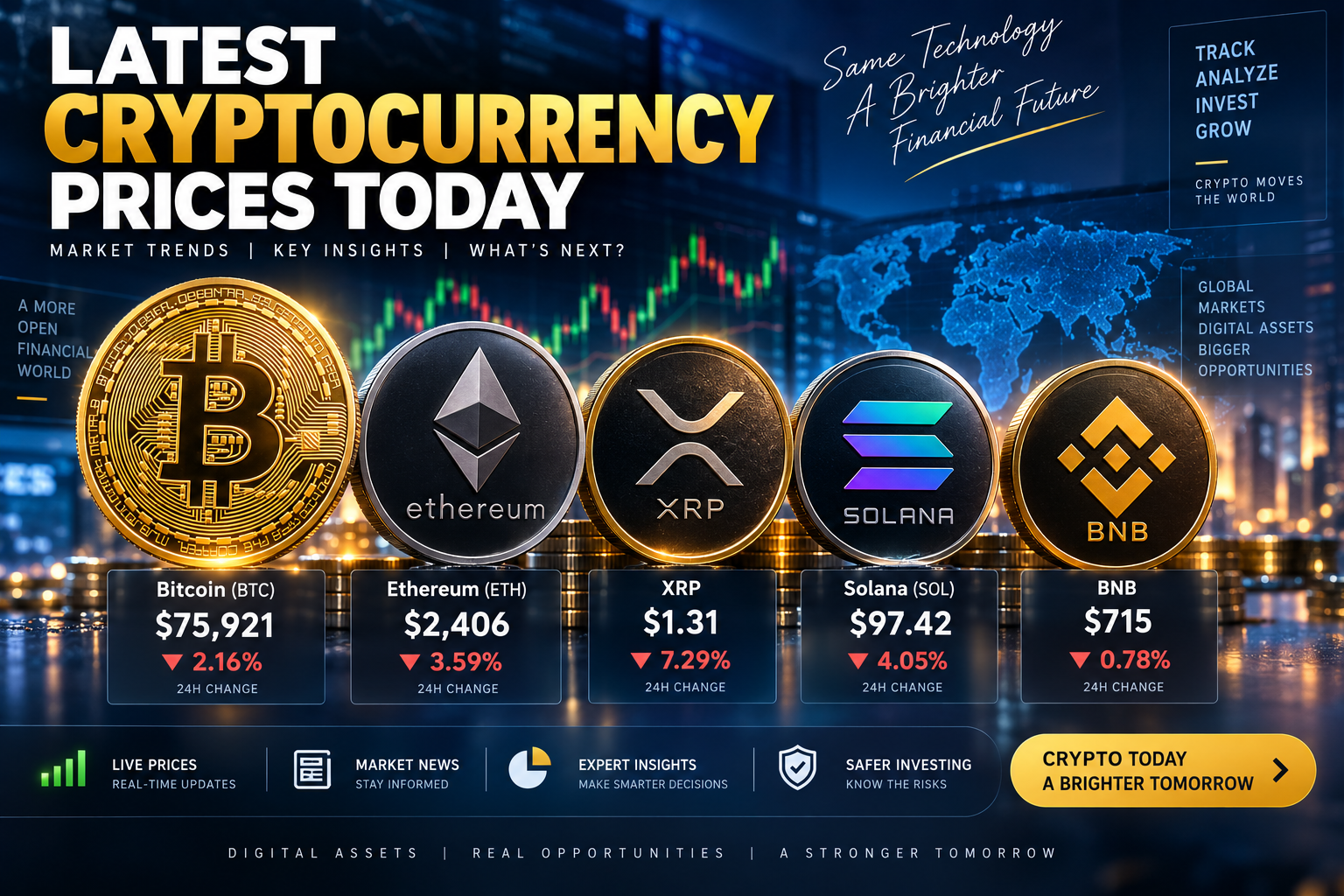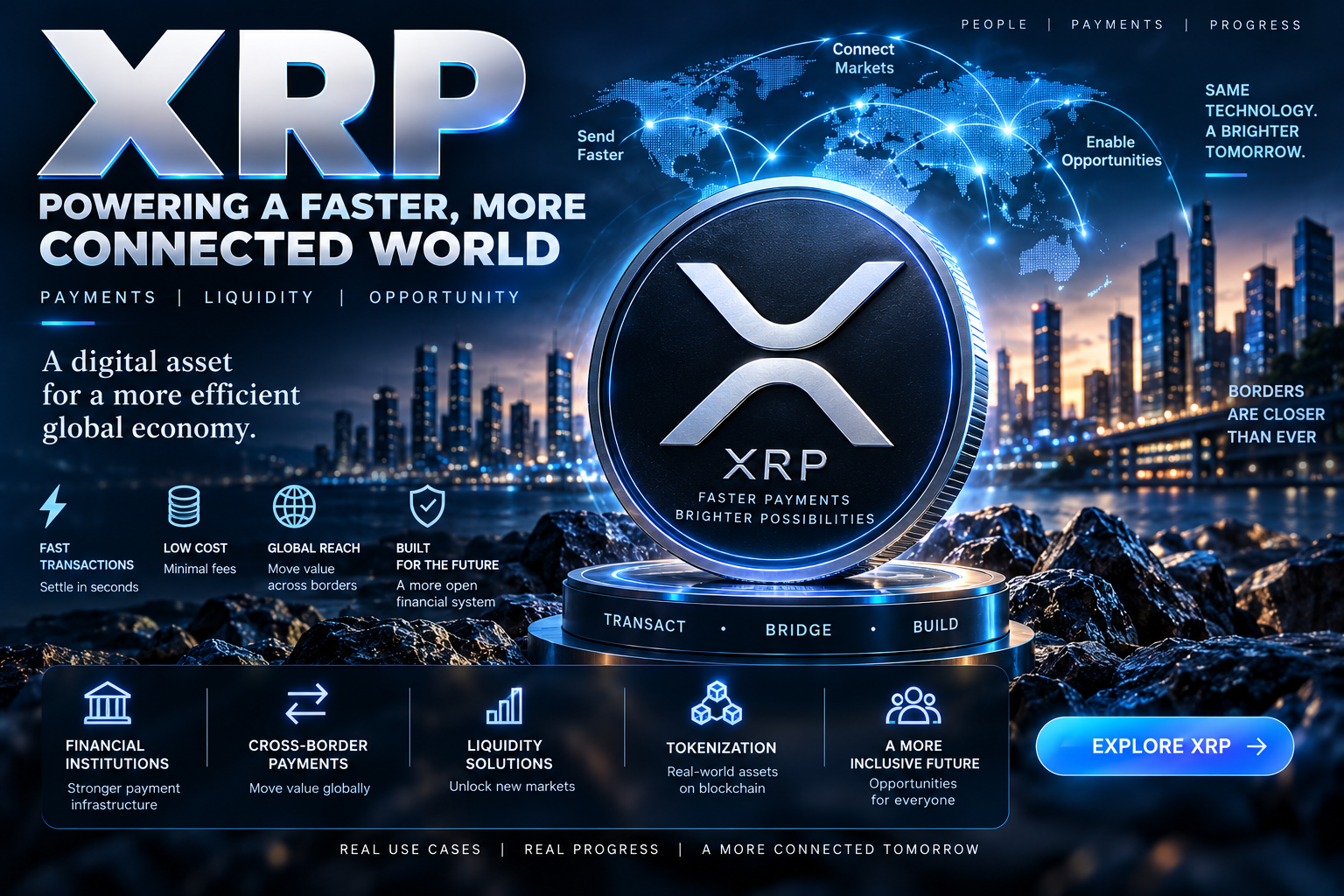
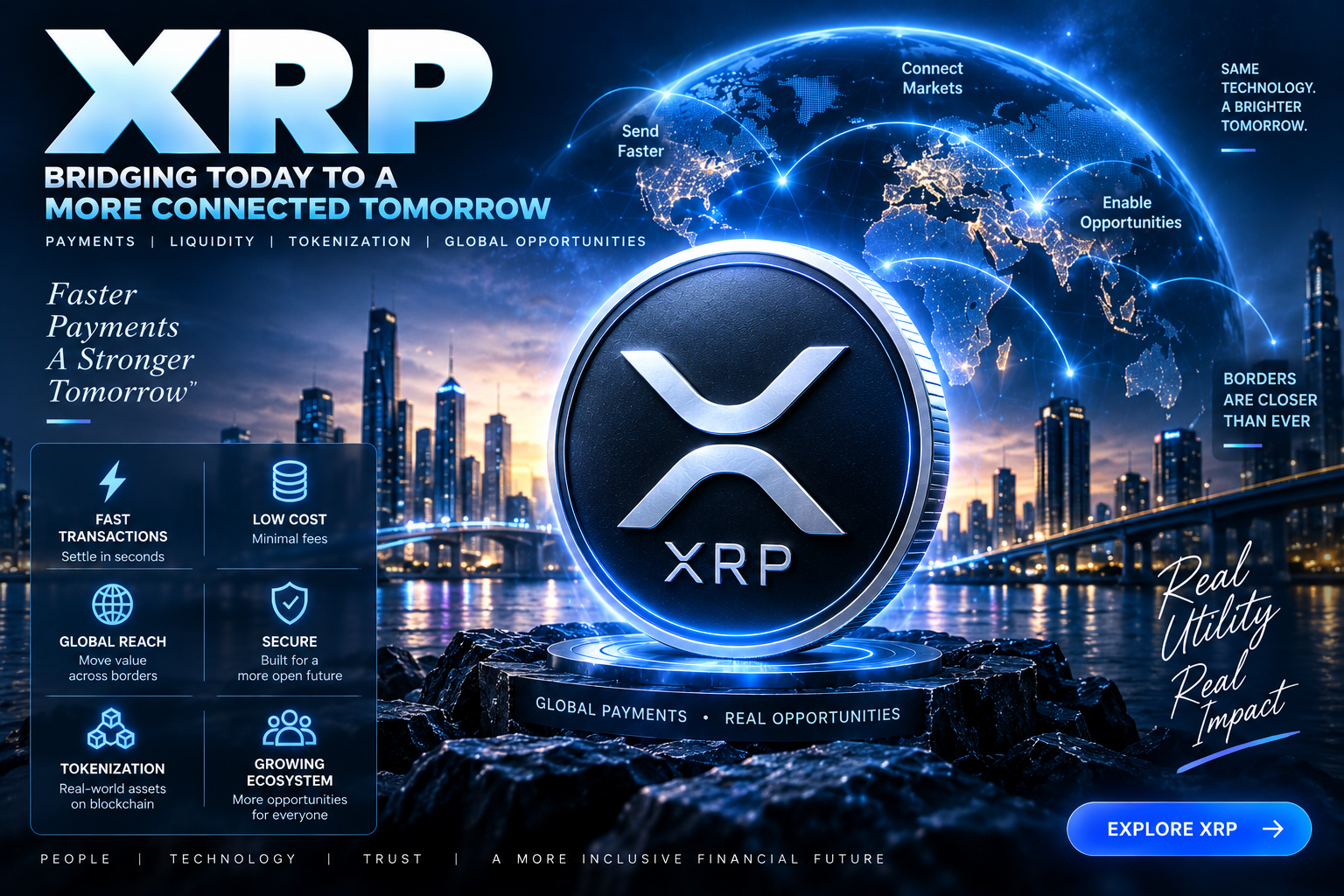
XRP is one of the most established digital assets in the cryptocurrency industry and has developed a distinctive position within the blockchain sector. While Bitcoin is primarily associated with decentralized digital money and Ethereum is known for smart contracts and decentralized applications, XRP has historically focused attention on fast transactions, payments, liquidity, and financial infrastructure.
At the center of the XRP ecosystem is the XRP Ledger (XRPL), a decentralized and open-source blockchain designed to facilitate the movement of digital value. The network can process XRP transactions as well as support other digital assets and tokenized financial instruments.
The combination of fast settlement, low transaction costs, built-in asset exchange capabilities, and a payment-oriented architecture has made XRP and XRPL important topics in discussions about the future of digital finance.
What Is XRP?
XRP is a digital asset native to the XRP Ledger.
It can be transferred between compatible cryptocurrency wallets and used within applications built around the XRP Ledger. XRP is also designed to facilitate the movement of value across the network.
Unlike traditional currencies, XRP does not exist as physical cash. Ownership is represented through entries on the XRP Ledger, with transactions authorized through cryptographic keys.
XRP has become one of the most widely recognized digital assets, with a global ecosystem of exchanges, wallets, developers, businesses, and blockchain services.
What Is the XRP Ledger?
The XRP Ledger is a decentralized blockchain that provides the infrastructure for XRP and other digital assets.
The network was designed with a strong emphasis on efficient settlement and payments.
Instead of using traditional proof-of-work mining, the XRP Ledger uses a consensus protocol in which participating validators agree on the state of the ledger.
This approach allows the network to process transactions without the mining process used by Bitcoin.
The XRP Ledger can also support issued assets, decentralized exchange functionality, and other blockchain-based financial applications.
How Does XRP Work?
When a user wants to transfer XRP, they create and sign a transaction using a compatible wallet.
The transaction is then submitted to the XRP Ledger network.
Validators participate in the consensus process to determine which transactions are valid and should be included in the next ledger version.
Once consensus is reached, the transaction becomes part of the ledger.
This process allows XRP transactions to settle without requiring a central bank or traditional clearing institution to approve each blockchain transaction.
XRP and Fast Payments
Speed is one of the major characteristics associated with XRP and the XRP Ledger.
Financial systems often require transactions to pass through multiple institutions before final settlement. International transfers can be particularly complex because they may involve different currencies, banking systems, intermediaries, and compliance procedures.
Blockchain networks can provide an alternative infrastructure for moving digital value.
The XRP Ledger was designed to process transactions quickly, making it potentially useful for applications where rapid settlement is important.
However, blockchain settlement is only one part of a complete payment. Real-world payments can still involve currency conversion, compliance checks, banking relationships, and other processes.
XRP as a Bridge Asset
One of the most discussed potential applications of XRP is its use as a bridge asset.
A bridge asset can theoretically help connect two different currencies or assets.
For example, if two currencies do not have sufficient direct liquidity, a digital asset could potentially serve as an intermediate asset.
The simplified concept would involve:
Currency A → XRP → Currency B
Such a model could potentially reduce the need for separate liquidity arrangements across every possible currency pair.
Whether this approach is economically useful depends on liquidity, transaction costs, market conditions, regulatory requirements, and the specific payment infrastructure being used.
XRP and Cross-Border Transactions
Cross-border payments remain an important area of interest for blockchain technology.
Traditional international transfers can involve multiple stages and institutions. Settlement may also depend on operating hours and intermediary relationships.
Digital assets can operate on blockchain networks continuously, potentially providing a different settlement mechanism.
XRP's payment-focused architecture has therefore made it a frequent subject of discussion in relation to international transfers.
However, actual adoption depends on businesses and financial institutions choosing to integrate the relevant technology.
XRP and Liquidity
Liquidity is essential to global financial markets.
A market with greater liquidity generally allows assets to be bought or sold more efficiently.
XRP's role in payment discussions is partly connected to the concept of providing liquidity between different currencies and financial assets.
Cryptocurrency exchanges also provide liquidity for XRP trading pairs.
The amount of available liquidity can vary significantly between exchanges and markets, so users should consider the specific trading venue rather than assuming that liquidity is identical everywhere.
XRP Transaction Fees
Transactions on the XRP Ledger require a small fee.
One purpose of the fee is to help protect the network from spam and excessive transaction activity.
Unlike Bitcoin mining fees, the XRP Ledger's transaction mechanism does not depend on miners competing to add blocks.
The cost of a transaction can depend on network rules and conditions, but the XRP Ledger has historically been designed around low-cost transactions.
Low transaction costs can be particularly relevant for payment applications where many transfers may occur.
XRP Supply
XRP has a fixed maximum supply.
The asset was created at the beginning of the XRP Ledger's history rather than being gradually produced through proof-of-work mining.
Supply distribution and XRP held in escrow have been important subjects in discussions surrounding the asset.
Market participants often examine circulating supply, escrow releases, trading volume, and demand when evaluating XRP's market structure.
As with other digital assets, supply alone does not determine market value. Price is influenced by the interaction between supply and demand as well as liquidity, market sentiment, regulation, and broader cryptocurrency conditions.
XRP and Ripple
A common source of confusion is the relationship between XRP, the XRP Ledger, and Ripple.
They are related but distinct.
XRP is the digital asset.
XRP Ledger is the decentralized blockchain network on which XRP operates.
Ripple is a technology company that develops payment and financial infrastructure.
The XRP Ledger is open-source, and XRP is not equivalent to shares or ownership in Ripple.
Holding XRP does not mean that a person owns part of Ripple.
Understanding this distinction is important when discussing the cryptocurrency and the company separately.
XRP Ledger Decentralization
The XRP Ledger does not rely on traditional mining.
Instead, validators participate in the network's consensus process.
Different participants can operate validator infrastructure, and the network uses validator relationships to reach agreement about the ledger's state.
The architecture has generated ongoing discussions about decentralization, validator diversity, governance, and network participation.
These technical characteristics distinguish XRPL from proof-of-work networks such as Bitcoin and proof-of-stake networks such as Ethereum.
XRP and Tokenization
The XRP Ledger can support digital representations of assets beyond XRP.
Tokenization involves representing an asset, financial instrument, or other form of value as a blockchain-based token.
Potential tokenization applications include:
Stablecoins
Fiat-linked assets
Real-world assets
Digital securities
Commodities
Collectibles
Financial instruments
Digital certificates
Tokenized assets can potentially interact with blockchain-based payment and trading infrastructure.
The success of tokenization, however, requires more than technical functionality. Legal ownership, regulatory compliance, custody, identity verification, liquidity, and market demand are also important.
XRP and Stablecoins
Stablecoins are digital assets designed to maintain a relatively stable value, often by referencing an external currency such as the U.S. dollar.
They can be used for cryptocurrency trading, payments, decentralized finance, and blockchain settlement.
The XRP Ledger can support issued tokens, including stablecoin-related assets.
XRP and stablecoins can serve different functions within a digital payment ecosystem.
A stablecoin may be designed to represent a particular fiat currency, while XRP can function as a separate digital asset for transfers or liquidity.
XRP and Decentralized Exchange Technology
The XRP Ledger includes native functionality for exchanging different assets.
This is an important feature because users can interact with the ledger's asset infrastructure without relying exclusively on external centralized exchanges.
The network can facilitate trading between different issued assets and XRP through its decentralized exchange functionality.
This creates an additional layer of utility beyond simple XRP transfers.
XRP and Decentralized Finance
The broader XRPL ecosystem has also expanded into decentralized financial applications.
Developers can create applications that use the ledger's asset and payment capabilities.
Potential applications include:
Decentralized trading
Lending
Tokenized assets
Payments
Liquidity management
Stablecoins
Financial marketplaces
As the ecosystem develops, additional applications may emerge.
However, decentralized finance introduces risks including smart-contract vulnerabilities, market volatility, liquidity problems, scams, and operational failures.
XRP Wallets
Users need a compatible wallet to store and transfer XRP.
Wallets can include:
Mobile wallets
Desktop wallets
Hardware wallets
Web wallets
Exchange wallets
Self-custody wallets give users control over their private keys.
That control also creates responsibility.
If a private key or recovery information is lost, access to the associated assets may be permanently lost.
Users should never share private keys or recovery phrases with another person or enter them into suspicious websites.
XRP Security
The XRP Ledger uses cryptographic mechanisms to authorize transactions and protect the integrity of the network.
However, users can still experience security problems outside the blockchain itself.
Common threats include phishing, fake cryptocurrency platforms, malicious wallet applications, malware, social engineering, and compromised exchange accounts.
Users should carefully verify wallet addresses before sending XRP because blockchain transactions generally cannot simply be reversed after they are completed.
XRP and Regulation
Regulation remains an important issue for XRP and the wider cryptocurrency industry.
Different countries have adopted different approaches to digital assets.
Regulatory frameworks can cover areas such as:
Cryptocurrency exchanges
Taxation
Anti-money-laundering requirements
Digital-asset custody
Consumer protection
Payment services
Tokenized assets
Financial products
XRP has also been involved in major regulatory and legal discussions in the United States.
The regulatory treatment of digital assets can influence exchange listings, institutional activity, business operations, and market access.
Because rules can change, users and businesses should consult current laws and official regulatory guidance relevant to their jurisdiction.
XRP and Institutional Use
Financial institutions have increasingly explored blockchain technology for payments, settlement, tokenization, and other financial applications.
XRP's payment-oriented design has contributed to its visibility in these discussions.
However, it is important to distinguish between a company using blockchain technology and a company directly using XRP.
A financial institution can use blockchain infrastructure without necessarily holding or transferring XRP.
Actual XRP adoption therefore depends on specific products, partnerships, technical integrations, regulatory conditions, and economic incentives.
XRP Market Dynamics
Like other cryptocurrencies, XRP is traded on digital-asset markets around the world.
Its market price is influenced by many factors, including:
Supply and demand
Trading volume
Market liquidity
Cryptocurrency market sentiment
Bitcoin price movements
Regulatory developments
Exchange activity
Institutional participation
Technology developments
Macroeconomic conditions
XRP can experience significant price volatility.
Short-term price movements can be driven by market sentiment and news, while longer-term valuation depends on broader adoption, liquidity, technology, and market conditions.
XRP Compared With Bitcoin
XRP and Bitcoin represent different approaches to blockchain technology.
Bitcoin was designed primarily as a decentralized peer-to-peer monetary system.
XRP and the XRP Ledger have a stronger focus on fast settlement, payments, liquidity, and digital-asset transfers.
Bitcoin uses proof of work, while the XRP Ledger uses a consensus protocol.
Bitcoin has a maximum supply of 21 million coins, whereas XRP has a substantially larger fixed supply.
These differences mean that the networks have different technical structures and potential applications.
XRP Compared With Ethereum
Ethereum is primarily a programmable blockchain platform designed for smart contracts and decentralized applications.
XRP Ledger focuses more strongly on payments, asset transfers, liquidity, and settlement.
Ethereum has become a major platform for DeFi, NFTs, stablecoins, Web3 applications, and smart contracts.
XRPL provides its own asset-management and decentralized exchange functionality and has historically emphasized efficient payments.
Both networks demonstrate different approaches to blockchain-based financial infrastructure.
XRP and the Future of Digital Payments
The global payments industry is changing rapidly.
Instant payment systems, mobile banking, stablecoins, tokenized assets, digital currencies, and blockchain infrastructure are creating new possibilities for moving money.
XRP could potentially participate in this changing environment if payment providers and financial institutions find its infrastructure economically and technically useful.
The future of XRP payments will depend on factors including:
Regulatory clarity
Market liquidity
Financial institution adoption
Payment infrastructure
Currency interoperability
Transaction costs
User demand
Technological development
No single technology is guaranteed to become the dominant global payment infrastructure.
XRP and Real-World Asset Tokenization
Real-world asset tokenization is emerging as an important blockchain use case.
Tokenization can potentially bring traditional assets onto digital networks, creating opportunities for programmable ownership, automated settlement, and digital trading.
The XRP Ledger's ability to represent different assets makes it relevant to this development.
Possible examples include tokenized currencies, securities, commodities, and other financial assets.
For these systems to operate at scale, however, blockchain technology must work alongside legal and financial infrastructure.
Challenges Facing XRP
XRP and the XRP Ledger face several challenges.
Regulatory Uncertainty
Changing regulations can affect cryptocurrency businesses and market access.
Competition
Other blockchain networks and payment technologies compete for developers, businesses, and users.
Adoption
Technical capabilities do not automatically result in widespread real-world use.
Market Volatility
XRP can experience substantial price fluctuations.
Security
Users and applications remain exposed to phishing, scams, compromised wallets, and other cybersecurity threats.
Centralization Debate
The structure of validator participation, token distribution, and ecosystem development continues to generate discussion about decentralization.
The Future of the XRP Ledger
The future of XRPL may extend beyond traditional cryptocurrency transfers.
Developments in tokenization, decentralized trading, stablecoins, payments, and financial applications could expand the network's utility.
As businesses explore blockchain-based financial infrastructure, networks that can provide fast settlement and support multiple digital assets may become increasingly relevant.
At the same time, continued development will require attention to security, scalability, regulatory compliance, user experience, and decentralization.
Why XRP Remains Important
XRP remains an important digital asset because it represents a distinct approach to blockchain-based finance.
Rather than focusing primarily on general-purpose smart contracts, the XRP ecosystem has historically emphasized payments, settlement, liquidity, and digital asset transfers.
The XRP Ledger demonstrates that blockchain networks can use different consensus models and architectural approaches to address specific financial and technological requirements.
Its development also reflects the broader trend of traditional finance exploring blockchain-based infrastructure.
Conclusion
XRP and the XRP Ledger occupy an important position in the cryptocurrency and blockchain industries.
XRP is a digital asset designed to operate within the XRP Ledger, while XRPL provides decentralized infrastructure for transferring value and supporting other digital assets.
Fast settlement, low transaction costs, asset issuance, decentralized exchange functionality, and payment-oriented architecture are among the characteristics that have contributed to the ecosystem's development.
At the same time, XRP faces challenges involving regulation, competition, adoption, cybersecurity, market volatility, and ongoing debates about network structure.
The future of XRP will depend on real-world utility, technological development, regulatory conditions, liquidity, and the continued growth of the XRP Ledger ecosystem.
As digital payments and tokenized financial assets continue to develop, XRP and XRPL will remain relevant to discussions about how blockchain technology could reshape the movement of value in the global economy.