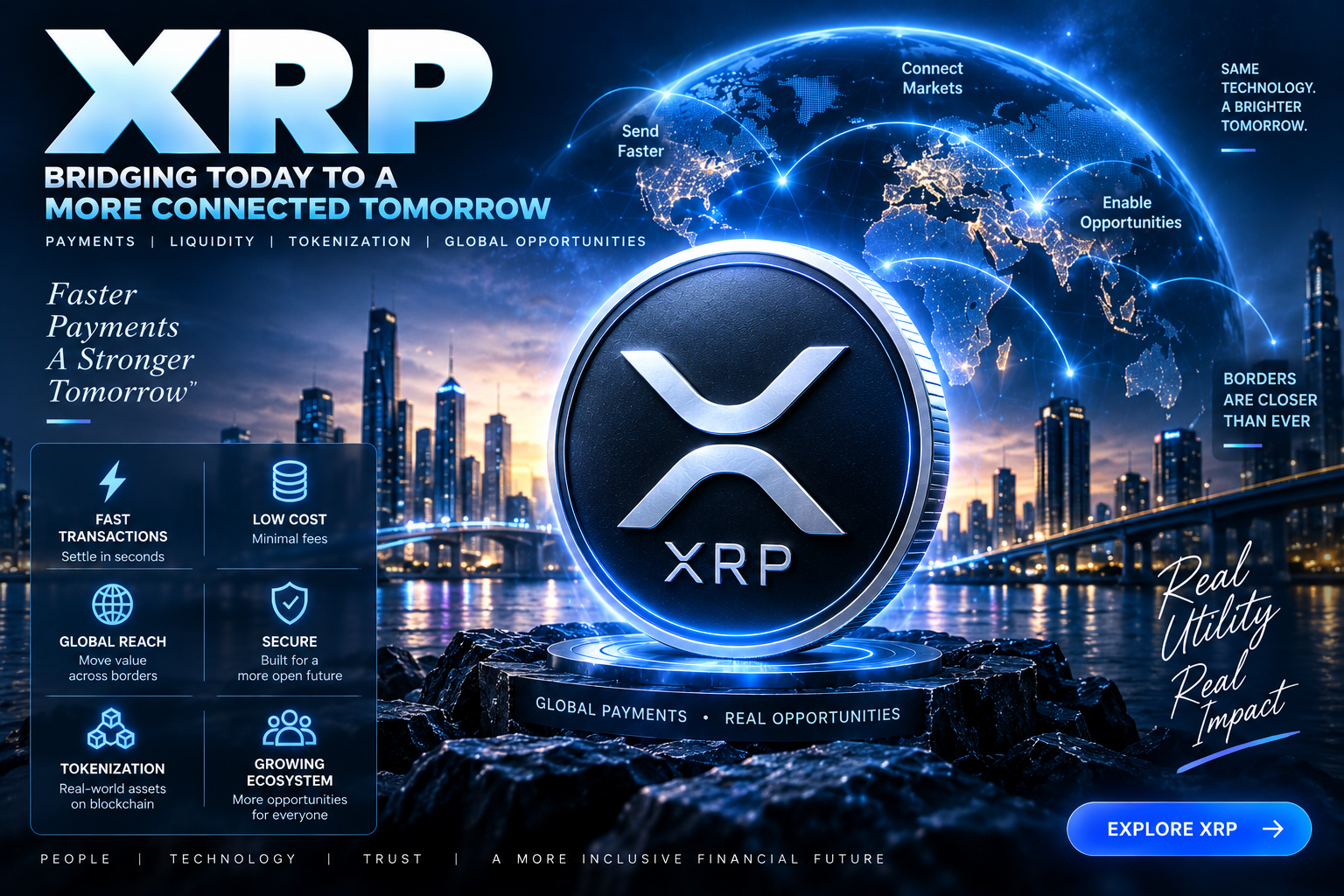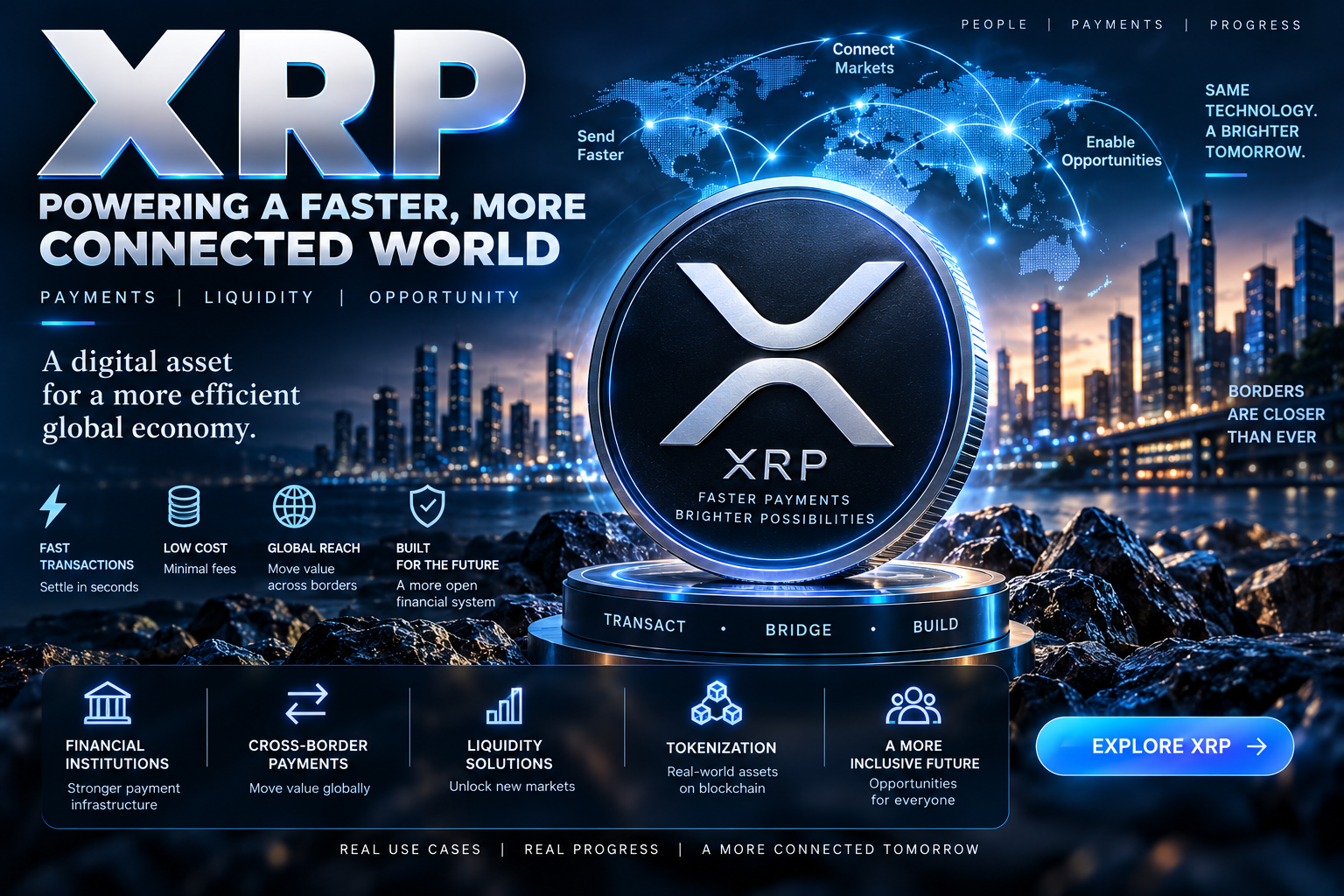
XRP is one of the most recognized digital assets in the cryptocurrency market. Unlike some cryptocurrencies that primarily focus on decentralized applications or digital collectibles, XRP has historically been associated with fast payments, cross-border transfers, liquidity, and financial infrastructure.
XRP operates on the XRP Ledger (XRPL), a decentralized blockchain designed to process transactions quickly and efficiently. The network provides infrastructure for transferring XRP and supporting other digital assets and financial applications.
Over the years, XRP has attracted attention from cryptocurrency users, developers, payment companies, financial institutions, and investors. Its development has also been closely connected with discussions about blockchain-based payments and the regulation of digital assets.
This article explores what XRP is, how the XRP Ledger works, its major use cases, advantages, risks, regulatory considerations, and its potential role in the future of digital finance.
What Is XRP?
XRP is a digital asset that operates on the XRP Ledger.
It can be transferred between compatible wallets and used within the XRP Ledger ecosystem. One of the network's key design goals is to facilitate fast and efficient transactions.
XRP is sometimes discussed alongside Ripple, but the two are not the same thing.
XRP is the digital asset, while Ripple is a technology company that has developed products and services for financial institutions and businesses.
The XRP Ledger is an open-source blockchain network that exists independently as a decentralized technology.
Understanding this distinction is important when discussing XRP and the broader ecosystem surrounding it.
What Is the XRP Ledger?
The XRP Ledger, commonly abbreviated as XRPL, is a decentralized blockchain designed for payments and digital-asset transactions.
The ledger records transactions and maintains the state of accounts and assets on the network.
Unlike Bitcoin, which uses proof of work, the XRP Ledger uses a different consensus approach involving independent validators.
The network is designed to confirm transactions quickly without requiring energy-intensive mining.
How Does XRP Work?
When a user wants to send XRP, a transaction is created and submitted to the XRP Ledger.
Validators participate in the network's consensus process to determine which transactions should be accepted into the ledger.
Once consensus is reached, transactions are recorded on the network.
This structure allows XRP transactions to be processed without the traditional mining process used by Bitcoin.
The design focuses on speed, transaction efficiency, and the ability to move digital value across the network.
XRP and Cross-Border Payments
One of the most discussed use cases for XRP is cross-border payments.
International payments can involve multiple financial institutions, currencies, settlement systems, and intermediaries.
Blockchain technology can potentially simplify some parts of this process by allowing digital assets to move directly between compatible systems.
XRP can be used as a bridge asset in certain payment models, allowing value to move between different currencies or financial systems.
For example, a payment provider could potentially use XRP as an intermediate digital asset rather than maintaining direct liquidity relationships for every currency pair.
However, the actual use of XRP in payment systems depends on the products, jurisdictions, liquidity arrangements, and businesses involved.
XRP as a Bridge Asset
A bridge asset is an asset that can help facilitate transactions between two different currencies or financial assets.
XRP's design and liquidity have made the concept of using it as a bridge asset an important part of discussions surrounding its potential financial applications.
Suppose a payment system needs to move value between two currencies that do not have a highly liquid direct trading pair.
A digital asset could potentially act as an intermediary.
Instead of maintaining separate pools of liquidity for every possible currency combination, a financial system could use a common digital asset as an intermediate step.
This concept is one of the reasons XRP has historically received attention within the payments industry.
XRP Transactions
XRP transactions are generally designed to be fast and inexpensive compared with many traditional international payment processes.
A transaction on the XRP Ledger requires a small network fee.
One purpose of the transaction fee is to help prevent network spam.
Unlike systems that rely on mining rewards, the XRP Ledger does not use proof-of-work mining to validate transactions.
The network's consensus mechanism allows transactions to be processed without the computational competition associated with Bitcoin mining.
XRP and Transaction Speed
Transaction speed is an important characteristic of the XRP Ledger.
Fast settlement can be useful for payment applications because businesses and users generally want transactions to complete without long waiting periods.
Traditional international transfers can sometimes involve multiple processing stages and banking schedules.
Blockchain-based systems can operate continuously, allowing digital transactions to be processed outside traditional banking hours.
However, the speed of a blockchain transaction should not be confused with the total time required for a real-world payment.
A complete international transfer may still involve banks, compliance procedures, currency conversion, and other infrastructure.
XRP Supply
XRP has a fixed maximum supply established by the XRP Ledger's design.
Unlike Bitcoin, where new coins are introduced through mining rewards, XRP was created at the beginning of the XRP Ledger's history.
A portion of XRP has historically been held in escrow arrangements associated with Ripple. Escrow mechanisms can control the rate at which XRP becomes available from locked holdings.
Supply dynamics are an important consideration when analyzing XRP because circulating supply, escrow releases, market demand, and liquidity can all influence the digital asset market.
XRP and Ripple
The relationship between XRP and Ripple is frequently misunderstood.
Ripple is a private technology company that develops payment and financial infrastructure.
XRP is a digital asset that exists on the XRP Ledger.
The XRP Ledger is open-source and operates as a decentralized network.
Therefore, XRP should not simply be treated as a company-issued stock or ownership interest in Ripple.
Owning XRP does not automatically mean owning shares of Ripple or receiving ownership rights in the company.
This distinction is important for users and readers who are learning about the XRP ecosystem.
XRP Ledger Decentralization
The XRP Ledger uses a consensus mechanism rather than proof-of-work mining.
Independent validators participate in confirming transactions.
The network's architecture includes a concept known as a Unique Node List, or UNL, which refers to a list of validators that a participant considers trustworthy for consensus purposes.
The design has generated continuing discussions about decentralization, validator diversity, governance, and network security.
As with any blockchain system, understanding how consensus works is important when evaluating its technical characteristics.
XRP and Tokenization
The XRP Ledger is not limited to XRP itself.
The network can support other digital assets and tokenized representations of value.
Tokenization involves representing an asset or financial instrument through a blockchain-based token.
Potential applications include:
Stablecoins
Tokenized currencies
Real-world assets
Digital certificates
Financial instruments
Payment-related assets
Tokenization can allow digital assets to interact with programmable blockchain infrastructure.
As financial institutions continue exploring tokenized assets, blockchain networks such as XRPL may have opportunities to participate in this emerging market.
XRP Ledger and Stablecoins
Stablecoins are digital assets designed to maintain a relatively stable value, often by referencing currencies such as the U.S. dollar.
Stablecoins can be useful for digital payments, trading, liquidity management, and decentralized financial applications.
The XRP Ledger can support tokenized assets, including stablecoin-related applications.
Stablecoins may also complement XRP in payment ecosystems.
For example, a payment system could potentially use a stablecoin to represent a fiat currency while using XRP for another part of a transaction or liquidity process.
The exact structure depends on the financial application and its supporting infrastructure.
XRP and Decentralized Finance
Although XRP is strongly associated with payments, the XRP Ledger can also support financial applications.
Developers can build tools and applications that interact with digital assets on the ledger.
Potential areas include:
Decentralized trading
Tokenized assets
Payments
Liquidity
Digital currencies
Financial applications
The XRP Ledger's functionality continues to evolve as developers introduce new tools and applications.
XRP and Decentralized Exchange Features
The XRP Ledger includes built-in functionality for trading different assets.
This infrastructure can allow users to exchange assets without relying entirely on an external centralized exchange.
Native ledger functionality can provide a foundation for liquidity and asset trading.
This is different from simply transferring XRP from one wallet to another because the network can support broader asset-management and exchange functions.
XRP Wallets
Users need a compatible wallet to hold and transact with XRP.
XRP wallets can be available through different forms, including:
Mobile wallets
Desktop wallets
Hardware wallets
Exchange wallets
Web-based wallets
Wallet security is extremely important.
Users should protect their private keys and recovery information. A lost or compromised private key can result in the loss of access to digital assets.
When using an exchange wallet, users should also consider the security and operational risks associated with the exchange itself.
XRP Reserve Requirement
The XRP Ledger has historically used a reserve mechanism associated with account creation and certain ledger objects.
The purpose is partly to discourage spam and excessive creation of accounts and objects on the network.
Reserve requirements can change through network governance and protocol developments.
Users interacting with the XRP Ledger should therefore understand the current requirements before creating accounts or using advanced ledger features.
Advantages of XRP
XRP has several characteristics that have contributed to its popularity.
Fast Transactions
The XRP Ledger is designed for rapid transaction confirmation.
Low Transaction Costs
XRP transactions generally require a small network fee.
Payment Focus
The ecosystem has strong historical connections to cross-border payments and financial infrastructure.
No Mining
The XRP Ledger does not depend on proof-of-work mining.
Asset Support
The ledger can support XRP and other tokenized assets.
Global Accessibility
XRP can be transferred between compatible wallets across geographic borders.
Risks of XRP
Like other cryptocurrencies, XRP carries significant risks.
Price Volatility
The market price of XRP can change substantially.
Regulatory Risk
Government policies can affect cryptocurrency markets and businesses.
Technology Risk
Software vulnerabilities or network-related issues can affect blockchain applications.
Custody Risk
Users can lose assets through compromised wallets, exchanges, or private keys.
Market Liquidity Risk
Liquidity can vary between exchanges and trading pairs.
Ecosystem Risk
Applications and services built around XRP can introduce additional risks that are separate from the underlying XRP Ledger.
XRP and Regulation
Regulation has been one of the most important issues surrounding XRP.
Digital-asset regulation varies significantly between countries.
Governments and regulators may classify, regulate, or supervise digital assets differently depending on their legal frameworks.
XRP has also been involved in significant regulatory and legal discussions in the United States, particularly regarding the relationship between XRP sales and securities laws.
The legal treatment of a digital asset can have important consequences for exchanges, businesses, investors, and market infrastructure.
Because regulatory frameworks can change, users should rely on current official guidance and applicable laws when making decisions involving XRP.
XRP and Institutional Adoption
XRP's connection to financial infrastructure has contributed to institutional interest in the broader ecosystem.
Financial institutions and payment companies have explored blockchain technology for areas such as:
Cross-border payments
Settlement
Liquidity
Tokenization
Digital currencies
Payment infrastructure
However, interest in blockchain technology does not necessarily mean that every institution uses XRP.
It is important to distinguish between adoption of blockchain technology, use of Ripple products, and actual use of XRP.
XRP Price Volatility
XRP's market price can fluctuate significantly.
Price movements can be influenced by cryptocurrency market sentiment, Bitcoin's performance, regulatory developments, exchange activity, liquidity, technological developments, and broader economic conditions.
News related to the XRP ecosystem can also generate significant market reactions.
Because of this volatility, historical price performance should not be treated as a guarantee of future results.
XRP Compared With Bitcoin
XRP and Bitcoin are both digital assets, but their technologies and primary design goals differ.
Bitcoin was designed primarily as a decentralized peer-to-peer monetary network.
XRP and the XRP Ledger have a stronger focus on fast digital transactions, payments, and financial infrastructure.
Bitcoin uses proof of work, while the XRP Ledger uses a different consensus model.
Bitcoin also has a maximum supply of 21 million coins, while XRP has a much larger fixed supply.
These differences mean that the two networks should not necessarily be evaluated using exactly the same criteria.
XRP Compared With Ethereum
XRP and Ethereum also serve different primary purposes.
Ethereum is a programmable blockchain designed to support smart contracts and decentralized applications.
The XRP Ledger is particularly focused on payments, asset transfers, and efficient settlement.
Ethereum supports a large ecosystem of smart contracts, DeFi protocols, NFTs, and Web3 applications.
XRPL offers different native features focused on payments and digital assets.
Both networks demonstrate different approaches to blockchain infrastructure.
XRP and the Future of Payments
The global payments industry continues to evolve.
Digital banking, mobile payments, instant settlement systems, stablecoins, central bank digital currencies, and blockchain networks are all influencing the financial sector.
XRP could potentially play a role in this changing environment if demand develops for its payment and liquidity capabilities.
Its future use will depend on technology, regulation, liquidity, partnerships, financial infrastructure, and real-world adoption.
The Future of the XRP Ledger
The XRP Ledger continues to develop beyond its original payment-focused identity.
Developers are exploring additional functionality involving tokenization, decentralized trading, smart-contract-related capabilities, and financial applications.
Expanding the network's functionality could create new opportunities for developers and businesses.
At the same time, increased functionality can introduce additional complexity and technical risks.
The long-term development of XRPL will therefore depend on maintaining network reliability while expanding its usefulness.
XRP and Tokenized Real-World Assets
Real-world asset tokenization is becoming an important area of blockchain development.
Financial institutions and technology companies are exploring how assets such as currencies, securities, commodities, and other financial instruments could be represented digitally.
The XRP Ledger's ability to support issued assets makes it relevant to discussions surrounding tokenization.
However, successful tokenization requires more than blockchain technology. Legal ownership, regulatory compliance, custody, settlement, identity verification, and market liquidity are also important.
Why XRP Remains Important
XRP remains an important cryptocurrency because it represents a different approach to blockchain-based finance.
While some blockchain networks focus heavily on general-purpose smart contracts, XRP's ecosystem has maintained a strong emphasis on payments, settlement, liquidity, and asset transfers.
The XRP Ledger demonstrates how distributed ledger technology can be designed around fast transactions without using proof-of-work mining.
Its development also illustrates the growing intersection between cryptocurrency networks and traditional financial infrastructure.
Conclusion
XRP is a major digital asset operating on the XRP Ledger, a decentralized blockchain designed for fast and efficient transactions.
Its ecosystem has historically focused on payments, cross-border transfers, liquidity, tokenized assets, and financial infrastructure.
XRP differs from Bitcoin and Ethereum in both technology and intended use cases. The XRP Ledger uses a consensus mechanism rather than proof-of-work mining, while its network provides features designed around efficient asset transfers and payments.
At the same time, XRP carries risks involving market volatility, regulation, cybersecurity, custody, liquidity, and evolving technology.
The future of XRP will depend on developments across the cryptocurrency industry, financial infrastructure, regulatory frameworks, institutional adoption, and the continued development of the XRP Ledger.
As blockchain technology becomes increasingly connected with digital payments and tokenized financial assets, XRP and the XRP Ledger will remain important subjects in discussions about the future of digital finance.