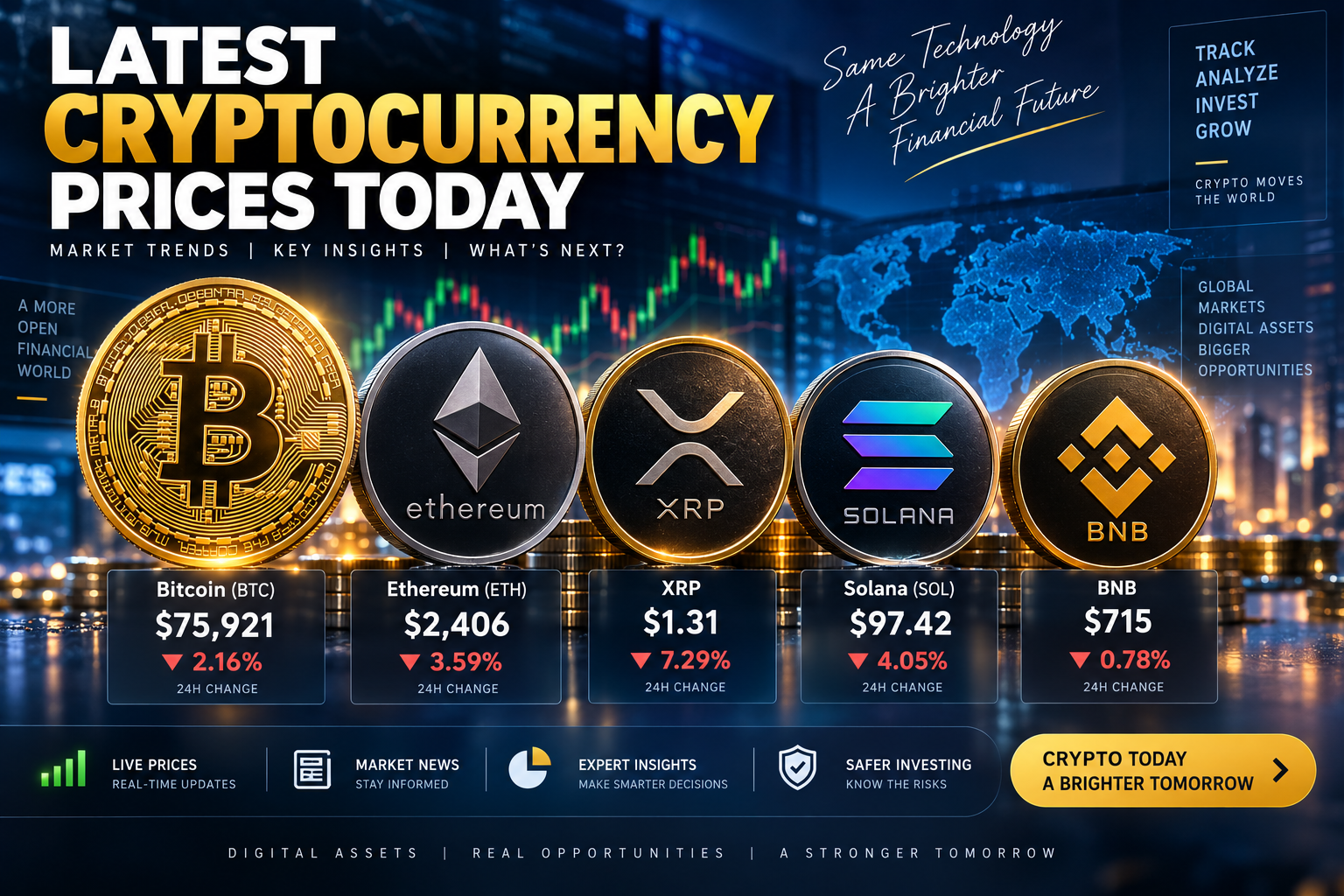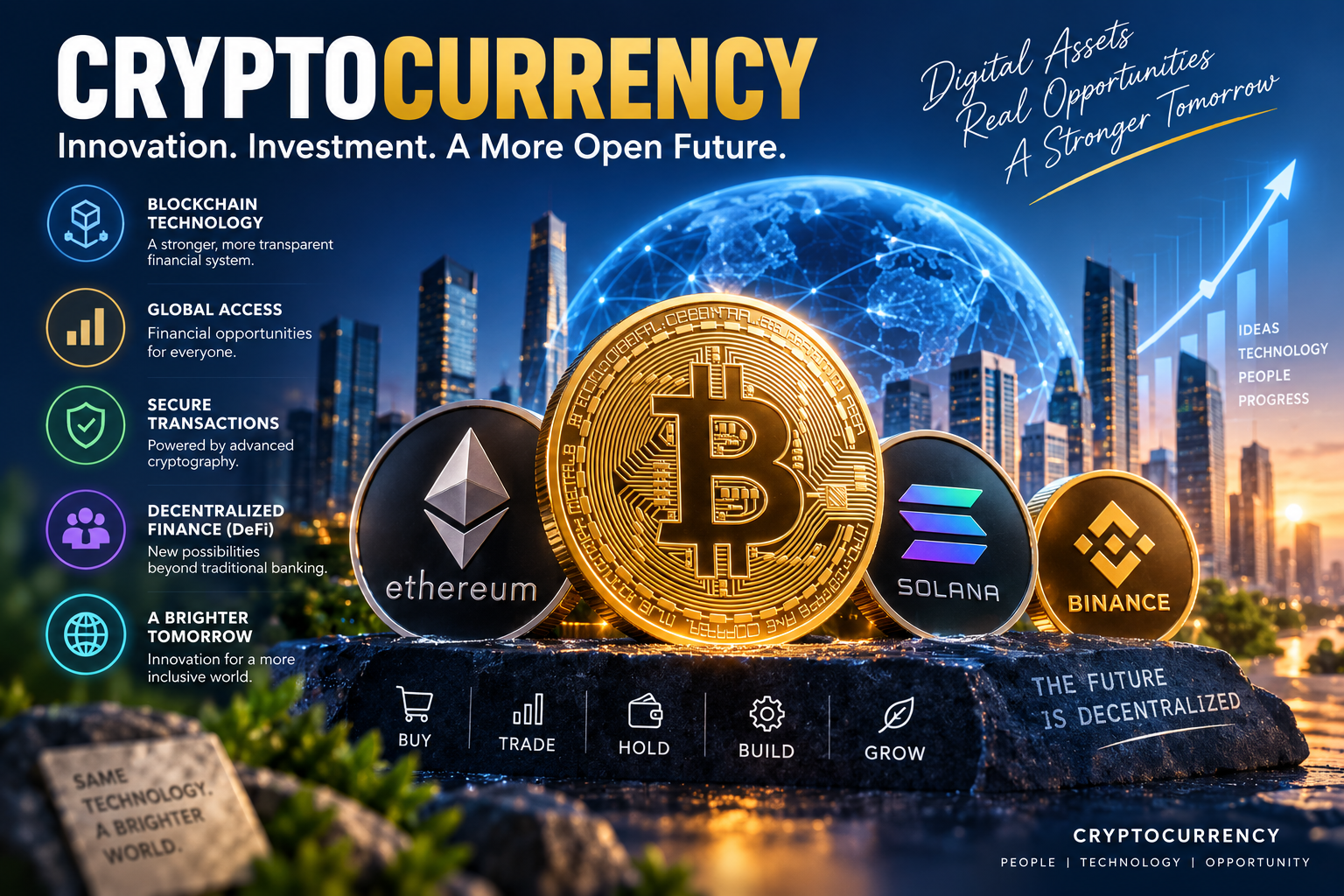
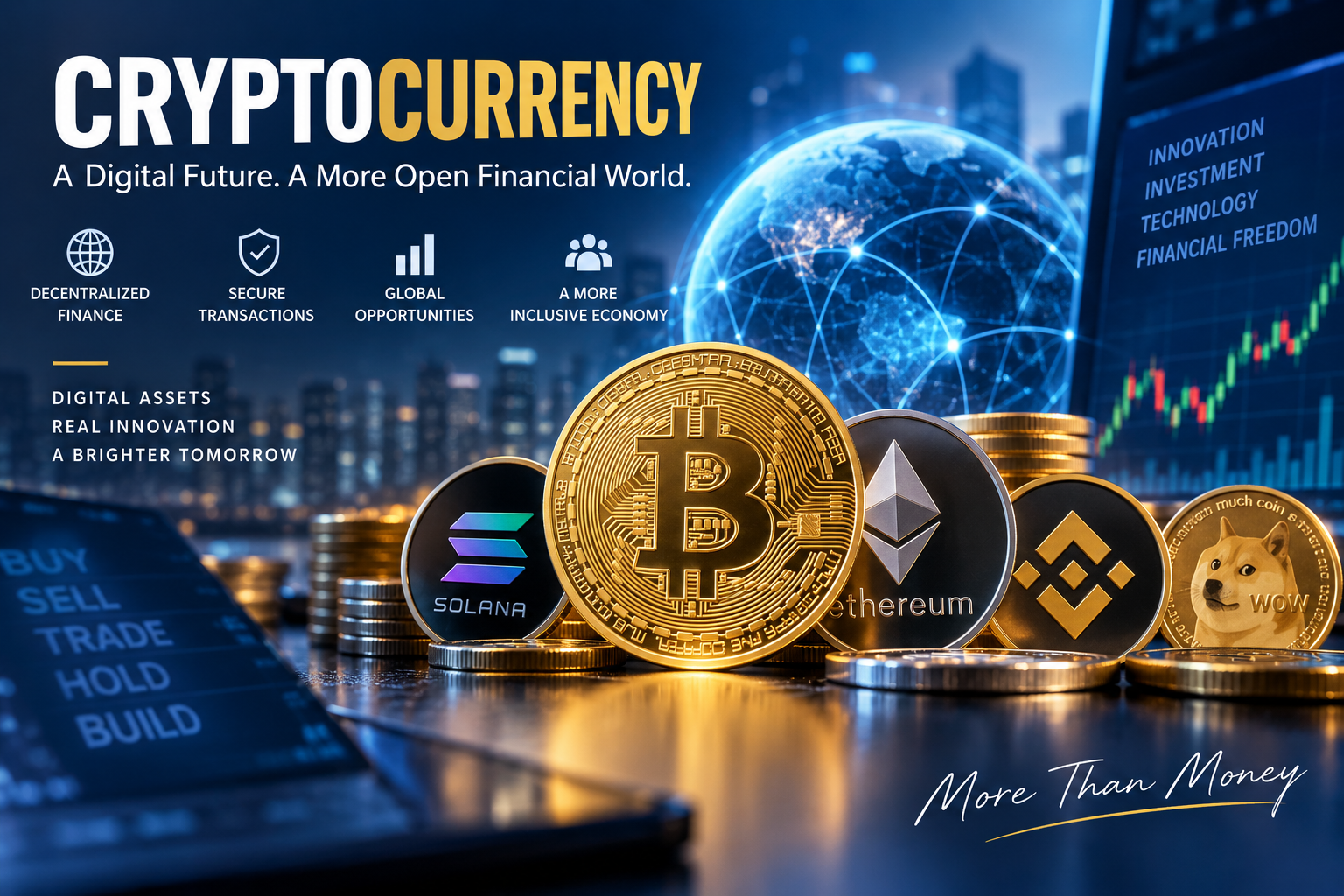
Cryptocurrency has developed from a relatively niche technological experiment into a major part of the global digital economy. Over the past decade and a half, digital assets have attracted individual investors, technology companies, financial institutions, entrepreneurs, developers, and policymakers. The growth of cryptocurrencies has also encouraged the development of blockchain technology, decentralized applications, stablecoins, tokenization, and decentralized finance.
Unlike traditional currencies such as the U.S. dollar, euro, or Pakistani rupee, cryptocurrencies are generally digital assets that operate through blockchain or distributed-ledger networks. Depending on the cryptocurrency, these networks can facilitate payments, smart contracts, decentralized applications, digital ownership, and other forms of digital interaction.
However, cryptocurrency is also a highly dynamic market. Prices can change rapidly, regulations continue to evolve, and different digital assets have very different technological designs and purposes. Understanding the fundamentals is therefore important before evaluating the opportunities and risks associated with the sector.
What Is Cryptocurrency?
Cryptocurrency is a type of digital asset that uses cryptographic technology to secure transactions and control the creation or transfer of units. Many cryptocurrencies operate on decentralized networks, meaning that transaction records are maintained across numerous computers rather than by a single central authority.
Bitcoin was introduced in 2009 and became the first cryptocurrency to achieve widespread recognition. Its underlying system demonstrated that digital value could be transferred between participants without requiring a traditional financial institution to maintain a central transaction ledger.
Since Bitcoin's launch, the cryptocurrency ecosystem has expanded considerably. Thousands of digital assets now exist, although they differ significantly in their technology, purpose, adoption, liquidity, and risk.
Some cryptocurrencies are designed primarily as digital payment assets. Others are connected to blockchain platforms that support applications and smart contracts. There are also stablecoins, utility tokens, governance tokens, and digital assets associated with specific blockchain ecosystems.
How Does Cryptocurrency Work?
Most cryptocurrencies rely on blockchain technology. A blockchain is essentially a distributed digital ledger that records transactions in a structured sequence of blocks.
When a transaction is submitted, the network uses its consensus mechanism to determine whether the transaction is valid. Once transactions are verified and included in the blockchain, the resulting record becomes part of the network's transaction history.
Different blockchains use different approaches to consensus.
Bitcoin, for example, uses a proof-of-work system in which miners compete to add new blocks to the network. Other blockchains use proof-of-stake or variations of other consensus mechanisms.
Cryptographic keys are another important part of cryptocurrency. Users generally control their digital assets through private keys or other forms of cryptographic authorization. A wallet does not necessarily "store" cryptocurrency in the traditional sense. Instead, it allows users to manage the credentials needed to interact with assets recorded on a blockchain.
This means security is particularly important. Losing access credentials can make it extremely difficult or impossible to access digital assets.
Bitcoin and the Evolution of Digital Assets
Bitcoin remains one of the most recognized names in cryptocurrency. It was designed as a peer-to-peer digital payment system and introduced the concept of a blockchain-based monetary network that could operate without a central issuing authority.
The success of Bitcoin encouraged developers to explore additional applications for blockchain technology.
Ethereum became particularly important because it expanded the concept beyond digital payments. Its programmable smart contracts allow developers to build applications that execute predetermined instructions on a blockchain.
This contributed to the growth of decentralized finance, blockchain gaming, tokenization, decentralized applications, and other digital ecosystems.
Other blockchain networks have subsequently focused on areas such as scalability, transaction speed, interoperability, privacy, and specialized applications.
Types of Cryptocurrencies and Digital Assets
The cryptocurrency market contains many different categories of assets.
Bitcoin
Bitcoin is the original cryptocurrency and is widely regarded as the most established digital asset in the sector. Its fixed maximum supply is one of the characteristics frequently discussed by market participants.
Ethereum and Smart-Contract Platforms
Ethereum provides infrastructure for smart contracts and decentralized applications. Its ecosystem has played an important role in the development of decentralized finance and blockchain-based applications.
Stablecoins
Stablecoins are digital assets designed to maintain a relatively stable value, often by referencing a traditional currency such as the U.S. dollar or another asset.
They are used in cryptocurrency trading, payments, transfers, decentralized applications, and other blockchain activities.
Utility and Governance Tokens
Some tokens provide access to specific blockchain applications or services. Others give holders certain governance-related rights within decentralized protocols.
The exact function depends on the design of the individual project.
What Is Blockchain Technology?
Blockchain technology is one of the most important innovations associated with cryptocurrency.
A blockchain allows information to be recorded and shared across a network. Instead of relying exclusively on one central database, participating computers maintain copies of transaction information according to the rules of the network.
This architecture can create transparency and enable participants to verify transactions without depending on a traditional centralized record keeper.
However, blockchain technology is not automatically appropriate for every application. Networks can face challenges involving scalability, transaction costs, energy consumption, security, interoperability, and user experience.
As the industry develops, researchers and developers continue to explore different approaches to address these challenges.
Cryptocurrency and Decentralized Finance
Decentralized finance, commonly called DeFi, is one of the major developments enabled by blockchain technology.
DeFi applications can provide financial functions such as lending, borrowing, trading, and asset management through smart contracts rather than conventional financial intermediaries.
Users interact with decentralized protocols using blockchain wallets. Depending on the application, transactions can be executed automatically according to programmed rules.
DeFi has created new possibilities for financial experimentation, but it also introduces significant risks. Smart-contract vulnerabilities, market volatility, liquidity problems, fraudulent projects, and other technical or financial risks can result in losses.
As a result, users need to evaluate the technology and risks associated with individual protocols rather than assuming that all DeFi projects operate in the same way.
Cryptocurrency as an Investment
Cryptocurrency has become an increasingly discussed investment category. Investors may purchase digital assets with the expectation that their value will increase over time, while others trade them over shorter periods.
However, cryptocurrency markets can be considerably more volatile than many traditional asset markets. Prices can respond rapidly to changes in market sentiment, liquidity, technological developments, regulatory announcements, macroeconomic conditions, and broader financial-market movements.
The performance of one cryptocurrency should also not be assumed to represent the performance of another. Each asset has its own technology, supply structure, development team, ecosystem, liquidity, and use case.
Investors researching cryptocurrency should therefore consider factors such as market capitalization, trading liquidity, token supply, network activity, technology, security, development activity, and regulatory considerations.
Major Risks in the Cryptocurrency Market
Cryptocurrency provides opportunities for technological innovation, but it also involves substantial risks.
Price Volatility
Cryptocurrency prices can experience significant fluctuations. An asset that rises sharply can also decline rapidly, creating substantial losses for investors.
Security Risks
Digital assets can be exposed to hacking, phishing, wallet theft, fraudulent websites, compromised accounts, and other cybersecurity threats.
Regulatory Uncertainty
Governments continue to develop rules governing cryptocurrency exchanges, taxation, consumer protection, stablecoins, and other digital-asset activities. Regulatory changes can influence markets and businesses.
Fraud and Scams
The cryptocurrency industry has experienced various forms of fraud, including fake investment platforms, fraudulent tokens, impersonation schemes, and misleading projects.
Investors should independently verify information and avoid making decisions based solely on social-media promotions or promises of guaranteed returns.
Technology Risk
Blockchain networks and smart contracts are software systems. Bugs, vulnerabilities, network failures, and design problems can create financial risks.
Cryptocurrency and Traditional Finance
The relationship between cryptocurrency and traditional finance has evolved considerably.
Financial institutions, payment companies, technology firms, and asset managers have increasingly explored blockchain technology and digital assets. At the same time, traditional financial infrastructure continues to play an important role in cryptocurrency markets through banking services, custody, payment systems, investment products, and regulated exchanges.
One area attracting particular attention is tokenization. Tokenization involves representing certain assets or rights digitally on a blockchain. Depending on the structure, tokenization could potentially be applied to financial instruments, real-world assets, and other forms of ownership.
The development of these technologies could create new connections between traditional financial markets and blockchain networks.
Cryptocurrency and Global Payments
Cryptocurrency and blockchain networks can also be used for transferring digital value across borders.
Traditional international transfers may involve multiple financial institutions and processing systems. Blockchain-based transfers can potentially move digital assets directly between compatible wallets, depending on the network and service being used.
Stablecoins have become particularly relevant to this area because their design seeks to reduce some of the price volatility associated with other cryptocurrencies.
Nevertheless, the practical use of cryptocurrency for payments depends on factors such as transaction costs, network speed, liquidity, regulatory requirements, merchant acceptance, and user accessibility.
Regulation and Government Policies
Cryptocurrency regulation varies significantly around the world.
Some jurisdictions have developed comprehensive frameworks for digital assets, while others have introduced restrictions or continue to develop their regulatory approaches.
Regulation can address areas such as cryptocurrency exchanges, anti-money-laundering requirements, taxation, consumer protection, stablecoins, custody services, and securities rules.
For cryptocurrency businesses and users, regulatory developments can have important implications. A company operating legally in one jurisdiction may face different requirements in another.
Anyone dealing with digital assets should therefore consider the laws and regulations applicable to their specific country and circumstances.
The Role of Cryptocurrency Exchanges
Cryptocurrency exchanges provide platforms where users can buy, sell, and trade digital assets.
Centralized exchanges typically operate through a company that manages trading infrastructure and user accounts. Decentralized exchanges, by contrast, generally allow users to trade through blockchain-based smart contracts without relying on the same type of centralized order-book structure.
Each model involves different considerations relating to custody, security, liquidity, fees, and user responsibility.
Users should research an exchange's security practices, regulatory status where applicable, withdrawal policies, fees, and reputation before using it.
The Future of Cryptocurrency
The future of cryptocurrency is likely to be influenced by technological development, regulation, institutional adoption, consumer demand, and practical applications.
Several areas could continue to shape the industry.
Stablecoins may become increasingly important for digital payments and blockchain-based financial services. Tokenization could create new methods for representing assets digitally. Layer-2 networks and other scaling technologies may seek to improve transaction capacity and reduce costs.
Decentralized applications could also expand into financial services, gaming, social platforms, identity systems, and other areas.
Artificial intelligence and blockchain technology may also increasingly intersect, particularly in areas involving automated systems, digital identity, data verification, and decentralized infrastructure.
However, the long-term development of cryptocurrency remains uncertain. Some projects may gain adoption while others may disappear. Technological innovation does not guarantee commercial success, and regulatory decisions may significantly influence how the industry develops.
How to Research a Cryptocurrency
Before purchasing or using a cryptocurrency, users can research several fundamental factors.
First, understand what problem the project is attempting to solve. A clearly defined use case can provide more context than marketing claims alone.
Second, examine the technology and blockchain architecture. Understanding whether the project operates its own blockchain or uses another network can help explain its functionality.
Third, research tokenomics, including total supply, circulating supply, distribution, issuance mechanisms, and potential future supply changes.
Fourth, examine liquidity and trading activity. An asset with limited liquidity may be difficult to buy or sell without significantly affecting its market price.
Finally, research security, development activity, governance, regulatory considerations, and the project's publicly available documentation.
No single metric can determine whether a cryptocurrency will succeed.
Conclusion
Cryptocurrency has become an important component of the evolving digital economy. Bitcoin introduced a new model for transferring digital value, while subsequent blockchain networks expanded the technology into smart contracts, decentralized applications, stablecoins, decentralized finance, and tokenization.
The industry presents opportunities for technological innovation and new financial infrastructure, but it also carries considerable risks. High volatility, cybersecurity threats, regulatory uncertainty, fraud, and technological vulnerabilities remain important considerations.
As cryptocurrency continues to develop, understanding the technology and evaluating individual projects carefully will remain essential. Rather than viewing the market as a single category, users and businesses can benefit from examining the different networks, assets, applications, and economic models that make up the broader digital-asset ecosystem.