
Asia is entering a new phase of economic transformation. Artificial intelligence, digital payments, ecommerce, advanced manufacturing, cloud computing, semiconductors, and modern infrastructure are changing how businesses operate and how consumers interact with the economy.
From established technology economies such as Japan and South Korea to rapidly expanding markets such as India, Indonesia, Vietnam, and Malaysia, countries across Asia are developing different strengths while becoming increasingly connected to one another.
For businesses and investors, understanding this transformation requires looking beyond individual stock markets. The bigger story is the development of a digital and increasingly connected Asian economy.
Asia's Digital Economy Is Expanding
Smartphones and affordable internet access have changed consumer behavior across the region.
People increasingly use digital platforms for shopping, banking, transportation, entertainment, communication, and financial services.
This has created opportunities for businesses that can build products around digital consumers.
Ecommerce platforms can reach customers across large geographic areas. Digital banks can provide financial services through smartphones. Online marketplaces allow small businesses to access customers without building large physical retail networks.
As internet access and smartphone adoption continue to expand, the digital economy can become an increasingly important contributor to economic activity.
India and the Rise of Digital Services
India has become one of Asia's most important digital economies.
Its large population, technology workforce, expanding middle class, and rapidly developing digital infrastructure have created opportunities across technology, financial services, ecommerce, telecommunications, and consumer industries.
Digital payment systems have also changed the way consumers and businesses interact with money.
For companies entering the Indian market, however, scale alone is not enough. Businesses need to understand regional differences, consumer preferences, regulation, infrastructure, and competition.
India's long-term opportunity comes from the combination of population, technology adoption, entrepreneurship, and rising consumer demand.
China's Technology Transformation
China remains a major force in Asian technology and manufacturing.
The country has built significant capabilities in electric vehicles, batteries, renewable energy, robotics, artificial intelligence, electronics, and advanced manufacturing.
China's technology development is also increasingly connected to its domestic consumer market.
Companies are not only producing goods for international customers. They are developing technologies and services for a huge domestic market.
This combination of manufacturing capability, engineering talent, infrastructure, and consumer scale gives China an important role in Asia's technological development.
Japan's Next Generation of Innovation
Japan continues to hold a strong position in advanced manufacturing and industrial technology.
The country has significant expertise in robotics, automobiles, electronics, machinery, precision manufacturing, and advanced materials.
As businesses around the world look for greater automation, Japanese technology companies and industrial suppliers can benefit from demand for robotics and intelligent manufacturing systems.
Japan also faces challenges, including demographic changes and an aging population.
This makes automation particularly important.
Robotics and AI can potentially help businesses address labor shortages while improving productivity.
South Korea and the Semiconductor Economy
South Korea is one of the most important semiconductor and technology economies in Asia.
Semiconductors are fundamental to modern technology. They power smartphones, computers, automobiles, industrial systems, and AI infrastructure.
The rapid expansion of artificial intelligence has increased demand for advanced computing and memory technologies.
This places South Korean semiconductor companies in an important position within the global technology supply chain.
However, semiconductor markets can be highly cyclical.
Strong demand can lead to increased investment and production, while weaker demand can create excess supply and pressure prices.
For investors, understanding this cycle is important when evaluating semiconductor companies.
Southeast Asia Becomes More Important
Southeast Asia is becoming increasingly attractive to international businesses.
Countries such as Vietnam, Indonesia, Malaysia, Singapore, Thailand, and the Philippines each offer different advantages.
Some provide manufacturing opportunities.
Others offer large consumer markets, financial services, technology ecosystems, logistics infrastructure, or regional headquarters.
Companies are also diversifying their supply chains.
Rather than relying on one manufacturing location, international businesses may establish operations across several countries.
This strategy can increase resilience while creating opportunities for emerging Asian economies.
Malaysia and the Data-Center Boom
Malaysia has attracted significant attention from technology companies and infrastructure investors because of its growing data-center industry.
Artificial intelligence requires enormous computing resources.
Those systems need data centers, electricity, cooling infrastructure, high-speed networks, and reliable connectivity.
This creates opportunities for countries with suitable infrastructure and competitive operating environments.
Malaysia's location in Southeast Asia also gives it access to regional markets and international connectivity.
However, data-center development brings challenges.
Large facilities require significant electricity and water resources, making sustainability and infrastructure planning increasingly important.
Singapore's Role as a Regional Hub
Singapore continues to play a distinctive role in Asia.
The country combines financial services, logistics, technology, trade, and international business.
Its strategic location makes it an important gateway between Asian economies and global markets.
Singapore is also becoming increasingly relevant to technology infrastructure, data centers, financial technology, and advanced services.
For multinational companies, the country can serve as a regional headquarters or business hub.
Its small domestic market means its economic success depends heavily on its international connections.
Digital Payments Are Changing Consumer Behavior
One of Asia's most significant developments has been the rapid adoption of digital payments.
Consumers increasingly use mobile devices to pay for products and services.
Digital payments can make transactions faster and more convenient while allowing businesses to collect information about customer activity.
In emerging markets, digital finance can also expand access to financial services.
People who previously had limited access to traditional banking may be able to use mobile platforms for payments, savings, transfers, and other services.
This creates opportunities for fintech companies while increasing competition among traditional financial institutions.
Ecommerce and the New Asian Consumer
Asia's expanding digital consumer base is creating opportunities for ecommerce businesses.
Consumers can discover products through social media, marketplaces, mobile applications, and digital advertising.
The growth of online commerce also creates demand for logistics.
Warehouses, fulfillment centers, delivery networks, payment systems, and digital customer-service platforms all become part of the ecommerce ecosystem.
This means the digital economy is connected to physical infrastructure.
A successful online business still requires warehouses, transportation, telecommunications, and reliable energy.
Artificial Intelligence Across Asian Industries
AI is increasingly being applied beyond technology companies.
Manufacturers can use AI for predictive maintenance and quality control.
Banks can use AI for fraud detection and customer analysis.
Retailers can use AI for recommendations and demand forecasting.
Hospitals can explore AI-assisted diagnostics and administrative systems.
Logistics companies can use AI to optimize routes and inventory.
Telecommunications companies can use AI to manage networks and customer support.
This broad adoption could make AI one of the most important productivity technologies across Asia.
Manufacturing Is Becoming More Intelligent
Asia remains central to global manufacturing.
But manufacturing is changing.
Factories are increasingly using robotics, sensors, computer vision, predictive maintenance, and AI-powered systems.
This can improve production efficiency and reduce errors.
It may also change the skills required by manufacturing workers.
Future factories may require fewer workers performing repetitive manual tasks and more employees managing automated systems, analyzing data, maintaining robotics, and solving technical problems.
This creates both opportunities and challenges for education and workforce development.
Infrastructure Will Determine Growth
Technology cannot develop without physical infrastructure.
Data centers need electricity.
Factories need transportation.
Ecommerce requires logistics networks.
Digital services need telecommunications.
Cities need reliable energy, water, roads, and public transportation.
For this reason, infrastructure investment is likely to remain an important part of Asia's economic development.
Countries that can build reliable infrastructure while maintaining competitive costs may attract additional business investment.
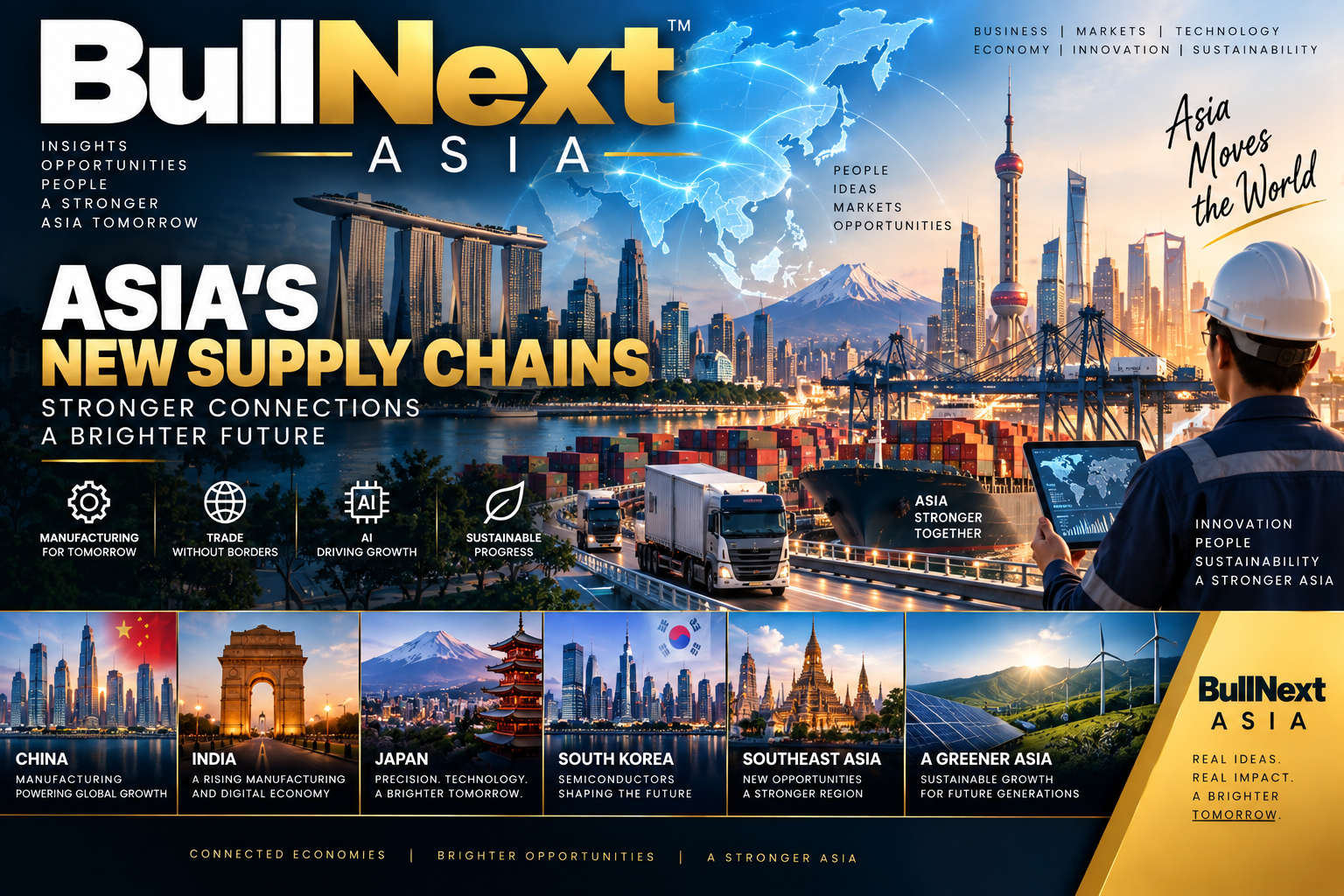
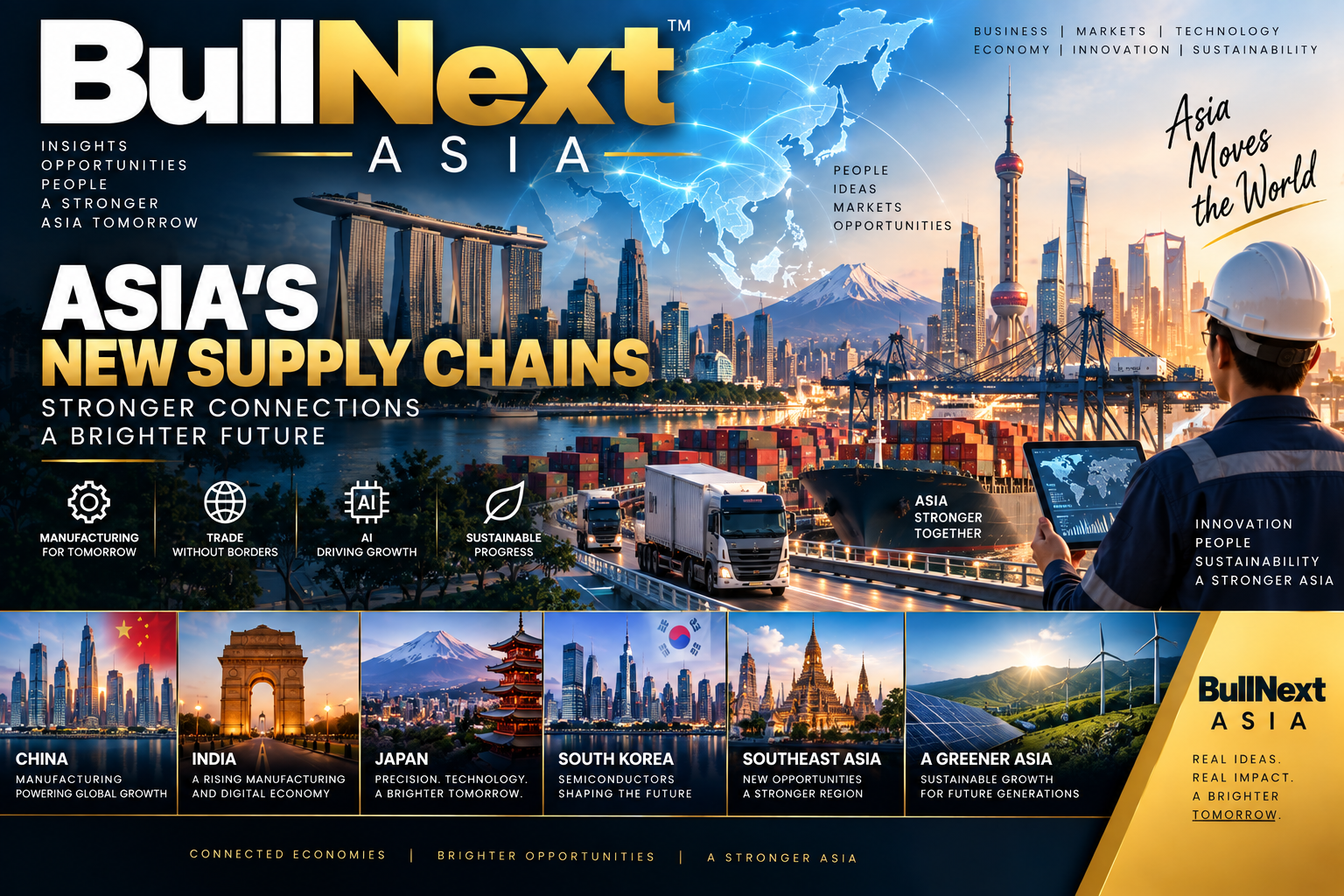
The New Asian Supply Chain
Global supply chains are changing.
Businesses are increasingly considering resilience alongside efficiency.
Instead of relying entirely on a single country or supplier, companies may diversify production across several Asian economies.
This could create opportunities for countries that can provide:
Reliable infrastructure
Skilled workers
Competitive costs
Political stability
Access to ports and transportation
Strong supplier networks
Supportive business policies
The result could be a more diversified Asian manufacturing network.
Energy Demand Is Rising
Technology and industrial development require energy.
AI data centers consume electricity.
Factories require power.
Electric vehicles require charging infrastructure.
Urban populations need transportation and residential energy.
This creates a major challenge for Asian economies.
Countries need to expand energy supply while managing environmental concerns.
Renewable energy, nuclear power, natural gas, energy storage, and more efficient grids could all play roles in meeting future demand.
Sustainability Becomes More Important
Rapid development can create environmental challenges.
Cities need to manage pollution, waste, water consumption, and energy use.
Technology can help.
Smart grids can improve electricity management.
AI can optimize industrial processes.
Digital systems can improve transportation.
Renewable energy can reduce dependence on fossil fuels.
Data centers can adopt more efficient cooling technologies.
Sustainability is therefore becoming increasingly connected to economic competitiveness.
What Businesses Should Watch
Companies looking at Asia should consider more than economic growth.
Important factors include:
Consumer Growth
A growing middle class can create new demand for products and services.
Technology Adoption
Countries with strong digital adoption may provide opportunities for technology businesses.
Infrastructure
Reliable transportation, energy, telecommunications, and logistics can determine whether businesses can scale.
Workforce
Education, technical skills, and labor costs remain important considerations.
Regulation
Government policies can significantly influence technology, finance, manufacturing, and foreign investment.
Supply Chains
Businesses increasingly need resilient and diversified supply networks.
Challenges Facing Asia
Asia's growth story also has risks.
These include geopolitical tensions, trade restrictions, currency volatility, demographic changes, energy shortages, environmental pressures, and differences in regulation.
Technology companies also face cybersecurity risks.
AI adoption creates questions around privacy, data protection, employment, and responsible use.
Investors and businesses therefore need to consider both opportunity and risk.
The Next Decade for Asia
The next decade could see major changes across the region.
AI may transform manufacturing and services.
Digital payments could become even more widespread.
Electric vehicles could reshape transportation.
Renewable energy could change power systems.
Data centers could become a major infrastructure sector.
Ecommerce could continue expanding.
New manufacturing hubs could emerge.
At the same time, established economies such as Japan, South Korea, China, Singapore, and others will continue investing in advanced technology.
This combination of established expertise and emerging markets could make Asia one of the most important regions for global growth.
Why BullNext Asia Matters
BullNext's Asia coverage looks at the region through the broader lens of markets, technology, business, commodities, leadership, and economic development.
That perspective is important because Asia's transformation cannot be understood through stock prices alone.
A semiconductor investment can affect technology markets.
A new data center can increase energy demand.
A manufacturing investment can create jobs and boost logistics.
Digital payments can change consumer behavior.
Infrastructure investment can open new business opportunities.
These developments are interconnected.
Frequently Asked Questions
What is BullNext Asia?
BullNext Asia is BullNext's Asia-focused coverage exploring markets, business, technology, investment, economic development, and emerging opportunities across the region.
Why is Asia important to the global economy?
Asia is a major center for manufacturing, technology, trade, finance, digital services, and consumer markets. Its economic developments can have significant global effects.
Which Asian countries are attracting technology investment?
China, India, Japan, South Korea, Singapore, Malaysia, Vietnam, and Indonesia are among the countries with important technology, manufacturing, digital, or infrastructure opportunities.
Why are semiconductors important to Asia?
Semiconductors are essential to modern electronics, automobiles, data centers, and AI systems. Several Asian economies are major participants in semiconductor manufacturing and supply chains.
How is AI changing Asian businesses?
AI is being adopted across manufacturing, finance, healthcare, logistics, ecommerce, telecommunications, and customer service to automate processes and improve decision-making.
Why is Southeast Asia attracting manufacturers?
Companies are diversifying supply chains and looking for markets with competitive costs, skilled workers, infrastructure, and access to growing consumer populations.
Why are data centers important?
Data centers provide the computing infrastructure needed for cloud services, AI, digital platforms, and many modern business applications.
What are the biggest risks for Asian economies?
Major risks include geopolitical tensions, trade disruptions, energy costs, currency volatility, regulation, demographic changes, and environmental pressures.
What could drive Asia's growth in the future?
Technology, AI, digital services, consumer growth, manufacturing, infrastructure, renewable energy, and expanding regional trade could all contribute to future growth.
Conclusion
Asia is becoming more digitally connected, technologically advanced, and economically diverse.
India is expanding its digital economy.
China continues to develop advanced manufacturing and technology.
Japan is investing in automation and industrial innovation.
South Korea remains central to semiconductor production.
Southeast Asia is attracting manufacturing, technology, logistics, and infrastructure investment.
Together, these developments are creating a region with enormous economic complexity and opportunity.
The future of Asia will not be defined by one country or one industry.
It will be shaped by the interaction of technology, people, infrastructure, capital, consumers, and innovation.
For investors and businesses, understanding these connections can provide a clearer view of where the next opportunities may emerge.
BullNext Asia offers a lens into this rapidly changing region — one where today's digital transformation could become tomorrow's global economic advantage.