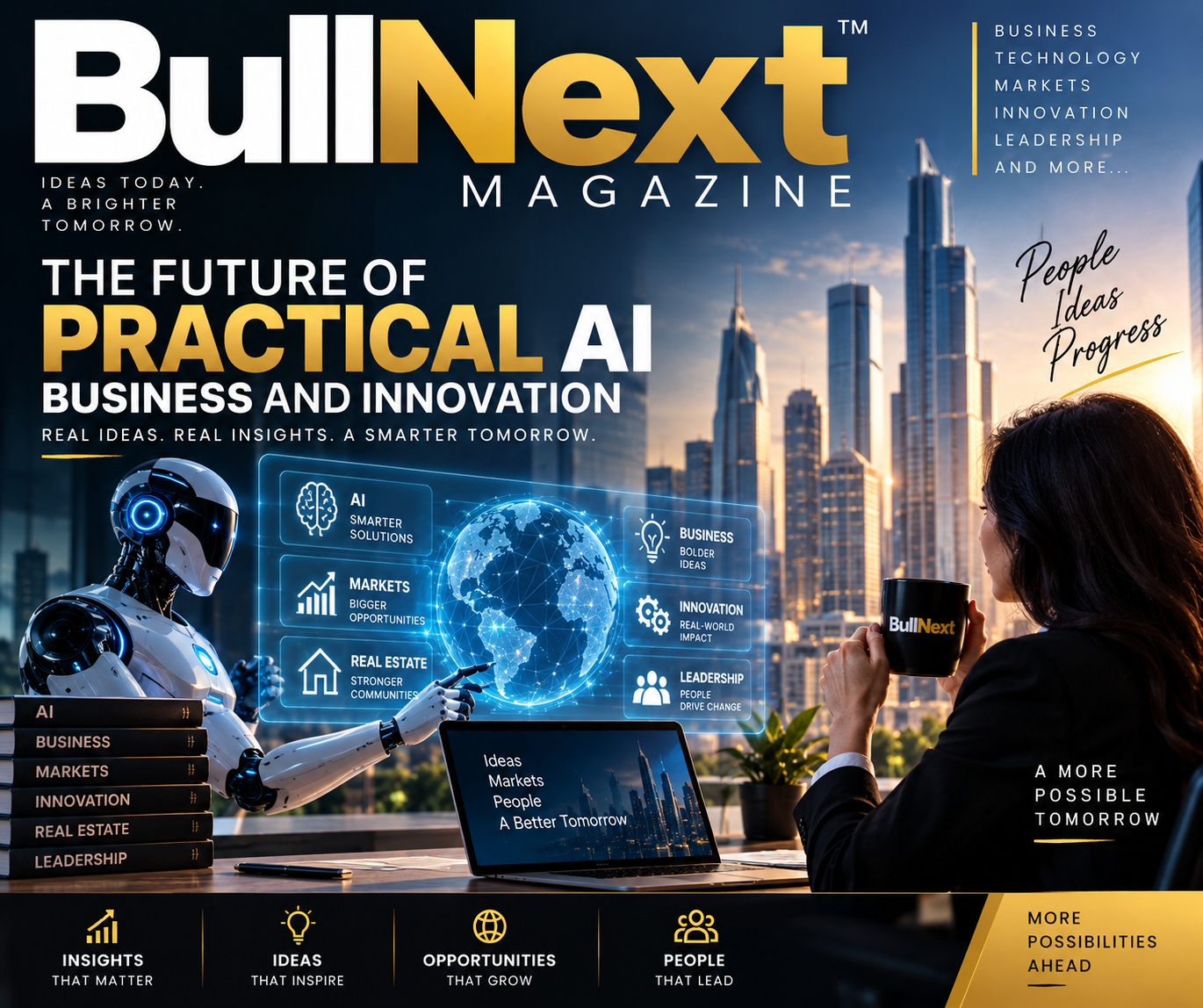

The global business landscape is changing faster than ever.
Technology is transforming industries, consumers are becoming more digital, companies are redesigning their operations, and new economic centers are gaining importance. At the same time, businesses are facing greater pressure to control costs, improve efficiency, understand customers, and respond quickly to change.
In this environment, opportunity is not limited to one industry.
Artificial intelligence, digital infrastructure, advanced manufacturing, financial technology, renewable energy, real estate, logistics, and emerging markets are creating new possibilities for businesses and investors.
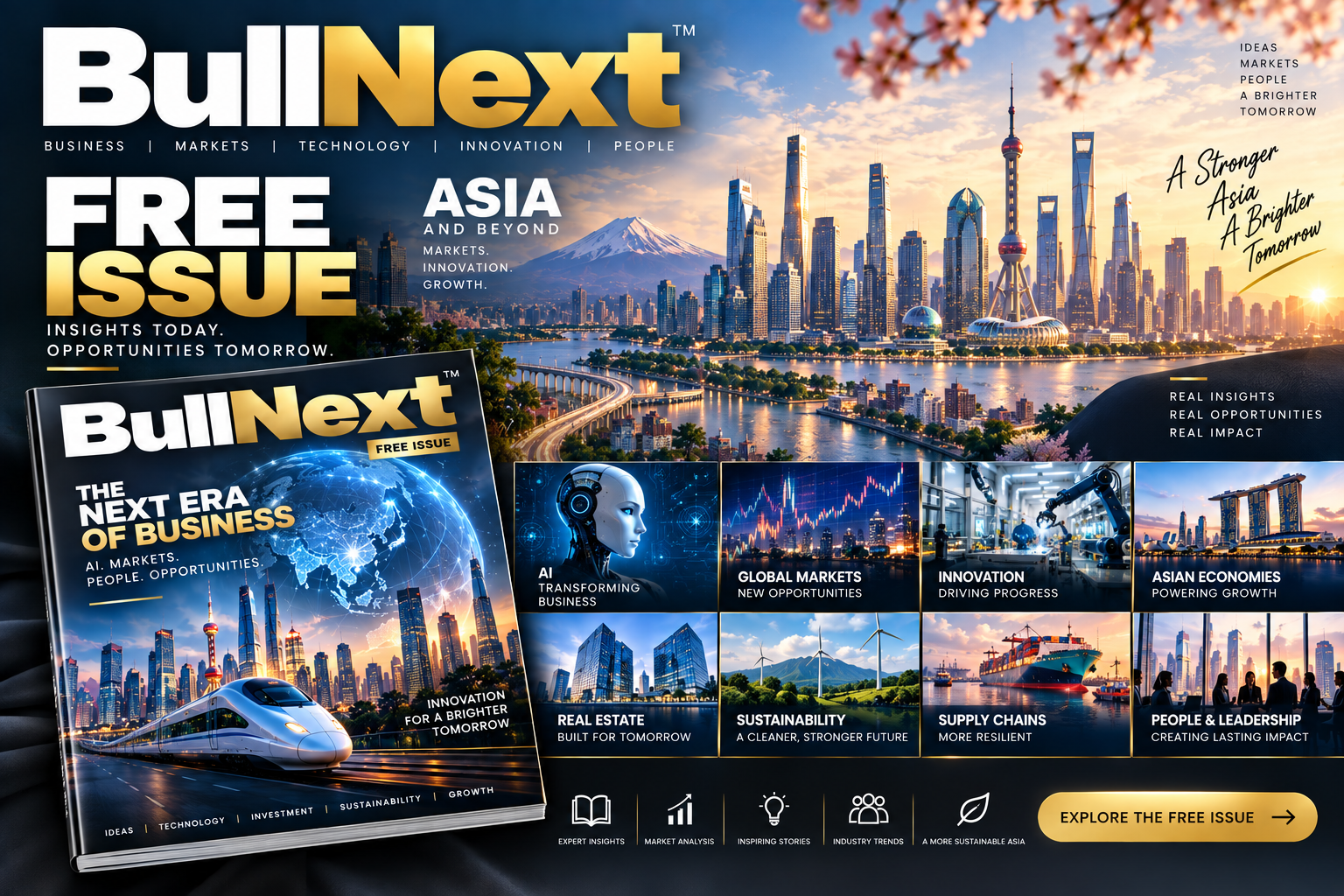
The latest BullNext Free Issue looks beyond individual headlines to explore where the next generation of business opportunities could emerge.
The New Business Advantage
For many years, companies competed primarily through products, pricing, distribution, and brand recognition.
Those factors remain important, but technology has introduced another competitive advantage: speed.
Companies can now collect information faster, communicate with customers instantly, automate repetitive processes, launch digital products quickly, and analyze business performance in real time.
This means organizations that can make decisions and adapt quickly may have an advantage over slower competitors.
The modern business environment rewards companies that can continuously improve.
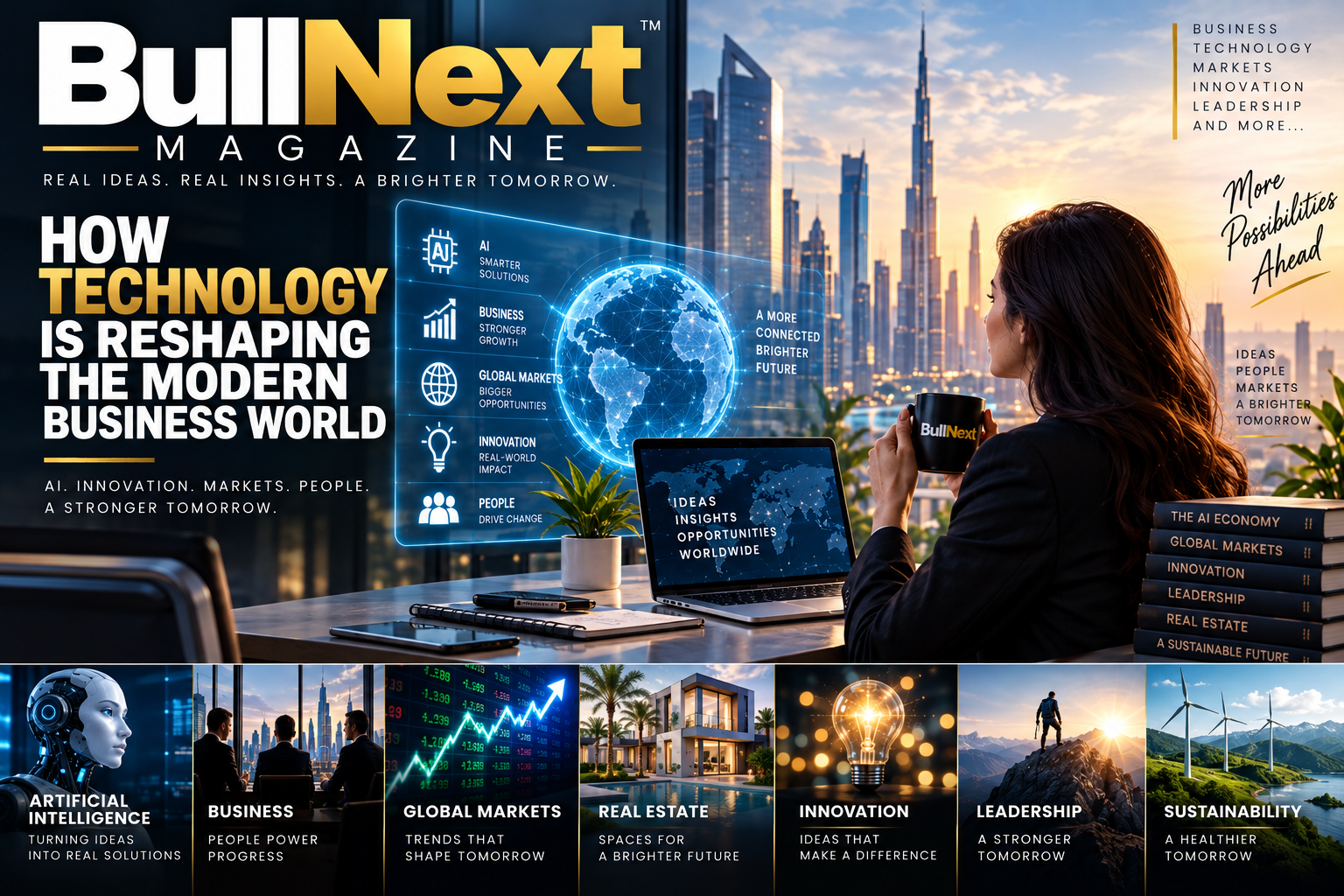
Artificial Intelligence Moves Into the Core of Business
Artificial intelligence is becoming increasingly integrated into everyday business operations.
Companies are exploring AI for customer service, marketing, research, financial analysis, logistics, software development, human resources, and internal administration.
The biggest opportunity may not come from replacing employees.
Instead, businesses can use AI to help employees work more efficiently.
A customer-service representative can use AI to summarize conversations. A financial team can use AI to analyze large datasets. A marketing team can use AI to generate ideas and evaluate campaigns. Managers can use AI-powered systems to identify patterns in business performance.
The result is a new model in which humans and intelligent software work together.
From AI Tools to AI Systems
The next phase of AI adoption could be more sophisticated than simply adding individual AI tools.
Businesses are increasingly interested in connecting AI with their existing systems.
An AI system could potentially access business information, analyze it, recommend an action, and help execute that action through connected software.
For example, a retail company could use AI to identify changing customer demand, recommend inventory adjustments, alert suppliers, and support purchasing decisions.
This creates an opportunity to redesign entire workflows rather than simply automate individual tasks.
Data Becomes a Strategic Asset
Businesses are generating enormous quantities of data.
Sales records, customer interactions, website activity, financial information, logistics data, inventory levels, and operational metrics can all provide valuable insights.
But data alone does not create an advantage.
The real value comes from understanding what the information means and turning it into better decisions.
Companies that organize their data effectively may be better positioned to use AI and advanced analytics.
This makes data infrastructure increasingly important to modern business strategy.
Digital Infrastructure Is the New Foundation
As businesses become more dependent on technology, digital infrastructure is becoming increasingly important.
Cloud computing, telecommunications, data centers, cybersecurity, networking systems, and computing hardware all support the digital economy.
AI is increasing this demand even further.
Advanced AI applications require significant computing power and data storage. Data centers require electricity, cooling systems, connectivity, and suitable locations.
This creates opportunities not only for technology companies but also for construction, energy, telecommunications, engineering, and real estate businesses.
The Next Opportunity May Be Outside Technology
One of the most interesting aspects of the current technology cycle is that its impact extends far beyond software.
AI and digital transformation can influence manufacturing, transportation, healthcare, banking, agriculture, real estate, education, energy, and retail.
A company does not need to be a technology giant to benefit from technology.
A logistics company can use AI to improve routes.
A manufacturer can use automation to improve production.
A property company can use data to understand demand.
A financial institution can use technology to improve risk analysis.
The opportunity is therefore increasingly about applying technology to traditional industries.
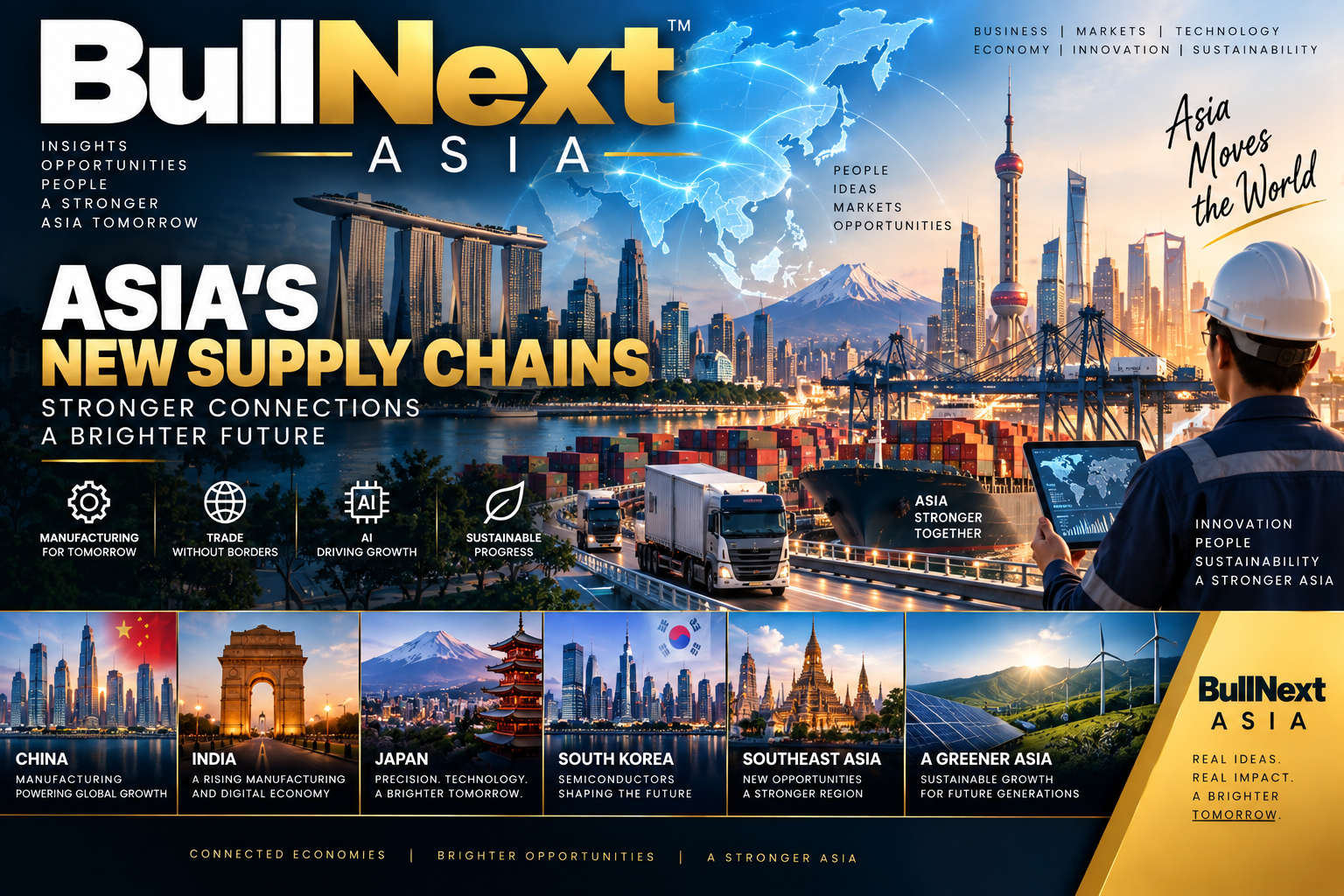
Asia's Expanding Role
Asia remains central to the future of global business.
The region combines large consumer markets with manufacturing capacity, technology expertise, infrastructure development, and rapidly growing digital economies.
China remains a major industrial and technological force.
India continues to expand its digital economy and manufacturing capabilities.
Japan remains important in advanced machinery, robotics, automobiles, and industrial technology.
South Korea plays a major role in semiconductors and electronics.
Southeast Asian economies are becoming increasingly important in manufacturing, logistics, digital services, and consumer markets.
Together, these markets create a diverse economic environment with opportunities across multiple industries.
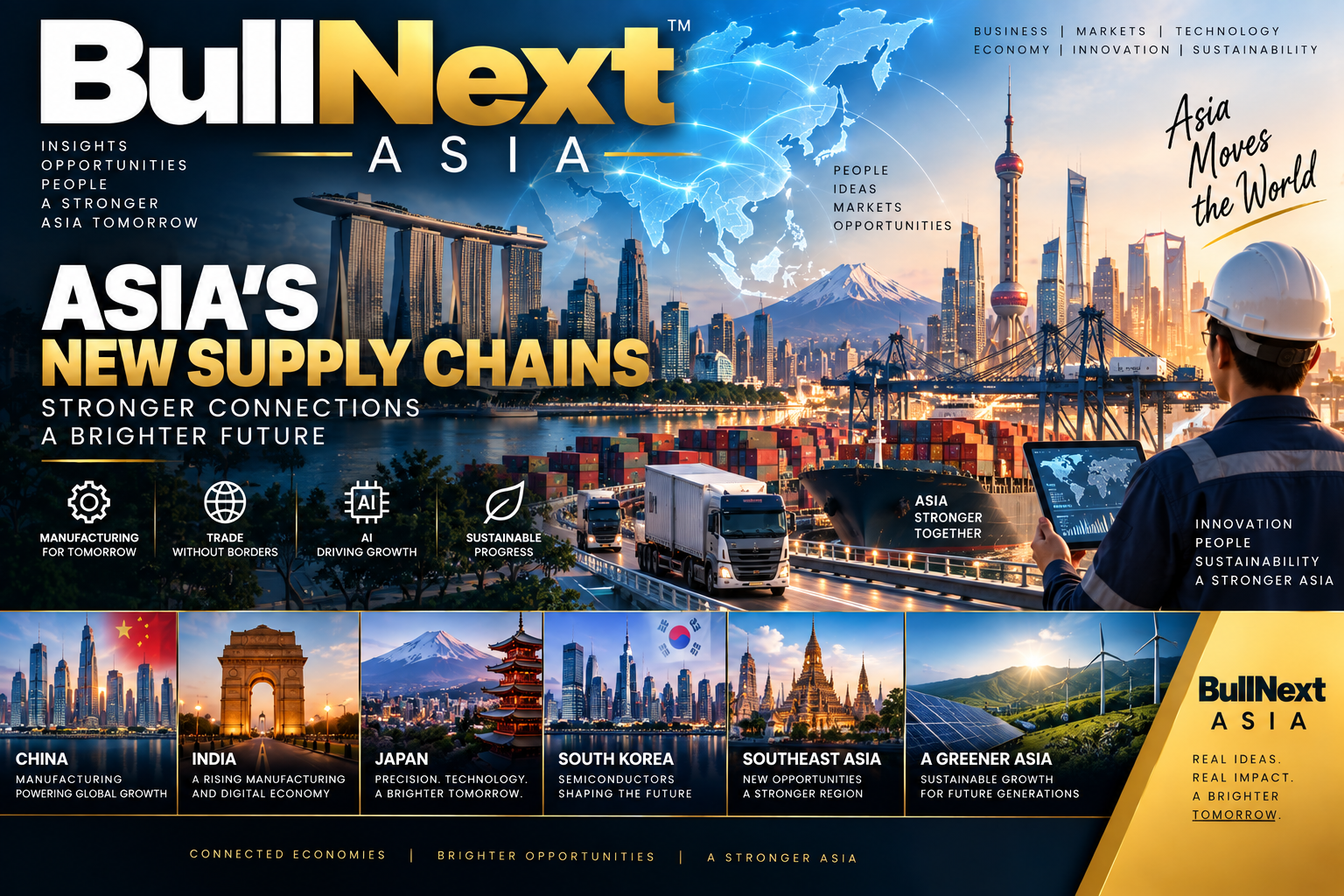
Supply Chains Are Being Redesigned
Global businesses are increasingly focused on resilience.
Companies want supply chains that can continue operating despite disruptions, transportation challenges, changing trade policies, or unexpected events.
This is encouraging businesses to diversify suppliers and production locations.
The trend could benefit emerging manufacturing markets while also increasing investment in ports, warehouses, industrial parks, transportation infrastructure, and logistics technology.
Supply-chain changes therefore create opportunities across much more than manufacturing.
The Growth of Industrial Real Estate
Real estate is also changing alongside the economy.
Traditional offices and residential properties remain important, but industrial and technology-related real estate is becoming increasingly significant.
Warehouses support ecommerce.
Industrial parks support manufacturing.
Data centers support digital businesses.
Logistics facilities support international trade.
Technology campuses support growing companies.
As business infrastructure changes, property demand changes with it.
This creates an increasingly close relationship between economic growth and real estate development.
Energy Becomes More Important
Technology requires energy.
AI data centers, semiconductor facilities, electric vehicles, factories, and digital infrastructure can consume substantial amounts of electricity.
As investment in these industries grows, reliable energy becomes an important economic advantage.
Renewable energy, energy storage, grid modernization, and efficient power systems could therefore become major areas of opportunity.
The transition toward cleaner energy is not only an environmental story.
It is also becoming an infrastructure and business story.
Consumers Are Becoming More Digital
Consumer behavior continues to evolve.
People increasingly use smartphones and digital platforms for shopping, payments, entertainment, banking, travel, and communication.
This creates opportunities for businesses that can provide simple, fast, and personalized experiences.
However, digital consumers are also becoming more demanding.
They expect convenient services, fast communication, secure transactions, reliable delivery, and strong customer support.
Companies that understand these expectations may be better positioned to build long-term customer relationships.
Financial Technology Continues to Expand
Financial technology is another area where digital transformation is creating opportunities.
Digital payments, mobile banking, online investing, financial applications, and automated financial services are changing how consumers and businesses interact with money.
The opportunity extends beyond traditional financial institutions.
Technology companies, payment platforms, cybersecurity providers, and data companies can all play roles in the evolving financial ecosystem.
At the same time, regulation and security remain critical considerations.
Sustainability Becomes a Business Strategy
Sustainability is increasingly becoming part of corporate strategy.
Businesses are looking for ways to reduce energy consumption, improve resource efficiency, manage waste, and develop more sustainable products.
Technology can support these efforts.
Smart buildings can reduce energy consumption.
AI can improve resource planning.
Advanced manufacturing can reduce waste.
Renewable energy can reduce dependence on traditional power sources.
Companies that combine efficiency with sustainability may discover new ways to reduce costs while responding to changing consumer and regulatory expectations.
Leadership in the New Economy
Technology can provide powerful tools, but people remain at the center of business.
Leaders need to decide which technologies are useful, where investment should be directed, and how employees should adapt.
Strong leadership increasingly requires a combination of business knowledge, technology awareness, communication, and strategic thinking.
The best leaders may not necessarily be technology experts.
Instead, they may be the people who understand how technology can solve real business problems.
What Businesses Should Watch
Several trends could have a significant influence on the next phase of global business:
AI-powered automation
AI agents and intelligent workflows
Semiconductor investment
Data-center expansion
Digital payments
Supply-chain diversification
Advanced manufacturing
Industrial real estate
Renewable energy
Asian consumer growth
Cybersecurity
Digital infrastructure
These trends are interconnected.
Investment in AI increases demand for chips and data centers. Data centers increase demand for electricity and infrastructure. Manufacturing investment increases demand for logistics and industrial property.
Understanding these connections can provide a clearer view of where economic opportunities are developing.
The Importance of Adaptability
No business can predict the future perfectly.
Technology can develop faster than expected. Consumer preferences can change. Economic conditions can shift. New competitors can emerge.
Adaptability is therefore becoming one of the most valuable business capabilities.
Companies should be prepared to experiment, learn, adjust, and improve.
The goal is not to predict every change.
It is to build an organization capable of responding when change arrives.
What Could Define the Next Business Cycle?
The next business cycle could be shaped by several major forces working together.
AI could improve productivity.
Digital infrastructure could support new industries.
Asia could continue contributing to global economic growth.
Supply-chain diversification could create new manufacturing hubs.
Renewable energy could support expanding industrial demand.
Real estate could evolve around technology and logistics.
And consumers could continue moving toward increasingly digital experiences.
The companies that benefit may be those that connect these trends rather than treating them as separate developments.
BullNext's Perspective
The purpose of the BullNext Free Issue is to give readers a broader view of the forces changing business.
Markets cannot be understood without considering technology.
Technology cannot be understood without considering infrastructure.
Infrastructure cannot be separated from energy and real estate.
And businesses cannot succeed without understanding customers and people.
These connections are becoming increasingly important.
Rather than focusing only on individual trends, businesses and investors can benefit from understanding how different developments influence one another.
Final Thoughts
The next generation of business opportunities will likely emerge from the intersection of technology, markets, infrastructure, people, and innovation.
Artificial intelligence is opening new possibilities, but its greatest impact may come when it is applied to traditional industries.
Asia is becoming increasingly important to global growth.
Digital infrastructure is becoming a fundamental part of the economy.
Real estate is adapting to new forms of demand.
Energy is becoming a strategic consideration.
And businesses are learning that adaptability can be just as important as scale.
The future will not be defined by one technology or one market.
It will be shaped by how businesses connect multiple opportunities and turn them into practical value.
That is the focus of the BullNext Free Issue — understanding the trends today that could create the business opportunities of tomorrow.
Frequently Asked Questions
What is the BullNext Free Issue?
The BullNext Free Issue provides a broad look at important business, technology, market, innovation, and economic trends shaping the future.
What are the biggest business opportunities today?
AI, digital infrastructure, advanced manufacturing, fintech, renewable energy, logistics, real estate, and emerging markets are among the areas creating new opportunities.
Why is AI important for businesses?
AI can help businesses automate processes, analyze information, improve productivity, support employees, and create better customer experiences.
Why is Asia important to global business?
Asia combines major manufacturing capabilities, large consumer markets, technology industries, growing digital economies, and significant infrastructure investment.
How is technology affecting real estate?
Technology is creating demand for data centers, warehouses, logistics facilities, industrial properties, and specialized infrastructure.
What should businesses focus on for the future?
Businesses should focus on adaptability, practical technology adoption, customer experience, efficient operations, strong leadership, cybersecurity, and understanding emerging markets.