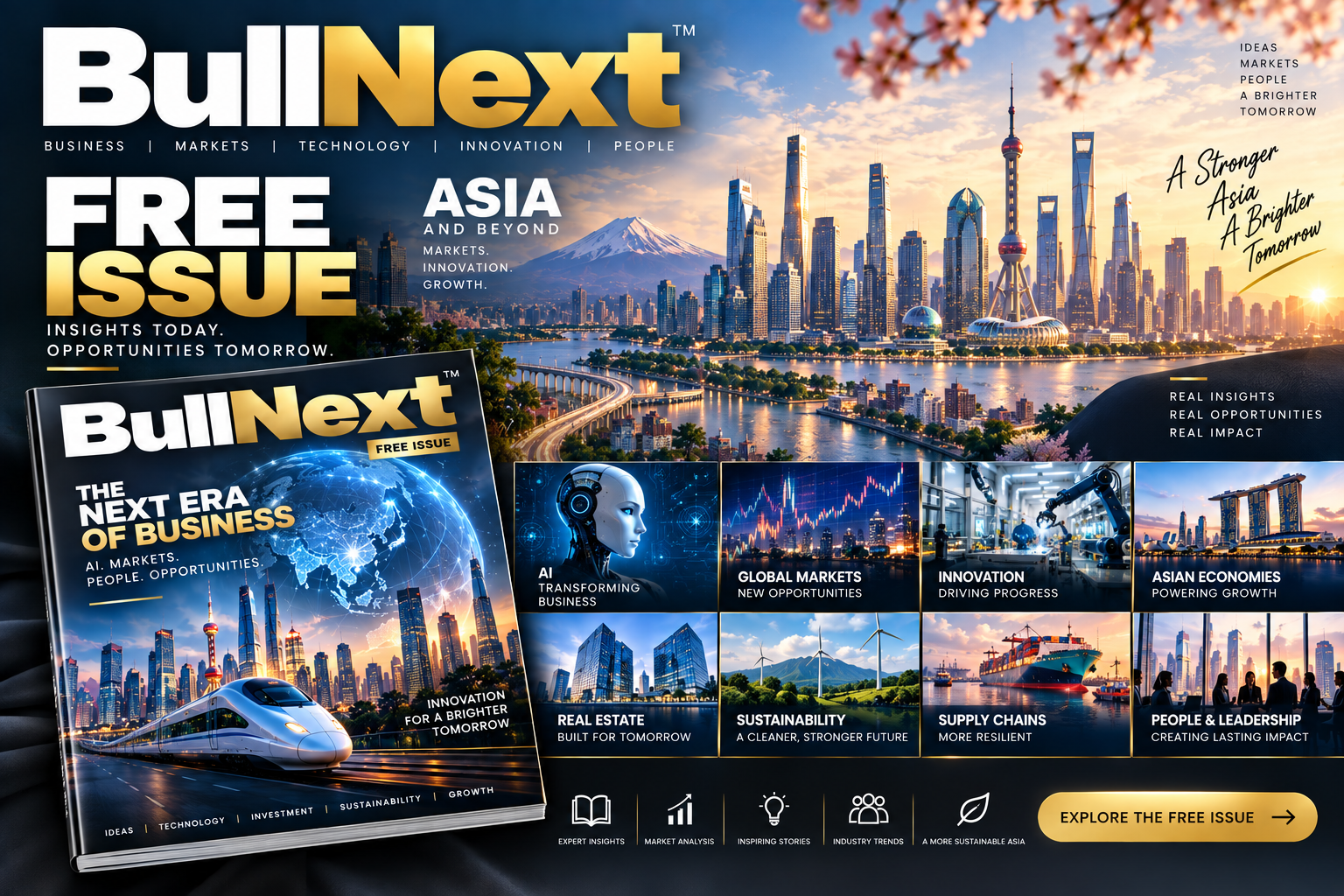
The business world is entering a period of rapid transformation.
Artificial intelligence is changing how companies work. Digital platforms are reshaping consumer behavior. Global supply chains are becoming more flexible. Asian economies are gaining influence, while new technologies are creating opportunities across industries that once seemed unrelated.
For businesses, investors, entrepreneurs, and professionals, the challenge is no longer simply keeping up with change.
The bigger challenge is identifying where the next opportunities are emerging.
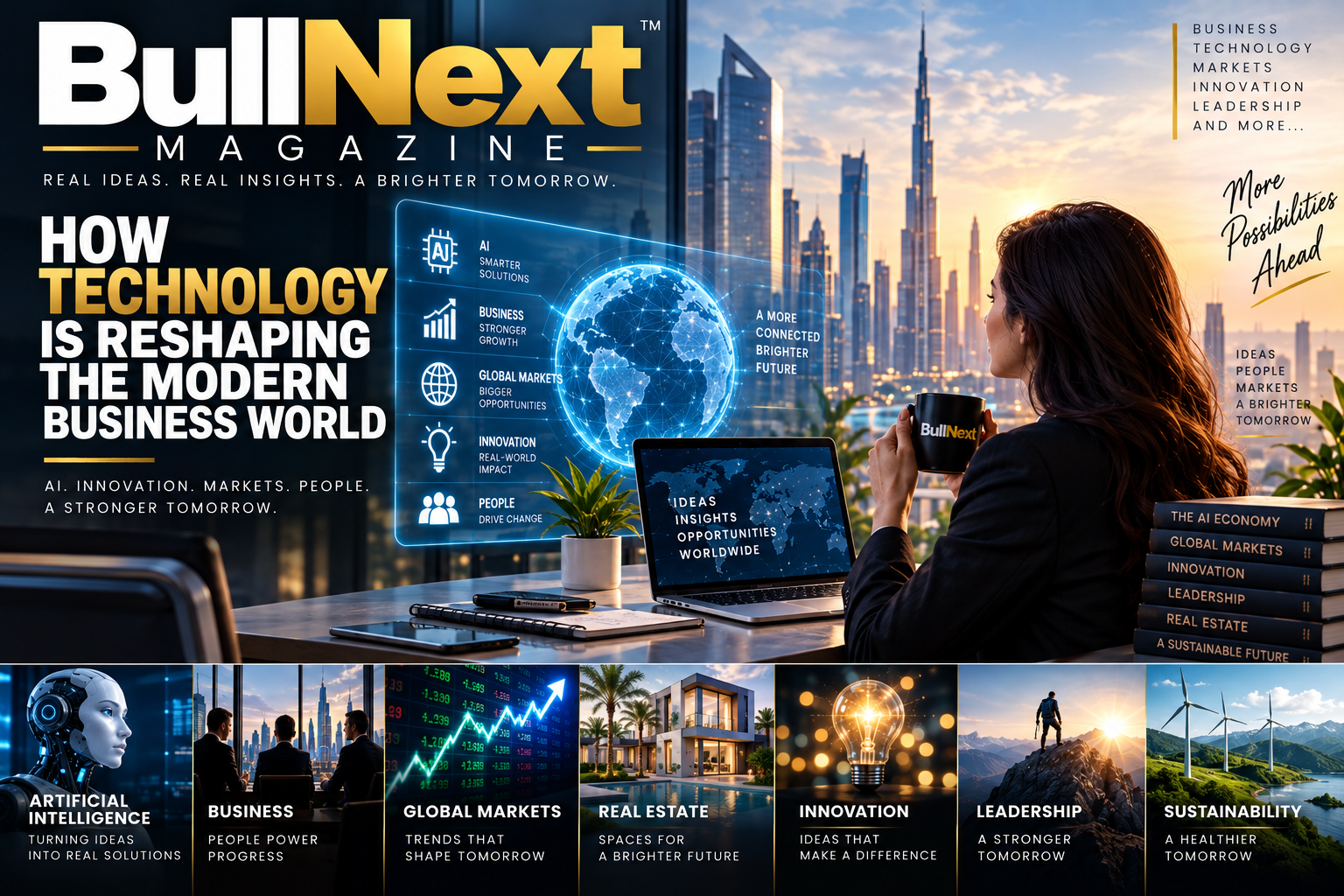
The BullNext Free Issue brings together some of the most important forces shaping the modern business environment — from artificial intelligence and global markets to innovation, leadership, Asia, real estate, and the future of digital business.
AI Is Becoming Part of Everyday Business
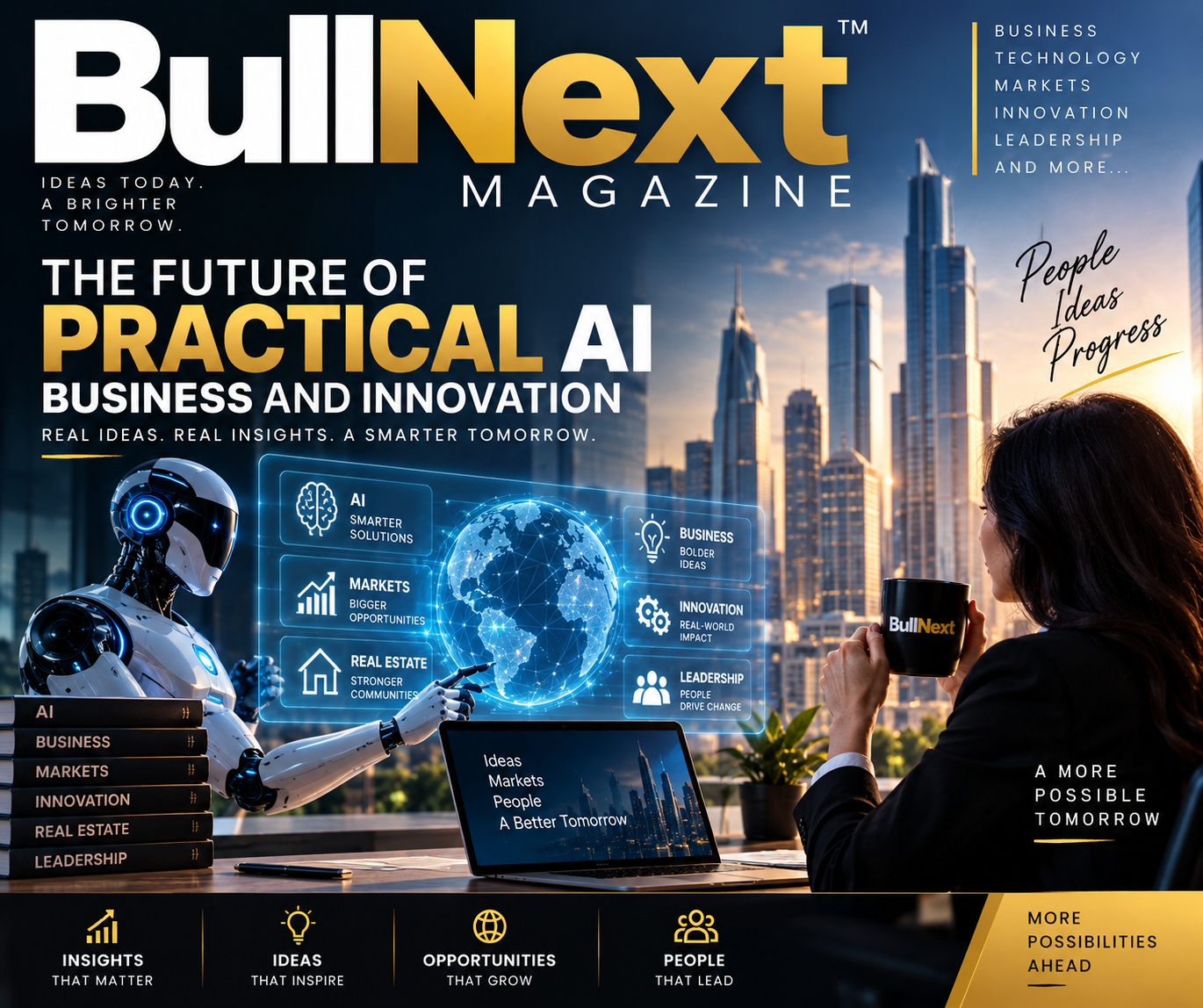
Artificial intelligence has moved beyond experimentation.
Companies are increasingly looking at AI as a practical business tool that can improve productivity, automate repetitive processes, analyze information, support employees, and improve customer experiences.
AI can assist businesses with tasks such as:
Customer support
Marketing
Data analysis
Financial forecasting
Content production
Sales operations
Document processing
Workflow automation
Research and reporting
The important development is that businesses are becoming more focused on using AI to solve specific problems rather than adopting technology simply because it is new.
This shift toward practical AI could become one of the defining business trends of the coming years.
The Rise of AI-Powered Workflows
The next stage of business automation could involve systems that connect multiple tasks together.
Instead of using separate software for every individual activity, companies can increasingly connect data, applications, employees, and AI systems into broader workflows.
For example, an AI-powered workflow could receive a customer request, analyze the information, prepare a response, update a database, notify a team member, and create a follow-up task.
This creates a new opportunity for businesses to rethink how work gets done.
The question becomes:
Which processes should remain manual, and which can be intelligently automated?
AI Agents Could Change Business Operations
AI agents represent another important development.
Unlike traditional software that generally waits for direct instructions, AI agents can be designed to complete multiple steps toward a specific objective.
Businesses could potentially use agents for research, customer service, sales support, operations, scheduling, data analysis, and internal administration.
However, successful implementation will require more than powerful models.
Companies will also need:
Reliable data
Clear processes
Security
Human oversight
Performance monitoring
Strong governance
The future of AI may therefore depend as much on responsible implementation as on technological capability.
Global Markets Are Entering a New Environment
Technology is only one part of the changing business landscape.
Global markets continue to respond to interest rates, inflation, corporate earnings, energy prices, currencies, trade conditions, and geopolitical developments.
For investors, this creates both opportunities and uncertainty.
Different sectors can react differently to the same economic event.
Technology companies may benefit from increasing AI investment, while energy-intensive industries may face higher operating costs. Consumer companies may benefit from rising demand, while businesses exposed to weaker economies could face pressure.
Understanding these connections is becoming increasingly important.
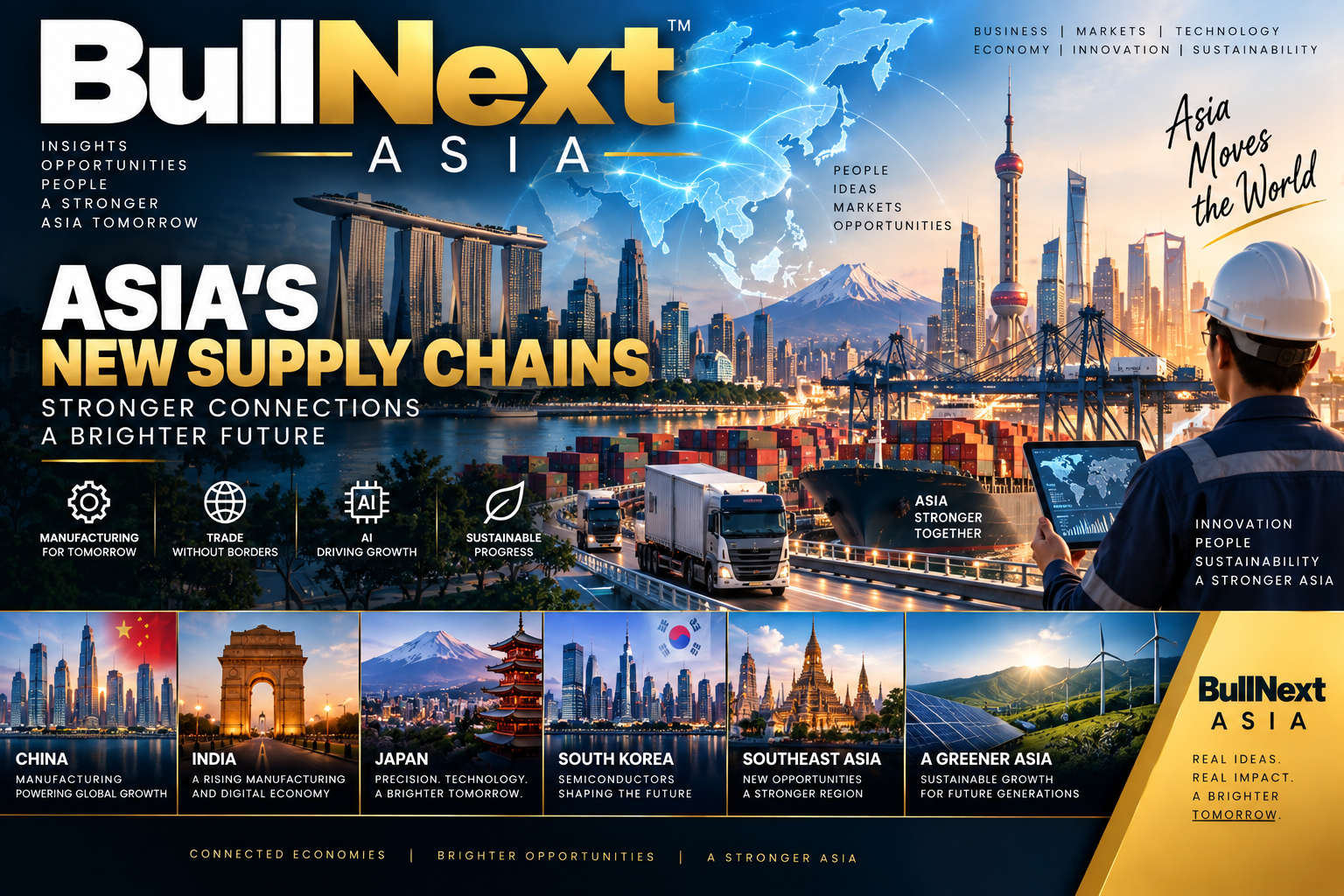
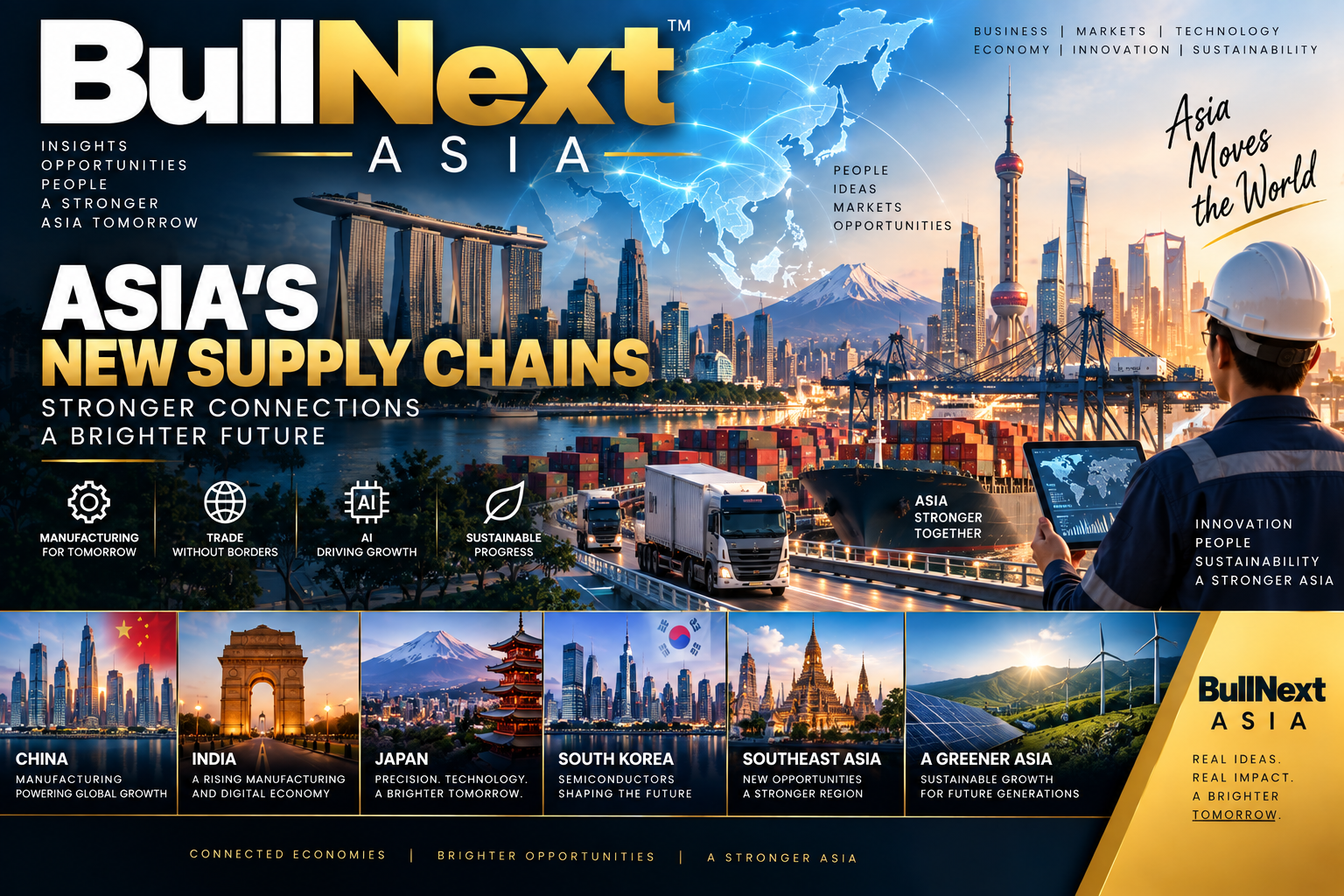
Asia's Growing Economic Influence
Asia remains one of the most important regions for the future of global business.
China continues to play a major role in manufacturing and technology.
India is expanding its digital economy and strengthening its position in global services and manufacturing.
Japan remains important in robotics, advanced manufacturing, automobiles, and industrial technology.
South Korea has major influence in semiconductors, electronics, and advanced technology.
Meanwhile, Southeast Asian economies are attracting attention for manufacturing, logistics, digital services, infrastructure, and consumer growth.
The result is a more diversified Asian economy with multiple sources of growth.
The New Global Supply Chain
Businesses are also rethinking how products move around the world.
Companies increasingly want supply chains that are not only efficient but also resilient.
This is encouraging businesses to consider multiple manufacturing locations, suppliers, transportation routes, and logistics hubs.
For emerging Asian economies, this can create significant opportunities.
Manufacturing investment can lead to additional demand for industrial property, transportation, energy, telecommunications, warehouses, and skilled workers.
The supply chain is therefore becoming more than a logistics issue.
It is becoming an important part of economic strategy.
Innovation Is Becoming a Competitive Advantage
Innovation does not always mean inventing a completely new technology.
Sometimes the biggest improvements come from changing how an existing business operates.
A company can innovate by:
Improving customer service
Simplifying payments
Automating administrative work
Redesigning products
Using data more effectively
Creating new business models
Improving logistics
Developing more sustainable operations
Small improvements across multiple areas can create significant advantages over time.
Businesses that consistently improve may be better positioned to compete in rapidly changing markets.
The Digital Consumer
Consumer behavior is changing alongside technology.
People increasingly use smartphones and digital platforms for shopping, banking, entertainment, communication, travel, education, and financial services.
This creates opportunities for companies that can deliver convenient and personalized experiences.
But digital consumers also have higher expectations.
They want faster responses, simpler interfaces, secure payments, reliable delivery, and services that understand their needs.
Companies that fail to adapt may find it increasingly difficult to retain customers.
Real Estate Is Being Reshaped by Technology
Technology is also changing the property sector.
Traditional residential and commercial real estate remains important, but new demand is emerging around technology-driven infrastructure.
Data centers, logistics facilities, industrial properties, warehouses, and technology campuses are becoming increasingly important as digital businesses expand.
AI itself may influence real estate demand.
Data centers require specialized locations, power infrastructure, cooling systems, and connectivity.
Ecommerce requires distribution centers.
Manufacturing requires modern industrial facilities.
This means real estate and technology are becoming increasingly connected.
Energy and the Next Industrial Economy
The expansion of AI, manufacturing, electric vehicles, data centers, and digital infrastructure is increasing the importance of energy.
Businesses need reliable electricity to operate.
Technology-intensive industries can require particularly large amounts of power.
This is creating new opportunities around renewable energy, energy storage, electricity infrastructure, efficiency, and other technologies.
The future industrial economy will not only depend on computing power.
It will also depend on the ability to provide the energy required to operate that computing infrastructure.
Leadership in a Changing Business World
Technology can create opportunities, but leadership determines how organizations use them.
Modern leaders increasingly need to understand technology while maintaining strong human skills.
Strategic thinking, communication, creativity, decision-making, and adaptability remain essential.
Leaders also need to understand when automation is appropriate and when human judgment should remain central.
The strongest organizations may be those that combine technological efficiency with human intelligence.
The Importance of Adaptability
One of the biggest lessons from today's business environment is the importance of adaptability.
Markets can change quickly.
Technology can develop faster than expected.
Consumer preferences can shift.
New competitors can appear from unexpected industries.
Companies that depend entirely on one product, one market, or one business model may face greater risks when conditions change.
Diversification, experimentation, continuous learning, and flexible decision-making can help organizations respond more effectively.
Where Could the Next Opportunities Come From?
Several areas deserve attention as businesses look toward the future.
Artificial Intelligence
AI could continue expanding into almost every major business function.
Digital Infrastructure
Cloud computing, data centers, telecommunications, and cybersecurity will remain important as digital activity increases.
Advanced Manufacturing
Automation, robotics, semiconductors, and smart factories could reshape industrial production.
Asian Markets
Growing consumer markets, manufacturing capabilities, technology industries, and infrastructure development could create opportunities across the region.
Sustainable Technology
Renewable energy, energy storage, electric transportation, and efficiency technologies could become increasingly important.
Real Estate
Industrial, logistics, residential, commercial, and technology-related properties could benefit from changing economic patterns.
Risks Businesses Should Not Ignore
Opportunities always come with risks.
AI adoption can create cybersecurity and privacy challenges.
Global markets can experience significant volatility.
Geopolitical tensions can disrupt supply chains.
Rapid technological development can make existing products less competitive.
And businesses that invest heavily in new technology without a clear business purpose may struggle to generate meaningful returns.
The goal should not be to chase every trend.
The goal should be to understand which trends create genuine value.
What the Future of Business Could Look Like
The future business environment is likely to be increasingly connected.
AI will interact with software.
Software will interact with data.
Data will influence decisions.
Digital platforms will connect businesses with customers.
Global supply chains will connect manufacturers and markets.
And technology will increasingly connect physical infrastructure with digital systems.
This could create a business environment where speed and adaptability become major competitive advantages.
Companies that can identify change early and respond effectively may have an opportunity to build stronger positions in their markets.
BullNext's Perspective
The purpose of BullNext is not simply to follow individual headlines.
The bigger opportunity is to understand the forces behind those headlines.
Why is AI attracting so much investment?
Why are companies redesigning supply chains?
Why are Asian markets becoming increasingly important?
Why is digital infrastructure becoming a strategic asset?
Why is technology changing real estate?
Why are businesses investing in automation?
These questions are connected.
Understanding those connections can help readers develop a clearer view of the modern business environment.
Final Thoughts
The next era of business will be shaped by a combination of technology, markets, innovation, people, and global economic change.
Artificial intelligence may transform how work is performed.
Digital infrastructure may become as important as traditional infrastructure.
Asia may continue to influence global growth.
Supply chains may become more diversified.
Real estate may increasingly reflect the needs of digital industries.
And leadership may become more important as organizations navigate increasingly complex environments.
The biggest opportunities may not belong to the companies that simply adopt the newest technology.
They may belong to the companies that understand how to turn technology and change into practical value.
That is the central idea behind the BullNext Free Issue: understanding today's biggest developments so businesses, investors, and professionals can better prepare for what comes next.
Frequently Asked Questions
What is the BullNext Free Issue?
The BullNext Free Issue is a broad overview of major business, technology, market, innovation, and economic trends covered by BullNext.
Why is AI important for businesses?
AI can help businesses automate processes, analyze data, improve customer experiences, support employees, and increase operational efficiency.
What role will Asia play in future growth?
Asia is expected to remain important because of its manufacturing capabilities, technology industries, large consumer markets, digital economies, and growing infrastructure.
How are supply chains changing?
Companies are increasingly looking for more flexible and diversified supply chains to improve resilience and reduce dependence on individual markets or suppliers.
Is technology changing real estate?
Yes. Growth in ecommerce, manufacturing, cloud computing, AI, logistics, and data centers is creating new forms of demand for commercial and industrial property.
What should businesses focus on next?
Businesses should focus on practical AI adoption, digital infrastructure, customer experience, cybersecurity, innovation, operational efficiency, and the ability to adapt to changing markets.