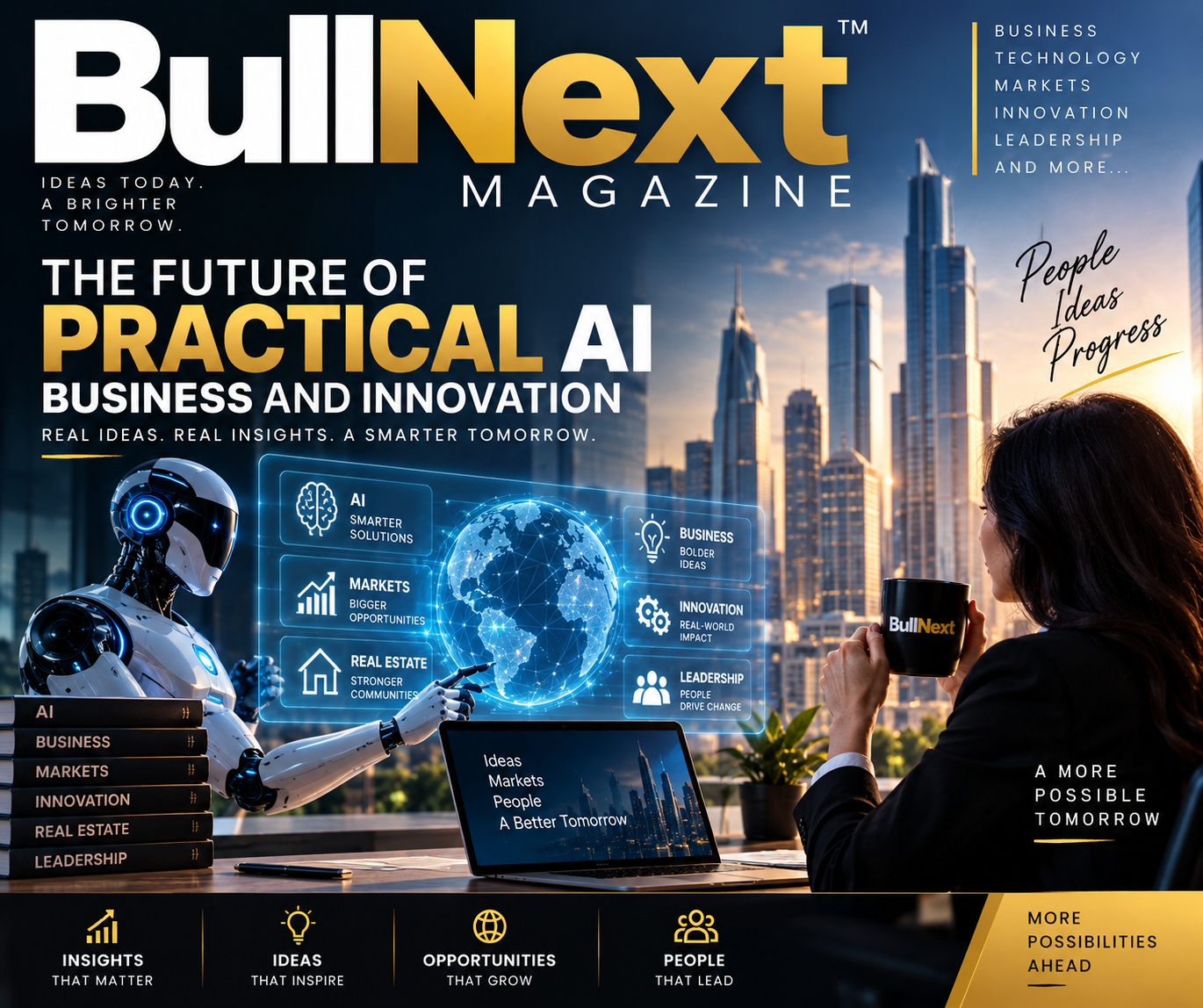

Technology is no longer something businesses simply use to support their operations. It has become one of the forces actively shaping how companies are built, how employees work, how customers interact with brands, and how markets evolve.
Artificial intelligence, automation, cloud computing, data analytics, digital platforms, and connected systems are changing the traditional business model. At the same time, economic shifts and changing consumer expectations are forcing organizations to become more flexible and responsive.
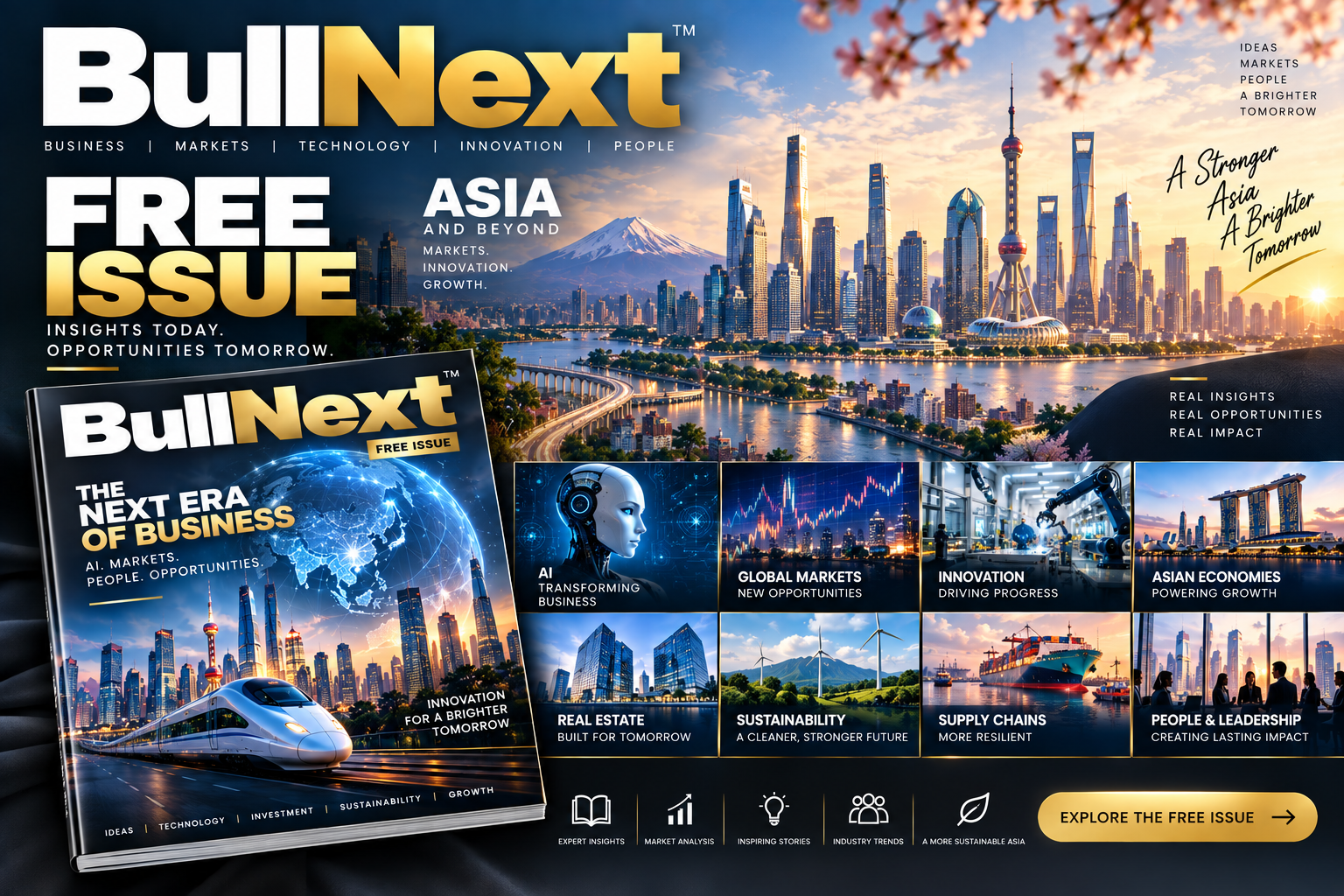
BullNext Magazine explores these developments and the wider trends influencing the future of business, technology, markets, innovation, and leadership.
The Business World Is Changing Faster
Businesses have always evolved, but the speed of change has increased significantly.
A company launching today can potentially reach customers around the world through digital platforms. A small team can use cloud software and AI tools to perform tasks that once required large departments. Consumers can compare products, prices, reviews, and services almost instantly.
This creates opportunities, but it also creates competition.
Businesses can no longer depend solely on established processes. They need to understand how technology is changing customer behavior and how competitors are using new tools to improve efficiency.
The ability to adapt has therefore become an important business advantage.
Artificial Intelligence Moves Into the Mainstream
Artificial intelligence has become one of the most influential technologies in modern business.
Early discussions about AI often focused on chatbots, image generation, and futuristic possibilities. Today, companies are increasingly interested in using AI to perform practical work.
Businesses can explore AI for:
Customer support
Data analysis
Workflow automation
Document processing
Marketing
Forecasting
Research
Sales operations
Financial analysis
Product development
The shift is from simply experimenting with AI toward integrating it into everyday operations.
BullNext's current AI coverage reflects this transition, including discussions around AI agents, decision intelligence, AI observability, and practical business automation.
AI Agents and the Next Generation of Automation
One of the most interesting developments in AI is the rise of AI agents.
Traditional software generally performs a specific function when instructed by a user. AI agents can potentially work through multiple steps to achieve a defined objective.
A business workflow could involve:
Receive information → Analyze it → Make a decision → Take action → Report the result
For example, an AI system could receive a customer request, analyze the information, search a database, prepare a response, update a business platform, and escalate unusual cases to a human employee.
This could significantly change how organizations structure repetitive work.
However, automation does not mean that humans become unnecessary.
The most effective systems may combine automated processing with human oversight, especially when decisions involve sensitive information, financial risk, legal requirements, or complex situations.
From Automation to Intelligent Workflows
Automation traditionally followed predefined rules.
AI introduces the possibility of more flexible workflows.
A traditional automated process might say:
If A happens, do B.
An AI-supported workflow may be capable of analyzing information and determining which action is most appropriate within defined boundaries.
This creates opportunities for businesses to automate processes that were previously difficult to structure.
For example, an organization could use AI to classify incoming documents, identify unusual cases, summarize information, and direct different requests to the appropriate departments.
The technology becomes especially valuable when businesses deal with large amounts of information every day.
Data Is Becoming More Valuable
Every modern business generates data.
Customers create data when they browse websites, purchase products, contact support teams, or interact with digital services.
Businesses also generate information through sales systems, financial platforms, inventory management, employee systems, logistics networks, and marketing campaigns.
The challenge is no longer simply collecting information.
It is understanding what that information means.
Data analytics and AI can help organizations identify patterns, monitor performance, discover inefficiencies, and evaluate potential opportunities.
A company that understands its data can potentially make decisions faster and with greater context.
Decision Intelligence
Business intelligence has traditionally helped companies understand what happened.
Decision intelligence aims to go further by helping organizations evaluate what could happen next.
For example, businesses can examine:
Changing customer demand
Pricing trends
Operating costs
Inventory levels
Sales performance
Market conditions
Customer behavior
AI can process large amounts of information and identify patterns that may be difficult to detect manually.
However, technology should support decision-making rather than eliminate responsibility.
Business leaders still need to evaluate risks, consider information that may not exist in the dataset, and make the final strategic decisions.
The Changing Customer
Technology has also transformed customer expectations.
Customers increasingly expect speed, convenience, personalization, and accessibility.
They may expect a company to respond quickly to a question, provide accurate information, remember preferences, and offer a seamless experience across different channels.
AI can help companies respond to these expectations.
Automated support systems can handle simple questions. Recommendation systems can personalize products and content. Data analysis can help businesses understand customer behavior.
But there is an important balance.
Customers may appreciate automation for simple tasks while preferring human interaction when a problem is complicated or emotionally sensitive.
The future customer experience may therefore combine technology with human connection rather than choosing one over the other.
Innovation Is Changing Business Models
Innovation is not limited to creating new technology.
Businesses can innovate by changing how they deliver products and services.
Subscription models, digital marketplaces, online platforms, direct-to-consumer businesses, remote services, and automated operations have all changed traditional industries.
A company can create innovation by improving an existing process rather than inventing something entirely new.
For example, reducing the number of steps required to complete a purchase can improve customer experience.
Automating an internal approval process can save employees time.
Using data to optimize inventory can reduce waste.
Small improvements can create significant results when they are repeated across thousands of transactions.
Technology and Global Markets
Technology is increasingly connected to global financial markets.
The growth of AI is creating demand for computing infrastructure, semiconductors, data centers, cloud services, networking equipment, and energy.
This has created opportunities for companies across the technology supply chain.
At the same time, investors continue to monitor interest rates, inflation, currencies, energy prices, corporate earnings, and economic growth.
The relationship between technology and markets therefore deserves attention.
A major technology trend can influence investment flows, corporate spending, employment, and even infrastructure development.
The Growing Importance of Asia
Asia remains an important part of the global economic landscape.
The region includes major manufacturing centers, technology companies, financial markets, consumer populations, and emerging economies.
Countries across the region play different roles.
China remains a major manufacturing and technology market.
India has become increasingly important in technology, digital services, manufacturing, and consumer growth.
Japan and South Korea remain important in advanced manufacturing, electronics, automotive industries, and technology.
Southeast Asia continues to develop its digital economy, manufacturing capabilities, ecommerce sector, and regional supply chains.
For global businesses and investors, understanding these markets can help identify broader economic trends.
Leadership in a Technology-Driven Economy
Technology can provide powerful tools, but leadership remains essential.
Modern leaders must increasingly understand technology while continuing to focus on people and strategy.
They need to ask:
Where can technology create value?
What risks does it introduce?
How should employees work with it?
What should remain under human control?
How should success be measured?
These questions require more than technical knowledge.
They require judgment.
The leaders who successfully combine technology with human decision-making may be better positioned to navigate a rapidly changing business environment.
The Human Side of AI
The conversation around AI often focuses on productivity.
But productivity is only one part of the story.
Employees also need to learn how to work with new technologies.
AI may change job responsibilities rather than simply eliminate them.
A marketing professional may use AI for research and content analysis.
A financial professional may use AI to process information.
A customer-service employee may use AI to summarize customer history before handling a complicated request.
A manager may use AI to analyze performance data.
The technology becomes an assistant that expands what people can accomplish.
This makes education and continuous learning increasingly important.
Cybersecurity and Trust
As businesses become more digital, cybersecurity becomes increasingly important.
More automated systems mean more connections between software platforms, data sources, employees, and customers.
Businesses therefore need to consider:
Data protection
Access controls
Security monitoring
AI reliability
Privacy
Compliance
Human oversight
Trust is especially important when AI systems interact with customers or make decisions.
Businesses need to understand how their systems work and establish appropriate controls around them.
Sustainability and Technology
Technology is also influencing how businesses approach sustainability.
Smart systems can monitor energy consumption.
Data analytics can identify inefficient processes.
Connected buildings can adjust lighting and climate systems according to occupancy.
AI can potentially help companies optimize logistics, inventory, and resource allocation.
Sustainability therefore increasingly overlaps with technology and operational efficiency.
The objective is not only environmental responsibility. Efficient resource use can also reduce operating costs.
The Future of Work
The workplace of the future is likely to be more connected and technology-driven.
Employees may work with AI assistants, automated workflows, cloud platforms, collaborative software, and real-time analytics.
Some routine responsibilities may disappear.
New responsibilities will emerge.
The most valuable skills may increasingly include:
Critical thinking
Creativity
Communication
Problem-solving
Adaptability
Technology literacy
Strategic decision-making
Technology can automate certain tasks, but businesses will continue to need people who can understand problems, communicate effectively, and make responsible decisions.
What Businesses Should Do Now
Businesses do not need to adopt every new technology.
Instead, they should identify where technology can create meaningful value.
A practical approach can begin with four questions:
What is the biggest operational problem?
How much time or money does it consume?
Can technology realistically improve the process?
How will the result be measured?
This approach prevents businesses from adopting technology simply because it is fashionable.
The objective should always be measurable improvement.
What the Future Could Bring
The next phase of business technology may involve deeper integration between different systems.
AI agents could communicate with enterprise software.
Decision-intelligence platforms could support executives.
Smart buildings could automatically optimize operations.
Digital platforms could connect businesses with global customers.
Automated systems could handle increasingly complex workflows.
At the same time, businesses will face new challenges involving cybersecurity, privacy, regulation, workforce transformation, and responsible AI.
The future will therefore require both innovation and caution.
BullNext Magazine's Broader Perspective
BullNext's current publication covers a wide range of subjects, including Markets, Tech & AI, Innovation, Leadership, Business, Asian Markets, Real Estate, Money & Markets, Health, and Travel.
This broad approach is valuable because modern developments rarely exist independently.
AI affects business.
Business affects markets.
Markets influence investment.
Innovation changes consumer expectations.
Leadership determines how organizations respond.
Global economic conditions influence all of these areas.
Understanding these connections can provide a clearer picture of where the world is heading.
Frequently Asked Questions
What is BullNext Magazine?
BullNext Magazine is a publication covering business, technology, artificial intelligence, markets, innovation, leadership, real estate, and other subjects connected to the modern economy.
What is the main focus of BullNext Magazine?
Its coverage focuses on major trends affecting businesses, investors, technology professionals, entrepreneurs, and modern consumers, including AI, markets, innovation, and economic change.
How is AI changing businesses?
AI is helping businesses automate repetitive work, analyze information, support customers, improve workflows, and assist with decision-making.
What are AI agents?
AI agents are systems that can potentially perform multiple steps within a workflow, such as analyzing information, using software tools, completing tasks, and reporting results.
Why is business automation important?
Automation can reduce repetitive work, improve efficiency, reduce processing time, and allow employees to focus on higher-value responsibilities.
Is AI going to replace human workers?
AI may automate certain tasks and change job responsibilities, but many roles still require creativity, judgment, communication, empathy, and strategic thinking. In many situations, AI is more useful as a tool that supports employees.
Why are global markets important?
Global markets influence businesses, investors, currencies, commodities, interest rates, and economic activity. Understanding these factors can help organizations make better-informed decisions.
Why are Asian markets important?
Asia contains major technology, manufacturing, consumer, and financial markets. Developments across the region can have significant effects on global trade and investment.
What should businesses consider before adopting AI?
Businesses should identify a real problem, evaluate whether AI can solve it effectively, consider risks and data requirements, and establish clear measures for success.
What does the future of business look like?
The future is likely to involve greater use of AI, automation, data analytics, digital platforms, and connected systems while human creativity, leadership, judgment, and communication remain important.
Conclusion
Technology is changing business at an extraordinary pace.
Artificial intelligence is becoming more practical.
Automation is moving into everyday workflows.
Data is becoming a strategic asset.
Innovation is changing business models.
Markets are responding to technological and economic developments.
And leadership is evolving to manage a more connected and complex world.
The businesses that succeed may not necessarily be those that adopt the most technology. They may be the ones that understand where technology creates real value and use it responsibly.
That is the bigger story behind the themes explored by BullNext Magazine.
The future of business will not be created by technology alone.
It will be shaped by the people who understand how to use technology to solve problems, create opportunities, and build something better.