In today's complex business environment, financial leadership involves much more than managing budgets, preparing reports, and monitoring cash flow. Chief Financial Officers (CFOs) are increasingly involved in strategic planning, risk management, digital transformation, investment decisions, and long-term business growth. As these responsibilities expand, CFO networks have become valuable resources for finance leaders seeking professional connections, industry knowledge, and practical solutions to business challenges.
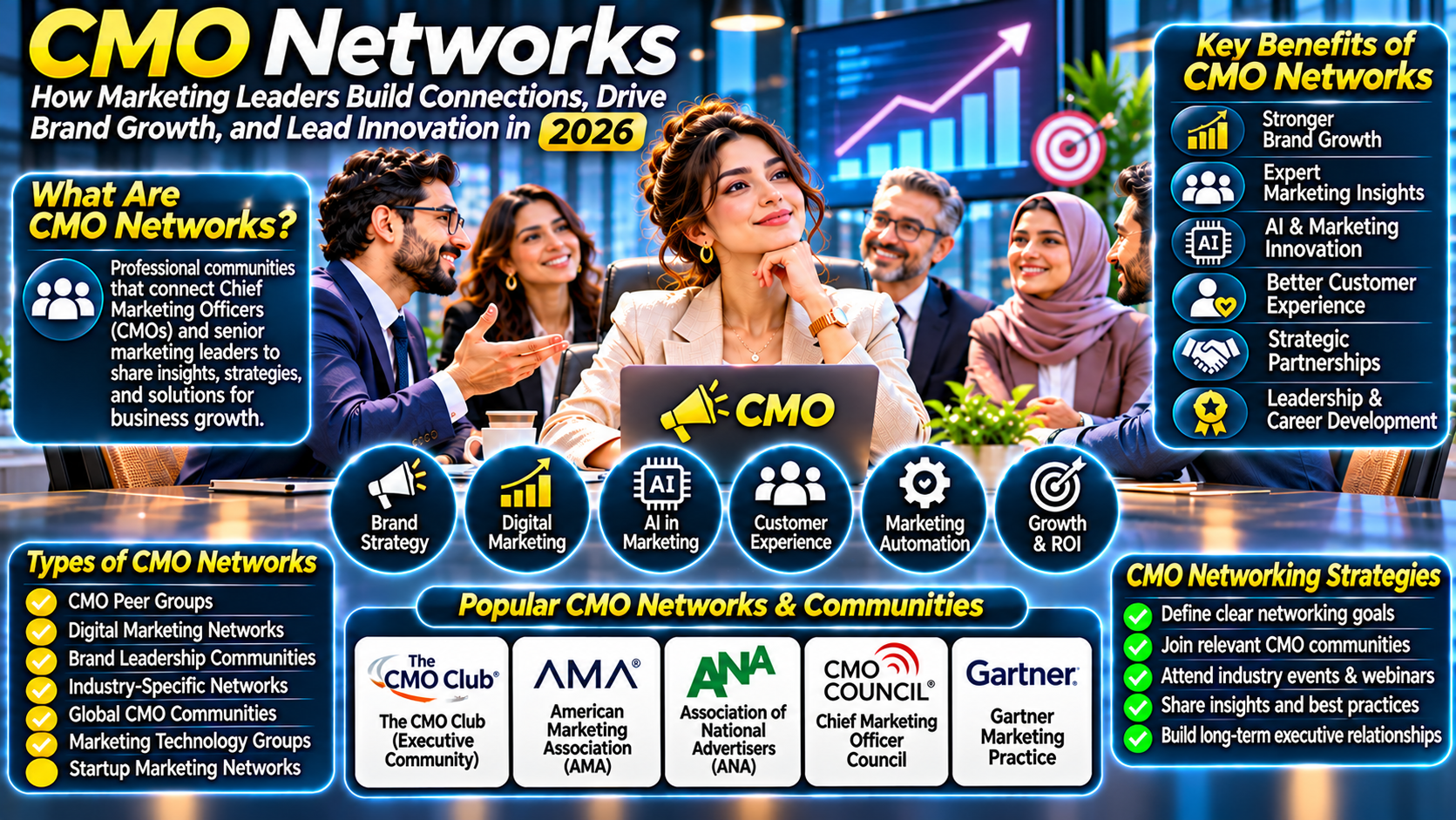
A CFO network is a professional community that connects chief financial officers, finance executives, financial controllers, and other senior finance professionals. These networks provide opportunities to exchange ideas, discuss financial management practices, learn about emerging technologies, and develop relationships with experienced professionals.
Finance leaders often face similar challenges, including economic uncertainty, rising operating costs, changing regulations, cash-flow pressures, and demands for more accurate financial forecasting. Connecting with other professionals can help CFOs evaluate different approaches and make better-informed decisions.
CFO networks also support professional development by creating opportunities to learn about financial technology, investment strategies, business analytics, corporate governance, and leadership. For growing businesses, these relationships may help identify potential advisers, strategic partners, and opportunities for collaboration.
However, the value of a CFO network depends on its relevance, credibility, and level of engagement. Simply joining a professional group does not guarantee better financial performance. Successful networking requires clear objectives, meaningful participation, and a willingness to exchange knowledge responsibly.
This article explores what CFO networks are, why they matter, the different types available, and how finance leaders can use professional connections to improve decision-making and support sustainable business growth.
What Is a CFO Network?
A CFO network is a professional community designed to connect finance executives for knowledge sharing, peer support, professional development, and business collaboration.
Members may include CFOs from established corporations, finance directors from mid-sized businesses, startup finance leaders, financial controllers, and professionals responsible for financial planning and analysis.
Some CFO networks focus on peer discussions and leadership development, while others emphasize financial technology, industry-specific challenges, investment trends, or executive education.
For example, a CFO working for an e-commerce business might join a network to discuss cash-flow forecasting, payment processing costs, customer acquisition expenses, and inventory financing. Another CFO from a manufacturing company may contribute experience with capital expenditure, supply-chain costs, and operational budgeting.
These conversations allow members to compare experiences and explore solutions that may be useful in their own organizations.
CFO networks can operate through private executive groups, professional associations, online communities, industry conferences, and structured peer advisory programs. Some require formal membership, while others are open to finance professionals who meet certain participation criteria.
The most effective networks encourage thoughtful discussion, protect confidential information, and help members develop relationships that extend beyond occasional introductions.
Why CFO Networks Matter in Modern Finance
1. Improving Financial Decision-Making
CFOs make decisions that influence profitability, liquidity, investment, and financial stability. These decisions often involve uncertainty and competing priorities.
A CFO network provides access to different perspectives on financial challenges. Members may discuss how they evaluate investment opportunities, structure budgets, manage financial risks, or assess the financial implications of business expansion.
For example, a CFO considering a new technology investment may learn how another organization measures implementation costs, expected savings, and long-term returns.
Such discussions can help identify important questions and potential risks before a company commits resources.
However, every business has different financial circumstances. Advice from other CFOs should be evaluated alongside company-specific data, professional standards, and appropriate financial guidance.
2. Strengthening Cash-Flow Management
Cash flow is essential to business continuity. Even companies with strong sales can experience financial pressure if customers pay late, inventory costs rise, or operating expenses increase unexpectedly.
CFO networks provide opportunities to exchange practical approaches to cash-flow forecasting, working-capital management, payment terms, and financial planning.
Members may discuss ways to improve the accuracy of forecasts, monitor receivables, manage supplier payments, and identify potential liquidity problems earlier.
For a growing business, these insights can help finance leaders develop more reliable processes and maintain appropriate financial flexibility.
3. Learning About Financial Technology
Financial technology is changing how organizations manage accounting, reporting, forecasting, payments, and financial analysis.
CFO networks can help finance leaders understand how different businesses evaluate and implement financial software.
Discussions may cover enterprise resource planning systems, automated reporting, cloud accounting, artificial intelligence, predictive analytics, and digital payment infrastructure.
Members can exchange lessons about implementation costs, staff training, data quality, integration problems, and cybersecurity.
These conversations can help CFOs evaluate technology more carefully rather than adopting new tools solely because they are popular.
4. Understanding Regulatory and Compliance Challenges
Financial regulations, tax requirements, accounting standards, and reporting obligations can change over time and vary across jurisdictions.
CFO networks can provide opportunities to discuss emerging compliance concerns and learn how other organizations manage financial governance.
For example, finance leaders operating internationally may exchange general insights about reporting processes, documentation practices, and coordination with local advisers.
However, professional networking should not replace advice from qualified accountants, tax professionals, or legal advisers when a decision depends on specific regulations.
5. Developing Professional Relationships
CFOs frequently work with CEOs, boards of directors, investors, auditors, lenders, and department heads.
Building a strong professional network can help finance leaders exchange ideas, identify experienced advisers, and develop relationships with people who understand their responsibilities.
These connections may become valuable when a CFO faces a complex financial decision, evaluates a new business opportunity, or seeks professional development.
Meaningful relationships generally develop through trust, consistent communication, and mutual support rather than immediate requests for favors.
Types of CFO Networks
Different CFO networks serve different professional objectives. Understanding these options helps finance leaders choose communities that match their experience and goals.
1. CFO Peer Advisory Groups
CFO peer advisory groups bring together a small number of finance executives to discuss challenges and exchange practical advice.
Meetings may focus on financial strategy, budgeting, business performance, leadership, and organizational change.
Some groups use professional facilitators to keep discussions structured and ensure that members have opportunities to contribute.
Peer advisory groups can be particularly useful for CFOs who want detailed conversations with professionals facing similar responsibilities.
Confidentiality is especially important because discussions may involve sensitive financial and organizational matters.
2. Industry-Specific CFO Networks
Industry-specific networks connect finance leaders working in the same sector.
Examples include technology, healthcare, manufacturing, retail, e-commerce, financial services, and logistics.
Because members face similar operating conditions, these networks can provide relevant discussions about cost structures, revenue models, investment requirements, and financial risks.
For instance, CFOs in software businesses may focus on recurring revenue, customer retention, subscription metrics, and product development costs.
CFOs in manufacturing may concentrate on inventory valuation, production costs, capital investments, and supply-chain exposure.
3. Startup CFO and Finance Networks
Startup finance networks connect CFOs, finance directors, and finance professionals working in early-stage or rapidly growing companies.
These communities may discuss fundraising, financial modelling, investor reporting, cash management, hiring, and the development of scalable financial systems.
Startup finance leaders often work with limited resources and incomplete information, making practical peer insights especially valuable.
More experienced members may share lessons about preparing for investment rounds, establishing financial controls, or managing rapid growth.
However, fundraising decisions and financial projections should always be supported by appropriate due diligence and realistic assumptions.
4. Online CFO Communities
Online CFO communities allow finance professionals to connect across locations and time zones.
These networks may operate through professional platforms, private forums, virtual meetings, and digital membership communities.
They can make it easier for executives to exchange information, participate in discussions, and access educational resources without extensive travel.
Online communities also provide opportunities to connect with specialists outside a finance leader's immediate geographic area.
Before joining, professionals should evaluate the community's credibility, privacy practices, moderation standards, and relevance to their responsibilities.
5. CFO Professional Associations
Professional associations provide finance leaders with opportunities for training, networking, industry discussions, and continuing professional development.
Depending on the organization, members may have access to conferences, research, technical resources, workshops, and executive forums.
These associations can help CFOs stay informed about developments in finance, accounting, corporate governance, and technology.
Finance leaders should review membership requirements and available resources to determine whether an association aligns with their professional objectives.
6. International CFO Networks
International CFO networks connect finance leaders across countries and regions.
These communities can be valuable for businesses involved in international trade, cross-border investment, global operations, or multinational financial reporting.
Members may exchange general insights about financial planning across markets, currency exposure, international expansion, and coordination between regional finance teams.
International networking can improve awareness of different business environments, but it does not eliminate the need for local financial, legal, and tax expertise.
How CFO Networks Support Strategic Business Growth
The CFO's role has expanded beyond traditional financial reporting. Modern finance leaders increasingly contribute to company strategy and help evaluate the financial implications of major business decisions.
CFO networks can support this responsibility by exposing members to different approaches and practical experiences.
Evaluating Investment Opportunities
CFOs often need to determine whether proposed investments justify their costs and risks.
Peer discussions can help finance leaders compare methods for evaluating capital expenditure, technology investments, acquisitions, and expansion plans.
For example, a CFO considering a new distribution facility may explore how other businesses assess demand, operating expenses, expected capacity, and alternative uses of capital.
The final decision should still depend on a detailed financial model and the company's strategic priorities.
Improving Financial Forecasting
Forecasting helps organizations anticipate future revenue, expenses, cash requirements, and potential financial pressures.
CFO networks provide opportunities to discuss forecasting methods, scenario analysis, assumptions, and performance monitoring.
Members may exchange insights about building more flexible models that account for changes in customer demand, supplier costs, interest rates, or market conditions.
A reliable forecasting process helps executives identify emerging problems earlier and make adjustments before they become more difficult to manage.
Supporting Mergers and Acquisitions
Mergers and acquisitions can involve complex financial analysis, valuation, due diligence, integration planning, and risk assessment.
CFO networks may help finance leaders learn from the experiences of executives who have participated in similar transactions.
Members can discuss general lessons about financial documentation, integration challenges, cost assumptions, and post-acquisition performance measurement.
Because transactions involve substantial financial and legal risks, companies should rely on qualified advisers and formal due diligence before making commitments.
Strengthening Investor Communication
CFOs often help prepare financial information for investors, lenders, boards, and other stakeholders.
Networking with experienced finance leaders can provide useful perspectives on financial reporting, performance explanations, forecasting assumptions, and the presentation of business risks.
Clear communication helps stakeholders understand not only what the financial results show but also the factors influencing those results.
Accurate reporting and transparent explanations are essential for maintaining credibility.
Essential Skills CFOs Can Develop Through Networking
CFO networks can support the development of several capabilities that are increasingly important in financial leadership.
Strategic Thinking
Strategic thinking helps CFOs understand how financial decisions influence long-term business objectives.
Through peer discussions, finance leaders can compare approaches to investment allocation, business expansion, cost management, and competitive positioning.
This broader perspective can help CFOs contribute more effectively to executive decision-making.
Communication and Influence
CFOs must explain financial information to people who may not have extensive financial expertise.
Networking can provide opportunities to observe how experienced executives communicate complex information, present recommendations, and discuss difficult financial decisions.
Clear communication helps finance leaders build alignment across departments.
Risk Management
Financial leaders must identify potential threats to liquidity, profitability, compliance, and business continuity.
CFO networks can provide insights into risk assessment, scenario planning, internal controls, and financial monitoring.
However, risk management practices should be adapted to the organization's specific exposure and regulatory requirements.
Technology Awareness
Finance departments increasingly depend on data analytics, automation, integrated systems, and artificial intelligence.
CFO networks can help leaders understand potential applications, common implementation challenges, and important governance considerations.
Technology awareness allows finance executives to ask better questions when evaluating software and digital transformation projects.
Leadership and Collaboration
CFOs frequently lead finance teams while working closely with other senior executives.
Networking can help them learn from different management approaches, discuss team development, and strengthen cross-functional collaboration.
These skills become particularly important when finance teams are implementing new systems or responding to organizational change.
The Role of AI and Automation in CFO Networking Discussions
Artificial intelligence and automation are changing how finance departments process information and support business decisions.
Modern CFOs may use AI-enabled tools to assist with forecasting, anomaly detection, document analysis, transaction processing, and management reporting.
CFO networks can provide opportunities to discuss practical applications and share lessons from implementation.
For example, finance leaders may compare how automation affects reporting time, data accuracy, reconciliation processes, or the preparation of financial forecasts.
However, AI adoption requires careful evaluation. Executives should consider data privacy, cybersecurity, accuracy, system integration, regulatory obligations, and the need for human review.
AI-generated forecasts and analyses should not be treated as automatically correct. Finance professionals must verify underlying data, examine assumptions, and ensure that important decisions remain appropriately supervised.
Networking can help CFOs understand what other organizations have learned, but each company should evaluate technology according to its own requirements and risk tolerance.
How to Choose the Right CFO Network
Choosing an appropriate CFO network requires more than comparing membership numbers or promotional claims.
Define Your Professional Objectives
Begin by identifying what you want from the network.
Your goals may include improving financial forecasting, developing leadership skills, learning about financial technology, building international relationships, or exchanging ideas with experienced CFOs.
A clear objective makes it easier to identify communities that are relevant to your needs.
Evaluate Member Experience
Review the professional backgrounds of members and consider whether their experience aligns with your responsibilities.
A CFO at a large multinational organization may have different priorities from a finance leader at a small startup.
The best network is not necessarily the largest one. It is the community where discussions, expertise, and relationships are relevant to your goals.
Consider Costs and Time Commitments
Some CFO networks require membership fees, conference expenses, or participation in scheduled meetings.
Evaluate these costs against the expected professional value.
Consider the time needed to attend events, prepare for discussions, and maintain relationships.
A network should provide enough relevant value to justify the investment.
Review Confidentiality and Data Protection
CFOs frequently handle sensitive financial information, commercial agreements, and internal forecasts.
Before joining a network, understand its confidentiality policies and expectations for information sharing.
Avoid sharing confidential company information without proper authorization. Where necessary, use approved procedures and seek legal guidance before discussing sensitive matters.
Assess the Quality of Discussions
Look for communities that encourage practical learning, respectful disagreement, and meaningful participation.
A strong CFO network should provide more than repeated promotional messages or generic business advice.
Opportunities for structured discussions, relevant educational content, and peer feedback can indicate a more useful professional environment.
Practical Strategies for Building Strong CFO Relationships
Contribute Useful Insights
Networking becomes more valuable when members contribute relevant knowledge rather than focusing exclusively on what they can receive.
Share appropriate professional experiences, discuss general lessons, and offer thoughtful feedback when you have relevant expertise.
Contributions should respect confidentiality and avoid disclosing information that belongs to your organization or clients.
Ask Specific Questions
Focused questions often produce more useful discussions than broad requests for advice.
For example, instead of asking how to improve financial management generally, a CFO might ask how other companies evaluate the accuracy of rolling cash-flow forecasts.
Specific questions help other members understand the problem and share relevant experiences.
Follow Up Professionally
After a useful conversation, send a brief message expressing appreciation and identifying a relevant point from the discussion.
If appropriate, share a resource or suggest a future conversation.
Follow-up should be purposeful and respectful of the other person's time.
Maintain Long-Term Relationships
Professional relationships develop through consistent interaction.
Participate in discussions, attend relevant meetings, and reconnect when you have useful information to share.
Do not expect every interaction to produce an immediate business opportunity. Long-term relationships can become valuable through shared learning, professional support, and collaboration.
Protect Professional Credibility
CFOs should communicate accurately, meet commitments, and respect confidentiality.
Avoid exaggerating financial achievements or presenting unverified claims as facts.
Professional credibility is especially important in finance because trust and accuracy are central to effective financial leadership.
Measuring the Value of a CFO Network
CFOs can evaluate networking activities by identifying outcomes that align with their professional goals.
Useful indicators include:
Relevant executive relationships developed.
Quality of financial and strategic insights received.
Professional development opportunities identified.
Potential partnerships or introductions explored.
Improvements made to forecasting or reporting processes.
Time and money invested in membership and events.
Business outcomes linked to networking activities.
The most appropriate measures depend on the purpose of the network.
For example, a peer advisory group may create value by improving decision-making, while an industry association may help members understand regulatory developments or emerging technology.
Immediate revenue should not be the only measure of success. Better-informed decisions, stronger professional relationships, and reduced uncertainty can also provide meaningful value.
Common CFO Networking Mistakes to Avoid
Joining Too Many Communities
Participating in too many networks can create unnecessary commitments and reduce the time available for meaningful conversations.
CFOs should prioritize communities that align with their goals and offer consistent value.
Expecting Immediate Financial Returns
Networking is not a guaranteed source of investment, customers, or business opportunities.
Relationships often require time and mutual effort before they produce practical benefits.
Ignoring Follow-Up
Failing to maintain contact can cause potentially valuable professional relationships to weaken.
A thoughtful follow-up helps keep conversations productive and creates opportunities for future collaboration.
Sharing Sensitive Financial Information
CFOs must protect confidential data and respect their organization's obligations.
General discussions about financial management are often useful, but company-specific information should only be shared when authorized and appropriate.
Treating Networking as a Substitute for Professional Advice
Peers can share valuable experiences, but they may not understand the legal, regulatory, or financial circumstances of another organization.
Important tax, accounting, investment, and legal decisions should be supported by appropriate professional expertise.
Conclusion
CFO networks provide finance leaders with opportunities to exchange knowledge, strengthen professional relationships, develop leadership skills, and explore practical solutions to financial challenges.
By connecting with relevant peers, CFOs can learn about cash-flow management, financial forecasting, risk assessment, technology adoption, and strategic investment decisions.
However, the value of networking depends on the quality of the community, the relevance of its members, and the effort participants invest in maintaining relationships.
Finance leaders should choose networks that match their objectives, contribute useful insights, protect confidential information, and evaluate the outcomes of their participation.
As the CFO role continues to expand, professional networks can serve as an important source of learning and collaboration. When used strategically, they can help finance executives make better-informed decisions, support organizational resilience, and contribute to sustainable business growth.
Frequently Asked Questions About CFO Networks
What is a CFO network?
A CFO network is a professional community that connects chief financial officers and other senior finance professionals for knowledge sharing, peer support, leadership development, and business collaboration.
What are the benefits of joining a CFO network?
Benefits may include learning from experienced finance leaders, discussing financial challenges, understanding emerging technologies, building professional relationships, and exploring strategic opportunities.
Who can join a CFO network?
Membership requirements vary. Some networks are designed exclusively for CFOs, while others also accept finance directors, financial controllers, startup finance leaders, and other senior professionals.
How can CFO networks help businesses grow?
CFO networks can help finance leaders improve decision-making, identify useful business connections, learn about financial management practices, and evaluate growth opportunities.
Are CFO networks available online?
Yes. Many professional communities offer online discussions, virtual events, digital resources, and remote peer meetings.
How can I choose the best CFO network?
Evaluate the network's members, professional focus, confidentiality practices, cost, time commitment, and relevance to your objectives.
Do CFO networks guarantee business opportunities?
No. CFO networks can create opportunities for learning and collaboration, but outcomes depend on participation, relationship quality, business circumstances, and follow-through.