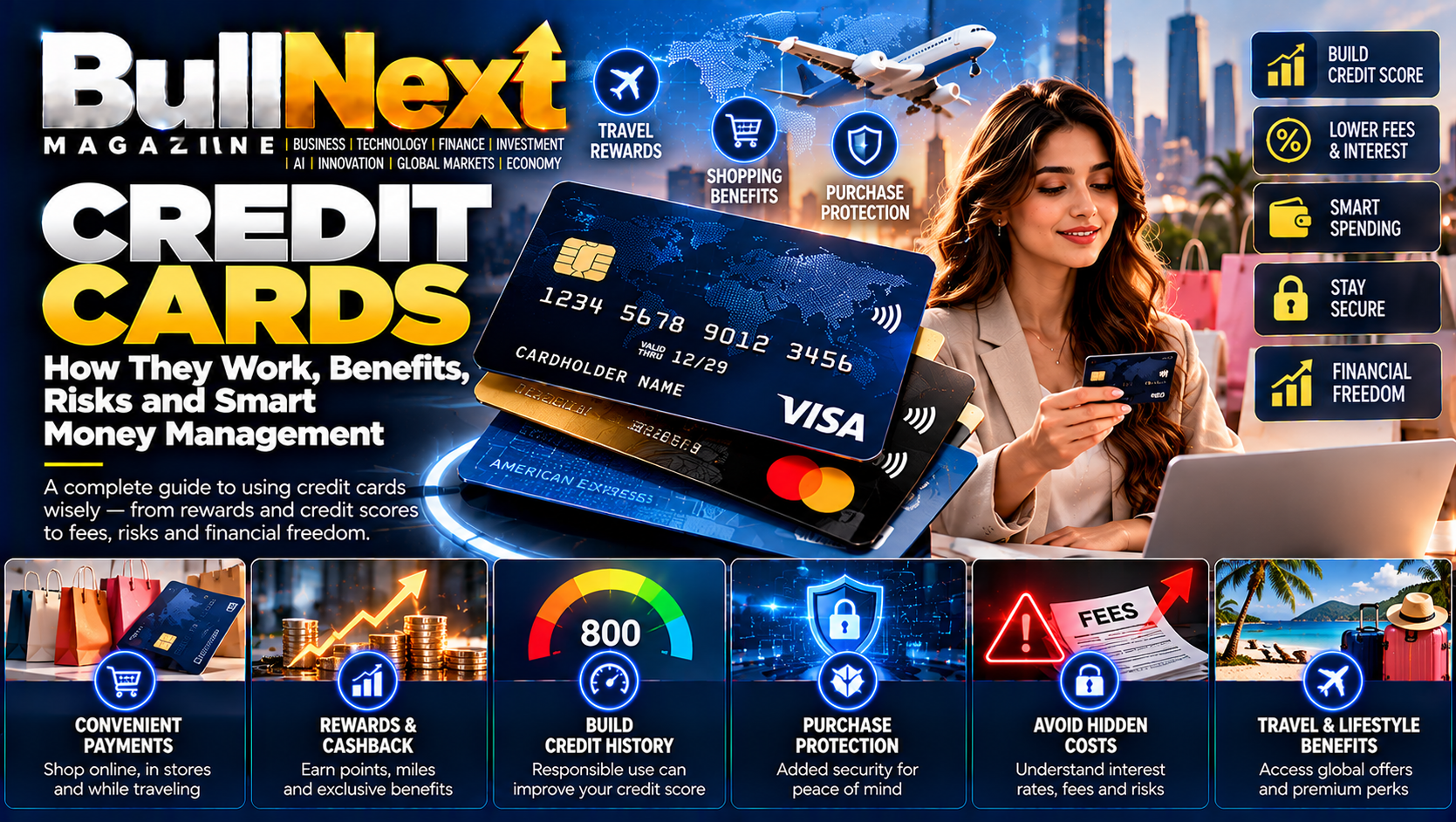
Credit cards have become an important part of modern financial life. From online shopping and travel bookings to everyday purchases and emergency expenses, they offer consumers a convenient way to pay without immediately using money from a bank account.
However, credit cards are more than simple payment tools. They provide access to borrowed money, and the way people manage that borrowing can influence their financial stability, borrowing costs and credit history.
For some consumers, credit cards offer flexibility, purchase protections and valuable rewards. For others, high interest charges, late payments and growing balances can create long-term financial pressure.
Understanding how credit cards work is therefore essential before applying for one or using it regularly.
1. What Is a Credit Card?
A credit card is a payment card issued by a bank or financial institution that allows an approved customer to borrow money up to a predetermined credit limit.
When a customer makes a purchase, the card issuer pays the merchant through the payment network. The customer then repays the issuer according to the card agreement.
Unlike a debit card, which generally draws money from an existing bank balance, a credit card allows spending against an approved line of credit.
For example, if a cardholder has a credit limit of $2,000 and spends $300, approximately $1,700 of the available limit remains, assuming there are no other transactions, fees or pending authorizations.
The $300 is not free money. It is borrowed money that must be repaid.
Depending on the card's terms, the customer may avoid interest on eligible purchases by paying the statement balance in full before the due date.
The US Federal Trade Commission explains that credit cards involve borrowing for purchases and that paying the full bill each month generally reduces borrowing costs. Terms and legal protections differ between countries. (FTC)
2. How Do Credit Cards Work?
Understanding the billing process can help consumers avoid unnecessary charges.
The credit limit
The credit limit is the maximum amount a cardholder can generally borrow using the account. Issuers may consider income, credit history, existing debt and other eligibility factors when setting it.
A higher limit does not mean a person should spend more. Spending decisions should be based on affordability rather than the amount of credit available.
The billing cycle
Credit cards typically operate through monthly billing cycles. Purchases and other transactions during a cycle are recorded on a statement.
The statement shows the balance owed, the minimum payment, the payment due date and other relevant information.
The statement balance
The statement balance is the amount shown as owed at the end of a billing cycle. Paying it in full by the due date can help eligible cardholders avoid purchase interest when the card offers a grace period and the applicable conditions are met.
The minimum payment
The minimum payment is the smallest amount the issuer requires the cardholder to pay by the due date to meet the account's minimum payment obligation.
Paying only the minimum may keep an account current under its terms, but interest can continue accumulating on the unpaid balance. Consequently, repayment may take much longer and cost significantly more.
Interest and APR
The annual percentage rate, commonly called APR, represents an annualized measure of borrowing costs under the applicable card terms. The exact calculation and disclosures vary by jurisdiction.
Many issuers calculate interest daily using the outstanding balance and applicable periodic rate. Different transactions, including purchases and cash advances, may have different rates or interest rules. (Consumer Financial Protection Bureau)
3. The Main Benefits of Credit Cards
When used responsibly, credit cards can provide several practical benefits.
Convenient payments
Credit cards make it easier to pay for products and services online, in stores and while traveling. They can also provide an alternative payment method when cash is inconvenient.
Building credit history
In countries where credit reporting systems record card activity, responsible use may help establish or strengthen a credit history.
Making payments on time, managing balances and avoiding serious delinquencies can support a stronger credit profile. However, the effect depends on the reporting system, the issuer's reporting practices and the person's overall financial history.
Purchase protections
Some credit cards offer dispute procedures or additional protections for eligible purchases. These may be useful when a product is not delivered, a transaction is incorrect or an unauthorized charge appears.
The specific protections available depend on local law, the payment network and the card agreement.
Rewards and cashback
Some cards provide cashback, travel points, shopping discounts or other rewards.
These benefits can be valuable when they match normal spending habits. However, rewards should not encourage unnecessary purchases or justify carrying expensive debt.
Emergency flexibility
Credit cards can provide short-term payment flexibility when unexpected expenses arise. Nevertheless, relying on credit for recurring essentials without a realistic repayment plan can lead to persistent debt.
4. The Hidden Costs of Credit Cards
The advertised benefits of a credit card do not always reveal its total cost. Consumers should examine the complete fee structure before applying.
Interest charges
Interest may become payable when a balance is not repaid according to the card's terms. If interest accumulates over several billing cycles, a relatively small purchase can become more expensive.
For example, a cardholder who spends $1,000 and carries the balance forward may owe additional interest and fees. The final cost depends on the APR, payment timing, balance calculation method and other agreement terms.
Annual fees
Some issuers charge a yearly fee for maintaining a card. Premium cards may offer travel benefits, insurance or rewards, but consumers should assess whether those benefits justify the cost.
Late payment fees
Missing a payment deadline can result in fees and may negatively affect a credit history, depending on local reporting practices and the circumstances.
Setting up payment reminders or automatic payments can help reduce the risk of missed deadlines.
Cash advance fees
Using a credit card to withdraw cash can be expensive. Cash advances may involve transaction fees and a separate interest rate, and interest may begin immediately rather than after a purchase grace period.
Consumers should check the terms before using a card to obtain cash.
Foreign transaction fees
Some cards charge fees for purchases processed in foreign currencies or through international merchants. These costs can matter when shopping online from overseas retailers or traveling internationally.
The key principle is simple: compare the full cost of a card, not just its rewards or advertised interest rate.
5. Credit Cards and Credit Scores
A credit score is a numerical indicator used by some lenders to assess aspects of a person's credit risk. The factors involved vary by country and scoring model.
Credit card behavior can influence credit assessments where card activity is included in credit reporting.
Important factors may include:
Payment history: Whether required payments are made on time.
Outstanding balances: How much debt is owed.
Credit utilization: The proportion of available revolving credit being used, where this factor is included.
Length of credit history: How long credit accounts have existed.
Recent applications: New credit inquiries or accounts, depending on the scoring model.
Overall credit management: The broader pattern of borrowing and repayment.
For example, someone with a $5,000 credit limit who regularly carries a $4,500 balance is using 90% of that limit. High utilization may negatively affect some credit scores.
Keeping balances manageable and paying on time can help support healthy credit habits. There is no single utilization threshold that guarantees a particular score, and scoring systems differ.
6. Credit Cards Versus Debit Cards
Credit cards and debit cards may look similar, but they work differently.
Feature | Credit card | Debit card |
|---|---|---|
Source of funds | Borrowed credit | Usually your bank balance |
Repayment | Paid later under card terms | Funds generally leave the account directly |
Interest | May apply to carried balances | Usually no borrowing interest for ordinary purchases |
Credit history | May contribute to credit history | Usually does not build credit history through ordinary spending |
Spending limit | Issuer-approved credit limit | Available account funds and bank limits |
Rewards | May offer rewards or cashback | Depends on the bank and account |
Neither option is automatically better for everyone.
A debit card can help people spend within the money they already have. A credit card can offer additional flexibility and certain protections, but it requires careful repayment management.
The best choice depends on personal circumstances, fees, financial goals and spending discipline.
7. How to Choose the Right Credit Card
Selecting a credit card should involve comparing the terms of multiple offers rather than choosing based only on advertising.
Compare the APR
Review the interest rate for purchases and any separate rates for cash advances or balance transfers.
A lower APR may be particularly important for someone who expects to carry a balance, although paying in full each month can reduce purchase interest when the credit card's grace-period conditions are satisfied.
Check annual fees
Consider whether the benefits justify any yearly fee. A no-annual-fee card may be more appropriate for someone who wants a simple payment tool.
Understand rewards
Read the conditions for cashback, points, discounts and travel benefits. Check spending categories, redemption limits, expiry rules and any minimum redemption requirements.
Review additional charges
Examine late payment fees, foreign transaction charges, cash advance costs and balance transfer fees.
Consider eligibility
Issuers may assess income, employment, credit history, residency and other requirements. Approval is not guaranteed, and eligibility criteria differ between financial institutions.
Read the card agreement
Before accepting an offer, understand the payment schedule, interest rules, fees, dispute procedures and conditions that could change the account's cost.
8. Smart Habits for Managing Credit Cards
Responsible credit card management begins before a purchase is made.
Pay the statement balance in full when possible. This can help avoid interest on eligible purchases when the account's grace-period requirements are met.
Never treat the credit limit as income. A credit limit represents borrowing capacity, not money earned or saved.
Create a spending budget. Use the card for purchases that fit within your financial plan, and set aside the money needed to repay them.
Pay on time. Use calendar reminders or automatic payments where appropriate. Make sure sufficient funds are available if payments are drawn from a bank account.
Monitor transactions. Review statements regularly and contact the issuer promptly about unfamiliar transactions or billing errors.
Limit unnecessary applications. Apply for cards that meet genuine needs instead of opening accounts simply because promotional offers are available.
Be cautious with cash advances. Their fees and interest rules can make them more expensive than ordinary purchases.
Avoid spending to earn rewards. Cashback is not a financial gain if it encourages purchases you cannot afford or leads to interest charges that exceed the rewards.
These habits help make credit cards a controlled payment method rather than a source of financial stress.
9. Common Credit Card Mistakes to Avoid
Even financially responsible consumers can make mistakes when they misunderstand card terms.
Paying only the minimum
Minimum payments can leave a large balance outstanding for a long period. Whenever possible, pay more than the minimum and develop a realistic repayment plan.
Ignoring statements
Unnoticed fees, incorrect transactions and unfamiliar subscriptions can continue for months if statements are not reviewed.
Maxing out the card
Using most or all of the available credit can leave little flexibility for unexpected expenses and may affect credit assessments where utilization is considered.
Missing the due date
Late payments can lead to fees and potentially affect credit history. A reminder system can reduce this risk.
Using credit for unaffordable purchases
Borrowing for a purchase does not make it affordable. Before spending, consider whether the repayment fits your budget after essential expenses and savings.
Assuming every card offers the same protection
Benefits, dispute rights, liability rules and fees differ by issuer and jurisdiction. Review the agreement and local consumer protection rules rather than assuming universal coverage.
10. Credit Card Security in the Digital Economy
As digital payments and online shopping expand, protecting credit card information has become increasingly important.
Fraudsters may use fake banking messages, phishing websites, fraudulent customer support calls or compromised merchant accounts to obtain payment details.
Consumers can reduce exposure by following several precautions:
Never share a card PIN, password or one-time verification code with someone who contacts you unexpectedly.
Use trusted websites and secure payment methods.
Enable transaction alerts when available.
Avoid entering card details through links in suspicious messages.
Never share a one-time code merely because someone claims to be a bank employee.
Lock or freeze a card through the issuer's official service if the feature is available and fraud is suspected.
Report lost cards and unauthorized transactions promptly.
Review statements and transaction notifications regularly.
If an unfamiliar transaction appears, contact the issuer using its official app, website or the telephone number printed on the card. Follow its instructions for blocking the card, disputing the charge and replacing compromised credentials.
The US Consumer Financial Protection Bureau provides guidance on unauthorized credit card use and the importance of reporting lost or stolen cards. The exact liability rules vary by jurisdiction. (CFPB)
11. The Future of Credit Cards
Credit cards are evolving alongside digital banking, mobile wallets, artificial intelligence and stronger payment authentication systems.
Contactless payments and digital wallets have made many transactions faster. Virtual card numbers and transaction controls can also help some consumers manage online purchases and reduce exposure of their main card details.
Financial institutions increasingly use automated systems to detect unusual spending patterns and identify potentially fraudulent transactions. These systems may help flag suspicious activity, although no security system can eliminate every risk.
At the same time, consumers face new challenges. Phishing messages can imitate legitimate financial institutions, while fraudulent websites and social engineering can trick people into authorizing transactions or revealing confidential information.
The future of credit cards will therefore depend on more than convenience. Security, transparent pricing, responsible lending and consumer awareness will remain important.
As payment technology develops, cardholders will need to understand not only how to make payments but also how their data is used, how disputes are handled and how to protect their accounts.
Conclusion
Credit cards can be useful financial tools when consumers understand their terms and manage borrowing responsibly.
They offer convenient payments, potential rewards, certain purchase protections and an opportunity to establish credit history in systems where card activity is reported. However, interest charges, fees, missed payments and excessive borrowing can undermine those benefits.
The most important habit is to spend according to a realistic budget and repay the balance on time. Comparing card terms, monitoring transactions and protecting account information can also help reduce financial risk.
Ultimately, successful credit card management is not about having the highest limit or earning the most rewards. It is about using borrowed money carefully, understanding its cost and keeping control of personal finances.
Frequently Asked Questions
What is a credit card used for?
A credit card allows approved customers to pay for purchases using borrowed funds. The amount spent must be repaid according to the issuer's terms.
Is it better to pay the full credit card balance?
Paying the statement balance in full by the due date can help avoid interest on eligible purchases when the card provides a grace period and the applicable conditions are met.
Does using a credit card improve a credit score?
Responsible use may help build credit history when the issuer reports account activity to credit reporting agencies. The effect depends on the country's credit system and the individual's overall financial record.
What happens if you pay only the minimum amount?
The remaining balance may continue accruing interest, making repayment more expensive and potentially extending the time needed to clear the debt.
Are credit cards safe for online shopping?
They can be used safely when appropriate precautions are followed, including using trusted merchants, enabling transaction alerts and reporting suspicious charges promptly. No payment method is entirely risk-free.
What is the difference between a credit card and a debit card?
A credit card generally uses borrowed funds that must be repaid later. A debit card usually draws money directly from a linked bank account.
Can a credit card charge interest immediately?
Yes, depending on the transaction and card terms. Cash advances often begin accruing interest immediately, while eligible purchases may qualify for a grace period.
How should someone choose their first credit card?
Compare eligibility requirements, interest rates, annual fees, other charges, rewards and repayment terms. Choose a card that fits your budget and financial needs rather than your maximum borrowing capacity.