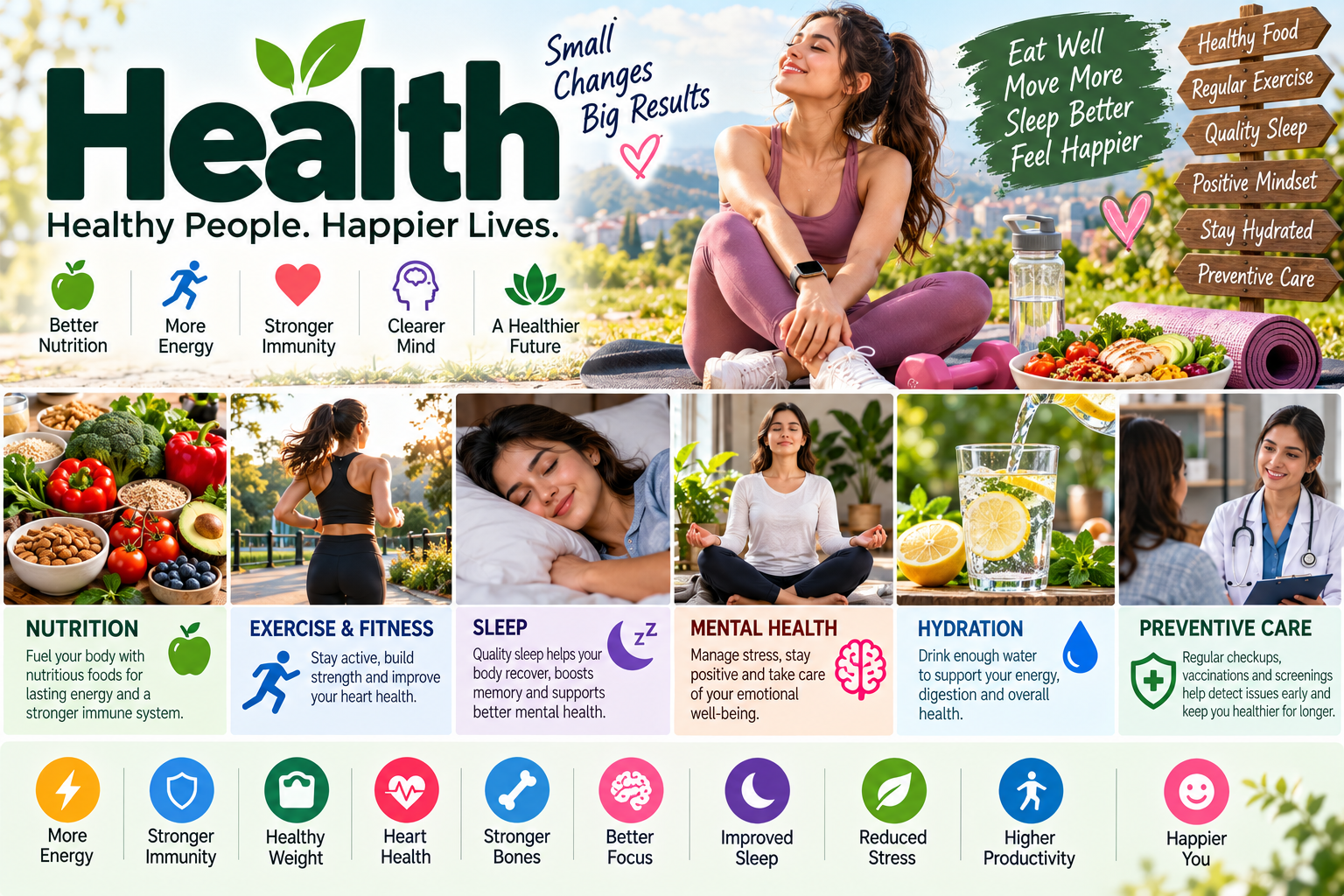
Health is more than the absence of illness. It involves physical well-being, mental health, nutrition, physical activity, sleep, preventive care, social connection, and the everyday habits that influence how people feel and function.
In 2026, health information is increasingly focused on prevention and sustainable lifestyle habits rather than quick fixes. The World Health Organization (WHO) emphasizes healthy eating, physical activity, adequate sleep, avoiding tobacco, limiting alcohol, and maintaining social connections as important components of self-care.
At the same time, digital health technologies, personalized nutrition, wearable devices, preventive screening, and mental-health awareness continue to influence how people manage their well-being.
What Does Good Health Mean?
Health has several interconnected dimensions.
Physical Health
Physical health includes the condition and functioning of the body's major systems. Regular movement, nutritious food, adequate sleep, preventive healthcare, and avoidance of harmful substances can all contribute to better physical well-being.
Mental Health
Mental health affects how people handle stress, relate to others, learn, work, and make decisions. WHO describes mental health as a state of mental well-being that helps people cope with life's stresses and participate in daily life.
Social Well-Being
Human connection is also important. Family relationships, friendships, community participation, and supportive social networks can contribute to emotional well-being and quality of life.
Preventive Health
Preventive healthcare focuses on reducing health risks before they become serious problems. Depending on age, sex, family history, and individual circumstances, preventive care may include vaccinations, health checks, screening tests, dental care, vision checks, and monitoring of conditions such as blood pressure.
Healthy Nutrition
Food provides the energy and nutrients required for normal growth, repair, immune function, and everyday activity.
WHO's 2026 healthy-diet guidance emphasizes four broad principles: adequacy, balance, moderation, and diversity.
A healthy eating pattern can include:
Vegetables
Fruits
Whole grains
Beans and other pulses
Nuts and seeds
Appropriate sources of protein
Dairy or suitable alternatives
Healthy unsaturated fats
Adequate water
The exact diet appropriate for an individual depends on factors such as age, activity level, health conditions, culture, food availability, and personal nutritional needs.
Fruits and Vegetables
WHO recommends that adults and children over 10 aim for at least 400 grams of fruits and vegetables per day.
A practical approach is to include vegetables or fruit with several meals and choose different colors and varieties throughout the week.
Whole Grains and Fiber
Whole grains, legumes, fruits, vegetables, nuts, and seeds can provide dietary fiber.
For people older than 10, WHO recommends at least 25 grams of naturally occurring dietary fiber per day.
Examples of fiber-rich foods include:
Oats
Whole-grain bread
Brown rice
Lentils
Chickpeas
Beans
Apples
Pears
Berries
Vegetables
Nuts and seeds
Limiting Excess Sugar, Salt, and Unhealthy Fats
A healthy diet is not simply about adding nutritious foods. It also involves moderating foods and nutrients that can contribute to health risks when consumed excessively.
WHO recommends limiting free sugars to less than 10% of total energy intake, with a further reduction to 5% suggested for additional health benefits. It also recommends limiting sodium to less than 2 grams per day, equivalent to less than 5 grams of salt.
Highly processed foods can sometimes contain substantial amounts of sodium, free sugars, and unhealthy fats, so checking nutrition labels can be useful.
Physical Activity and Fitness
Regular physical activity is one of the foundations of a healthy lifestyle.
WHO recommends that adults aged 18–64 complete at least 150 minutes of moderate-intensity physical activity per week, or at least 75 minutes of vigorous-intensity activity, or an equivalent combination.
Physical activity can include much more than going to a gym.
Examples include:
Walking
Cycling
Swimming
Dancing
Jogging
Sports
Hiking
Household activities
Gardening
Active transportation
Strength training
WHO notes that some physical activity is better than none, meaning people can benefit from increasing movement even if they are not immediately able to reach recommended levels.
Strength Training
Resistance exercises can help maintain muscle strength and support bone health.
Examples include:
Bodyweight exercises
Squats
Resistance bands
Weight training
Functional exercises
People with health conditions, injuries, or significant limitations should seek appropriate professional guidance before starting a new exercise program.
Benefits of Regular Physical Activity
Physical activity is associated with benefits across multiple areas of health.
The CDC reports that regular activity can help improve sleep, reduce anxiety, support heart health, lower the risk of type 2 diabetes and stroke, strengthen bones, support healthy weight, and reduce the risk of several chronic diseases.
Exercise can also support mental well-being.
The goal does not have to be extreme fitness. Consistency is often more practical than short periods of intense exercise followed by long periods of inactivity.
Sleep and Recovery
Sleep is an essential part of health.
During sleep, the body and brain carry out processes involved in recovery, memory, immune function, metabolism, and emotional regulation.
Healthy sleep habits can include:
Maintaining a consistent sleep schedule
Creating a comfortable, dark sleeping environment
Limiting excessive screen exposure before bed
Avoiding large meals immediately before sleeping
Keeping caffeine consumption appropriate for the individual
Using a relaxing bedtime routine
Persistent sleep problems can sometimes be associated with underlying medical or psychological conditions. People experiencing ongoing or severe sleep difficulties should discuss them with a healthcare professional.
Mental Health and Emotional Well-Being
Mental health is an essential part of overall health.
WHO reported in September 2026 that more than one billion people globally live with a mental health condition, highlighting the scale of mental-health needs worldwide.
Everyday practices that may support emotional well-being include:
Maintaining social connections
Staying physically active
Getting sufficient sleep
Taking breaks from stressful activities
Spending time outdoors
Practicing relaxation techniques
Maintaining meaningful activities
Seeking professional support when needed
Feeling stressed or emotionally overwhelmed from time to time is part of normal life. However, persistent symptoms that interfere with daily functioning deserve professional attention.
Stress Management
Stress can affect sleep, concentration, mood, appetite, and physical well-being.
Healthy stress-management strategies can include:
Physical Activity
Walking or exercising can provide a structured break from work and daily responsibilities.
Breathing and Relaxation
Slow breathing, mindfulness, prayer, meditation, and other relaxation techniques may help some people manage everyday stress.
Social Connection
Talking with a trusted friend, family member, counselor, or healthcare professional can provide support.
Healthy Routines
Regular meals, movement, sleep, and planned breaks can provide structure during stressful periods.
Preventive Healthcare
Preventive care helps identify health risks and conditions before they become more serious.
Depending on the person, preventive healthcare may involve:
Routine medical checkups
Blood pressure monitoring
Appropriate blood tests
Vaccinations
Cancer screening
Dental examinations
Eye examinations
Sexual and reproductive health services
Mental-health assessments
Monitoring existing medical conditions
The appropriate schedule varies according to age, sex, family history, personal health history, medications, and national healthcare recommendations.
The CDC recommends maintaining regular checkups, vaccinations, and appropriate screenings as part of healthy aging and chronic-disease prevention.
Chronic Disease Prevention
Many chronic diseases are influenced by modifiable lifestyle factors.
The CDC identifies tobacco use, poor nutrition, physical inactivity, and excessive alcohol use among major risk factors associated with chronic diseases.
Preventive strategies can include:
Not smoking
Avoiding secondhand smoke
Eating a balanced diet
Staying physically active
Maintaining a healthy weight when appropriate
Limiting alcohol
Getting recommended vaccinations
Attending recommended screenings
Managing diagnosed conditions
Taking prescribed medications as directed
Lifestyle changes cannot eliminate every disease risk, because genetics, environment, age, socioeconomic factors, and other circumstances also affect health.
Hydration
Water is essential for normal body function.
Fluid requirements vary depending on factors such as climate, physical activity, diet, age, illness, and pregnancy.
People can obtain fluids from drinking water and other beverages as well as water-containing foods.
During hot weather or prolonged physical activity, fluid needs can increase.
Rather than relying on a single universal water target for everyone, hydration needs should be considered in the context of individual circumstances.
Healthy Weight
Healthy weight is influenced by multiple factors, including nutrition, physical activity, sleep, stress, genetics, medications, medical conditions, and environment.
The CDC notes that healthy weight management involves healthy eating, physical activity, adequate sleep, and stress management rather than relying on fad diets.
Long-term health generally benefits from sustainable habits rather than extreme short-term restrictions.
A healthy lifestyle does not necessarily mean eliminating favorite foods or exercising every day at high intensity. It is often about creating patterns that can realistically be maintained over time.
Tobacco and Alcohol
Avoiding tobacco is one of the most important steps people can take to reduce preventable health risks.
Smoking is associated with serious diseases affecting the lungs, heart, blood vessels, and other parts of the body. Stopping smoking can reduce health risks even among people who have smoked for many years.
Alcohol can also affect health. People who drink should follow applicable health guidance, and people who do not drink do not need to start for health reasons.
Digital Health and Wearable Technology
Technology is increasingly becoming part of everyday health management.
Examples include:
Fitness trackers
Smartwatches
Sleep-monitoring devices
Digital medical records
Telehealth appointments
Medication reminders
Online health education
Remote monitoring devices
Wearable technology can provide information about movement, heart rate, sleep patterns, and other measurements.
However, consumer devices are not necessarily medical diagnostic tools. Unusual readings or symptoms should be interpreted with appropriate medical guidance rather than relying solely on an app or wearable.
Self-Care in 2026
WHO's 2026 guidance describes self-care as the ability of individuals, families, and communities to promote and maintain health, prevent disease, and cope with illness, with or without support from healthcare workers.
Examples of everyday self-care include:
Eating nutritious food
Being physically active
Getting enough sleep
Avoiding tobacco
Limiting alcohol
Maintaining social connections
Using appropriate health-monitoring tools
Seeking healthcare when necessary
Self-care complements professional healthcare rather than replacing it.
Health Trends to Watch in 2026
Several developments are influencing modern health and wellness.
Personalized Health
Consumers increasingly have access to health information tailored to their lifestyle, activity, nutrition, and personal goals.
Preventive Healthcare
More attention is being placed on identifying risk factors early rather than waiting until illness becomes severe.
Mental-Health Awareness
Mental health continues to receive greater attention as part of overall well-being.
Wearable Health Technology
Smartwatches and fitness trackers are becoming increasingly common tools for monitoring activity and other health-related measurements.
Digital Healthcare
Telehealth and digital health services can make healthcare information and selected services more accessible.
Sustainable Nutrition
Interest in plant-based foods, minimally processed ingredients, food quality, and environmentally conscious diets continues to influence consumer choices.
Functional Fitness
People are increasingly interested in strength, mobility, balance, and everyday physical capability rather than focusing only on appearance.
Building a Sustainable Healthy Lifestyle
A healthy lifestyle does not need to begin with a complete transformation.
Small changes can be easier to maintain.
A practical approach may include:
Step 1: Improve meals
Add more vegetables, fruit, whole grains, legumes, nuts, and other nutritious foods.
Step 2: Increase movement
Begin with walking or another enjoyable activity and gradually increase the amount.
Step 3: Establish a sleep routine
Try to maintain consistent sleeping and waking times.
Step 4: Reduce harmful habits
Avoid tobacco and consider reducing behaviors that negatively affect health.
Step 5: Manage stress
Make time for relaxation, social connection, hobbies, and activities that support emotional well-being.
Step 6: Keep up with preventive care
Follow appropriate vaccination, screening, dental, vision, and medical-care recommendations.
Step 7: Seek professional advice when needed
Persistent symptoms, sudden changes in health, or concerns about medications or medical conditions should be discussed with a qualified healthcare professional.
Frequently Asked Questions About Health
What are the main components of good health?
Good health involves physical well-being, nutrition, physical activity, sleep, mental health, social connection, preventive care, and management of health conditions.
How much exercise do adults need?
WHO recommends at least 150 minutes of moderate-intensity physical activity per week for adults aged 18–64, or 75 minutes of vigorous activity, or an equivalent combination.
What does a healthy diet include?
A healthy diet can include vegetables, fruits, whole grains, legumes, nuts, seeds, appropriate protein sources, and healthy fats, while limiting excessive free sugars, sodium, and unhealthy fats.
Is mental health part of overall health?
Yes. Mental health is an integral component of overall well-being and affects how people cope with stress, work, learn, interact, and participate in daily life.
Can lifestyle habits prevent every disease?
No. Healthy habits can reduce the risk of many conditions, but they cannot eliminate every risk. Genetics, age, environment, infections, and other factors can influence health.
When should someone see a doctor?
People should seek medical care for concerning, persistent, worsening, or unexplained symptoms. Urgent symptoms such as severe chest pain, difficulty breathing, sudden weakness, severe allergic reactions, or loss of consciousness require immediate medical attention.
Conclusion
Health is built through a combination of everyday habits and appropriate professional healthcare.
A balanced diet, regular physical activity, sufficient sleep, mental-health care, social connection, preventive screening, vaccination, and avoidance of tobacco can all contribute to long-term well-being.
The latest 2026 guidance from organizations such as WHO and the CDC continues to emphasize sustainable lifestyle habits rather than quick fixes.
The most useful approach is not to pursue perfection but to build realistic habits that can be maintained over time. Health needs also differ from person to person, so medical conditions, medications, age, pregnancy, disability, and other individual circumstances should be considered when making significant changes.
As healthcare becomes increasingly connected with digital technology, wearable devices, preventive medicine, and personalized services, the central principles remain remarkably consistent: eat well, move regularly, sleep adequately, care for mental well-being, avoid harmful habits, stay connected, and seek appropriate healthcare when needed.