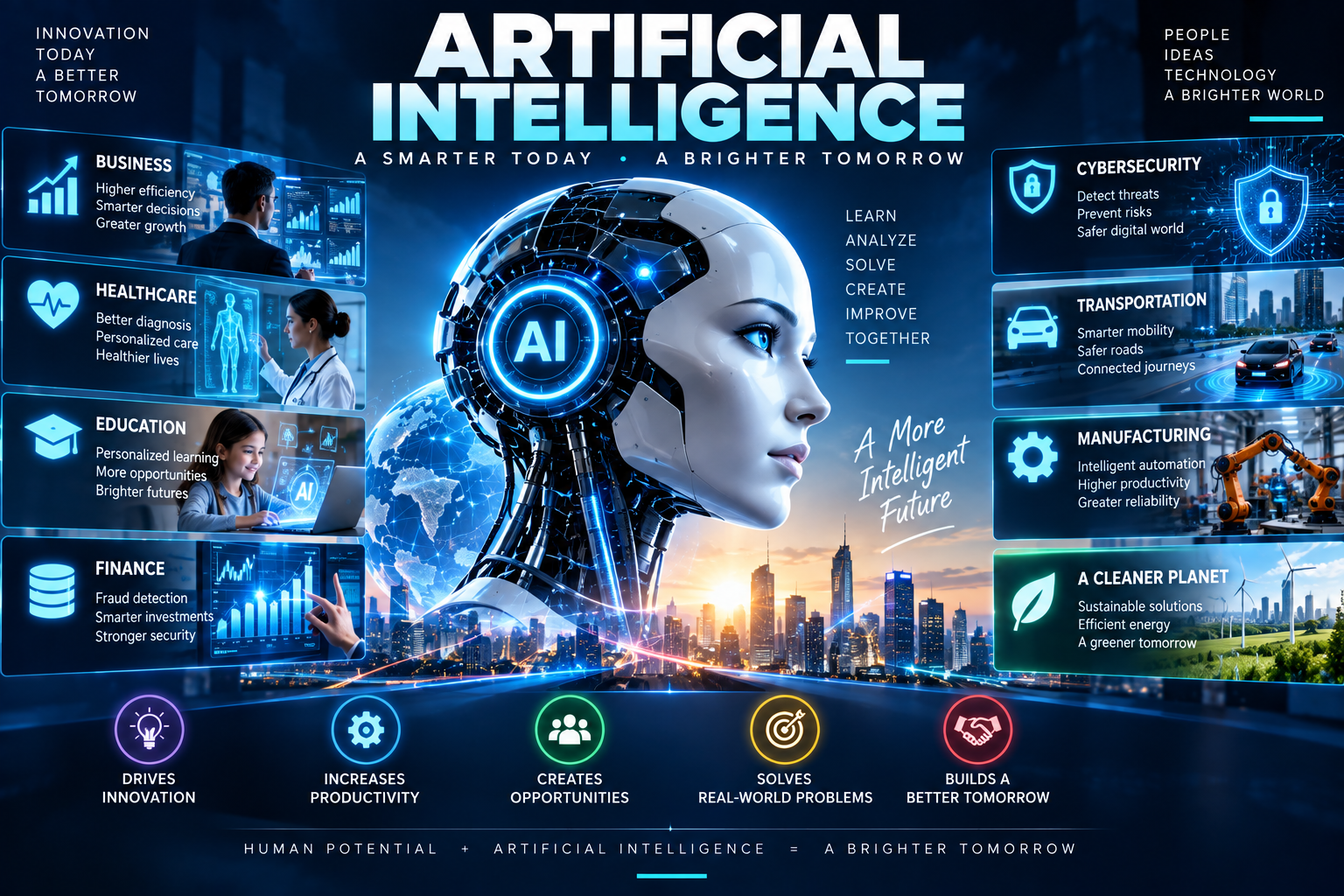
Artificial Intelligence, commonly known as AI, has become one of the most influential technologies of the modern era. From smartphones and search engines to healthcare, finance, transportation, education, and business, AI is increasingly becoming part of everyday life.
AI allows computers and machines to perform tasks that traditionally require human intelligence. These tasks can include understanding language, recognizing images, analyzing information, identifying patterns, making predictions, solving problems, and generating content.
The rapid development of AI is creating new opportunities for businesses and individuals while also raising important questions about jobs, privacy, security, ethics, and the future of technology.
What Is Artificial Intelligence?
Artificial Intelligence is a field of technology focused on creating computer systems that can perform tasks associated with human intelligence.
Traditional computer programs usually follow explicitly defined instructions. AI systems, particularly those based on machine learning, can learn patterns from data and use those patterns to produce predictions or decisions.
AI can be found in many technologies that people already use. Voice assistants can understand spoken requests, recommendation systems can suggest products or entertainment, navigation applications can estimate travel times, and online platforms can automatically identify certain types of content.
More advanced AI systems can process complex information, generate text and images, write software, analyze documents, and assist with research.
How Does AI Work?
AI relies on several technologies and techniques.
Machine Learning
Machine learning allows computers to learn patterns from data rather than relying entirely on manually programmed rules.
A machine-learning model can be trained using examples and then used to make predictions or classifications on new information.
Deep Learning
Deep learning uses neural networks with multiple layers to process complex information.
It has contributed significantly to advances in areas such as image recognition, speech processing, language understanding, and generative AI.
Natural Language Processing
Natural language processing enables computers to work with human language.
It is used in translation systems, chatbots, search tools, voice assistants, text analysis, and AI writing applications.
Computer Vision
Computer vision allows machines to analyze images and video.
Applications include quality inspection in manufacturing, medical image analysis, facial recognition, autonomous systems, and object detection.
Why Is AI Important?
AI is important because it can process enormous amounts of information at high speed.
Organizations generate vast quantities of data through transactions, websites, applications, sensors, customer interactions, and internal systems. AI can help transform this information into useful insights.
AI can also automate repetitive tasks. This can allow employees to spend more time on activities that require creativity, communication, strategic thinking, and human judgment.
For businesses, AI can improve efficiency and potentially reduce operational costs. For consumers, it can create more personalized and convenient experiences.
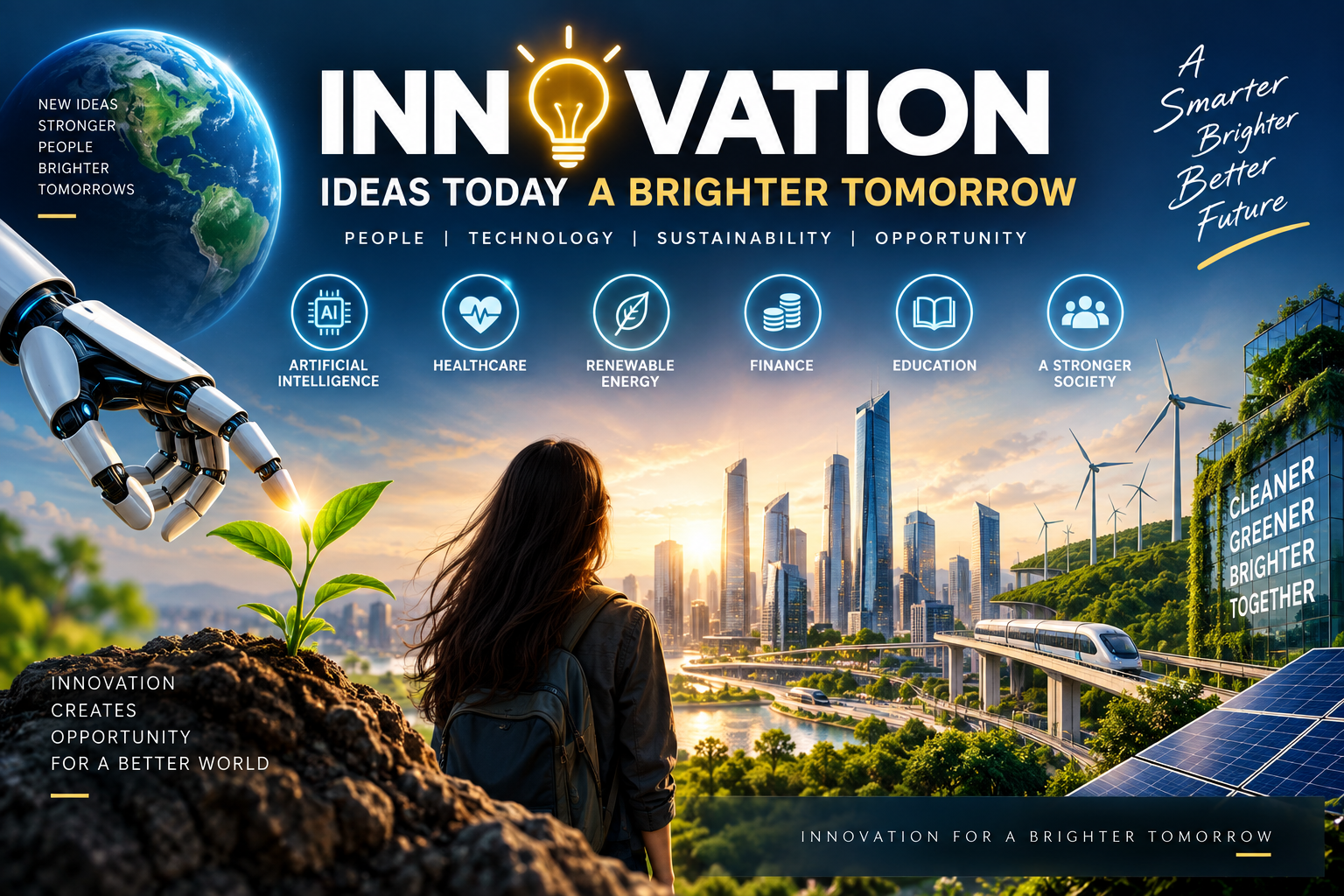
AI is also being explored for major global challenges, including healthcare research, energy efficiency, scientific discovery, agriculture, and climate-related problems.
AI in Everyday Life
Many people interact with AI without necessarily realizing it.
When a streaming service recommends a movie, an online store suggests a product, or a navigation application recommends a route, AI or machine-learning technology may be involved.
Smartphone cameras can use AI-based processing to improve photographs. Email systems can identify spam and suspicious messages. Banks can use automated systems to identify unusual transactions.
As AI becomes more integrated into software and devices, the distinction between "AI technology" and ordinary digital services may become less noticeable.
Generative AI
Generative AI has become one of the most visible developments in artificial intelligence.
Unlike systems designed primarily to classify or predict information, generative AI can produce new content based on user instructions and learned patterns.
Depending on the system, generative AI can create text, images, audio, video, software code, summaries, and other forms of digital content.
Businesses can use generative AI for marketing, customer support, research, software development, documentation, and internal productivity.
Students and professionals can use AI tools to brainstorm ideas, explain concepts, organize information, and assist with writing.
However, AI-generated information can sometimes be inaccurate. Users should therefore review important outputs rather than assuming every AI response is correct.
AI in Business
Businesses across many industries are exploring AI to improve their operations.
AI can automate administrative tasks, analyze customer behavior, forecast demand, identify patterns, and support decision-making.
Marketing teams can use AI to analyze audiences and develop content ideas. Sales teams can use AI to organize customer information and identify potential opportunities.
Operations teams can use predictive models to improve inventory and resource planning.
Enterprise AI can also connect AI capabilities with company data, applications, and workflows, allowing organizations to use artificial intelligence at a larger scale.
AI in Healthcare
Healthcare is one of the areas where AI has significant potential.
AI can assist researchers in analyzing large datasets and identifying patterns that may support medical research.
Healthcare organizations can also use AI for administrative tasks, document processing, scheduling, patient communication, and operational planning.
Computer vision technologies may assist with the analysis of medical images in certain applications.
AI does not eliminate the need for healthcare professionals. Medical decisions can involve complex factors that require professional knowledge, context, communication, and human judgment.
The successful use of AI in healthcare therefore depends on accuracy, validation, privacy, safety, and responsible oversight.
AI in Education
AI is changing the way students, teachers, and educational organizations approach learning.
AI-powered tools can explain concepts, provide practice questions, summarize material, assist with research, and support personalized learning.
Teachers can use AI to create educational materials, organize information, and develop learning activities.
AI may also help identify areas where students need additional support.
However, education should not become completely dependent on automated systems. Critical thinking, creativity, communication, collaboration, and relationships between teachers and students remain essential.
AI in Finance
Financial institutions have used data-driven technologies for many years, and AI is expanding their capabilities.
AI can assist with fraud detection, transaction monitoring, risk analysis, customer service, forecasting, and financial operations.
For example, an AI system can examine transaction patterns and identify activity that may require further investigation.
AI can also help financial professionals analyze large amounts of information more efficiently.
Because financial systems involve sensitive information and important decisions, security, privacy, accuracy, and regulatory compliance are critical.
AI and Cybersecurity
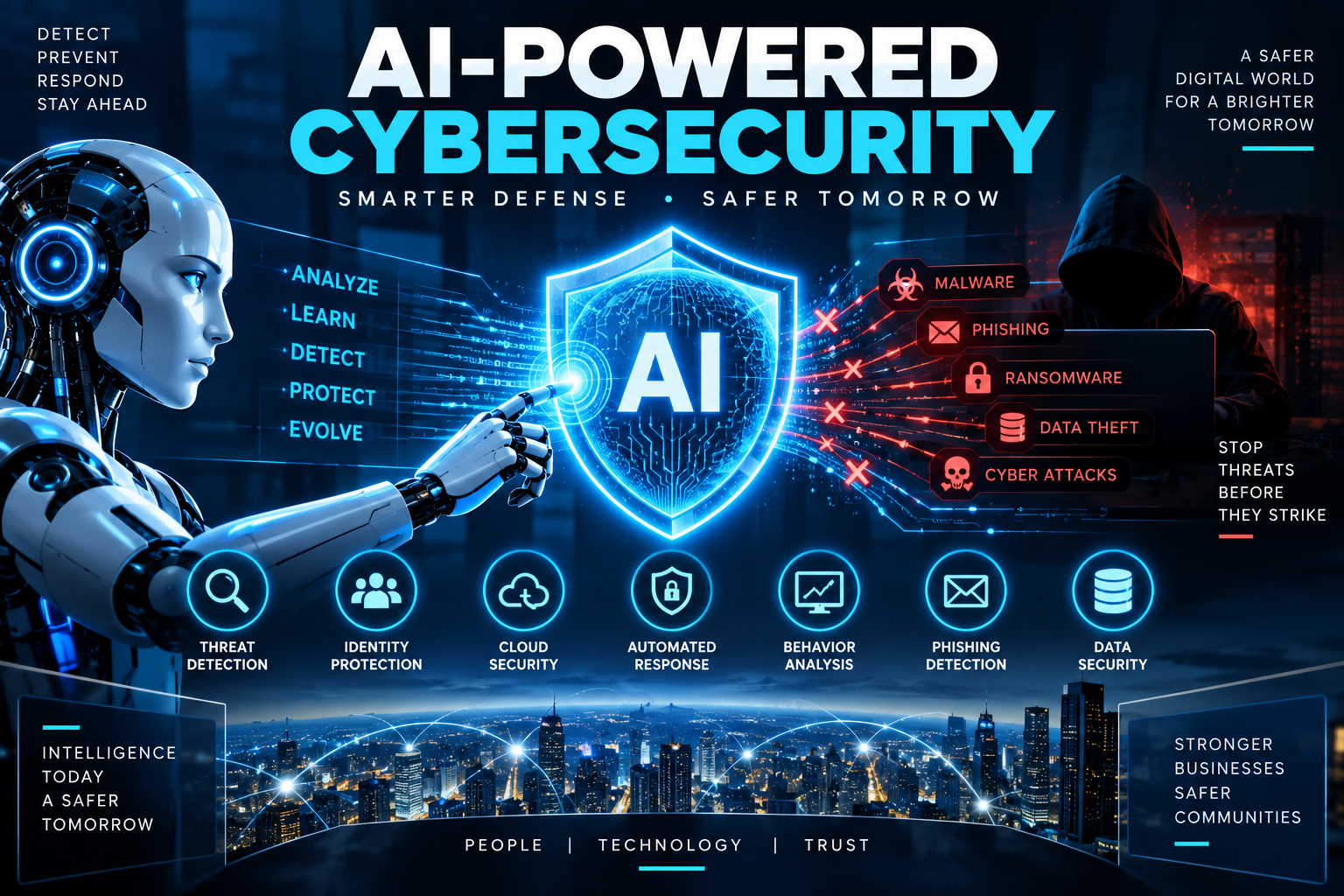
As cyber threats become more sophisticated, AI is becoming an important cybersecurity tool.
AI can analyze large volumes of network activity and security events to identify unusual behavior.
Organizations can use AI to assist with phishing detection, malware analysis, identity protection, threat monitoring, and incident response.
AI can potentially help security teams respond faster by prioritizing suspicious activity.
At the same time, cybercriminals can also use AI to improve certain attacks. This creates an ongoing technological competition between attackers and defenders.
Strong cybersecurity therefore requires AI alongside established practices such as access controls, secure backups, software updates, employee training, and multi-factor authentication.
AI in Transportation
Transportation is another area where AI is creating significant change.
AI can analyze traffic patterns, optimize routes, predict maintenance requirements, and support logistics operations.
Modern vehicles increasingly use AI-assisted systems for functions such as driver assistance, object detection, parking support, and safety monitoring.
Autonomous driving remains a complex technological and regulatory challenge, but AI continues to play an important role in research and development.
For logistics companies, AI can help optimize delivery routes, manage inventory, and improve supply-chain planning.
AI and the Future of Work
One of the biggest questions surrounding AI is how it will affect employment.
AI can automate certain tasks that previously required human labor. This may change the responsibilities associated with many jobs.
However, technological change can also create new roles and industries.
As AI becomes more common, employees may increasingly need skills in AI literacy, data analysis, critical thinking, communication, creativity, and problem-solving.
The future workplace may involve humans and AI systems working together.
Rather than asking whether AI will replace every worker, a more useful question may be which tasks AI can perform effectively and which tasks continue to benefit from human expertise.
Benefits of Artificial Intelligence
AI can provide many potential benefits, including:
Faster data analysis
Automation of repetitive tasks
Improved operational efficiency
Personalized customer experiences
Enhanced decision support
Better forecasting
Faster research
Improved productivity
Assistance with complex information
New products and business models
The actual benefits depend on how AI is implemented and whether the technology addresses a meaningful problem.
Challenges and Risks of AI
Despite its potential, AI also introduces challenges.
Accuracy
AI systems can produce incorrect or misleading results. Human review is especially important for high-impact decisions.
Privacy
AI systems may process large amounts of personal or confidential information. Organizations must protect sensitive data and use it responsibly.
Security
AI systems can become targets for cyberattacks, and attackers may also use AI to develop new methods of attack.
Bias
AI models can reproduce or amplify biases present in their training data or development processes.
Employment Changes
Automation may change job responsibilities and reduce demand for certain tasks while increasing demand for others.
Misinformation
Generative AI can make it easier to create convincing but inaccurate content, making digital literacy and verification increasingly important.
Responsible AI
The future of artificial intelligence depends not only on technological advancement but also on responsible development.
Responsible AI involves considering accuracy, fairness, transparency, privacy, security, accountability, and human oversight.
Organizations should understand how their AI systems work, what data they use, and what risks they create.
Important decisions should have appropriate levels of human oversight, particularly when they affect people's finances, employment, education, healthcare, or access to important services.
The Future of Artificial Intelligence
AI development is likely to continue at a rapid pace.
Future AI systems may become more capable of reasoning across different types of information and completing complex workflows.
AI assistants could become deeply integrated into workplaces, helping employees research information, analyze data, communicate with customers, and automate routine processes.
AI may also accelerate scientific discovery by helping researchers analyze complex datasets and explore potential solutions.
Robotics could combine AI with physical machines, creating new possibilities in manufacturing, logistics, healthcare, agriculture, and other industries.
At the same time, society will need effective rules and institutions to manage the risks associated with increasingly capable AI systems.
Conclusion
Artificial Intelligence is transforming technology, business, and everyday life.
From machine learning and generative AI to healthcare, education, finance, cybersecurity, and transportation, artificial intelligence is becoming an important part of the global digital economy.
AI can improve productivity, automate repetitive work, analyze information, support decisions, and create new opportunities. However, its benefits must be balanced with concerns involving privacy, security, accuracy, bias, employment, and misinformation.
The future of AI will ultimately depend on how people choose to develop and use it.
The most successful approach is unlikely to be humans versus machines. Instead, the future will increasingly involve humans working with intelligent systems, combining machine capabilities with creativity, judgment, empathy, and experience.
Frequently Asked Questions About AI
1. What is Artificial Intelligence?
Artificial Intelligence is technology that enables computers and machines to perform tasks associated with human intelligence, such as learning, reasoning, language processing, pattern recognition, and problem-solving.
2. What is AI used for?
AI is used in search engines, recommendation systems, customer service, healthcare, finance, cybersecurity, transportation, education, manufacturing, marketing, and many other areas.
3. What is generative AI?
Generative AI refers to AI systems capable of creating new content such as text, images, audio, video, or computer code based on learned patterns and user instructions.
4. How does machine learning work?
Machine learning systems learn patterns from data and use those patterns to make predictions, classifications, or other outputs when presented with new information.
5. Will AI replace human jobs?
AI may automate some tasks and change job responsibilities, but it can also create new roles and opportunities. Many future jobs are likely to involve collaboration between humans and AI.
6. What are the benefits of AI?
Key benefits include automation, faster analysis, improved productivity, personalized services, better forecasting, decision support, and the ability to process large quantities of information.
7. What are the risks of AI?
Important risks include inaccurate outputs, privacy concerns, cybersecurity threats, bias, misinformation, misuse, and changes to employment.
8. Is AI always accurate?
No. AI systems can make mistakes or generate incorrect information. Important outputs should be reviewed and verified, particularly in high-stakes situations.
9. How is AI used in business?
Businesses use AI for customer service, marketing, data analysis, forecasting, automation, fraud detection, cybersecurity, research, software development, and operational management.
10. What is the future of AI?
The future of AI is likely to involve more capable AI assistants, intelligent automation, advanced robotics, scientific applications, personalized services, and deeper integration into everyday work and technology.