Online dating has transformed how people meet, communicate, and build relationships. For LGBTQ+ singles, dating websites and apps offer opportunities to connect with people who share similar identities, interests, and relationship goals. Whether someone is looking for a serious relationship, friendship, casual dating, or a supportive community, there are several platforms designed to make online connections more accessible.
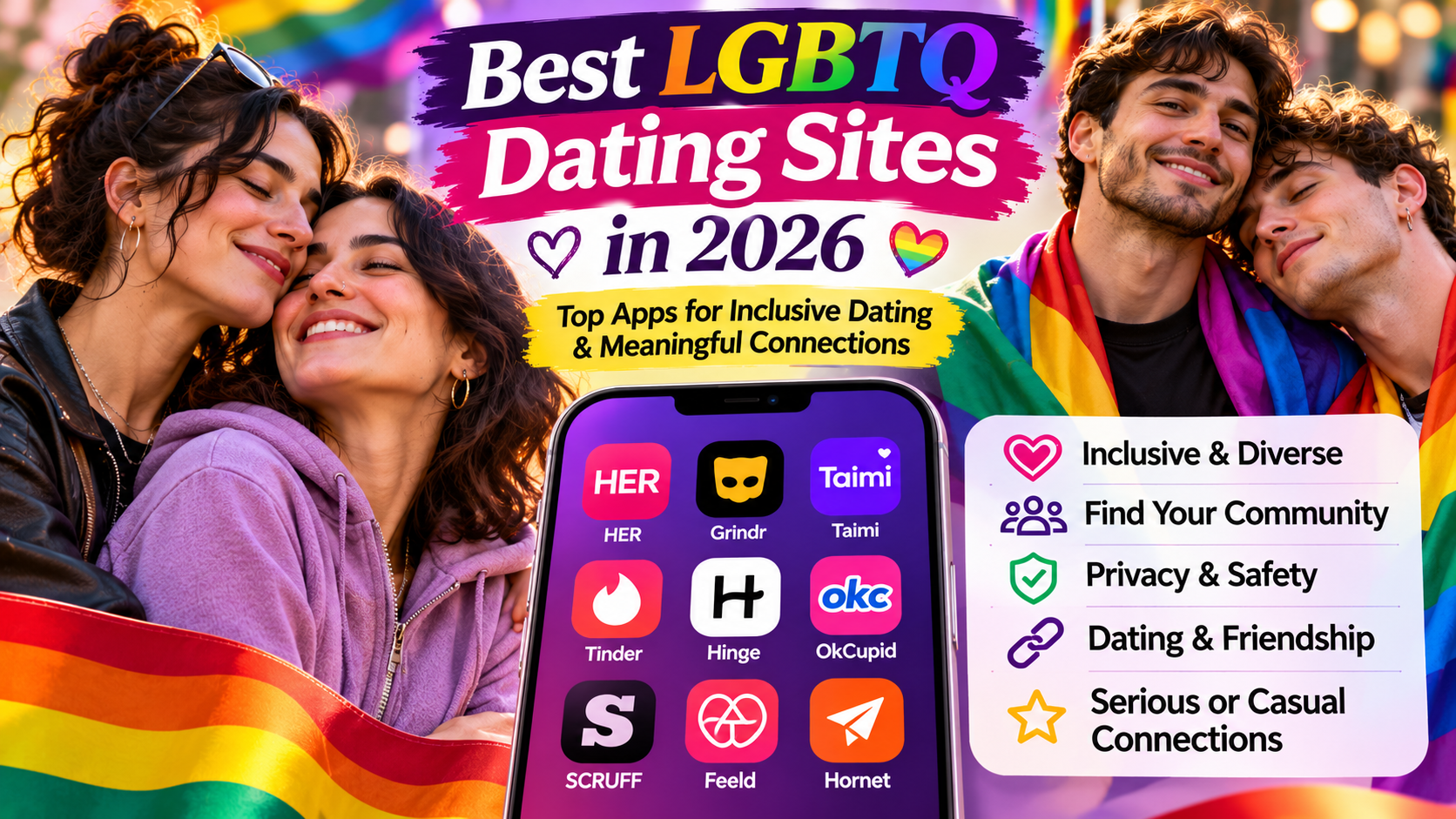
In 2026, LGBTQ+ dating options include dedicated platforms such as HER, Grindr, and Taimi, as well as mainstream dating apps like Hinge, Tinder, and OkCupid. Each service has a different audience, matching system, and set of features. Some focus on specific communities, while others welcome people across a broad range of sexual orientations and gender identities.
Choosing the right platform depends on personal preferences. A person seeking a long-term relationship may prefer detailed profiles and compatibility questions, while someone interested in meeting people nearby might value location-based discovery. Privacy, identity options, moderation, and communication controls are also important considerations.
This guide explores some of the best LGBTQ dating sites and apps in 2026, explains their main features, and provides practical advice for choosing a platform and staying safe online.
What Are LGBTQ Dating Sites?
LGBTQ dating sites are online platforms that help lesbian, gay, bisexual, transgender, queer, and other adults connect with potential romantic partners and friends. Some are specifically designed for LGBTQ+ communities, while others provide inclusive options within a broader dating service.
Traditional dating platforms have not always offered the identity options or community experiences that LGBTQ+ users may want. Dedicated services aim to address these needs by providing more relevant profile settings, community features, and ways to discover compatible people.
Depending on the platform, users may be able to:
Create profiles that describe their interests and identities.
Select sexual orientation and gender identity options.
Search for people with shared interests.
Find potential matches based on location.
Communicate through messages or other in-app features.
Join community discussions and social groups.
Set preferences for casual dating or serious relationships.
Not every platform offers all these features. Users should review the available settings and privacy policies before creating an account.
Best LGBTQ Dating Sites and Apps in 2026
The following platforms serve different parts of the LGBTQ+ dating community. The best choice depends on the type of connection someone wants and the features that matter most to them.
1. HER – Best for Queer Women and Sapphic Dating
HER is a dating and social networking platform created primarily for queer women and sapphic communities. It also welcomes many nonbinary and transgender users. Its community-oriented approach makes it different from general dating applications that focus mainly on swiping through profiles.
HER combines dating discovery with social features that can help users find people with similar interests. Depending on availability and account settings, members can explore profiles, connect with potential matches, and participate in community spaces.
Key features:
Dating discovery for queer women and sapphic users.
Profile preferences and matching features.
Community-oriented social experiences.
Opportunities to connect through shared interests.
Free and premium membership options.
Who should consider HER?
HER may be a useful option for lesbian, bisexual, and queer women who want a platform with a dedicated community. It can also suit people who appreciate social interaction alongside traditional dating features.
2. Grindr – Best for Gay, Bisexual, and Queer Men
Grindr is one of the most recognizable LGBTQ+ dating and social networking apps. It is primarily associated with gay, bisexual, transgender, and queer men, although its user community includes people with different identities and preferences.
The platform is known for location-based profile discovery. Users can browse nearby profiles and decide whom they want to contact. This approach makes it different from dating platforms that rely mainly on long compatibility questionnaires.
Grindr can be used for different types of connections, including dating, friendship, and casual encounters. Users should communicate their expectations clearly rather than assuming that everyone has the same goals.
Key features:
Location-based profile discovery.
Direct messaging.
Profile photographs and personal descriptions.
Options for sharing photos privately.
Free and paid subscription plans.
Who should consider Grindr?
Grindr may suit gay, bisexual, and queer men who prefer meeting people nearby. People looking for serious relationships should communicate their intentions early and assess whether potential matches want the same kind of connection.
3. Taimi – Best for a Broad LGBTQ+ Community
Taimi is a social networking and dating platform designed for a broad LGBTQ+ audience. It aims to provide a space where people with different sexual orientations and gender identities can meet and communicate.
Unlike services focused on one particular community, Taimi positions itself as an inclusive platform for a wider range of LGBTQ+ users. Its combination of social and dating features may appeal to people who want more than a conventional matching experience.
Key features:
Broad LGBTQ+ community focus.
Profile and identity options.
Dating and social networking features.
Communication and discovery tools.
Free access with optional premium features.
Who should consider Taimi?
Taimi may be worth exploring for people who want a platform designed for a broad range of LGBTQ+ identities. Users should review the available identity settings and local community activity to determine whether it meets their needs.
4. Hinge – Best for Relationship-Focused Dating
Hinge is a mainstream dating app that can also be used by LGBTQ+ singles. It emphasizes detailed profiles and conversation prompts rather than relying entirely on photographs and quick swipes.
Members can respond to specific profile prompts and interact with parts of another person's profile. This can make it easier to begin conversations based on shared interests, values, or experiences.
Hinge is often considered by people who want more intentional dating. However, no dating app can guarantee that users will find a long-term partner.
Key features:
Detailed personal profiles.
Conversation prompts.
Likes and comments on profile content.
Matching and messaging features.
Free and paid membership options.
Who should consider Hinge?
Hinge may suit LGBTQ+ adults interested in meaningful conversations and relationship-oriented dating. It is particularly useful for people who prefer learning about someone's personality before arranging a meeting.
5. OkCupid – Best for Compatibility-Based Matching
OkCupid is known for its questionnaire-based matching approach. Users can answer questions about their interests, values, lifestyle, and relationship preferences. The platform uses responses to help people discover potentially compatible matches.
Its identity and orientation options make it relevant to many LGBTQ+ users. The detailed profile format can also help members understand what another person is looking for before starting a conversation.
Key features:
Compatibility questions.
Detailed profiles.
Sexual orientation and gender identity options.
Matching based on preferences and responses.
Free and premium features.
Who should consider OkCupid?
OkCupid may appeal to people who value compatibility questions and want to explore connections beyond photographs. It can be useful for LGBTQ+ singles who want to communicate their preferences and expectations clearly.
6. Tinder – Best for a Large General Dating Audience
Tinder is a widely recognized dating app used by people with different orientations and relationship goals. It offers gender and orientation settings, although the exact options and experiences may vary by location and version.
Its swipe-based system makes profile discovery straightforward. Users can browse photographs and short descriptions, express interest, and communicate when a match is established.
Because Tinder serves a broad audience, the experience can differ considerably from dedicated LGBTQ+ platforms. Some people may appreciate its wider pool of users, while others may prefer a more focused community.
Key features:
Swipe-based matching.
Profile photographs and descriptions.
Gender and orientation settings.
Messaging after matching.
Free and premium subscription options.
Who should consider Tinder?
Tinder may be suitable for LGBTQ+ adults who want access to a broad dating audience. Users should make their relationship goals clear in their profiles to improve the chances of finding people with similar expectations.
7. SCRUFF – Best for Gay and Bisexual Men's Community
SCRUFF is a dating and social networking app primarily associated with gay, bisexual, and queer men. It offers profile discovery and community features, with options that can be useful for people who travel or want to connect with users in different locations.
The platform provides a dedicated environment rather than relying on a general dating audience. Its user experience and community focus may appeal to people looking for dating, friendships, or social connections.
Key features:
Profiles for gay, bisexual, and queer men.
Location-based discovery.
Messaging and profile browsing.
Travel-related discovery features.
Free and optional paid membership.
Who should consider SCRUFF?
SCRUFF may be worth considering for gay and bisexual men who want a dedicated community and location-based discovery. As with other apps, users should check privacy settings before sharing their location or personal information.
8. Feeld – Best for People Exploring Different Relationship Styles
Feeld is a dating platform designed for adults interested in a range of relationship structures and dating preferences. Its audience includes LGBTQ+ users, couples, and people exploring consensual non-monogamy.
The platform focuses on allowing members to communicate their preferences and find others who are open to similar relationship arrangements. It is not exclusively an LGBTQ+ dating app, but it may be relevant to people who want a more flexible dating experience.
Key features:
Inclusive dating preferences.
Options for different relationship structures.
Individual and couple profiles.
Profile discovery and messaging.
Free and premium features.
Who should consider Feeld?
Feeld may suit LGBTQ+ adults who are interested in alternative relationship structures or want to meet people with clearly stated dating preferences. Users should communicate boundaries and expectations honestly.
9. Hornet – Best for Social Networking and Dating
Hornet combines social networking and dating features for gay, bisexual, and queer men. It provides opportunities to discover profiles, communicate, and engage with content from the wider community.
Some people prefer a platform that includes social interaction rather than functioning only as a matching service. Hornet's community-oriented approach may be attractive to users who want to explore conversations and connections.
Key features:
Community and social networking tools.
Profile discovery.
Messaging features.
Content and community interaction.
Free and premium options.
Who should consider Hornet?
Hornet may be useful for gay and bisexual men who want a combination of social networking and dating. Its usefulness will depend on the activity of its community in a user's area.
10. PinkCupid – Best for Lesbian Dating
PinkCupid is a niche dating platform associated with lesbian dating. Rather than serving every part of the LGBTQ+ community, it focuses on helping women interested in women discover potential partners.
Its profile-based approach can appeal to users who prefer a more dedicated dating environment. As with other niche platforms, the number of active members may vary significantly by location.
Key features:
Lesbian-focused dating community.
Member profiles and browsing.
Search and matching options.
Communication features.
Free registration with paid membership options.
Who should consider PinkCupid?
PinkCupid may be worth exploring for lesbian women who prefer a specialized dating website. Before purchasing a subscription, users should check how many relevant profiles are active in their region.
Comparison of the Best LGBTQ Dating Sites
The following table summarizes the main audience and purpose of each platform.
Platform | Best For | Main Approach |
|---|---|---|
HER | Queer women and sapphic users | Dating and community |
Grindr | Gay, bisexual, and queer men | Nearby profile discovery |
Taimi | Broad LGBTQ+ audience | Dating and social networking |
Hinge | Relationship-focused singles | Detailed profiles and prompts |
OkCupid | Compatibility-focused dating | Questions and matching |
Tinder | Broad dating audience | Swipe-based matching |
SCRUFF | Gay and bisexual men | Community and profile discovery |
Feeld | Different relationship structures | Preference-based discovery |
Hornet | Gay and bisexual men | Social networking and dating |
PinkCupid | Lesbian dating | Specialized dating profiles |
The comparison is a general guide, not a guarantee of match quality, local membership, or safety. Features and availability can change.
How to Choose the Best LGBTQ Dating Site
Selecting a dating platform is a personal decision. The most popular app may not necessarily be the best one for every user. Consider the following factors before creating an account.
1. Identify Your Dating Goals
Start by deciding what type of connection you want. Some people are interested in long-term relationships, while others want friendship, casual dating, or community interaction.
Look for platforms that make it possible to communicate these preferences. A detailed profile can reduce misunderstandings and help you connect with people who want similar things.
2. Review Gender and Orientation Options
An inclusive dating experience begins with accurate identity settings. Check whether the platform offers profile options that reflect how you identify and whom you want to meet.
Do not assume that every app provides the same choices. Review its current settings before investing time in building a profile.
3. Consider Local User Activity
A dating app can have millions of members worldwide but relatively few active users in a particular city. Local activity can make a significant difference to the experience.
Explore free features first, where available, to see whether there are relevant profiles in your area.
4. Compare Free and Paid Features
Many dating platforms offer free accounts alongside premium subscriptions. Free memberships may include basic profile creation and matching, while paid plans can offer additional filters, visibility options, or other features.
Before subscribing, check:
Which features are included for free?
Is messaging available without payment?
Does the subscription renew automatically?
Can the membership be cancelled easily?
Are prices different across countries or app stores?
Never assume that a free download means every feature is free.
5. Check Privacy and Security Controls
Privacy is particularly important for LGBTQ+ users who may not want their identity or dating activity visible to everyone.
Look for blocking, reporting, profile visibility, location controls, and account deletion options. Review the platform's privacy policy to understand how personal information is collected and used.
Tips for Creating a Strong LGBTQ Dating Profile
A well-written profile can help people understand your personality and intentions. You do not need an elaborate biography. A few authentic details can make your profile more engaging.
Use a Clear Profile Photograph
Choose a photograph that represents you accurately. If you are comfortable sharing your face, use a recent image with good lighting.
If privacy is a concern, review the platform's photograph and visibility settings before uploading pictures.
Write an Honest Description
Your profile description should communicate your interests and what you hope to find. Avoid exaggerating personal details or pretending to have interests you do not enjoy.
For example:
"I'm interested in meeting thoughtful people who enjoy good conversations, music, and exploring new places. I'm open to building a genuine connection and getting to know someone gradually."
Communicate Your Relationship Preferences
If you want a serious relationship, friendship, or casual dating, communicate that clearly. This helps reduce confusion and gives potential matches a better understanding of your expectations.
Show Your Personality
Mention a few things you genuinely enjoy, such as cooking, travelling, reading, fitness, films, or creative hobbies. Shared interests can provide natural conversation starters.
Respect Other People's Boundaries
A good dating experience depends on mutual respect. Avoid pressuring someone to share photographs, reveal personal information, meet in person, or discuss subjects they are uncomfortable with.
Online Dating Safety Tips for LGBTQ+ Users
Online dating can create opportunities for meaningful connections, but users should take practical precautions. Safety is especially important when a platform includes location-based discovery or when someone is concerned about being identified without consent.
Protect Your Personal Information
Avoid sharing sensitive information with people you have just met online. This includes:
Home or workplace addresses.
Financial information.
Passwords and verification codes.
Identity documents.
Private photographs that could be misused.
Information about family members without their consent.
Use the platform's messaging system until you feel comfortable sharing another way to communicate.
Review Location Settings
Some dating apps use location information to help people discover nearby profiles. Check whether the app allows you to control location visibility or limit access to your device's location.
Avoid sharing your exact home or workplace location with strangers.
Be Careful About Scams
Romance scammers may create fake profiles, build trust, and eventually request money or financial assistance. Be cautious if someone:
Requests money or gift cards.
Claims to have an urgent financial emergency.
Avoids reasonable identity checks or video calls.
Sends suspicious links.
Requests banking details or verification codes.
Pressures you to move conversations to unfamiliar platforms.
Never send money to someone simply because they claim to be a romantic partner.
Arrange First Meetings Carefully
If you decide to meet someone in person, choose a public place and arrange your own transportation. Tell a trusted person where you are going and consider sharing your meeting details with them.
Do not feel obligated to continue a meeting if you become uncomfortable.
Use Blocking and Reporting Tools
If someone sends threatening messages, harasses you, or behaves inappropriately, use the app's blocking and reporting options. Keep relevant evidence when necessary and seek appropriate help if there is a credible threat.
Think Carefully Before Sharing Your Identity
Not everyone has the same level of privacy or safety. Some users may not be publicly out or may live in environments where disclosure could create personal risks.
Only share identity-related information when you feel comfortable. Check profile visibility and notification settings, and avoid assuming that another person is ready to disclose personal information.
Are LGBTQ Dating Sites Free?
Many LGBTQ dating apps offer free versions, but their features vary. Some allow users to create profiles and communicate without paying, while others limit certain matching, messaging, or discovery features.
Premium memberships may include:
Advanced search filters.
Additional profile visibility.
More likes or interactions.
Incognito or private browsing options.
Additional discovery tools.
Removal of advertisements.
Prices can vary by country, subscription duration, platform, and promotional offers. A price shown in a US app store may not apply in Pakistan, the United Kingdom, or another region.
Before paying, read the subscription terms carefully. Check the renewal date, cancellation procedure, and whether the service offers a trial.
LGBTQ Dating Apps vs. Traditional Dating Websites
Dedicated LGBTQ dating platforms and mainstream dating apps can both be useful, but they offer different experiences.
Dedicated LGBTQ platforms are designed around particular communities. They may offer more relevant identity settings, specialized discovery tools, and community features.
Mainstream dating apps provide access to a wider general audience. Some offer inclusive gender and orientation options, detailed profiles, or compatibility features.
Neither category is automatically better. A person may prefer a dedicated community, while another may find more compatible matches on a mainstream service.
The best approach is to compare the available features, privacy controls, and local activity rather than choosing an app solely because it is popular.
The Future of LGBTQ Online Dating in 2026 and Beyond
Online dating continues to evolve as technology and user expectations change. LGBTQ+ users increasingly expect dating services to offer more than basic matching and messaging.
Several developments are shaping the future of digital dating.
More Inclusive Profile Options
Dating platforms are under pressure to provide identity settings that reflect a wider range of experiences. More thoughtful profile options can help people describe themselves accurately and find compatible connections.
Improved Privacy Controls
Privacy is likely to remain a major consideration. Users want more control over who can view their profiles, access their location, or contact them.
Dating companies that make privacy settings easier to understand may offer a better experience for people who have additional concerns about visibility.
Better Profile Verification
Fake profiles and impersonation can undermine trust. Verification tools may help users assess whether a profile is genuine, although no verification system can guarantee that someone is honest or safe.
More Meaningful Matching
Some services are emphasizing personality, interests, and relationship preferences rather than relying entirely on photographs. Detailed prompts and compatibility questions can support more meaningful conversations.
Community Beyond Dating
Dating apps may increasingly include social spaces, events, and community discussions. These features can help people build connections even when they are not actively searching for a romantic partner.
Conclusion
The best LGBTQ dating sites in 2026 offer different ways to meet people, explore relationships, and connect with communities. HER is a dedicated option for queer women and sapphic users, Grindr and SCRUFF serve many gay and bisexual men, and Taimi offers a broader LGBTQ+ social and dating experience. Hinge and OkCupid may appeal to people who prefer detailed profiles and compatibility-focused interactions, while Tinder provides access to a broad dating audience.
There is no single platform that works perfectly for everyone. The right choice depends on identity options, relationship goals, local activity, affordability, and privacy preferences.
Before subscribing to any service, explore its free features, read its privacy policy, and review its safety tools. Be honest about your intentions, respect other people's boundaries, and avoid sharing sensitive personal information too quickly.
With careful platform selection and sensible precautions, online dating can provide an additional way for LGBTQ+ adults to discover companionship, friendship, and meaningful relationships.
Frequently Asked Questions (FAQs)
1. What are the best LGBTQ dating sites in 2026?
Popular options include HER, Grindr, Taimi, Hinge, OkCupid, Tinder, SCRUFF, Feeld, Hornet, and PinkCupid. Each platform serves different audiences and relationship preferences.
2. Which LGBTQ dating app is best for queer women?
HER is a well-known dating and community platform designed primarily for queer women and sapphic users. PinkCupid is another specialized option for lesbian dating.
3. Which dating app is popular among gay men?
Grindr is one of the best-known apps used by gay, bisexual, transgender, and queer men. SCRUFF and Hornet are other platforms worth exploring.
4. Is Taimi an LGBTQ dating app?
Yes. Taimi is a social networking and dating platform designed for a broad LGBTQ+ audience. It combines dating-related features with community interaction.
5. Are LGBTQ dating apps free?
Many offer free accounts, but some features may require a paid subscription. Users should check the current membership terms and pricing in their country.
6. Can LGBTQ singles use mainstream dating apps?
Yes. LGBTQ+ adults can use mainstream platforms such as Hinge, Tinder, and OkCupid. Their identity options and matching experiences vary, so it is worth reviewing each app's settings.
7. Which LGBTQ dating app is best for serious relationships?
Hinge may be a useful starting point for people interested in relationship-focused dating. HER, Taimi, OkCupid, and other services can also be used by people seeking serious connections.
8. Are LGBTQ dating sites safe?
No dating platform can guarantee complete safety. Users should protect personal information, review privacy settings, watch for scams, and arrange first meetings in public places.
9. Can I use LGBTQ dating apps privately?
Some platforms provide privacy settings such as profile visibility controls or private browsing features. Availability may depend on the app and subscription plan. Users should review current settings before creating an account.
10. How do I choose the right LGBTQ dating app?
Consider your relationship goals, identity options, local user activity, subscription costs, privacy controls, and available communication features. Try free features before purchasing a premium membership.
11. What should I write in an LGBTQ dating profile?
Write a short, honest description of your personality, interests, and relationship goals. Avoid sharing sensitive personal information until you feel comfortable.
12. Do LGBTQ dating apps work internationally?
Some platforms operate in multiple countries, but availability and the number of active users vary by region. Check whether the service is accessible and useful in your location before subscribing.