Running a business involves more than generating sales and attracting customers. Business owners also need to understand where their money comes from, how it is spent, and whether enough cash will be available to cover upcoming expenses.
Without a clear budget, even a business with strong sales can experience financial difficulties. Unexpected costs, slow customer payments, rising supplier prices, and poorly planned investments can create cash shortages that interrupt daily operations.
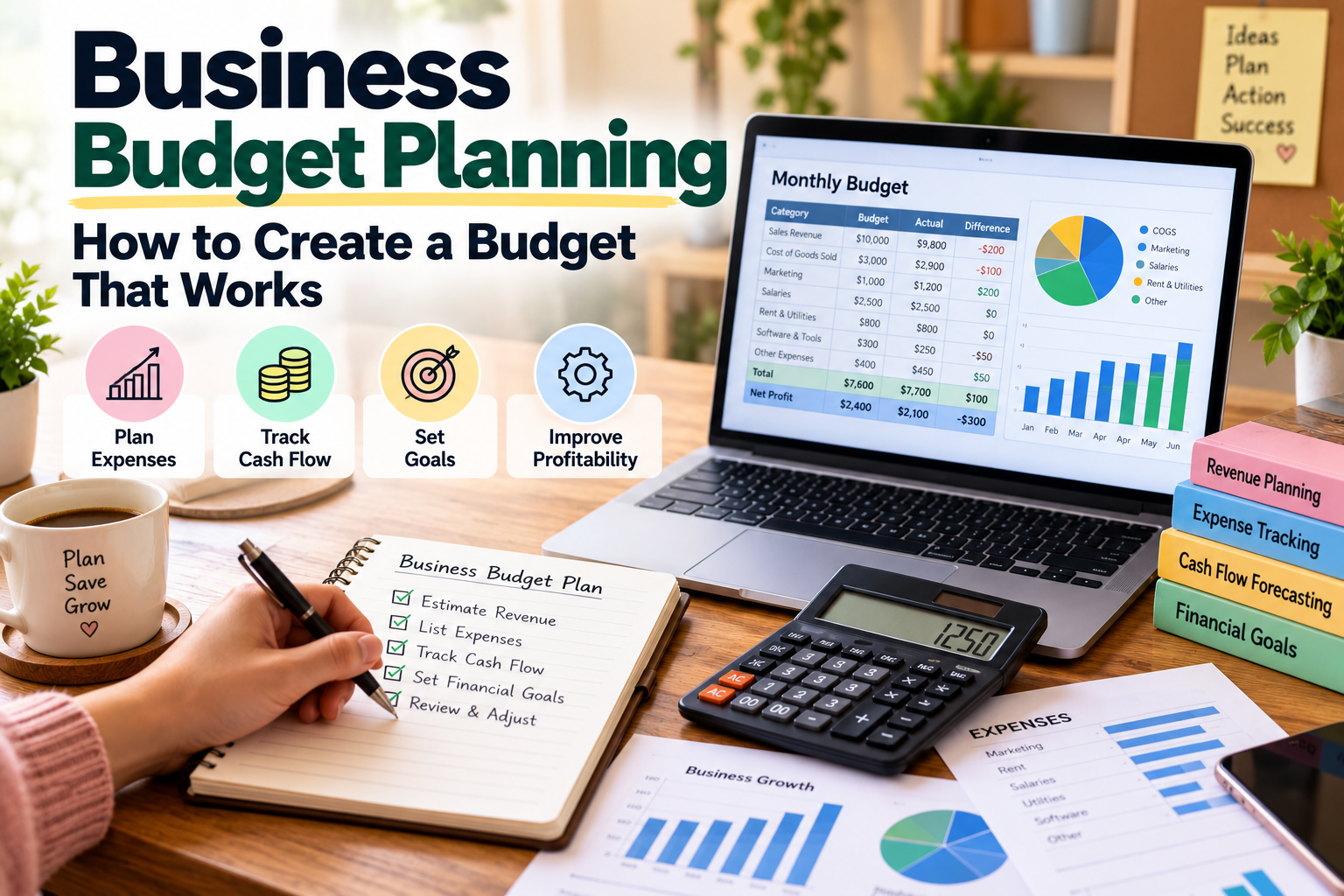
Business budget planning helps companies organize their finances, estimate future income and expenses, and make informed decisions about spending. It gives business owners a practical way to prepare for different situations instead of relying entirely on guesswork.
Whether you operate a small online store, a consulting business, a retail shop, or a growing company with employees, a budget can help you allocate resources more effectively.
The good news is that creating a business budget does not require complicated financial software. A spreadsheet and accurate financial information are often enough to get started.
In this guide, you will learn how to create a business budget, estimate revenue, categorize expenses, forecast cash flow, avoid common budgeting mistakes, and build a financial plan that supports your business goals.
What Is Business Budget Planning?
Business budget planning is the process of estimating a company's future revenue, expenses, cash requirements, and financial priorities over a specific period.
A business budget provides a financial plan that helps owners decide how much they can spend, save, invest, or allocate to different activities.
For example, a small business might prepare a monthly budget that estimates:
Expected sales revenue.
Product purchasing and production costs.
Employee salaries and contractor payments.
Rent, utilities, and software subscriptions.
Marketing and advertising expenses.
Loan repayments and tax obligations.
Cash reserves for unexpected expenses.
At the end of the month, the business can compare actual results with the original budget to identify differences and determine whether adjustments are needed.
A budget is not a guarantee that financial results will match expectations. Instead, it provides a structured plan that can be updated when business conditions change.
Why Is Business Budgeting Important?
Business budgeting helps companies make decisions based on financial information rather than assumptions.
It can help business owners:
Control expenses: Identify unnecessary spending and recurring costs that may be reduced.
Plan for growth: Estimate the resources required to hire employees, purchase equipment, or expand operations.
Manage cash flow: Anticipate periods when cash may be insufficient to cover upcoming payments.
Set realistic goals: Connect sales targets and business priorities with available resources.
Prepare for uncertainty: Set aside reserves for unexpected expenses or weaker-than-expected revenue.
Measure performance: Compare actual financial results with planned targets and investigate significant differences.
A well-prepared budget is especially valuable for small businesses because they may have limited access to additional funding when unexpected costs arise.
Types of Business Budgets
Businesses use different budgets depending on their size, operations, and financial goals. Understanding the main types can help you decide which ones are most useful for your company.
1. Operating Budget
An operating budget estimates the revenue and expenses associated with running the business during a particular period.
It commonly includes sales revenue, cost of goods sold, salaries, rent, utilities, marketing, and administrative expenses.
For example, an online retailer might forecast monthly sales of $20,000 and estimate the costs required to purchase, market, and deliver its products.
The operating budget helps the business evaluate whether its expected revenue can cover its operating costs.
2. Cash Flow Budget
A cash flow budget estimates when money will enter and leave the business.
This is different from an operating budget because the timing of payments matters.
For example, a company may record a sale in March but receive payment from its customer in April. Meanwhile, it may need to pay its supplier in March.
The business could appear profitable while still experiencing a temporary cash shortage.
A cash flow budget helps owners anticipate these timing differences and prepare for upcoming payments.
3. Capital Budget
A capital budget focuses on major investments that are expected to provide value over a longer period.
Examples include purchasing machinery, upgrading computer systems, opening another location, or investing in new production equipment.
These decisions may require substantial upfront spending, so businesses should evaluate expected benefits, costs, risks, and financing requirements before proceeding.
4. Master Budget
A master budget combines several individual budgets into an overall financial plan.
It may include operating budgets, cash flow forecasts, capital expenditure plans, and projected financial statements.
Larger businesses often use master budgets to coordinate different departments, while smaller businesses can create a simplified version that brings their main financial plans together.
5. Flexible Budget
A flexible budget adjusts expected costs and financial results according to changes in activity levels.
For example, a business selling more products may incur additional packaging, shipping, and payment processing expenses.
A flexible budget helps distinguish expenses that naturally increase with sales from costs that should remain relatively stable.
This can make financial comparisons more meaningful when actual sales differ from the original forecast.
How to Create a Business Budget Step by Step
Creating a business budget becomes easier when you divide the process into manageable steps.
Step 1: Review Your Current Financial Position
Start by gathering accurate information about your business's finances.
Review bank statements, invoices, accounting records, sales reports, supplier bills, payroll records, and existing financial commitments.
If your business has operated for several months or years, examine previous financial results to identify patterns.
Look for seasonal changes, recurring expenses, customer payment delays, and periods of unusually high or low sales.
For a new business without historical records, use market research, supplier quotations, planned pricing, and realistic assumptions to estimate future results.
Separate confirmed figures from estimates so that you can update the budget when better information becomes available.
Step 2: Estimate Your Revenue
Revenue forecasting is one of the most important parts of business budget planning.
Your forecast should reflect realistic expectations rather than the sales figures you hope to achieve.
Start by identifying the main sources of revenue. These might include product sales, service fees, subscriptions, consulting projects, or recurring contracts.
For a simple business, you can estimate sales using this formula:
Expected Revenue = Expected Number of Sales × Average Selling Price
Suppose an online store expects to sell 400 products per month at an average price of $25.
Expected revenue = 400 × $25 = $10,000.
This is a forecast, not a guaranteed result.
Consider customer demand, marketing performance, seasonal patterns, production capacity, and competition when estimating sales.
It can also be helpful to create three scenarios:
Conservative: Sales are lower than expected.
Expected: Sales follow your most reasonable forecast.
Optimistic: Sales are stronger than expected.
Planning for multiple scenarios can help you prepare for uncertainty without assuming that the best outcome will occur.
Step 3: Identify Fixed Expenses
Fixed expenses are costs that generally remain relatively stable over a defined period, even when sales change.
Examples may include:
Office rent.
Certain software subscriptions.
Insurance premiums.
Salaried employee costs.
Internet service plans.
Some loan payments.
Suppose a business has the following monthly expenses:
Expense | Monthly cost |
|---|---|
Office rent | $800 |
Software subscriptions | $100 |
Insurance | $150 |
Internet and phone | $100 |
Total | $1,150 |
The business should include these expenses in its monthly budget.
However, fixed does not mean permanent. Rent, insurance, and subscription costs may change when contracts are renewed or services are updated.
Review recurring expenses regularly to identify costs that are no longer necessary.
Step 4: Estimate Variable Expenses
Variable expenses change with sales, production, or business activity.
For an online store, they may include product purchase costs, packaging, shipping, payment processing fees, and sales commissions.
For a service business, variable costs might include subcontractor payments, project-specific software, travel, or materials.
Suppose a company expects to sell 400 products and incurs $10 in variable costs per product.
Estimated variable expenses = 400 × $10 = $4,000.
This figure should be included alongside fixed expenses when estimating total costs.
Some expenses are mixed: they have both fixed and variable components. For example, a utility bill may include a basic service charge plus charges based on usage.
Accurately classifying expenses improves the usefulness of your forecast.
Step 5: Include Payroll and Contractor Costs
If your business employs people or hires contractors, include the full expected cost of their work.
Depending on the business and jurisdiction, this may include wages, employer payroll taxes, benefits, insurance, training, and recruitment costs.
For contractors, account for project fees, retainers, and other agreed payments.
Do not estimate staffing expenses using salaries alone if the business is responsible for additional employment costs.
If you plan to hire someone in the future, include the expected start date and related expenses in the appropriate budget period.
Step 6: Plan for Taxes and Debt Payments
Tax obligations vary depending on business structure, location, revenue, and applicable rules.
Estimate relevant tax payments using appropriate financial records or professional guidance. Avoid treating money collected on behalf of tax authorities as freely available business income.
If your business has loans or other financing arrangements, include scheduled payments in your cash flow budget.
For accounting purposes, remember that a loan repayment is not necessarily an expense in its entirety: interest is generally an expense, while repayment of loan principal reduces the outstanding liability.
Keeping these distinctions clear helps you avoid confusing profitability with cash availability.
Step 7: Set Aside Money for Unexpected Costs
Unexpected expenses can arise from equipment breakdowns, refunds, supplier delays, legal issues, or urgent repairs.
A contingency reserve can help your business manage these situations without disrupting normal operations.
The appropriate reserve depends on your industry, monthly expenses, revenue stability, and ability to access additional funds.
A business with unpredictable revenue may need more protection than one with stable recurring contracts.
You can start by identifying likely risks and estimating how much cash would be needed to handle them.
Avoid setting an arbitrary reserve target without considering your actual financial commitments.
Step 8: Calculate Your Expected Profit
Once you have estimated revenue and expenses, calculate the expected financial result.
A simplified operating budget may use:
Expected Operating Profit = Revenue − Cost of Goods Sold − Operating Expenses
Suppose a business forecasts:
Financial item | Amount |
|---|---|
Monthly revenue | $15,000 |
Cost of goods sold | $5,000 |
Operating expenses | $7,000 |
Expected operating profit | $3,000 |
Expected operating profit = $15,000 − $5,000 − $7,000 = $3,000.
This simplified example excludes items such as interest and income taxes that may affect the final net profit.
A positive forecast is encouraging, but the business should also examine when revenue will be received and when expenses must be paid.
Step 9: Prepare a Cash Flow Forecast
A cash flow forecast estimates the money expected to enter and leave the business during a particular period.
Start with the opening cash balance, add expected cash receipts, and subtract expected payments.
Ending Cash Balance = Opening Cash Balance + Cash Inflows − Cash Outflows
Suppose a business starts the month with $5,000 in available cash.
It expects to collect $12,000 from customers and pay $10,000 in expenses and other cash obligations.
Ending cash balance = $5,000 + $12,000 − $10,000 = $7,000.
The forecast ending balance is $7,000.
For a more useful forecast, assign receipts and payments to the periods in which they are expected to occur.
A business that receives payments late may need a weekly cash flow forecast rather than relying only on monthly totals.
Step 10: Compare Actual Results With Your Budget
A budget should be reviewed throughout the year rather than created once and forgotten.
At the end of each month, compare actual revenue and expenses with the planned amounts.
For example, if you budgeted $2,000 for marketing but spent $2,600, investigate the difference.
The additional spending may have generated valuable sales, or it may indicate that advertising costs are higher than expected.
Similarly, if revenue is below forecast, determine whether the cause is lower demand, delayed customer payments, pricing changes, or a temporary seasonal pattern.
The purpose is not simply to identify mistakes. It is to understand what happened and improve future decisions.
A Simple Business Budget Example
Consider a small online business preparing a monthly budget.
The owner estimates revenue of $12,000 and plans expenses as follows:
Budget item | Monthly amount |
|---|---|
Expected revenue | $12,000 |
Product costs | $3,600 |
Shipping and packaging | $900 |
Marketing | $1,200 |
Software and administration | $500 |
Rent and utilities | $800 |
Other operating expenses | $600 |
Total listed expenses | $7,600 |
Estimated operating profit | $4,400 |
Estimated operating profit = $12,000 − $7,600 = $4,400.
This simplified budget assumes that all listed costs are operating expenses or direct costs and excludes additional items such as interest and taxes.
The owner can use the budget to evaluate spending priorities and determine whether the expected results support planned investments.
For example, if sales fall below expectations, the owner can identify which costs are variable, which are committed, and where adjustments may be possible.
A budget becomes more useful when it is updated with actual results and realistic forecasts.
How to Create a Business Budget in Excel or Google Sheets
A spreadsheet is an accessible way to organize a small business budget.
You can create a basic template with the following columns:
Column | Purpose |
|---|---|
Budget category | Revenue or expense type |
Planned amount | Expected amount |
Actual amount | Recorded amount |
Difference | Variance between actual and planned |
Notes | Explanation or next action |
For a simple expense variance calculation, if the planned amount is in cell B2 and the actual amount is in cell C2, enter:
=C2-B2
A positive number means actual spending exceeded the budget. A negative number means actual spending was below the budget.
For revenue, the interpretation is different: a positive variance usually means revenue exceeded the forecast.
You can use formulas to total each category and calculate expected operating profit.
For example:
=Total_Revenue-Total_Expenses
In an actual spreadsheet, replace these illustrative labels with cell references or named ranges.
Organize Your Budget by Month
Create columns for January through December, or use separate worksheets for each month.
This helps you identify seasonal patterns and compare planned results with actual performance.
For businesses with uncertain cash flows, a weekly forecast may be useful alongside the monthly budget.
Use Formulas to Reduce Errors
Spreadsheet formulas can automatically calculate totals, variances, and projected balances.
Check formulas carefully and make sure expense categories are not counted twice.
Protect important cells if several people edit the same file, and keep copies of previous budgets so that you can review how forecasts changed over time.
Common Business Budgeting Mistakes to Avoid
Even a detailed budget can become unreliable if its assumptions are unrealistic or its figures are not updated.
1. Overestimating Revenue
Business owners may assume that sales will grow quickly without sufficient evidence.
Use historical results, customer research, conversion data, and realistic sales assumptions to prepare forecasts.
Consider a conservative scenario to understand whether the business can handle lower revenue.
2. Forgetting Small Expenses
Individual subscriptions, transaction fees, shipping charges, and minor purchases may seem insignificant.
However, these expenses can add up over time.
Review bank statements and receipts to ensure that recurring and occasional costs are included.
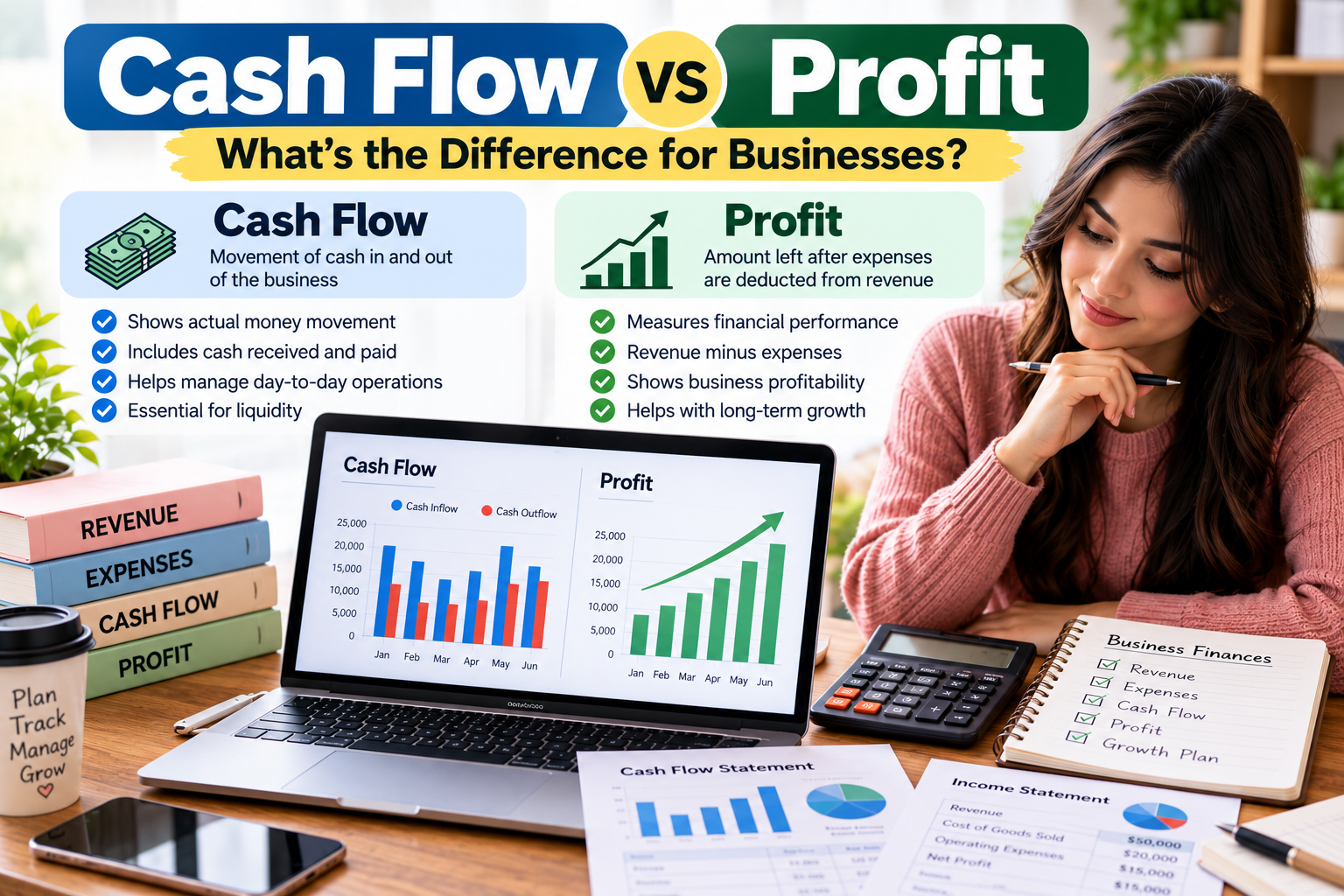
3. Confusing Profit With Cash Flow
Profit and cash flow measure different things.
A business may record revenue before receiving payment, or it may pay for inventory before selling the products.
A budget should therefore include both a profit forecast and a cash flow forecast when timing differences matter.
4. Ignoring Seasonal Changes
Some businesses experience predictable changes in sales during holidays, school periods, or particular seasons.
Using the same revenue estimate for every month may produce an unrealistic budget.
Review historical patterns and adjust forecasts where there is evidence of seasonality.
5. Failing to Update the Budget
A budget prepared at the beginning of the year may become outdated as prices, customer demand, staffing needs, or business plans change.
Review results regularly and update forecasts when new information becomes available.
6. Cutting Costs Without Evaluating Their Value
Reducing spending can improve profitability, but not every expense is wasteful.
For example, eliminating effective marketing or reducing essential quality checks may harm future revenue or customer satisfaction.
Evaluate the purpose and results of an expense before deciding to remove it.
Practical Tips for Better Business Budget Planning
A useful budget should be realistic, easy to maintain, and connected to business goals.
Review your budget monthly. Compare planned figures with actual results and investigate important differences.
Use conservative assumptions. Avoid relying entirely on optimistic sales forecasts.
Separate business and personal spending. Clear records make financial reporting and budgeting easier.
Prioritize essential expenses. Protect spending required to deliver products or services, meet obligations, and retain customers.
Track key financial indicators. Revenue, gross profit, operating expenses, cash balance, and overdue invoices can reveal emerging problems.
Assign responsibility. If several people manage spending, clarify who approves purchases and monitors each budget category.
Keep records organized. Store invoices, receipts, contracts, and financial statements so that budget figures can be verified.
Plan for different scenarios. Consider what you would do if revenue fell, costs increased, or a major customer paid late.
These habits can make budgeting a practical management tool rather than a document that is reviewed only at year-end.
How Often Should a Business Budget Be Reviewed?
The ideal review schedule depends on the size and complexity of the business.
A small business may review its main budget monthly and monitor cash flow weekly when payments are unpredictable.
A business with high transaction volumes, changing inventory requirements, or tight cash reserves may need more frequent reviews.
Major events can also justify an immediate update. Examples include hiring employees, changing suppliers, taking out a loan, launching a product, or experiencing a significant drop in sales.
The objective is to identify financial changes early enough to respond.
A rolling forecast can be particularly useful. Instead of planning only for the remaining months of a fixed year, the business continually updates its outlook for a future period, such as the next 12 months.
This approach combines financial discipline with the flexibility needed to adapt to changing conditions.
Conclusion
Business budget planning helps companies understand their expected income, control expenses, and prepare for future financial needs.
To create a budget that works, review your financial position, estimate revenue realistically, categorize expenses, plan for taxes and debt payments, and prepare a cash flow forecast.
Use a spreadsheet or accounting system to compare actual results with your plan. Investigate important differences and adjust your assumptions when business conditions change.
Remember that a budget is not a promise that financial results will match expectations. It is a tool for making better decisions with the information available.
Whether you operate a new startup or an established small business, a realistic and regularly updated budget can help you allocate resources responsibly, manage uncertainty, and work toward sustainable growth.
Frequently Asked Questions (FAQs)
1. What is business budget planning?
Business budget planning is the process of estimating future revenue, expenses, cash requirements, and financial priorities for a business over a specific period.
2. How do I create a business budget?
Start by reviewing your finances, forecasting revenue, listing fixed and variable expenses, accounting for taxes and debt payments, preparing a cash flow forecast, and comparing actual results with your budget regularly.
3. What should a small business budget include?
A small business budget commonly includes sales revenue, direct costs, salaries, rent, software, marketing, taxes, debt payments, planned investments, and a reserve for unexpected expenses.
4. What is the difference between a business budget and a cash flow forecast?
A business budget estimates planned financial performance and spending. A cash flow forecast estimates when money will enter and leave the business. Both are useful because a profitable business can still face cash shortages.
5. Can I create a business budget in Excel?
Yes. You can use Excel or Google Sheets to organize planned and actual revenue, expenses, variances, and projected cash balances. Spreadsheet formulas can automate calculations and make monthly comparisons easier.
6. How much money should a small business keep in reserve?
There is no universal amount. The appropriate reserve depends on operating expenses, revenue stability, seasonal changes, outstanding obligations, and access to additional funding. Estimate likely risks before setting a target.
7. What is a flexible business budget?
A flexible budget adjusts expected financial figures based on actual or forecast business activity. It is useful when expenses change with production, sales, or service volume.
8. What is the difference between fixed and variable expenses?
Fixed expenses generally remain relatively stable over a period, while variable expenses change with business activity. Rent may be relatively fixed under a lease, while packaging costs usually increase as more products are sold.
9. How often should a business update its budget?
Many small businesses review budgets monthly. Cash flow may need weekly monitoring, especially when customer payments are unpredictable or the business has limited reserves. Major financial changes may require immediate updates.
10. Why is business budgeting important?
Budgeting helps business owners plan spending, anticipate cash shortages, monitor performance, allocate resources, and make informed decisions about growth and investment.
11. What is a business budget variance?
A budget variance is the difference between a planned financial amount and the actual result. It can reveal unexpected expenses, stronger-than-expected sales, lower revenue, or changes in operating conditions.
12. What is the best business budgeting method?
The best method depends on your business. A simple monthly budget may be sufficient for a small service provider, while a company with seasonal sales or variable costs may benefit from flexible budgets and rolling forecasts.
13. What is a rolling budget?
A rolling budget or forecast is updated regularly by adding a new future period as the current period ends. It helps businesses maintain an up-to-date financial outlook rather than relying only on an annual plan.
14. Can a business be profitable but have cash flow problems?
Yes. A business can record profit while waiting for customers to pay invoices or holding cash in inventory. Meanwhile, rent, supplier invoices, salaries, and loan payments may be due. Cash flow forecasting helps manage this timing difference.