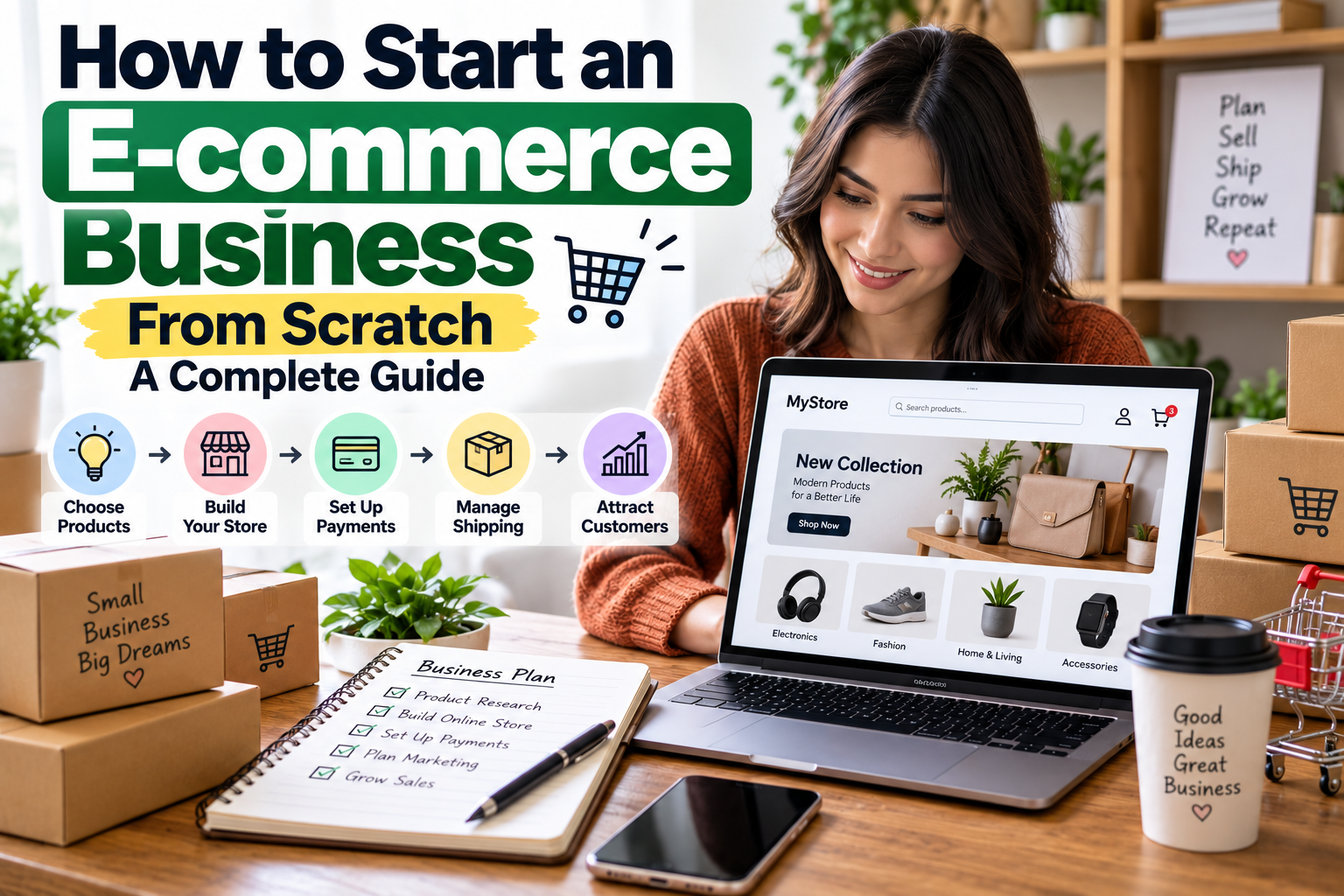
Starting an e-commerce business can be an attractive way to sell products without opening a traditional retail store. An online business allows entrepreneurs to reach customers through websites, online marketplaces, and digital marketing channels while managing many operations remotely.
However, launching an online store involves more than uploading products and waiting for orders. Business owners must research demand, choose suitable products, understand costs, establish payment methods, organize shipping, and develop a reliable strategy for attracting customers.
For beginners, these decisions can feel overwhelming. Choosing the wrong product, spending too much on inventory, or overlooking delivery expenses can make an online store difficult to sustain.
The good news is that you do not need to build a large operation immediately. You can begin with a focused product range, test customer demand, and improve your store as you learn what works.
This guide explains how to start an e-commerce business from scratch, select a business model, research products, establish an online store, manage orders, and build a foundation for long-term growth.
What Is an E-commerce Business?
An e-commerce business sells products or services through the internet. Customers browse online listings, place orders electronically, and complete payments through supported payment methods.
E-commerce businesses operate through several channels, including independent websites, online marketplaces, social commerce platforms, and specialized digital storefronts.
Common examples include:
Clothing and fashion stores.
Electronics and accessories retailers.
Beauty and personal care shops.
Home and kitchen product stores.
Digital product businesses.
Subscription-based online services.
Business-to-business online suppliers.
Some businesses sell directly to individual consumers, while others sell products in bulk to other companies.
An e-commerce business may manage its own inventory, work with a manufacturer, use a fulfillment service, or arrange for suppliers to ship products directly to customers.
The best model depends on the products you want to sell, your budget, your operational capabilities, and the expectations of your target customers.
Step 1: Choose an E-commerce Business Model
Before selecting products or building a website, decide how your business will operate.
Different e-commerce models have different costs, risks, and responsibilities.
1. Business-to-Consumer (B2C)
B2C businesses sell products directly to individual customers.
For example, an online store might sell phone accessories, home decor, clothing, or skincare products.
This model can be suitable for entrepreneurs who want to build a recognizable brand and develop direct relationships with customers.
However, businesses must compete on factors such as pricing, product quality, customer experience, delivery speed, and marketing.
2. Business-to-Business (B2B)
B2B e-commerce businesses sell products or services to other companies.
Examples include office supplies, packaging materials, wholesale products, and business software.
Orders may be larger than typical consumer purchases, but sales cycles can be longer and buyers may require negotiated prices, credit terms, or specialized support.
3. Dropshipping
In dropshipping, the seller lists products for sale while a third-party supplier handles inventory and ships orders to customers.
This model can reduce the need to purchase inventory upfront.
However, the seller still needs to manage customer service, supplier reliability, shipping expectations, refunds, and applicable consumer protection obligations.
Profit margins may also be limited by supplier prices, advertising costs, and competition.
4. Print-on-Demand
Print-on-demand businesses sell customized products such as T-shirts, mugs, posters, and tote bags.
Products are generally printed after an order is placed, reducing the need to hold large amounts of finished inventory.
The model can work well for original designs and specific audiences, but production costs and delivery times should be evaluated carefully.
Only use artwork, designs, and other intellectual property that you have permission to sell.
5. Private Label and Wholesale
Private-label businesses sell products manufactured by another company under their own brand, while wholesale businesses typically purchase products in quantity and resell them.
These models may offer greater control over branding or unit costs, but they can require more upfront capital, product testing, inventory management, and supplier coordination.
Before placing a large order, investigate demand, product quality, minimum order quantities, and storage requirements.
Step 2: Choose a Product to Sell Online
Product selection can significantly influence the success of an e-commerce business.
A product may look attractive because it is trending, but strong sales demand does not automatically mean it will be profitable.
Look for products that address a clear customer need, have a defined target audience, and can be sourced and delivered at a reasonable cost.
Research Customer Problems
Start by identifying problems that customers regularly experience.
For example, people may look for better ways to organize small spaces, protect electronic devices, store kitchen equipment, or transport items while traveling.
A product that solves a specific problem may be easier to explain and market than a generic item with no clear differentiation.
Study Competitors
Review existing online stores and marketplace listings.
Pay attention to pricing, product descriptions, shipping options, customer reviews, return policies, and common complaints.
Negative reviews can reveal opportunities to improve product quality, instructions, durability, packaging, or customer support.
Competition is not necessarily a reason to reject an idea. It may indicate that customers already understand the product category.
The important question is whether you can offer a meaningful advantage.
Evaluate Product Economics
Estimate the complete cost of selling a product rather than looking only at its purchase price.
Include:
Product sourcing or manufacturing.
Packaging and shipping.
Marketplace or payment fees.
Advertising and customer acquisition.
Returns, refunds, and damaged goods.
Storage and fulfillment.
Applicable taxes and duties.
For example, a product purchased for $12 and sold for $30 does not necessarily generate $18 in profit.
If packaging, shipping subsidies, payment fees, advertising, and other relevant costs total another $10, the remaining contribution is only $8 before any additional overhead not included in the calculation.
A simple cost estimate can prevent you from choosing products that are difficult to sell profitably.
Step 3: Validate Demand Before Investing Heavily
One of the most common mistakes new entrepreneurs make is purchasing large quantities of inventory before confirming customer demand.
Product validation helps reduce this risk.
You can start by reviewing search trends, competitor listings, customer discussions, and marketplace sales indicators where reliable data is available.
You can also speak directly with potential customers to understand what they want, what they currently buy, and which problems remain unresolved.
For a service or digital product, consider offering a small pilot or sample before developing a complete product range.
For physical products, request samples from suppliers and evaluate quality, packaging, and delivery times before committing to a large order.
Where appropriate, test a landing page or a small advertising campaign to measure customer interest.
Interest does not always translate into purchases, so evaluate actual buying behavior when possible.
The objective is to collect enough evidence to make a better-informed decision before committing substantial funds.
Step 4: Create a Simple E-commerce Business Plan
A business plan helps organize your decisions and establish realistic goals.
It does not have to be lengthy. A concise plan can cover the main elements of your online store.
Define Your Target Audience
Identify who is most likely to buy your products.
Consider customer needs, budget, location, shopping habits, and reasons for choosing one product over another.
A specific target audience helps you make better decisions about product selection, pricing, website design, and advertising.
Establish Your Value Proposition
Explain why customers should buy from your store rather than another seller.
Your advantage might involve product quality, specialized designs, clear instructions, reliable service, carefully selected products, or a convenient buying experience.
Avoid making claims you cannot support.
Set Your Business Goals
Define measurable objectives, such as launching a product category, reaching a specific number of monthly orders, improving conversion rates, or reducing return rates.
Goals should be realistic and connected to your available resources.
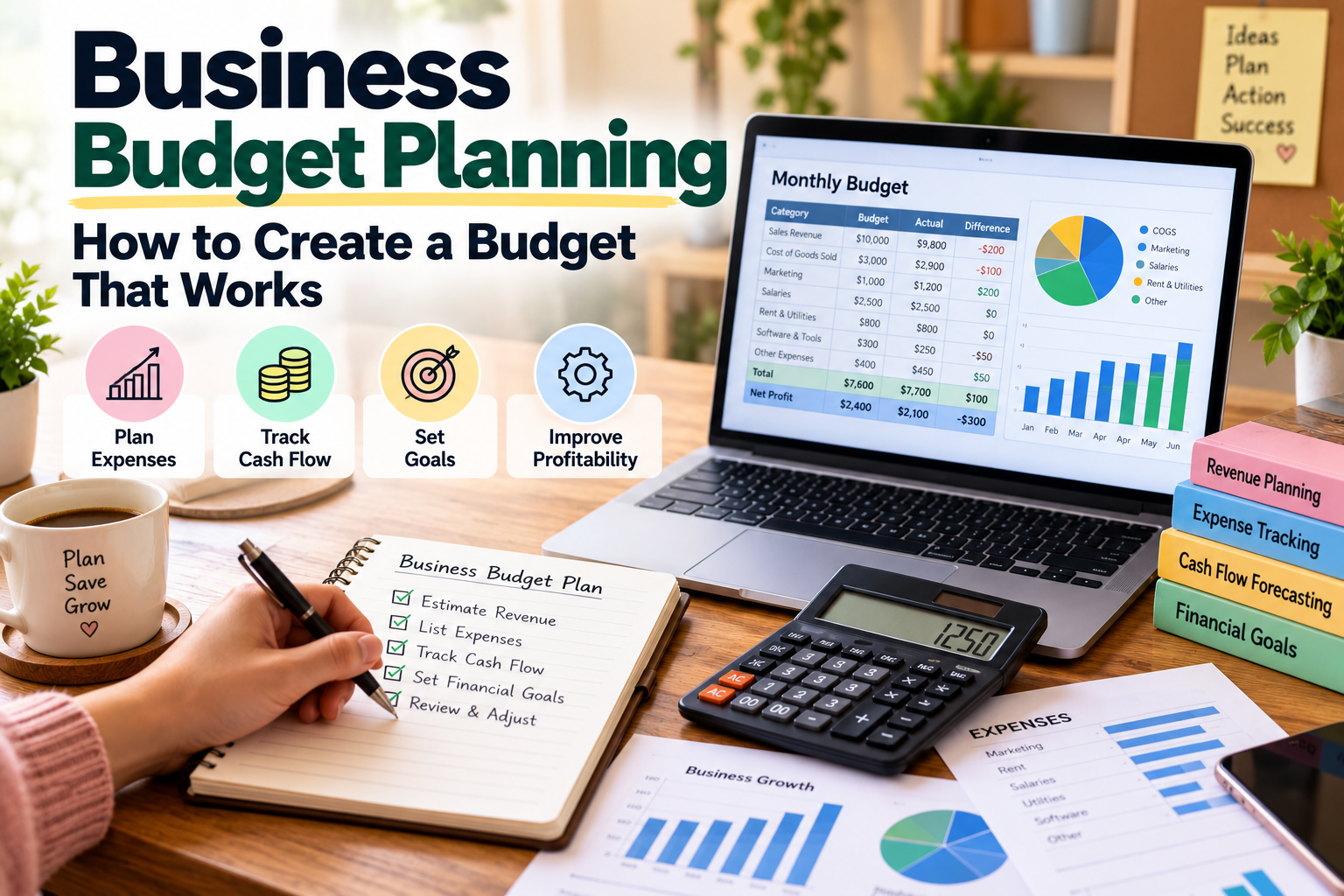
Estimate Startup Costs
List the expenses required to begin operating.
These may include registration, website setup, initial inventory, samples, packaging, payment processing, marketing, and software.
Also estimate ongoing expenses so that you understand the resources needed to keep the business running.
Step 5: Calculate Your E-commerce Startup Budget
Your startup budget depends on the business model and products you choose.
A service-based online business may need relatively little additional equipment, while a physical-product store may require inventory, storage, packaging, and shipping funds.
Consider the following expense categories:
Expense category | What to include |
|---|---|
Product sourcing | Samples, inventory, manufacturing |
Website | Domain, hosting, store platform |
Branding | Logo, product photography, packaging |
Payments | Transaction and payment processing fees |
Marketing | Advertising, content, promotional materials |
Fulfillment | Storage, shipping, packaging |
Administration | Registration, accounting, compliance |
Contingency | Unexpected costs and cash reserves |
Actual costs vary widely, so obtain current quotations and platform pricing before making financial commitments.
Understand Your Profit Margin
Suppose an online store sells a product for $40.
Its costs per order are:
Product cost: $12.
Packaging and shipping subsidy: $5.
Payment fees: $2.
Advertising cost per order: $7.
Total listed costs = $12 + $5 + $2 + $7 = $26.
Contribution after these costs = $40 − $26 = $14.
Contribution margin = ($14 ÷ $40) × 100 = 35%.
This 35% is not necessarily the final net profit margin because additional expenses, such as software, rent, salaries, returns, and taxes, may still need to be covered.
Use this type of calculation to compare products and assess whether your pricing and marketing approach are sustainable.
Step 6: Register Your Business and Handle Compliance
Business registration requirements depend on your location, legal structure, products, and target markets.
Before launching, investigate whether you need to register a business name, establish a legal entity, obtain licenses, or register for applicable taxes.
If you sell regulated products, additional requirements may apply.
Online stores should also consider privacy, data security, consumer protection, advertising standards, product labeling, and refund obligations.
If you sell internationally, research import duties, customs documentation, product safety rules, and the tax requirements that may apply in your target countries.
Do not assume that forming a company in one country automatically satisfies every requirement in another.
Choose a business structure that fits your needs and budget, and seek professional guidance where the rules are complex.
Step 7: Choose an E-commerce Platform
Your platform determines how customers browse products, place orders, and interact with your store.
Several options are available, and each has advantages and limitations.
Independent Online Store
Platforms such as Shopify and WooCommerce allow businesses to create their own storefronts.
An independent store offers greater control over branding, website content, customer experience, and marketing.
However, you must attract visitors, maintain the website, configure payment methods, and manage technical or operational requirements.
Platform fees and available features vary, so compare current plans before deciding.
Online Marketplaces
Marketplaces allow sellers to list products on an established platform.
They may provide access to existing shoppers, built-in checkout systems, and seller tools.
However, sellers must comply with marketplace rules, pay applicable fees, and compete with other listings.
Account restrictions, policy changes, and dependence on a third-party platform can also create risks.
Social Commerce
Some businesses sell through social platforms that support shopping features, product catalogs, or direct customer inquiries.
Social channels can help businesses demonstrate products and build relationships with audiences.
The available checkout, payment, and seller features depend on the platform and country.
Before choosing a channel, verify that your business location is eligible for the features you intend to use.
How to Choose the Right Platform
Compare platforms based on:
Total monthly and transaction costs.
Payment gateway availability.
Shipping and inventory integrations.
Customization options.
Mobile shopping experience.
Security and maintenance.
Access to customer and sales data.
Ability to expand as the business grows.
The best platform is the one that meets your current needs without introducing unnecessary cost or complexity.
Step 8: Build Your Online Store
Once you have selected a platform, create a store that makes it easy for customers to understand your products and complete a purchase.
Use Clear Product Pages
Each product page should provide accurate information, including product features, dimensions, materials, compatibility, and care instructions where relevant.
Use clear photographs that show the product from useful angles.
Avoid misleading images or descriptions that create unrealistic expectations.
Make Navigation Simple
Organize products into logical categories and provide a search function if your catalog is large enough to benefit from one.
Customers should be able to find important information without unnecessary clicks.
Optimize for Mobile Devices
Many shoppers browse and purchase products on mobile phones.
Check that product images, descriptions, navigation, forms, and checkout work properly on smaller screens.
Slow-loading pages and confusing checkout steps can discourage customers from completing purchases.
Display Important Policies
Make shipping times, return policies, contact information, privacy notices, and applicable terms easy to find.
Clear policies help customers understand what to expect and reduce avoidable misunderstandings.
Build Trust
Use accurate product information, secure payment options, transparent pricing, and reliable customer support.
Only display genuine customer reviews and substantiated claims.
A professional-looking store is useful, but customer trust ultimately depends on the experience the business delivers.
Step 9: Set Up Payments and Checkout
Customers need a convenient and reliable way to pay for their orders.
Depending on your target market, available options may include debit cards, credit cards, digital wallets, bank transfers, or cash on delivery.
Availability varies by country, business type, platform, and payment provider.
Before selecting a provider, check eligibility requirements, transaction fees, settlement times, refund procedures, currency support, and any reserve or verification policies.
Businesses selling internationally should also consider currency conversion fees and the countries in which payments can be accepted.
Make Checkout Easy
A complicated checkout process can cause customers to abandon their purchases.
Keep the process clear and request only the information needed to complete the transaction and fulfill the order.
Display shipping costs and other charges before the customer places the order.
Offer guest checkout where appropriate, provide clear error messages, and ensure that the payment process works on mobile devices.
Never store sensitive payment information unless you have the necessary compliant systems and authorization.
Step 10: Organize Shipping and Order Fulfillment
Order fulfillment includes receiving an order, preparing the product, packaging it, shipping it, and communicating delivery information to the customer.
Reliable fulfillment is important because delays, damaged products, and inaccurate delivery estimates can harm customer trust.
Choose a Shipping Method
Your options may include postal services, courier companies, third-party logistics providers, or fulfillment services offered by a marketplace.
Compare delivery coverage, tracking availability, handling requirements, insurance, and total costs.
Set Realistic Delivery Times
Base delivery estimates on actual supplier and carrier performance rather than optimistic assumptions.
If a product is made to order or shipped internationally, explain this clearly before checkout.
Plan for Returns
Create a process for handling refunds, exchanges, damaged products, and lost shipments.
Understand the legal requirements that apply to your products and customer locations.
Returns may create additional shipping and inventory costs, so include reasonable estimates in your financial plan.
Manage Inventory Carefully
If you hold inventory, track stock levels and reorder points.
Buying too much inventory can tie up cash, while buying too little can result in missed sales.
Use actual sales patterns and supplier lead times to make more informed purchasing decisions.
Step 11: Develop a Marketing Strategy
Launching an online store does not automatically generate traffic or sales.
You need a strategy for reaching potential customers and communicating why your products are worth considering.
Search Engine Optimization
SEO helps search engines understand your store and can make product pages and useful articles easier to discover.
Use descriptive product titles, accurate meta descriptions, helpful category pages, clear URLs, and useful content that addresses customer questions.
For example, a store selling home organization products could publish a guide explaining how to organize a small kitchen.
SEO takes time and does not guarantee rankings, so monitor relevant search performance and improve pages based on evidence.
Content Marketing
Create useful articles, demonstrations, buying guides, and product comparisons.
Content should answer real customer questions rather than simply repeat keywords.
Useful content can support brand awareness and help shoppers make informed decisions.
Social Media Marketing
Choose social platforms that suit your products and audience.
Demonstrations, product photography, educational posts, and customer stories can help communicate value.
Maintain consistent branding and respond professionally to questions.
Paid Advertising
Search and social advertising can help you test demand and reach targeted audiences.
Start with a controlled budget and track the results.
Measure the cost of acquiring a customer alongside the revenue and contribution generated by that customer.
Do not increase advertising spending simply because traffic is rising. Confirm that the campaign produces results that support the business's financial goals.
Email Marketing
With appropriate consent, email marketing can help you communicate with customers about product updates, helpful content, and relevant offers.
Provide clear subscription and unsubscribe options, and comply with applicable privacy and marketing laws.
Focus on useful communication rather than sending excessive promotional messages.
Step 12: Track E-commerce Performance
Once orders begin arriving, monitor key performance indicators to understand how the business is performing.
Conversion Rate
Conversion rate measures the percentage of visitors who complete a desired action, such as making a purchase.
A simplified purchase conversion formula is:
Conversion Rate = (Number of Purchases ÷ Number of Website Visitors) × 100
If 1,000 visitors produce 20 purchases, the conversion rate is 2%.
Interpret this figure in context because traffic sources, customer intent, devices, and measurement methods can affect the result.
Average Order Value
Average order value measures the average amount customers spend per order.
Average Order Value = Total Sales Revenue ÷ Number of Orders
If a store generates $6,000 in sales from 150 orders, its average order value is $40.
Customer Acquisition Cost
Customer acquisition cost estimates the average amount spent to acquire a customer.
A simplified calculation divides relevant acquisition spending by the number of new customers acquired during the same period.
Include the appropriate costs and use consistent measurement periods.
Return Rate
Track the proportion of orders or products returned, using a consistent definition.
A high return rate may indicate product quality problems, inaccurate descriptions, sizing issues, or mismatched customer expectations.
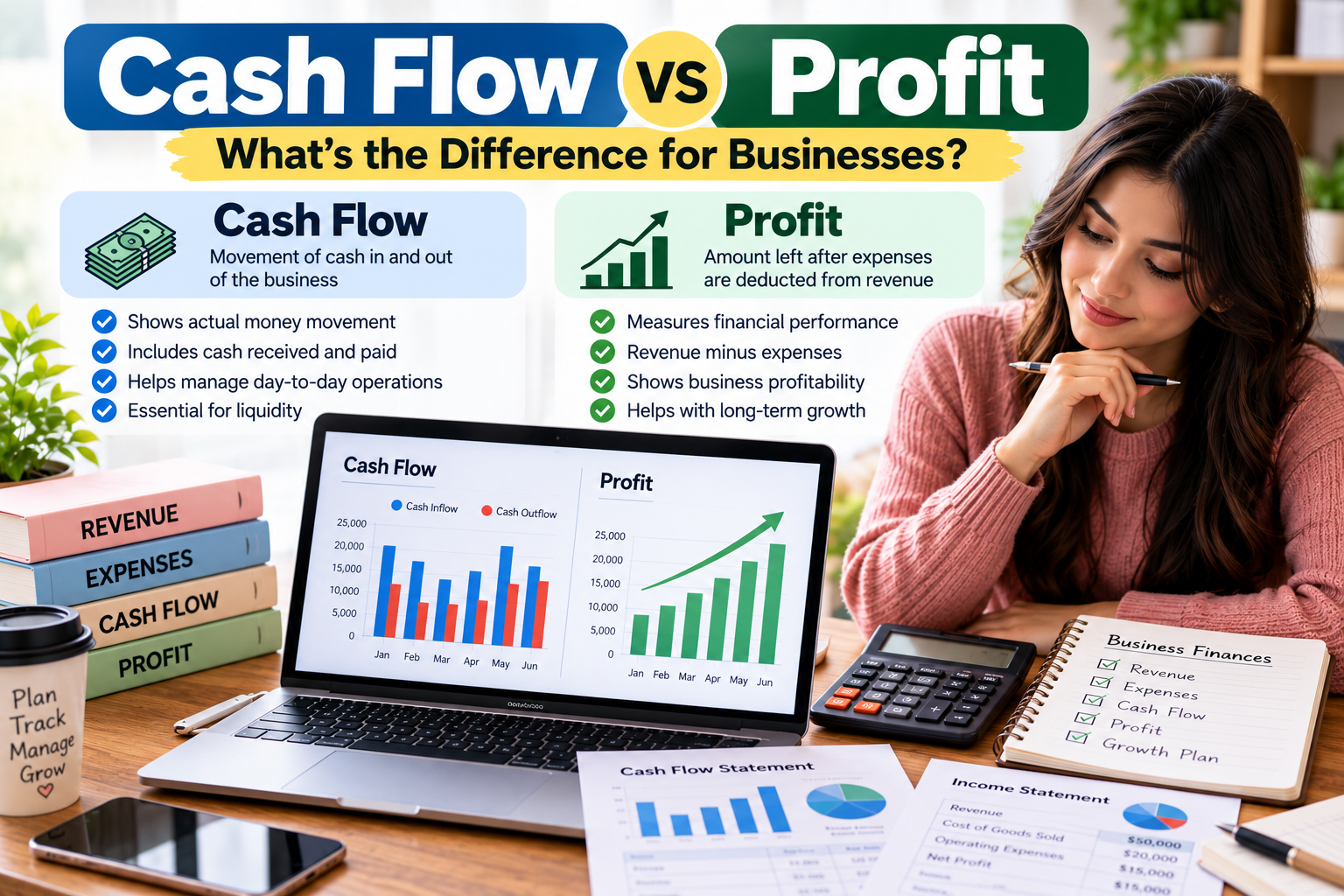
Cash Flow and Profitability
Monitor revenue, direct costs, operating expenses, outstanding payments, and available cash.
A store can generate substantial sales while losing money if product costs, shipping, returns, and marketing expenses are too high.
Use these indicators together rather than relying on revenue alone.
Common Mistakes to Avoid When Starting an E-commerce Business
Choosing Products Without Research
A product that looks appealing may have limited demand or intense competition.
Research the market, compare suppliers, and validate interest before committing to large inventory purchases.
Underestimating Total Costs
Product costs are only one part of the financial picture.
Include payment fees, packaging, shipping, marketing, refunds, platform costs, taxes, and overhead when evaluating profitability.
Ignoring Customer Service
Customers may need help with product selection, order tracking, returns, or technical problems.
Slow or unclear responses can damage trust and discourage repeat purchases.
Create a reliable process for answering questions and resolving complaints.
Depending on One Sales Channel
Relying entirely on a single marketplace, advertising platform, or social network can make the business vulnerable to policy changes and unexpected account restrictions.
Where practical, develop additional customer acquisition channels and maintain appropriate records of your business activities.
Expanding Too Quickly
Increasing inventory, hiring staff, or launching many product categories before validating demand can increase risk.
Expand when sales data, available cash, and operational capacity support the decision.
How to Grow an E-commerce Business
Once the store has established a reliable sales process, focus on improving the parts of the business that have the greatest effect on customer experience and profitability.
Start by identifying your best-performing products and understanding why customers purchase them.
Improve product descriptions, images, shipping reliability, and checkout where the data shows a need.
Use customer feedback to identify recurring problems and opportunities to improve your offer.
Review supplier pricing and fulfillment processes to determine whether costs can be reduced without compromising quality.
Consider adding related products when existing customers show interest and the economics make sense.
Finally, expand marketing gradually and measure the results. Growth should be supported by evidence rather than assumptions about future sales.
Conclusion
Starting an e-commerce business from scratch requires research, planning, and consistent execution.
Choose a business model that matches your budget and capabilities, research products carefully, and validate customer demand before investing heavily.
Build a clear online store, select appropriate payment methods, organize reliable fulfillment, and establish a marketing strategy that reaches your target audience.
Track sales, costs, conversion rates, and cash flow so you can understand which parts of the business are working and where improvements are needed.
There is no guaranteed path to e-commerce success, but a focused approach can help you limit avoidable risks and make better decisions as the business grows.
Start with a manageable plan, learn from real customers, and expand when your financial results and operational capacity justify the next step.
Frequently Asked Questions (FAQs)
1. How do I start an e-commerce business from scratch?
Choose a business model, research customer demand, select a product, estimate startup costs, handle applicable registration requirements, build an online store, configure payments and shipping, and develop a marketing strategy.
2. How much money do I need to start an e-commerce business?
The amount depends on your business model, product costs, inventory requirements, platform fees, marketing, and fulfillment. A service or digital product business may require less initial spending than a physical-product store that holds inventory.
3. Is e-commerce profitable for beginners?
E-commerce can be profitable, but results depend on product demand, competition, pricing, costs, and execution. New sellers should calculate their expected contribution per order and avoid assuming that sales automatically translate into profit.
4. What is the easiest e-commerce business to start?
Some beginners find service-based online businesses, digital products, print-on-demand, or carefully selected dropshipping models easier to test because they may require less upfront inventory investment. Each model still involves operational challenges and potential costs.
5. Do I need a website to start an e-commerce business?
Not always. You can begin through an eligible online marketplace or social commerce channel. An independent website offers greater control over branding and customer experience, but you will need to attract visitors and manage the store.
6. How do I find products to sell online?
Research customer problems, marketplace listings, competitor reviews, search trends, supplier catalogs, and product costs. Validate demand and assess the complete cost of selling the product before making large purchases.
7. What is dropshipping?
Dropshipping is an e-commerce model in which a seller accepts orders while a supplier stores inventory and ships products directly to customers. The seller remains responsible for the customer experience and should verify supplier quality, delivery times, and applicable obligations.
8. How can I attract customers to my online store?
You can use search engine optimization, helpful content, social media, email marketing with appropriate consent, referrals, marketplaces, and paid advertising. Choose channels that suit your target audience and measure the results.
9. How do I calculate e-commerce profit?
Subtract the relevant costs and expenses from sales revenue. Include product costs, fulfillment, payment fees, advertising, returns, and operating overhead as appropriate. The exact result depends on whether you are calculating contribution, operating profit, or net profit.
10. What payment methods should an online store offer?
Payment options depend on the target market and provider eligibility. Common options include cards, digital wallets, bank transfers, and, in some markets, cash on delivery. Compare fees, settlement times, supported currencies, and refund procedures.
11. How important is SEO for e-commerce?
SEO can help customers discover product pages, category pages, and useful buying guides through search engines. Results may take time, and rankings are not guaranteed, but relevant content and clear product information can support long-term discoverability.
12. What are the biggest challenges in e-commerce?
Common challenges include choosing profitable products, attracting customers, managing shipping and returns, maintaining cash flow, controlling advertising costs, and building trust. Careful research and consistent performance monitoring can help businesses address these issues.
13. Can I run an e-commerce business from home?
Yes, many e-commerce businesses can be managed from home. However, inventory storage, shipping, product handling, local zoning rules, licensing, and other requirements may affect whether a particular setup is suitable.
14. How long does it take for an e-commerce business to succeed?
There is no fixed timeline. Some stores receive early sales, while others require substantial testing and improvement before reaching consistent demand. Results depend on the product, market, budget, customer acquisition strategy, and execution.