Cybersecurity has become one of the most important challenges of the digital age. Businesses, governments, financial institutions, healthcare providers, and individuals increasingly depend on connected technologies to store information, communicate, process transactions, and deliver services. As this dependence grows, so does the need to protect digital systems from cyber threats.
Cybersecurity is no longer simply an IT concern. A successful cyberattack can interrupt business operations, expose confidential information, create financial losses, damage a company's reputation, and reduce customer confidence. For organizations operating in an increasingly connected economy, cybersecurity has become a fundamental part of risk management and business strategy.
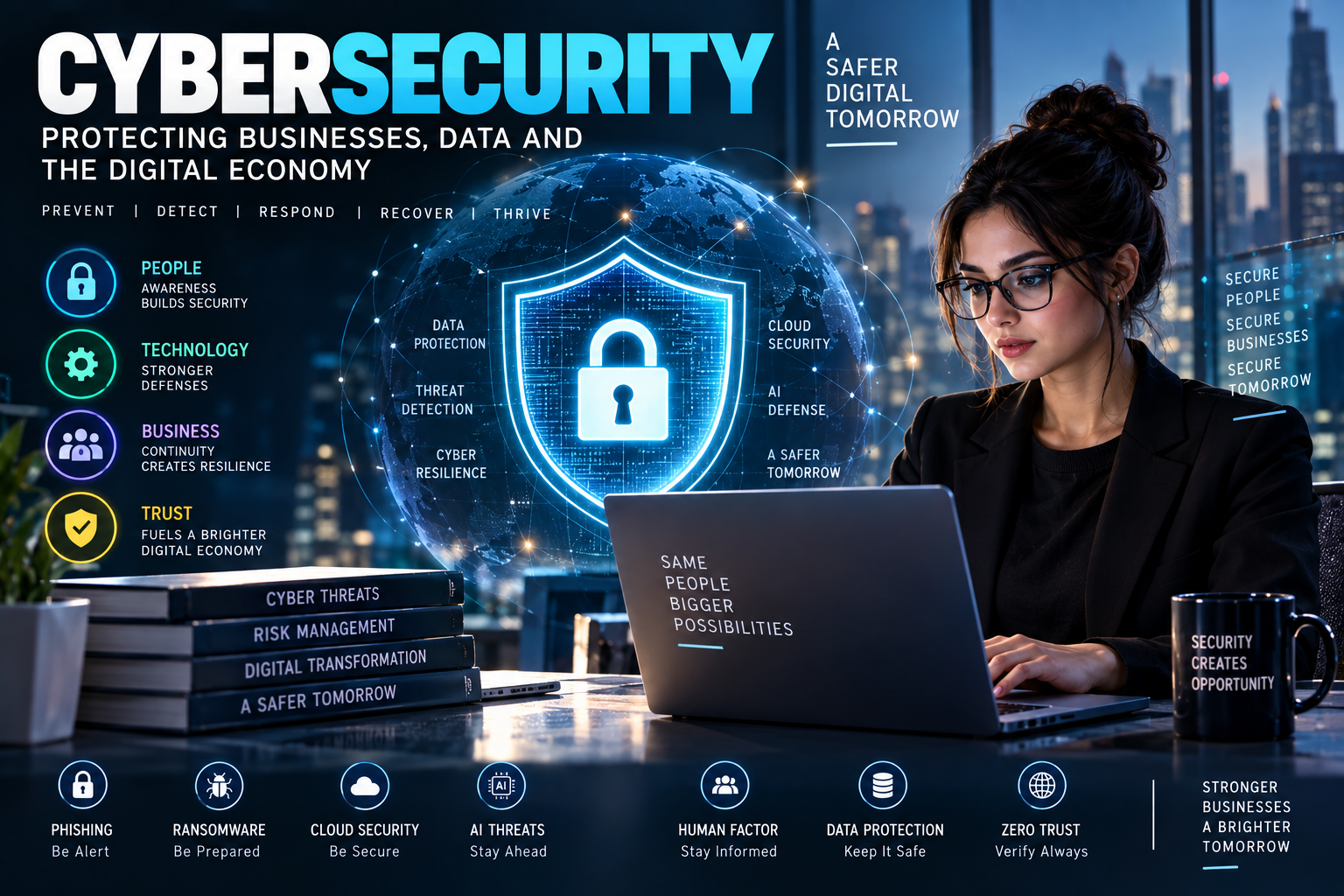
From ransomware and phishing to identity theft and sophisticated attacks powered by artificial intelligence, the threat landscape continues to evolve. Companies must therefore take a proactive approach to protecting their digital infrastructure.
What Is Cybersecurity?
Cybersecurity refers to the technologies, processes, policies, and practices used to protect digital devices, computer systems, networks, applications, and data from unauthorized access, damage, theft, or disruption.
A comprehensive cybersecurity strategy generally focuses on three major objectives: protecting the confidentiality of information, maintaining the integrity of data, and ensuring that systems remain available when they are needed.
Cybersecurity can involve many different technologies and practices, including firewalls, encryption, antivirus software, multi-factor authentication, identity management, network monitoring, vulnerability assessments, employee training, and incident-response planning.
The objective is not simply to prevent every attack. Organizations also need to detect suspicious activity, contain threats, recover affected systems, and learn from incidents.
Why Cybersecurity Is Becoming More Important
The rapid expansion of digital technology has created a much larger environment for cybercriminals to target.
Companies now store enormous amounts of information electronically. Employees may work remotely and access cloud applications from different locations. Customers increasingly make purchases and payments online. Connected devices are used in homes, offices, factories, hospitals, and transportation systems.
Every connected system can potentially create another entry point for attackers.
At the same time, businesses are increasingly dependent on technology for everyday operations. If a company's systems become unavailable, employees may be unable to work, customers may be unable to access services, and transactions may be interrupted.
This makes cybersecurity closely connected to business continuity.
Major Cybersecurity Threats
Cyber threats come in many forms, and attackers often combine multiple techniques during an operation.
Phishing
Phishing involves fraudulent messages designed to convince people to reveal sensitive information, click malicious links, download harmful files, or transfer money.
These attacks can appear to come from banks, employers, delivery companies, colleagues, or other trusted sources. Modern phishing messages can be highly convincing, making employee awareness an important line of defense.
Ransomware
Ransomware is a type of malicious software that can prevent users from accessing their files or systems. Attackers may demand payment in exchange for restoring access or preventing the release of stolen information.
Ransomware can cause significant operational disruption, particularly when critical systems are affected.
Malware
Malware is a broad term for malicious software designed to compromise or damage systems. Viruses, trojans, spyware, and other forms of malicious software can be used to steal information, monitor activity, or gain unauthorized access.
Credential Theft
Passwords and other login credentials are valuable targets. If attackers obtain legitimate credentials, they may be able to access systems without immediately triggering traditional security defenses.
Strong passwords, multi-factor authentication, and effective identity management can reduce this risk.
Social Engineering
Social engineering attacks exploit human behavior rather than technical vulnerabilities. Attackers may impersonate executives, employees, suppliers, or service providers to manipulate individuals into taking actions that compromise security.
The Human Factor in Cybersecurity
Technology is an essential part of cybersecurity, but people remain one of the most important elements.
Employees interact with emails, websites, applications, devices, and company systems every day. A single mistake can sometimes create an opportunity for an attacker.
Organizations should therefore provide regular security awareness training. Employees should understand how to identify suspicious messages, protect their passwords, verify unusual requests, and report potential incidents.
Creating a strong security culture is particularly important. Employees should feel comfortable reporting suspicious activity or accidental mistakes without unnecessary fear of punishment. Early reporting can give security teams more time to respond.
Cybersecurity should become a shared responsibility across an organization rather than something handled exclusively by the IT department.
Protecting Business Data
Data is among the most valuable assets of modern businesses. Companies may possess customer information, payment details, financial records, intellectual property, employee information, strategic plans, and confidential communications.
Protecting this information requires multiple layers of security.
Encryption can help protect data by making it difficult for unauthorized users to understand. Access controls can ensure that employees only have access to information required for their roles.
Organizations should also regularly review their data. Knowing what information exists, where it is stored, and who can access it is essential for effective protection.
Reliable backups are another important component. If data is accidentally deleted, corrupted, encrypted by ransomware, or otherwise compromised, tested backups can help organizations restore operations.
Cloud Security
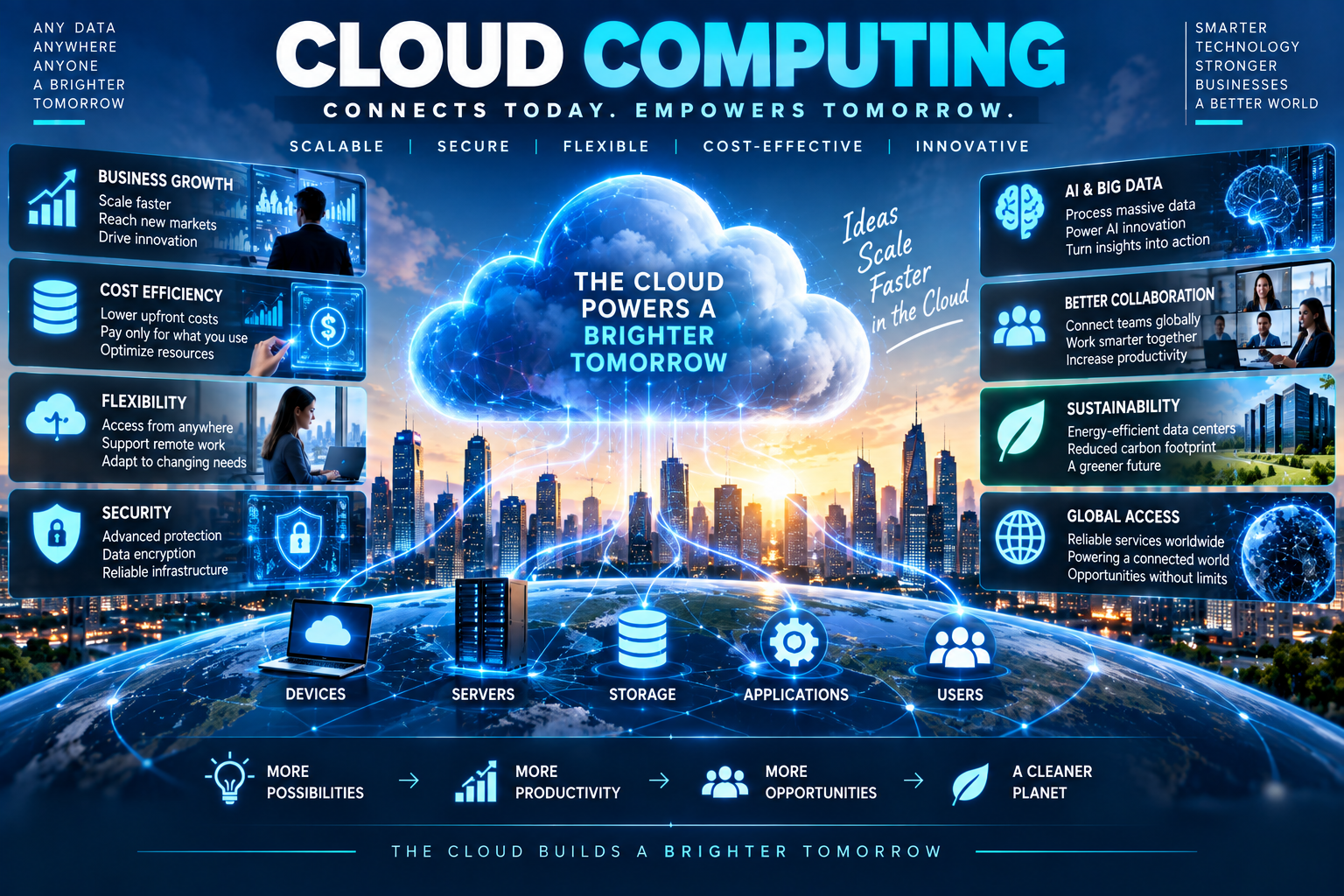
Cloud computing has transformed how companies store data and operate applications. Instead of maintaining all infrastructure on physical servers, businesses can use cloud platforms to access computing resources and software over the internet.
Cloud services can provide flexibility and scalability, but they also introduce security considerations.
Poorly configured cloud resources, excessive permissions, weak authentication, and compromised accounts can expose sensitive information.
Organizations should carefully manage cloud identities, permissions, configurations, and access policies. Security responsibilities also need to be clearly understood between the organization and its cloud service providers.
Artificial Intelligence and Cybersecurity
Artificial intelligence is rapidly changing cybersecurity.
Security teams can use AI to analyze large amounts of data, identify unusual behavior, prioritize alerts, detect patterns, and assist with investigations. Automated systems can help security professionals respond to threats faster than would be possible through manual analysis alone.
However, AI can also be used by attackers.
Criminals may use AI-based tools to generate convincing fraudulent messages, automate certain activities, analyze information, or adapt attacks more efficiently.
This creates an ongoing competition between attackers and defenders.
Organizations should therefore consider AI both as a security opportunity and as an emerging source of risk. Human oversight, strong security policies, and responsible use of AI remain important.
The Rise of Zero-Trust Security
Traditional cybersecurity models often assumed that users inside a corporate network could be trusted. Modern organizations increasingly operate across cloud platforms, remote workplaces, mobile devices, and third-party services.
Zero-trust security takes a different approach.
Instead of automatically trusting a user or device, organizations continuously verify identities and access requests. Users receive only the permissions required to perform their jobs.
This principle of least privilege can help reduce the potential impact of compromised accounts.
Zero trust does not mean that every user is treated as malicious. Rather, it means organizations should not assume that access is safe simply because a user or device is already inside a particular network.
Cybersecurity for Small Businesses
Small businesses can also become targets of cyberattacks. In some cases, smaller organizations may have fewer security resources while still holding valuable customer, financial, or operational information.
The good news is that basic security measures can significantly improve protection.
Small businesses should consider enabling multi-factor authentication, using strong and unique passwords, keeping software updated, maintaining secure backups, limiting administrator privileges, training employees, and regularly reviewing access permissions.
Businesses should also create an incident-response plan. Even a simple plan identifying important systems, responsible employees, external security contacts, and recovery procedures can be valuable during an emergency.
Cybersecurity and Business Reputation
The consequences of a cyberattack can extend beyond immediate financial losses.
Customers expect businesses to protect their personal information. If sensitive information is exposed, customers may lose confidence in the organization.
Reputation can take years to build but can be damaged quickly following a major security incident.
For this reason, cybersecurity should be considered part of brand protection. Businesses that demonstrate strong security practices can strengthen customer confidence, while companies that repeatedly experience preventable incidents may face significant reputational challenges.
Cybersecurity as a Strategic Investment
Organizations increasingly view cybersecurity as an investment rather than simply an expense.
Security measures can protect business continuity, customer relationships, intellectual property, and operational efficiency. They can also help organizations meet legal, regulatory, and contractual requirements.
Executives and boards are increasingly expected to understand cybersecurity risks because these risks can directly affect business performance.
A mature cybersecurity strategy should therefore align with the organization's overall goals. Security teams need to understand which systems and data are most critical and prioritize protection accordingly.
The Importance of Incident Response
Even organizations with strong security programs can experience incidents. Preparation is therefore essential.
An incident-response plan should establish how an organization will identify, contain, investigate, and recover from a cybersecurity event.
Organizations should know who has authority to make decisions, which systems need to be isolated, how backups will be restored, and how employees, customers, regulators, and other stakeholders will be informed when appropriate.
Regular exercises can help identify weaknesses before a real incident occurs.
The faster an organization can recognize and contain an attack, the greater its ability to limit potential damage.
The Future of Cybersecurity
The cybersecurity industry will continue to evolve alongside technology.
Artificial intelligence, cloud computing, connected devices, automation, digital payments, and other emerging technologies will create new opportunities and new vulnerabilities.
Security professionals will increasingly rely on automation to process large amounts of information and identify threats quickly. At the same time, human expertise will remain essential for risk assessment, strategy, investigation, governance, and decision-making.
Organizations will also need to pay greater attention to supply-chain security. Businesses often depend on software vendors, cloud providers, contractors, payment processors, and other third parties. A weakness in one supplier can potentially affect many connected organizations.
The future of cybersecurity will therefore involve not only protecting individual systems but also securing entire digital ecosystems.
Conclusion
Cybersecurity has become a fundamental requirement for the modern digital economy. Businesses and individuals rely on technology for communication, commerce, financial transactions, data storage, entertainment, healthcare, and countless other activities.
As technology becomes more deeply integrated into everyday life, cyber threats will continue to evolve.
Organizations can respond by combining technology with strong policies, employee education, identity protection, data security, monitoring, backups, and effective incident-response planning.
The most secure organizations will not simply focus on preventing attacks. They will build resilience so they can detect threats early, limit damage, recover quickly, and continue operating.
Ultimately, cybersecurity is about much more than protecting computers. It is about protecting data, trust, business continuity, innovation, and the digital economy itself.
Frequently Asked Questions About Cybersecurity
1. What is cybersecurity?
Cybersecurity is the practice of protecting computers, networks, applications, devices, and data from cyberattacks, unauthorized access, theft, damage, and disruption.
2. Why is cybersecurity important?
Cybersecurity is important because businesses and individuals depend heavily on digital systems. Strong security helps protect sensitive information, financial assets, business operations, privacy, and customer trust.
3. What are the most common cybersecurity threats?
Common threats include phishing, ransomware, malware, credential theft, social engineering, denial-of-service attacks, insider threats, and exploitation of software vulnerabilities.
4. How can businesses improve cybersecurity?
Businesses can improve security by using multi-factor authentication, strong passwords, encryption, secure backups, software updates, access controls, employee training, security monitoring, and incident-response plans.
5. What is phishing?
Phishing is a cyberattack in which criminals use fraudulent emails, messages, websites, or other communications to trick people into revealing information, clicking malicious links, downloading harmful files, or making unauthorized payments.
6. What is ransomware?
Ransomware is malicious software that can restrict access to files or computer systems. Attackers may demand payment to restore access or prevent the disclosure of stolen information.
7. Can small businesses be targeted by cybercriminals?
Yes. Small businesses can be attractive targets because they may possess valuable information but have fewer cybersecurity resources. Basic security practices can substantially reduce common risks.
8. How does artificial intelligence affect cybersecurity?
AI can help security teams detect threats, analyze data, identify unusual activity, and automate parts of incident response. However, attackers can also use AI to make certain attacks more convincing and scalable.
9. What is multi-factor authentication?
Multi-factor authentication requires users to provide more than one form of verification when accessing an account. It can provide additional protection if a password is compromised.
10. What is zero-trust security?
Zero-trust security is an approach in which users, devices, and access requests are continuously verified rather than automatically trusted. It commonly uses least-privilege access to limit exposure.
11. Why are cybersecurity backups important?
Backups can help organizations recover data after ransomware, accidental deletion, hardware failure, or other incidents. Backups should be protected and regularly tested to ensure they can actually be restored.
12. Is cybersecurity only an IT responsibility?
No. Cybersecurity is an organization-wide responsibility. Employees, executives, IT teams, security professionals, and business leaders all have roles in protecting digital systems and information.
13. What is the future of cybersecurity?
The future will likely involve greater use of artificial intelligence, automation, identity security, zero-trust architectures, cloud security, and continuous threat monitoring. Organizations will also need stronger protection for interconnected supply chains and digital ecosystems.