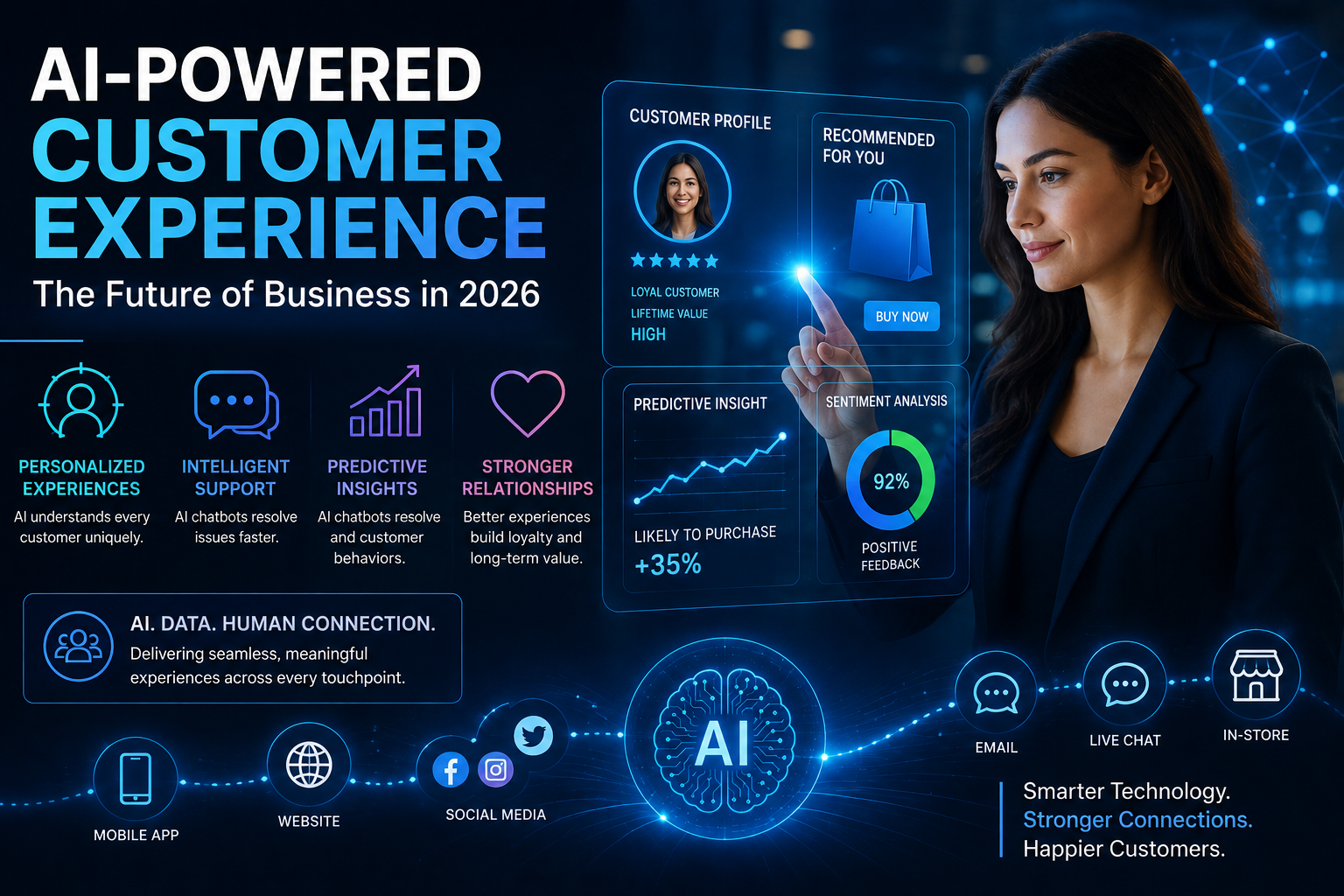
Customer expectations are changing faster than ever. People want businesses to understand their needs, respond quickly, provide relevant recommendations, and deliver consistent experiences across websites, apps, social media, email, and physical locations. In 2026, artificial intelligence is becoming one of the most important technologies helping companies meet these expectations.
AI-powered customer experience is moving beyond basic chatbots. Businesses are now using artificial intelligence to analyze customer behavior, personalize interactions, predict needs, automate support, and help employees make better decisions. The result is a new approach to customer experience in which technology works continuously behind the scenes to make interactions more relevant and efficient.
For companies competing in crowded markets, delivering a good product is no longer enough. The quality of the customer experience can influence whether people make a purchase, return to a business, recommend it to others, or move to a competitor.
The Evolution of Customer Experience
Traditional customer service depended heavily on human employees. Customers contacted businesses by phone, email, or in person, and representatives handled questions and complaints manually.
Digital technology changed this model by introducing websites, online forms, mobile applications, live chat, and automated email responses.
AI is taking the next step by making these digital experiences more intelligent.
Instead of simply responding to predefined commands, AI systems can analyze language, understand context, identify patterns, and provide personalized responses. This allows businesses to create experiences that feel more relevant to individual customers.
For example, an online retailer can analyze browsing behavior and previous purchases to recommend products that may interest a particular customer. A financial platform can use customer information to provide personalized insights. A software company can analyze support conversations to identify potential problems before they become major issues.
Personalization at Scale
Personalization has become a major competitive advantage, but traditional personalization methods can be difficult to scale.
Businesses may have thousands or millions of customers, each with different preferences, purchasing histories, interests, and expectations.
AI can process large amounts of customer information and identify patterns much faster than manual analysis.
This enables companies to personalize recommendations, marketing messages, product suggestions, and customer support.
An e-commerce platform, for instance, does not have to show the same homepage to every visitor. AI can help determine which products, offers, or content are more relevant to a particular user.
The objective is not simply to show more advertisements. Effective personalization should help customers discover useful products and information more quickly.
When personalization provides genuine value, both businesses and customers can benefit.
AI Is Transforming Customer Support
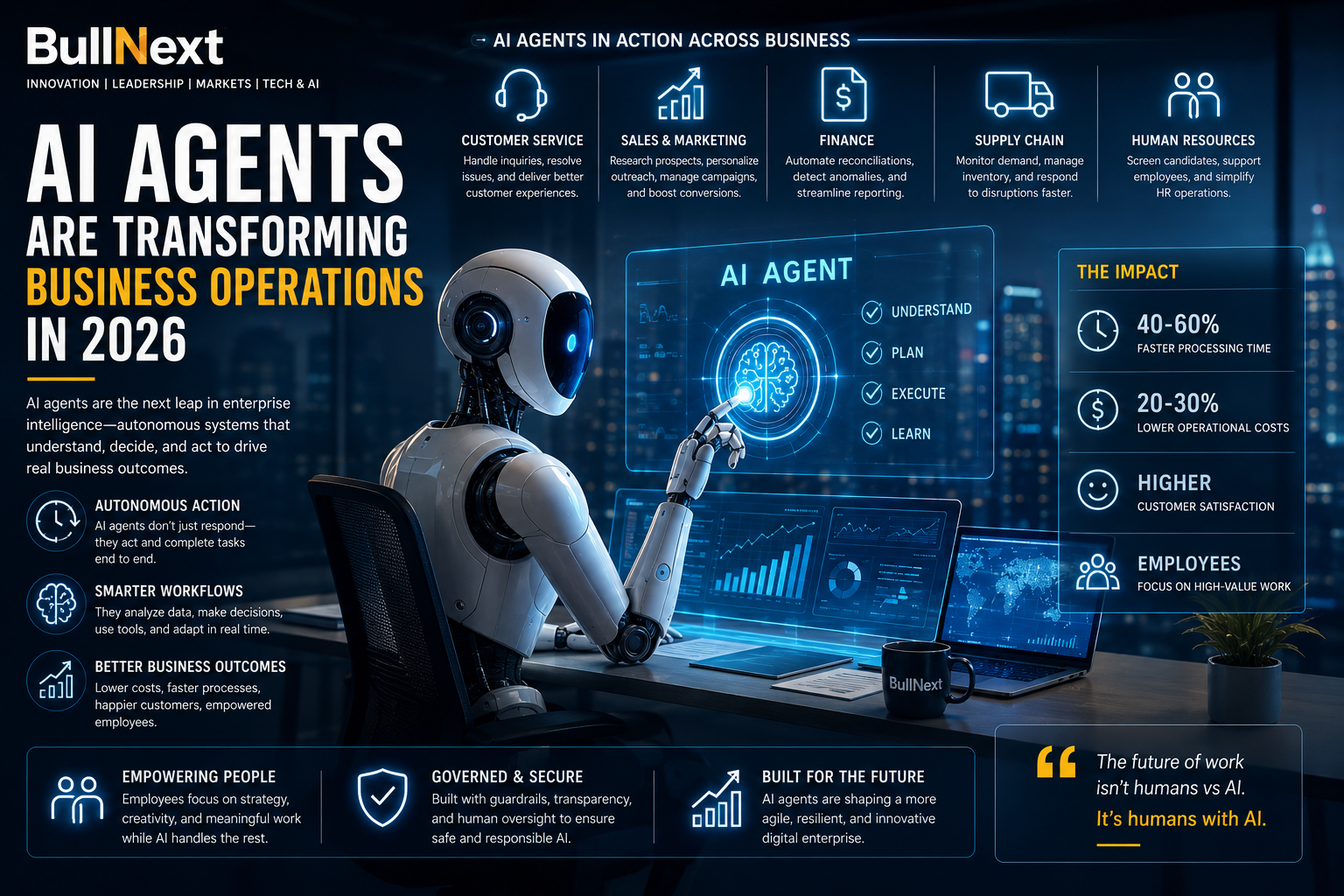
Customer support is one of the areas where AI adoption is already having a major impact.
AI assistants can answer common questions, help customers navigate products, provide information about orders, and assist with basic troubleshooting.
This can reduce waiting times while allowing human representatives to concentrate on complicated cases that require empathy, judgment, or specialized knowledge.
The most effective customer support systems combine AI and human employees rather than treating them as competing alternatives.
AI can handle repetitive questions and gather relevant information before a case reaches a human representative. The employee can then begin with a clearer understanding of the customer's problem.
This can make support faster while reducing repetitive workloads for service teams.
Predicting Customer Needs
One of the most powerful possibilities of AI-powered customer experience is predictive intelligence.
Instead of waiting for customers to report problems, businesses can analyze behavioral signals to identify potential issues or opportunities.
For example, a software company may detect that a customer has stopped using an important feature. An AI system could identify this change and alert the customer success team.
A retailer might identify purchasing patterns that suggest a customer is likely to need a particular product again. A financial service could recognize unusual activity and trigger an appropriate review.
Predictive systems allow companies to become more proactive.
Rather than simply reacting to customer requests, businesses can anticipate needs and provide assistance at the right time.
Understanding Customer Sentiment
Customers communicate through reviews, surveys, emails, social media posts, support tickets, and online conversations.
Analyzing this information manually can be difficult, particularly for large companies.
AI-powered sentiment analysis can help organizations identify whether customer feedback is generally positive, negative, or neutral. More advanced systems can also identify recurring themes and specific issues.
For example, if thousands of customers mention difficulty with the same product feature, AI can help identify that pattern quickly.
Management teams can use these insights to prioritize improvements.
This creates a feedback loop in which customer conversations directly influence product development and business strategy.
Creating Consistent Experiences Across Channels
Modern customers interact with businesses through multiple channels.
A person may discover a company through social media, visit its website, download its mobile application, contact customer support, and eventually make a purchase through a physical store.
Customers generally expect these interactions to feel connected.
AI can help businesses create more consistent experiences by connecting customer information and communication systems.
When appropriate data is available, a customer service representative may be able to understand previous interactions instead of asking the customer to explain everything again.
This reduces friction and creates a smoother journey.
The Role of AI in Marketing
AI-powered customer experience is also changing marketing.
Marketing teams can analyze customer behavior to identify different audience segments and understand which messages are most relevant to them.
AI can assist with campaign planning, content personalization, customer segmentation, and performance analysis.
Instead of creating one campaign for an entire audience, businesses can increasingly develop different experiences based on customer needs and behavior.
However, personalization must be handled carefully.
Customers may appreciate relevant recommendations, but excessive tracking or overly aggressive personalization can create privacy concerns.
Businesses therefore need to balance personalization with transparency and responsible data practices.
Data Quality Becomes Critical
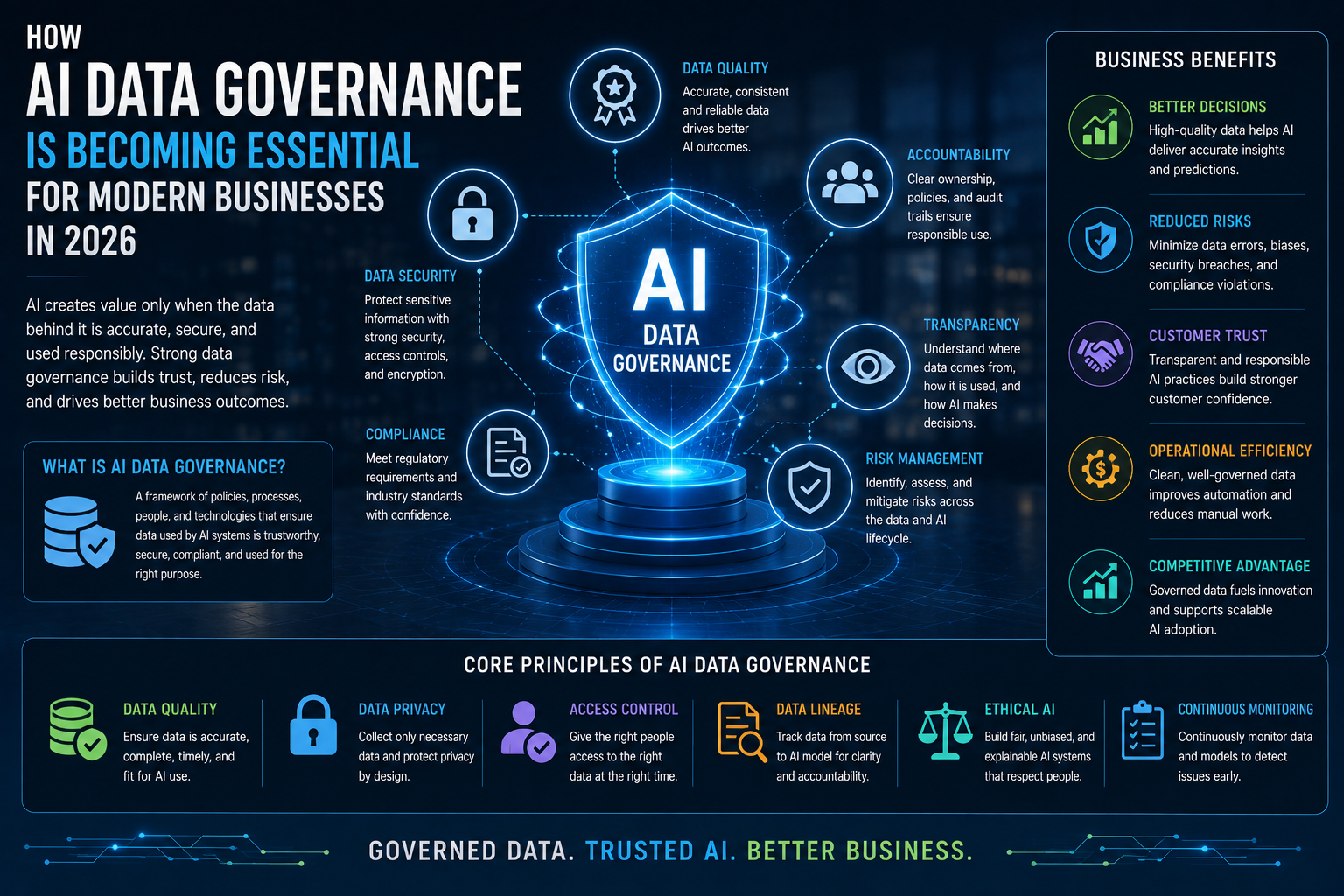
AI-powered customer experience depends on reliable data.
If customer information is incomplete, outdated, duplicated, or inaccurate, AI systems may produce poor recommendations or inappropriate responses.
Companies need strong data management practices before expecting AI to transform customer experience.
This includes maintaining accurate customer records, establishing appropriate access controls, protecting sensitive information, and ensuring that data is used responsibly.
Data governance is therefore becoming an important part of customer experience strategy.
Privacy and Trust Matter
AI can provide powerful personalization, but businesses must also protect customer trust.
Customers increasingly care about how their information is collected, stored, analyzed, and shared.
Companies should clearly explain how customer data is being used and provide appropriate controls where necessary.
AI systems should also be monitored for inaccurate or inappropriate outputs.
Human oversight remains particularly important when AI is involved in sensitive decisions or situations where mistakes could significantly affect customers.
Trust can take years to build but can be damaged quickly. Responsible AI adoption should therefore be treated as a business priority rather than simply a technical issue.
AI Empowers Employees Too
Customer experience is not only about customer-facing technology. AI can also help employees deliver better service.
Customer service representatives can use AI to summarize conversations, find relevant information, generate response suggestions, and identify potential solutions.
Sales teams can receive customer insights before meetings. Marketing professionals can analyze campaign performance more quickly. Managers can identify recurring customer complaints and operational problems.
In this way, AI becomes an employee-support system.
The goal is not to remove the human element from customer experience. Instead, AI can reduce administrative work and give employees better information so they can spend more time building relationships.
What Businesses Should Do Next
Companies interested in AI-powered customer experience should begin with specific problems rather than implementing AI everywhere at once.
The first step is identifying areas where customers experience unnecessary delays, repetitive processes, confusing communication, or poor personalization.
Businesses can then test AI solutions in controlled environments and measure outcomes such as response time, customer satisfaction, conversion rates, retention, and operational costs.
Employee training should also be part of the implementation strategy. Workers need to understand how AI systems operate, when their recommendations should be reviewed, and how customer information should be handled.
The Future of Customer Experience
AI-powered customer experience is likely to become increasingly integrated into everyday business operations.
Future systems may combine customer data, predictive analytics, AI agents, recommendation engines, and human support into connected experiences that respond dynamically to customer needs.
The competitive advantage will not necessarily belong to companies using the most advanced AI technology. It will belong to businesses that use AI thoughtfully to solve genuine customer problems.
Organizations that combine intelligent technology with human empathy, strong data practices, privacy protection, and excellent service can create experiences that are faster, more personalized, and more valuable.
In 2026, customer experience is becoming an important frontier for AI innovation. Companies that understand how to use artificial intelligence without losing the human connection can position themselves for stronger customer loyalty and long-term growth.