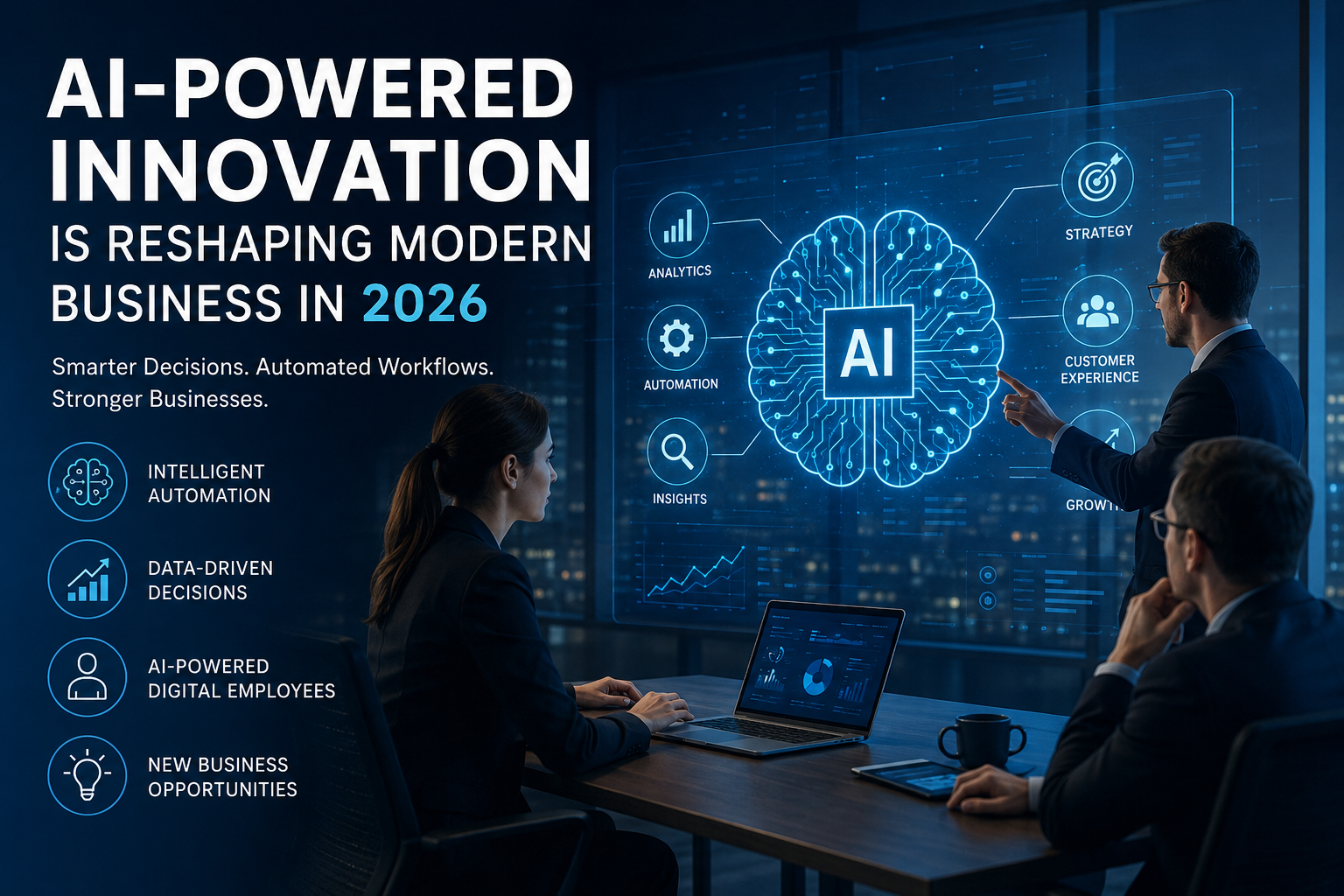
Artificial intelligence has moved beyond being an experimental technology reserved for large technology companies. In 2026, AI is becoming a practical business tool that organizations of all sizes can use to improve productivity, understand customers, automate repetitive processes, and create new sources of revenue.
The rapid development of generative AI, intelligent automation, predictive analytics, and AI-powered business platforms is changing how companies approach innovation. Instead of simply adding technology to existing processes, forward-thinking organizations are redesigning the way they operate around intelligent systems.
For businesses competing in increasingly digital markets, AI-powered innovation is no longer only about adopting the newest software. It is about building smarter, faster, and more adaptable organizations capable of responding to changing customer expectations and market conditions.
The Shift From Traditional Automation to Intelligent Systems
Business automation has existed for decades. Companies have traditionally used software to automate repetitive tasks such as data entry, accounting, inventory management, email marketing, and customer support.
AI takes automation to another level.
Traditional automation generally follows predefined rules. AI-powered systems can analyze information, recognize patterns, understand natural language, generate content, and support decisions based on large amounts of data.
This difference allows organizations to automate more complex activities.
For example, an AI-powered customer service system can analyze a customer's question, understand its context, search a company's knowledge base, and generate an appropriate response. Similarly, AI-driven analytics can examine business information and identify patterns that might not be immediately visible to human employees.
The result is a transition from simple task automation toward intelligent business operations.
AI Is Changing How Companies Make Decisions
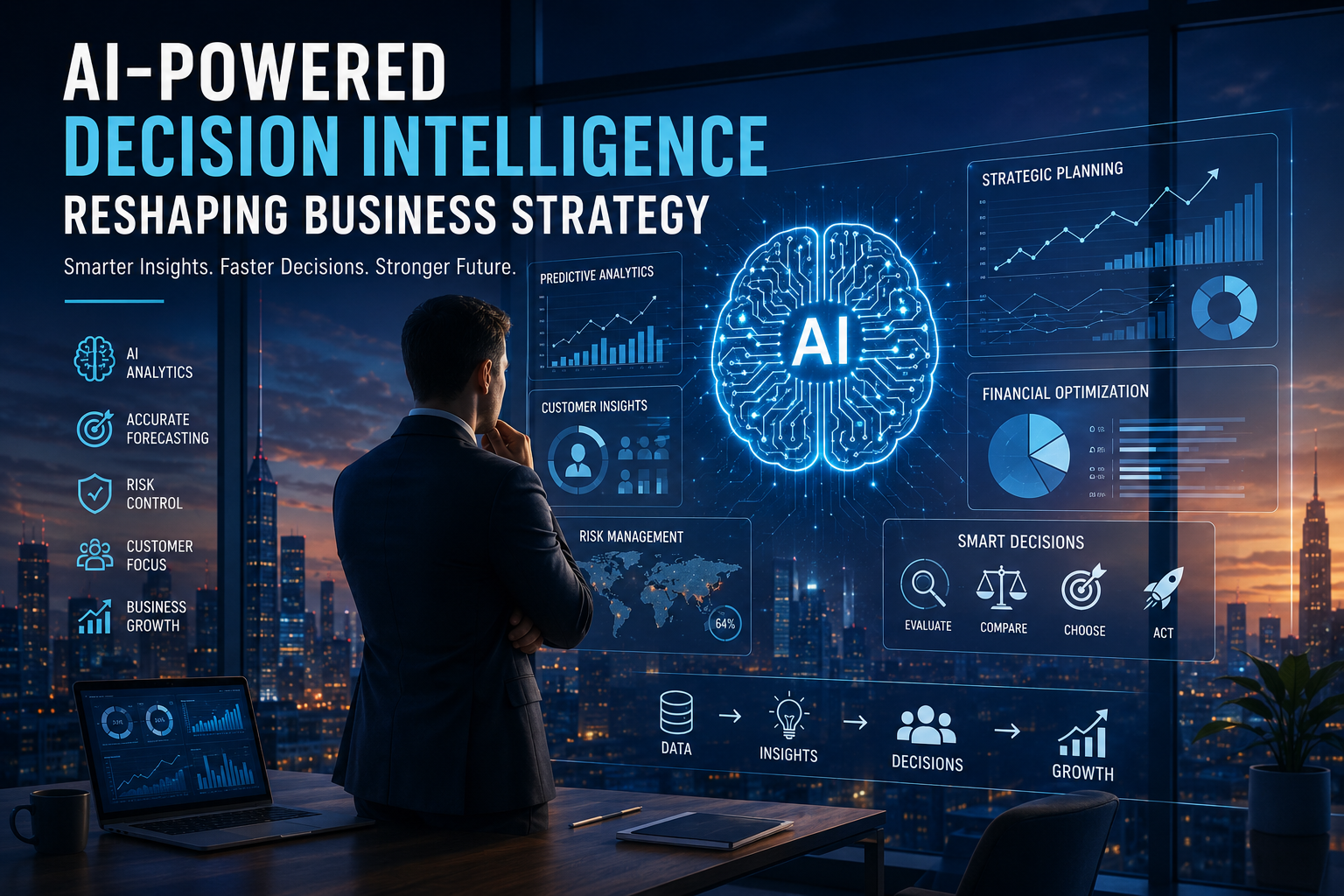
One of the most important effects of AI is its influence on business decision-making.
Companies generate enormous amounts of information every day. Sales transactions, website activity, customer feedback, advertising performance, supply-chain information, and financial data can all provide valuable insights. However, analyzing this information manually can take significant time.
AI systems can process large datasets rapidly and identify trends that support better decisions.
Marketing teams can use AI to understand customer behavior and identify potentially valuable audiences. Retail businesses can analyze purchasing patterns to improve inventory planning. Financial organizations can use intelligent systems to detect unusual transactions and identify potential risks.
However, AI should not automatically replace human judgment.
The strongest approach is often a combination of machine intelligence and human expertise. AI can identify patterns and provide recommendations, while experienced professionals can evaluate context, business priorities, ethical considerations, and potential risks.
Generative AI Is Transforming Business Productivity
Generative AI has become one of the most visible developments in modern business technology.
Organizations are using generative AI to assist with writing, research, coding, marketing, customer communication, product documentation, presentations, and internal knowledge management.
A marketing team, for example, can use AI to generate initial campaign ideas, summarize customer research, create content variations, and analyze performance data. Employees can then refine the output and add the creativity and strategic judgment that machines cannot reliably provide on their own.
Software development is another major area of change. AI coding assistants can help developers understand existing code, identify potential problems, generate repetitive code, and accelerate development workflows.
This does not necessarily mean fewer developers or marketers. Instead, it can allow professionals to spend less time on repetitive work and more time on strategy, creativity, problem-solving, and innovation.
AI Is Creating New Business Models
Technology does not only improve existing businesses. It can also create entirely new markets.
AI-powered software-as-a-service platforms, digital employees, intelligent customer assistants, automated research systems, personalized education platforms, and predictive business tools are examples of emerging opportunities.
Companies can increasingly build products that deliver highly personalized experiences at scale.
For instance, an online education company could use AI to adapt learning materials according to an individual student's progress. A financial technology platform could provide personalized insights based on a customer's financial activity. An e-commerce company could create more intelligent product discovery experiences.
These possibilities are encouraging entrepreneurs to rethink traditional business models.
Instead of selling only products or basic software subscriptions, companies can develop intelligent services that continuously learn from interactions and provide increasing value to customers.
The Rise of AI-Powered Digital Employees
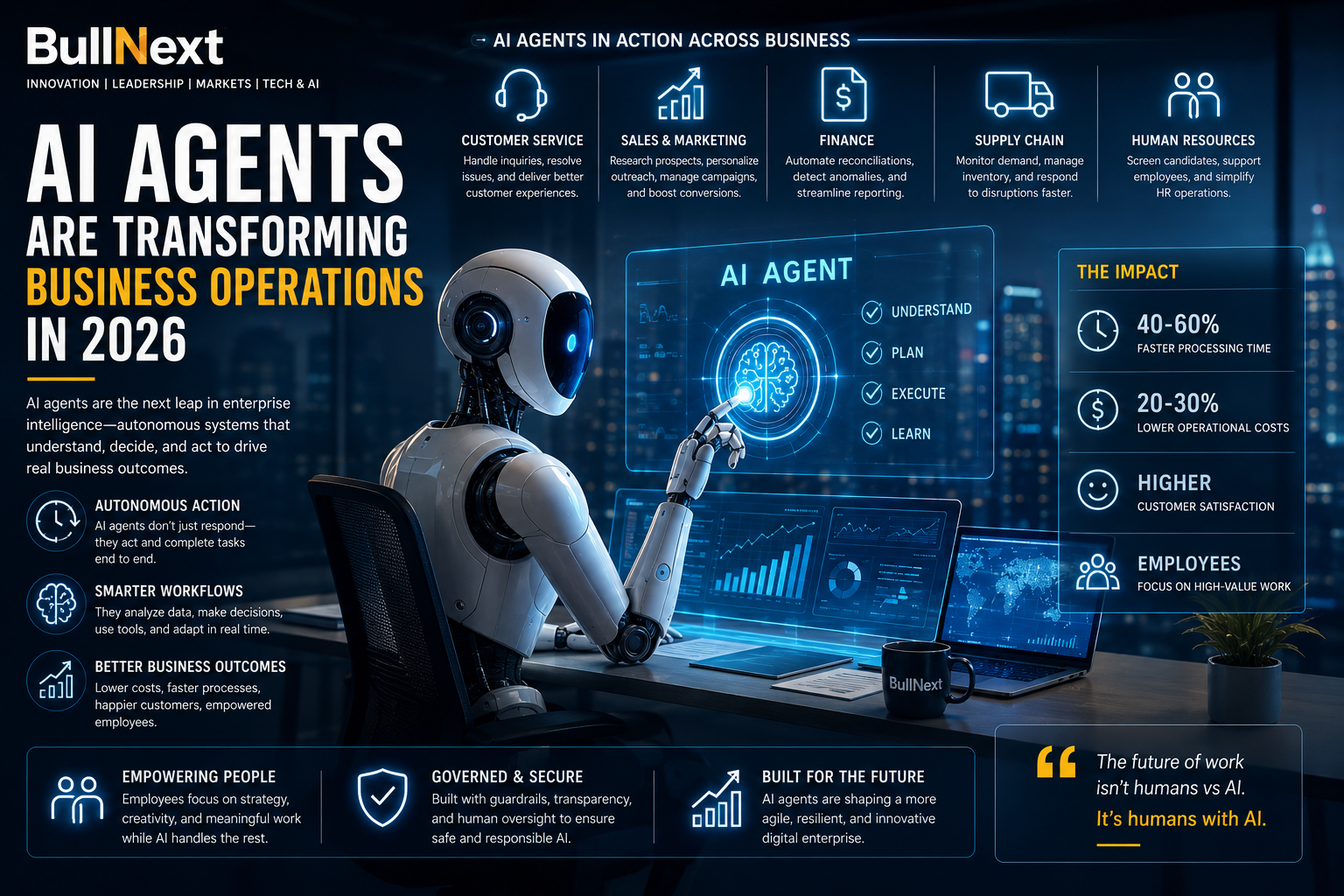
Another major development is the emergence of AI agents and digital employees.
Unlike traditional chatbots that respond to individual questions, modern AI agents can potentially perform sequences of tasks. Depending on the system and permissions provided, an AI agent may research information, organize data, draft communications, interact with business software, or support operational workflows.
This creates the possibility of AI becoming an operational layer inside organizations.
A company might use AI agents for customer support, sales research, administrative tasks, technical assistance, or internal knowledge management.
The most effective implementation will likely involve collaboration between humans and AI rather than complete replacement of human teams.
Employees can delegate repetitive tasks to intelligent systems while retaining responsibility for complex decisions, relationships, leadership, and creative work.
The Importance of Data Quality
AI innovation depends heavily on data.
Businesses sometimes assume that purchasing an AI platform is enough to transform operations. In reality, poor-quality, outdated, fragmented, or inconsistent data can significantly reduce the value of AI systems.
Organizations therefore need to improve their data foundations before expecting AI to solve every business problem.
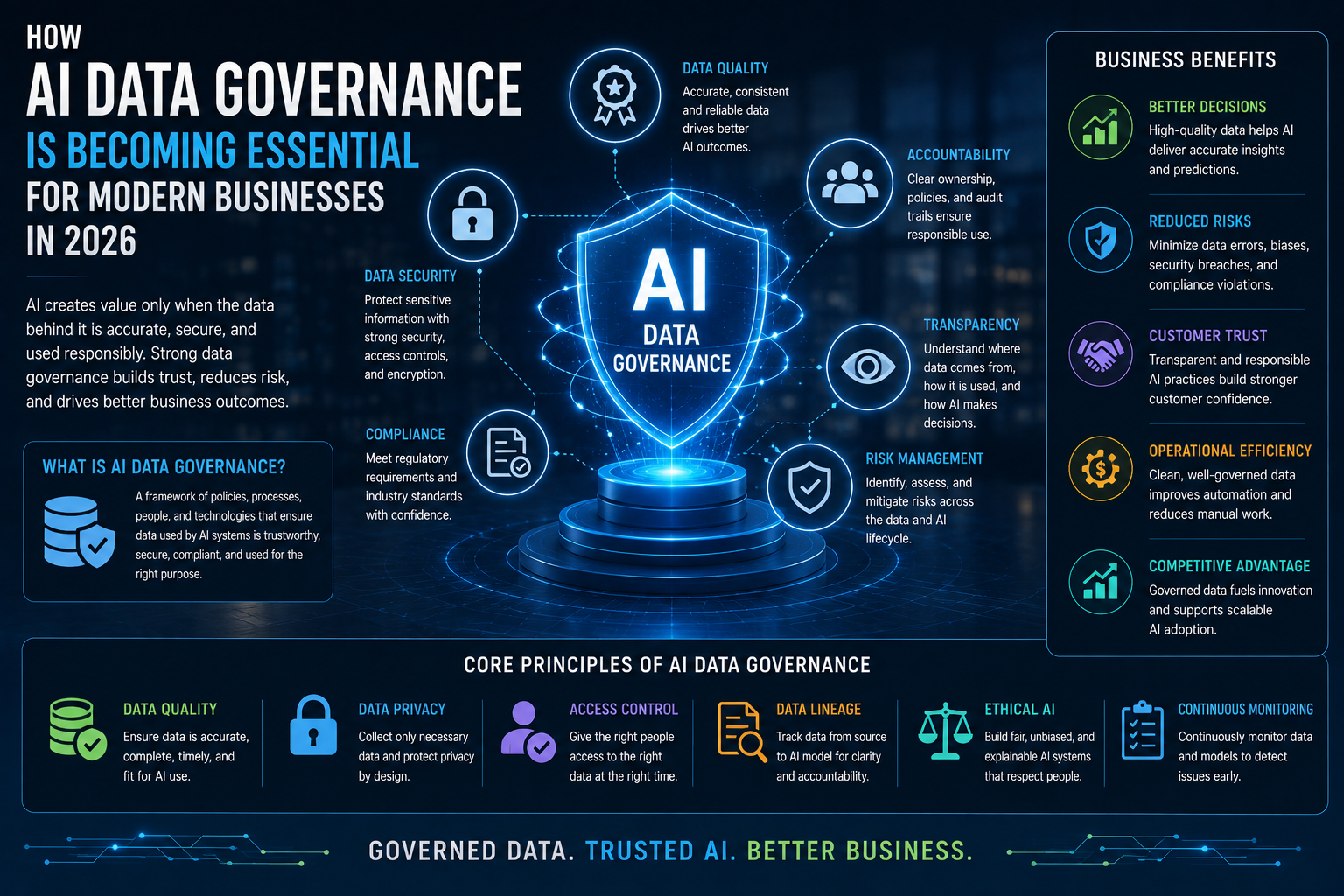
This includes organizing internal information, establishing appropriate data governance, protecting sensitive information, and ensuring that employees understand how data should be collected and used.
Companies with strong data foundations are generally better positioned to take advantage of AI because their systems have access to more reliable information.
Cybersecurity and Responsible AI
As businesses become more dependent on AI, cybersecurity and responsible technology management become increasingly important.
AI systems can process sensitive corporate and customer information. If organizations fail to establish appropriate security controls, they may expose confidential data or create new vulnerabilities.
Businesses should therefore consider access controls, data protection, employee training, monitoring, and governance when implementing AI.
Responsible AI also requires organizations to consider accuracy, transparency, bias, privacy, and accountability.
An AI-generated answer should not automatically be treated as fact. Businesses need appropriate review processes, particularly when AI is used in areas involving financial decisions, legal matters, healthcare, employment, or sensitive customer information.
Trust will become an important competitive advantage as AI adoption expands.
Small Businesses Can Benefit From AI Too
AI innovation is not limited to large corporations with massive technology budgets.
Small and medium-sized businesses can use affordable AI tools to improve marketing, customer service, administration, research, sales, and content creation.
A small company can use AI to answer common customer questions, analyze reviews, generate marketing ideas, summarize documents, organize internal knowledge, and automate repetitive administrative activities.
The key is not to adopt AI simply because competitors are doing so.
Businesses should identify specific problems where AI can produce measurable improvements. Saving employee time, reducing operational costs, improving customer satisfaction, increasing conversion rates, or generating new revenue are examples of useful performance objectives.
The Human Advantage Remains Important
Despite the rapid development of artificial intelligence, human skills remain extremely valuable.
Creativity, emotional intelligence, leadership, strategic thinking, communication, ethical judgment, and relationship-building are difficult to reduce to simple automated processes.
The future workplace is therefore likely to reward people who know how to work effectively with intelligent systems.
Employees who can combine industry expertise with AI literacy may become particularly valuable. Instead of competing directly against AI, professionals can learn how to use it as a productivity and decision-support tool.
Organizations also need leaders who understand both the opportunities and limitations of AI.
What Businesses Should Do Next
Companies preparing for the next stage of digital transformation should start with practical use cases rather than attempting to transform everything simultaneously.
The first step is identifying repetitive, time-consuming, or data-intensive processes. Businesses can then test AI solutions in controlled environments and measure their results.
Successful experiments can gradually expand across departments.
Companies should also invest in employee training. AI adoption is much more effective when workers understand how systems operate, what information they can safely provide, and when human review is necessary.
Finally, organizations should establish clear AI policies covering security, privacy, acceptable use, accuracy, and accountability.
The Future of AI-Powered Business
AI is becoming a fundamental component of modern business infrastructure. Its impact will extend beyond chatbots and content generation into decision-making, operations, customer experiences, product development, cybersecurity, and strategic planning.
The companies most likely to benefit will not necessarily be those that adopt the largest number of AI tools. They will be the organizations that understand where intelligent technology can create genuine business value.
The next phase of digital transformation will be defined by collaboration between people, data, software, and intelligent systems. Businesses that develop this capability early can become more adaptable and competitive as markets continue to evolve.
AI-powered innovation is therefore not simply a technology trend. It represents a broader change in how organizations create value, solve problems, serve customers, and compete in the modern economy. For businesses willing to experiment responsibly and continuously improve their use of AI, the opportunity is significant.