The digital economy is entering a new phase. Businesses are no longer simply moving existing services online; they are building increasingly automated environments where artificial intelligence, cloud computing, blockchain, connected devices, and digital platforms interact continuously.
As these systems become more sophisticated, one fundamental question becomes increasingly important: How do businesses know who—or what—is interacting with their digital infrastructure?
Digital identity is emerging as a critical part of the answer.
A digital identity allows an individual, organization, device, or software system to be recognized and authenticated within a digital environment. Traditionally, digital identity has been associated with usernames, passwords, identity documents, and authentication systems. But modern identity infrastructure is becoming much more sophisticated.
In an AI-driven economy, digital identity could become a foundational layer for secure transactions, automated systems, personalized services, compliance, and trusted interactions between people and machines.
What Is Digital Identity?
Digital identity is the collection of information and credentials used to represent an entity online.
For an individual, this might include authentication credentials, verified personal information, professional credentials, or other attributes.
For a business, digital identity can establish that an organization is legitimate and authorized to perform certain activities.
Digital identity can also apply to machines and software.
A connected device may need its own identity to communicate with another system. An AI agent may need authorization to access specific applications or perform particular tasks.
This broader definition is becoming increasingly important as businesses move toward automated digital environments.
Why Identity Matters in an AI Economy
Artificial intelligence is increasingly capable of performing actions rather than simply generating information.
AI systems can analyze data, communicate with customers, access software applications, create reports, and potentially initiate business processes.
This creates a new security challenge.
If an AI agent is allowed to perform a task, businesses need to know which system created the action, what permissions it has, and whether it is authorized to perform that activity.
Traditional employee-based identity systems were not necessarily designed for autonomous software agents.
As businesses deploy more AI systems, identity infrastructure will need to evolve accordingly.
From Passwords to Verifiable Credentials
Passwords have been the foundation of digital authentication for decades, but they have significant weaknesses.
They can be stolen, reused, guessed, shared, or exposed through phishing attacks.
Modern identity systems are increasingly moving toward stronger authentication methods and verifiable credentials.
These credentials can provide evidence about an individual's or organization's identity or qualifications without necessarily requiring the disclosure of unnecessary information.
For example, a user might be able to prove that they meet a particular requirement without revealing their entire identity profile.
This concept can support both security and privacy.
Digital Identity and Privacy
One of the biggest challenges of the digital economy is balancing personalization with privacy.
Businesses want to understand customers so they can provide relevant services. However, customers increasingly expect their personal information to be protected.
Digital identity systems can help create more controlled information-sharing environments.
Instead of providing every piece of personal information to every service, users could potentially provide only the attributes required for a particular transaction.
For example, a service may only need confirmation that a person is over a certain age rather than requiring access to their complete identity information.
This principle of minimizing unnecessary data sharing could become increasingly valuable as businesses collect more information.
AI Agents Need Identity Too
The rise of AI agents may be one of the strongest reasons digital identity will become more important.
An AI agent may eventually interact with multiple business applications, retrieve information, communicate with other systems, and execute approved tasks.
But businesses cannot treat every AI agent as if it were an anonymous software process.
Organizations need to know which agent is making a request, what it is allowed to access, and what actions it has performed.
This creates the concept of machine identity.
Just as employees receive credentials and permissions, AI agents and automated systems may require their own identities, access policies, and audit trails.
Controlling AI Permissions
Not every AI system should have unrestricted access to company information.
A customer-service AI may need access to customer support records but not confidential financial documents.
A marketing assistant may need access to campaign data but not employee payroll information.
A software development agent may need access to specific code repositories while being restricted from production systems.
Identity and access management can help businesses establish these boundaries.
The principle is straightforward: AI systems should receive only the permissions necessary to perform their assigned tasks.
This can reduce the potential impact of an error, compromised system, or unauthorized action.
Digital Identity and Financial Services
Financial services are another area where identity infrastructure is critical.
Banks, payment companies, investment platforms, and digital asset businesses need to establish who their customers are and whether transactions are legitimate.
Digital identity can potentially make onboarding and verification more efficient.
Instead of repeatedly submitting the same information to different services, customers could use trusted digital credentials where supported by the relevant legal and technical infrastructure.
This could reduce administrative friction while strengthening verification.
However, financial identity systems must meet strict regulatory and security requirements.
Blockchain and Decentralized Identity
Blockchain technology is also contributing to discussions around digital identity.
Decentralized identity models can allow users to hold and manage certain credentials without relying entirely on a single centralized identity provider.
Blockchain or distributed ledger infrastructure can potentially provide mechanisms for verifying credentials and recording relevant proofs.
The technology may be particularly interesting for digital assets, cross-border transactions, decentralized applications, and Web3 environments.
However, blockchain is not automatically the best solution for every identity problem.
Organizations need to consider privacy, scalability, governance, regulatory requirements, and user experience when choosing identity infrastructure.
Identity for Connected Devices
The Internet of Things is creating another major identity challenge.
Businesses may operate thousands or millions of connected devices.
These devices need to communicate securely with software platforms and other devices.
Each device may require a unique identity so that systems can determine whether a connection is legitimate.
For example, a smart factory may contain sensors, robots, cameras, production machines, and monitoring systems.
If an unknown device attempts to connect to the network, the organization needs mechanisms to identify and evaluate it.
Strong machine identity can therefore become a fundamental part of IoT security.
Digital Identity Can Improve Customer Experience
Security is not the only benefit of better identity systems.
Digital identity can also make digital experiences easier.
Customers frequently need to create accounts, verify their identities, reset credentials, and provide information repeatedly across different services.
Better identity infrastructure can reduce unnecessary friction.
For example, customers may eventually be able to move between trusted services using portable credentials or streamlined authentication processes.
The challenge is creating systems that are simultaneously secure, convenient, and understandable to ordinary users.
Complex identity systems that customers cannot easily use may fail even if their underlying technology is sophisticated.
Identity and Cybersecurity
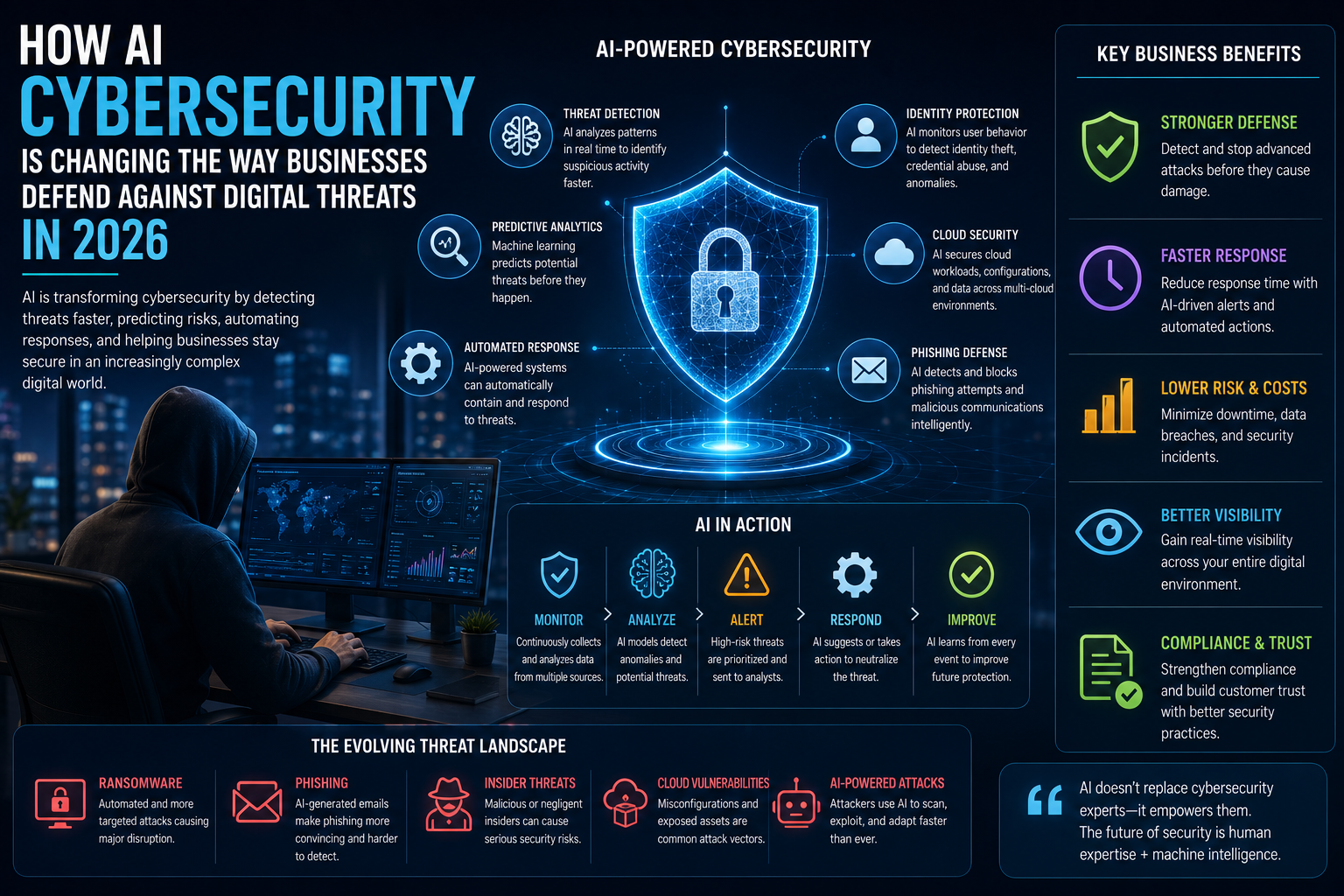
Digital identity is closely connected to cybersecurity.
Many security incidents begin with compromised credentials or unauthorized access.
Strong identity systems can help organizations determine who is accessing a resource and whether that access is appropriate.
Modern approaches may include multi-factor authentication, behavioral monitoring, device verification, role-based access controls, and continuous authorization.
The objective is to move beyond the assumption that a user should be trusted simply because they successfully entered a password.
Instead, access can be evaluated according to identity, context, permissions, device, and behavior.
The Importance of Interoperability
One major challenge is that digital identity systems need to work across different environments.
A user may interact with banks, government services, healthcare platforms, employers, retailers, and international businesses.
If every organization uses completely incompatible identity systems, users may still face fragmented experiences.
Interoperability standards could therefore become increasingly important.
Businesses and technology providers will need ways to verify credentials across different platforms while maintaining security and privacy.
This could be one of the most important areas of development for the future digital economy.
Regulatory Considerations
Identity is closely connected to privacy and regulation.
Governments around the world have different rules regarding personal information, authentication, financial identity, data protection, and digital credentials.
Businesses operating internationally may need to manage multiple regulatory environments.
This makes governance essential.
Companies should understand what information they collect, why they collect it, how long they retain it, and who can access it.
Identity technology should be implemented alongside appropriate legal and compliance processes.
Building Trust Between Humans and Machines
The next stage of digital transformation will involve more interaction between humans and machines.
Customers may communicate with AI assistants. Businesses may use AI agents to negotiate or coordinate processes. Software systems may automatically exchange information with other systems.
For these interactions to be trusted, participants need reliable ways to identify one another.
Digital identity can provide part of this foundation.
A future business transaction may involve a human customer, an AI assistant representing the customer, a business AI agent, payment infrastructure, and several automated verification systems.
Each participant may need to establish its identity and authority before the transaction can proceed.
Preparing for the Future
Businesses should begin treating identity as strategic infrastructure rather than simply an IT function.
Organizations can start by reviewing their existing authentication systems, identifying important digital identities, and determining which employees, devices, applications, and AI systems have access to sensitive resources.
Companies should also establish clear permission policies.
As AI adoption increases, businesses should consider which AI applications require access to internal data and what actions those systems are permitted to perform.
Strong identity governance can make AI adoption safer and more manageable.
The Future of Digital Identity
Digital identity is likely to become increasingly important as businesses move toward automated and interconnected digital environments.
Future identity systems may combine biometrics, cryptographic credentials, decentralized technologies, AI-based risk analysis, and continuous authentication.
People may gain greater control over their digital credentials, while businesses may gain stronger mechanisms for verifying customers, employees, machines, and AI agents.
The most successful systems will likely be those that balance security with convenience.
Identity should protect users without creating unnecessary barriers to legitimate digital activity.
Conclusion
Digital identity is becoming a foundational technology for the next generation of the internet and business infrastructure.
As AI agents, connected devices, blockchain platforms, cloud applications, and digital financial systems become more interconnected, organizations need reliable ways to determine who is accessing information and which actions are authorized.
Strong digital identity infrastructure can improve cybersecurity, simplify customer experiences, support privacy, enable machine-to-machine communication, and create greater trust in automated transactions.
The future of digital business will not depend only on powerful AI models or faster networks. It will also depend on knowing who is acting, what they are allowed to do, and whether their actions can be trusted.
Businesses that invest early in secure, interoperable, and privacy-conscious identity systems can build a stronger foundation for the AI-driven economy.