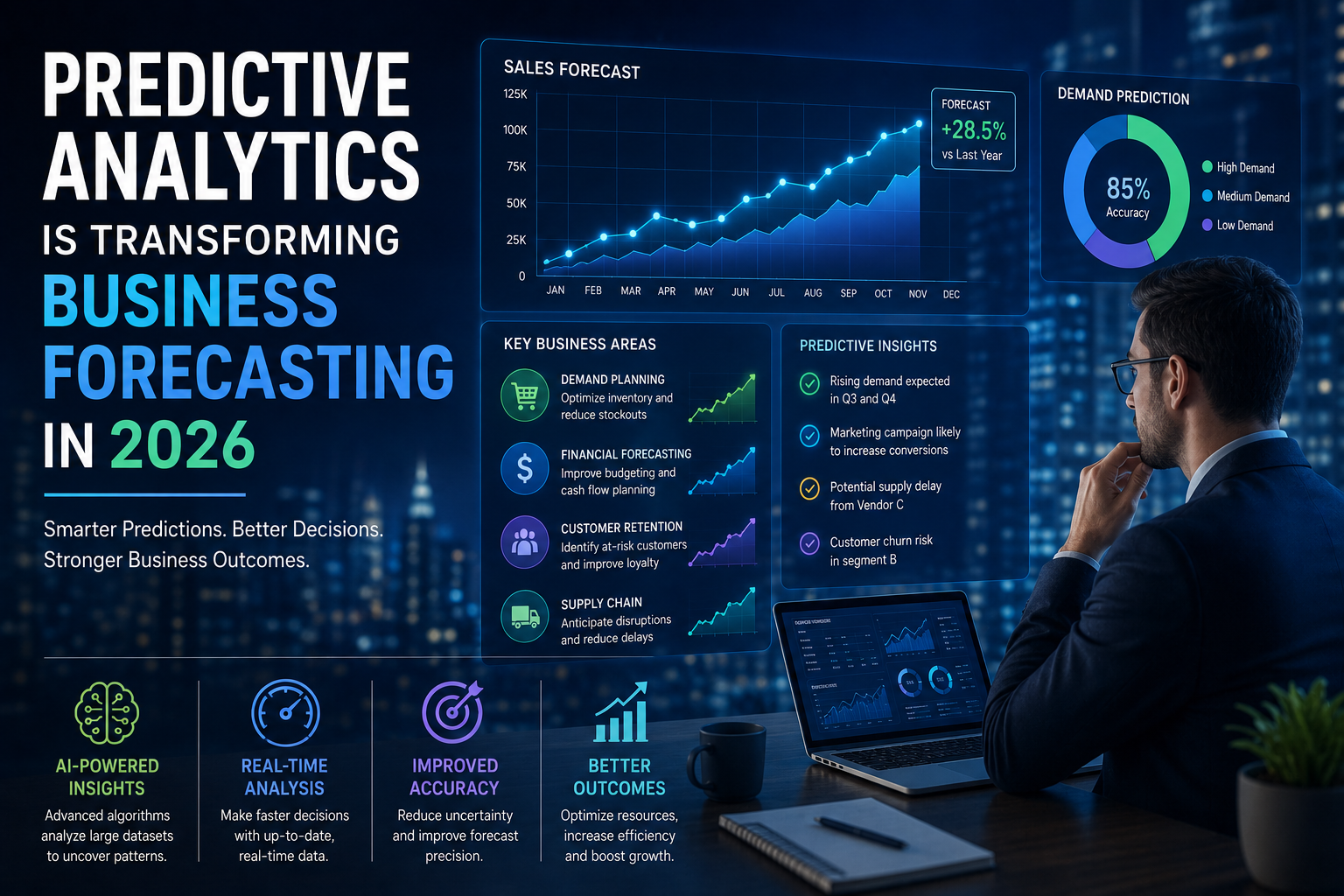
How Predictive Analytics Is Changing Business Forecasting in 2026
Business forecasting has always played an important role in corporate planning. Companies need to estimate future sales, understand customer demand, manage inventory, prepare budgets, and anticipate market changes. Traditionally, these forecasts have depended on historical data, spreadsheets, statistical models, and the experience of business leaders.
In 2026, predictive analytics is changing this process.
Advances in artificial intelligence, machine learning, cloud computing, and real-time data processing are allowing businesses to build more dynamic forecasts. Instead of relying primarily on what happened in the past, companies can analyze multiple sources of information and identify patterns that may provide clues about what could happen next.
Predictive analytics is therefore becoming an important part of modern business strategy, helping organizations make decisions with greater speed, context, and flexibility.
From Historical Reporting to Future Insights
Traditional business reporting mainly explains what has already happened.
A company may review last month's sales, quarterly revenue, customer acquisition numbers, or annual expenses. These reports are useful, but they do not necessarily explain what is likely to happen next.
Predictive analytics adds another layer.
By analyzing historical and current information, predictive systems can identify relationships and patterns that may indicate future outcomes. A retailer, for example, could analyze previous purchases, seasonal demand, pricing changes, promotional campaigns, and customer behavior to estimate future demand.
This allows management teams to move from simply reviewing performance to preparing for possible scenarios.
The distinction is important because modern markets can change rapidly. A forecast that was accurate several months ago may become less useful when customer behavior, economic conditions, competitors, or supply chains change.
Real-Time Data Is Making Forecasts More Dynamic
One of the biggest developments in predictive analytics is the growing availability of real-time information.
Businesses now generate data through websites, mobile applications, point-of-sale systems, connected devices, social platforms, customer service channels, and digital transactions.
Instead of waiting for a monthly or quarterly reporting cycle, organizations can increasingly monitor changing conditions as they occur.
For example, an online retailer could detect an unexpected increase in searches for a particular product and adjust inventory planning accordingly. A logistics company could analyze traffic, weather, delivery activity, and operational data to improve scheduling.
Real-time information does not guarantee accurate predictions, but it can give organizations more current information for decision-making.
Predictive Analytics Is Improving Demand Planning
Demand forecasting is one of the most practical applications of predictive analytics.
Businesses need to maintain enough inventory to meet customer demand without holding excessive stock. Overstocking can increase storage costs, while understocking can result in missed sales and dissatisfied customers.
Predictive models can analyze historical sales, seasonal patterns, promotions, customer behavior, geographic trends, and other variables to estimate future demand.
This can help businesses make more informed inventory decisions.
Manufacturers can use similar systems to estimate production requirements. Restaurants can forecast ingredient demand. Retailers can plan purchasing strategies. Online businesses can prepare fulfillment capacity for periods of higher activity.
The value comes from turning large amounts of information into actionable planning signals.
Financial Forecasting Is Becoming More Intelligent
Financial planning is another area where predictive analytics is gaining importance.
Companies need to forecast revenue, expenses, cash flow, and profitability. Unexpected changes in any of these areas can affect business stability.
AI-assisted predictive models can examine historical financial information and other relevant indicators to identify potential trends.
Finance teams can use these insights to build multiple scenarios rather than relying on a single forecast.
For example, a company could model how changes in sales growth, operating costs, interest rates, or customer retention might affect future cash flow.
Scenario planning can help executives understand potential risks before making major investments or expansion decisions.
However, predictive systems should support financial professionals rather than replace them. Economic conditions can change unexpectedly, and no model can account perfectly for every future event.
Marketing Can Become More Predictive
Predictive analytics is also changing how companies approach marketing.
Instead of evaluating customers only after they have made a purchase, businesses can analyze behavioral signals to identify customers who may be more likely to convert, return, or disengage.
Marketing teams can use these insights to improve audience segmentation and campaign planning.
For example, a company may identify customers whose activity suggests a higher probability of purchasing a particular product. Another group may show signs of declining engagement and require a different retention strategy.
This allows marketing resources to be allocated more strategically.
Predictive analytics can also help businesses estimate campaign performance and identify which customer segments are most likely to respond to specific offers.
Supply Chains Are Becoming More Predictive
Supply-chain uncertainty has made forecasting particularly valuable.
Companies increasingly need to understand not only customer demand but also potential disruptions involving suppliers, transportation, inventory, and production.
Predictive analytics can combine operational information with external signals to identify potential problems.
A manufacturer, for instance, might monitor supplier performance and delivery patterns to identify an increased risk of delays. A logistics company could analyze transportation information to anticipate disruptions.
The objective is not to predict every event perfectly. Instead, organizations can use predictive information to prepare alternative strategies.
This can make supply chains more resilient.
Customer Retention Can Benefit From Predictive Models
Acquiring new customers can be expensive, making customer retention an important business priority.
Predictive analytics can help organizations identify behavioral patterns associated with customer churn.
A subscription company, for example, might analyze changes in usage, support interactions, payment behavior, and engagement to identify customers who may be at higher risk of leaving.
The business can then take appropriate action before the customer makes a final decision.
This approach can be more effective than treating every customer in exactly the same way.
The goal is to identify relevant signals early and give employees enough information to respond appropriately.
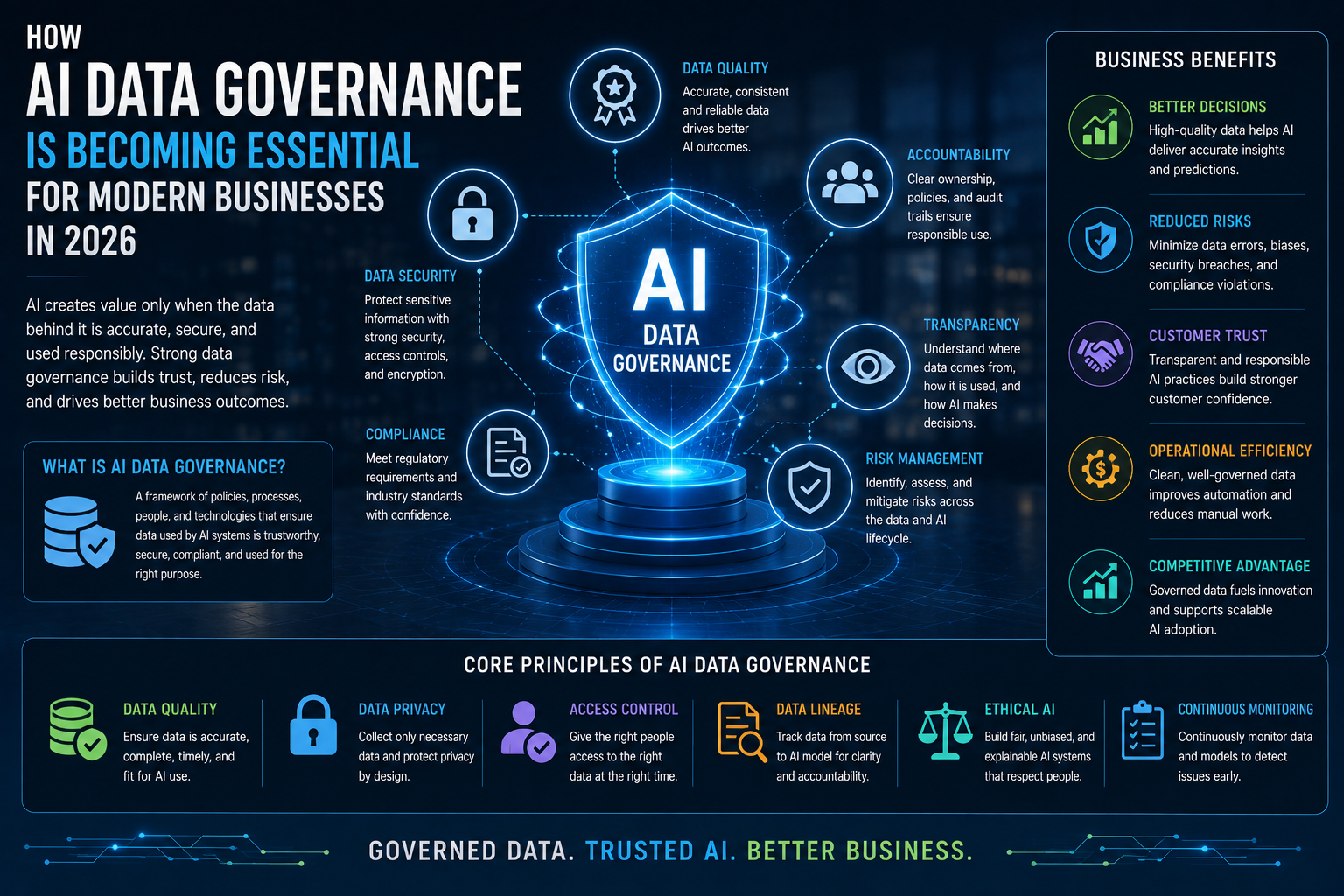
Better Forecasting Requires Better Data
Predictive analytics is only as reliable as the information behind it.
Poor-quality data can produce misleading results. Duplicate records, missing information, outdated customer profiles, inconsistent definitions, and disconnected systems can all reduce the effectiveness of predictive models.
Businesses therefore need strong data-management practices.
Data should be accurate, properly organized, securely stored, and accessible to authorized systems and employees.
Organizations should also understand where their data comes from and whether it is appropriate for the intended analytical purpose.
Building a strong data foundation may require more effort than implementing a predictive analytics platform, but it is essential for long-term value.
Human Judgment Still Matters
There is a common misconception that predictive analytics can eliminate uncertainty from business decisions.
It cannot.
Predictive models identify patterns based on available information. They do not know the future with certainty.
Unexpected events, regulatory changes, technological breakthroughs, geopolitical developments, consumer trends, and other factors can disrupt even sophisticated forecasts.
For this reason, business leaders should treat predictive analytics as decision support rather than absolute truth.
Human judgment remains essential for interpreting results, challenging assumptions, considering context, and deciding how to respond.
The strongest organizations will combine analytical intelligence with human experience.
The Rise of Scenario-Based Planning
Another important development is the growing use of scenario-based forecasting.
Instead of asking only what is most likely to happen, businesses can examine multiple possible futures.
A company might create optimistic, moderate, and challenging scenarios based on different assumptions.
This approach can improve preparedness.
If demand suddenly falls, for example, management can already have a plan for reducing costs or adjusting inventory. If demand rises unexpectedly, the organization can prepare for additional production or staffing requirements.
Scenario planning turns forecasting into a broader strategic exercise.
What Businesses Should Do Next
Organizations looking to adopt predictive analytics should begin with a specific business problem.
Rather than purchasing technology without a clear objective, companies should identify areas where better forecasting could produce measurable value.
Demand planning, cash-flow forecasting, customer retention, marketing performance, and supply-chain management are potential starting points.
Businesses should then evaluate their existing data, establish measurable goals, and test predictive models on a manageable scale.
Successful applications can gradually expand across the organization.
Employee training is equally important. Business teams need to understand how to interpret predictive insights and recognize the limitations of automated forecasts.
The Future of Business Forecasting
Predictive analytics is moving business forecasting from periodic analysis toward continuous intelligence.
As AI systems become more capable and organizations collect more real-time information, forecasts can become increasingly dynamic and responsive.
The biggest opportunity is not simply predicting the future more accurately. It is helping businesses prepare for multiple possible futures.
Companies that combine reliable data, predictive technology, human expertise, and flexible planning can respond more effectively to changing market conditions.
In 2026, forecasting is becoming less about looking backward and more about understanding what current signals may mean for tomorrow. Predictive analytics gives organizations another way to turn information into strategy, helping leaders make more informed decisions in an increasingly uncertain and competitive business environment.