Choosing your first credit card is an important step toward building a credit history and learning how to manage money responsibly. The right card can help you establish a credit profile, track everyday spending, and potentially earn cashback without paying an annual fee.
However, applying for your first credit card can feel confusing. Some cards are designed for college students, while others are intended for people with no credit history or those who need to rebuild their credit.
The best first credit card is not necessarily the one offering the biggest rewards. It is the one you can qualify for, afford to maintain, and use responsibly over time.
In this guide, we compare popular first credit cards in the United States in 2026, explain their benefits, and share practical tips for choosing a card that matches your needs.
What Is a First Credit Card?
A first credit card is a card designed for someone who is beginning to establish a credit history. Depending on your circumstances, it may be a student card, a secured credit card, or an unsecured card for applicants with limited credit experience.
Using a credit card responsibly may help you build a positive credit history by demonstrating that you can borrow money and make payments on time.
First credit cards commonly offer:
No annual fee.
Credit bureau reporting.
Manageable credit limits.
Simple rewards on eligible purchases.
Educational tools for monitoring credit.
Opportunities to qualify for other credit products in the future.
Not every card includes all these features. Review the issuer's terms before applying.
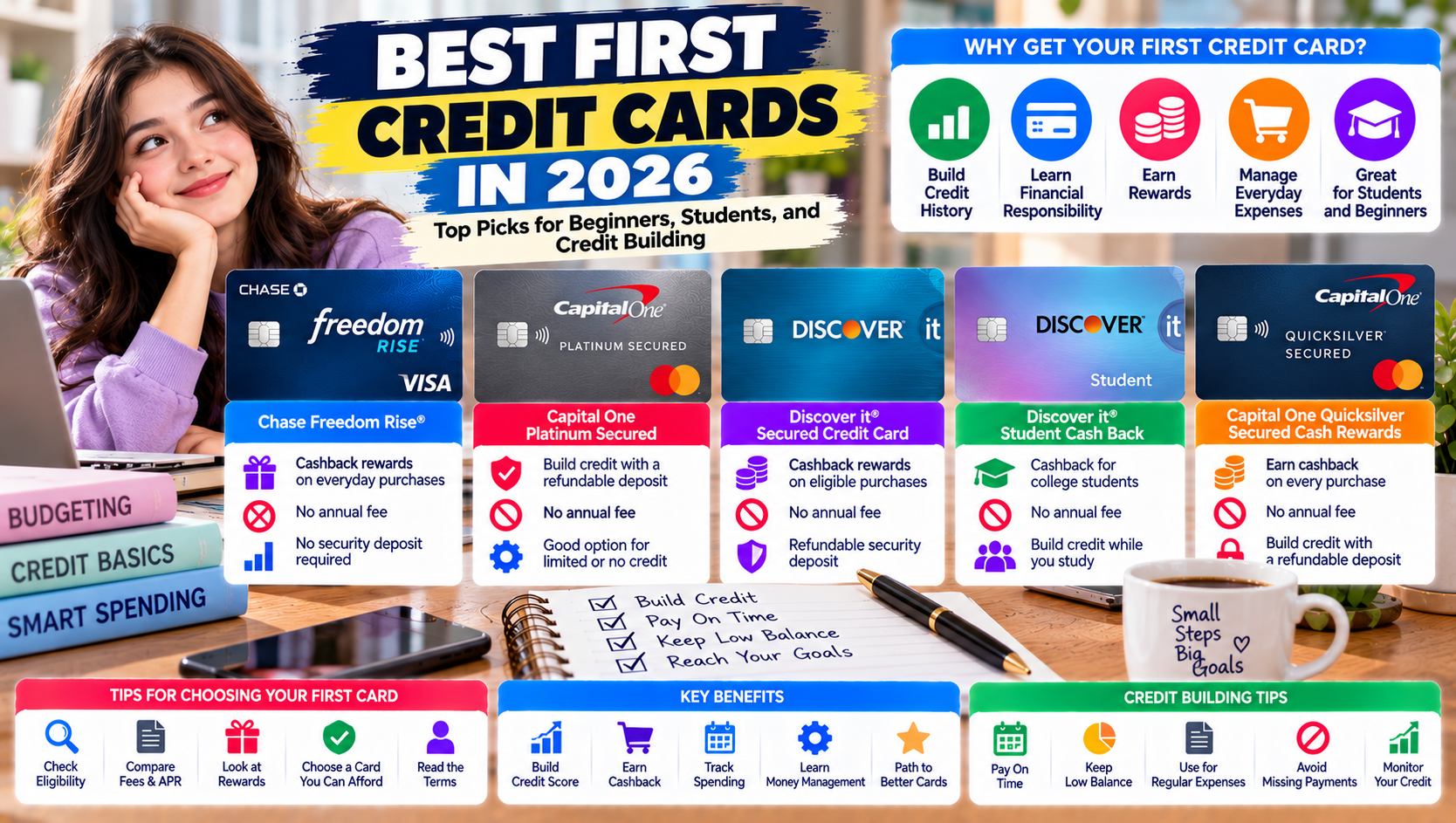
Best First Credit Cards in 2026
The following cards are worth comparing for people beginning their credit journey in the United States.
Credit Card | Best For | Annual Fee |
|---|---|---|
Chase Freedom Rise® | Beginners seeking an unsecured card | $0 |
Capital One Platinum Secured Credit Card | Building credit with a secured deposit | $0 |
Discover it® Secured Credit Card | Credit building with rewards | $0 |
Discover it® Student Cash Back | College students who want cashback | $0 |
Capital One Quicksilver Secured Cash Rewards Credit Card | Building credit while earning cashback | $0 |
Annual fees and features reflect published 2026 information. Approval requirements, deposits, APRs, and rewards terms can change. Check the issuer's current disclosures before applying.
1. Chase Freedom Rise® — Best for Beginners
The Chase Freedom Rise® is designed for people who want to begin building credit without providing a traditional secured-card deposit.
Key features:
No annual fee.
Cashback rewards on eligible purchases.
No security deposit required.
Credit-building tools through Chase.
Potential opportunities to qualify for other Chase credit cards over time.
Who should consider it?
This card may be suitable for first-time applicants who prefer an unsecured credit card and want to earn cashback while establishing their credit history.
Approval is not guaranteed. Chase considers applicants' financial profiles, and having an eligible Chase checking or savings account may improve approval odds under its published guidance.
Before applying, review the current rewards rate, APR, eligibility criteria, and payment terms.
2. Capital One Platinum Secured Credit Card — Best for Building Credit With a Deposit
A secured credit card requires a refundable security deposit that generally helps determine the account's initial credit limit.
The Capital One Platinum Secured Credit Card is an option for applicants who have limited credit history or are working to establish their credit profile.
Key features:
No annual fee.
A refundable security deposit.
Initial credit limits based on the issuer's approval and deposit requirements.
Credit-building opportunities through responsible use.
Possible credit-limit reviews under the issuer's policies.
Who should consider it?
This card may suit applicants who cannot qualify for an unsecured card and are comfortable providing a deposit.
Remember that the deposit is not a payment toward your monthly statement. You must still pay your card balance as required. The deposit's return depends on the account's terms and how the account is closed or upgraded.
3. Discover it® Secured Credit Card — Best for Credit Building With Rewards
The Discover it® Secured Credit Card combines a secured credit line with a rewards program.
Key features:
No annual fee.
A refundable security deposit.
Cashback on eligible purchases.
Credit bureau reporting.
A possible path to an unsecured card, subject to the issuer's review and policies.
Who should consider it?
This card may appeal to beginners who want to establish credit while earning rewards on everyday purchases.
The security deposit can be a barrier for some applicants, so check the required amount before applying. Also review the current cashback terms, eligible categories, and conditions for returning the deposit.
4. Discover it® Student Cash Back — Best for College Students
The Discover it® Student Cash Back card is designed for eligible college students who want to build credit while earning rewards.
Key features:
No annual fee.
Cashback on eligible purchases.
Rotating bonus categories that may require activation and have spending limits.
Credit-building opportunities.
Promotional rewards may be available under current terms.
Who should consider it?
This card may be useful for students who regularly make purchases such as groceries, books, transportation, or other eligible expenses.
Students should consider their budget before applying. A credit card is not extra income, and carrying a balance can lead to interest charges.
5. Capital One Quicksilver Secured Cash Rewards Credit Card — Best for Cashback and Credit Building
The Capital One Quicksilver Secured Cash Rewards Credit Card is a secured card that combines credit-building features with cashback rewards.
Key features:
No annual fee.
A refundable security deposit is required.
Cashback on eligible purchases.
Credit-building opportunities through responsible use.
Possible account reviews under the issuer's policies.
Who should consider it?
This card may suit applicants who want a secured card without giving up the opportunity to earn cashback.
Compare the required deposit, rewards terms, and ongoing APR with other secured cards. Rewards are useful, but avoiding interest and making payments on time should remain your main priorities.
First Credit Cards Compared
Use this table to understand which type of card may be appropriate for your situation.
Card Type | Security Deposit | Main Advantage | Best For |
|---|---|---|---|
Unsecured starter card | Usually not required | No deposit tied up | Applicants who qualify |
Secured credit card | Usually required | May be easier to qualify for | People with limited credit history |
Student credit card | Usually not required, but terms vary | Designed for eligible students | College students |
Cashback starter card | Depends on the product | Earn rewards on eligible spending | Beginners who want simple rewards |
The best choice depends on your credit history, financial situation, and ability to manage repayments.
How to Choose Your First Credit Card
1. Check Your Credit History
If you have never used credit, you may have a limited or nonexistent credit file. This does not automatically mean you have bad credit.
Look for cards designed for people with no credit history rather than applying for premium cards that usually require established credit.
2. Look for No Annual Fee
A no-annual-fee card can be a practical starting point because it reduces the cost of keeping the account open.
You can focus on making payments on time and learning how credit works without paying a recurring fee simply to hold the card.
3. Compare Secured and Unsecured Cards
A secured card requires a deposit, while an unsecured card generally does not.
If you qualify for a suitable unsecured card, it may save you from tying up cash in a deposit. If you have difficulty getting approved, a secured card from a reputable issuer may be worth considering.
4. Review the APR
The annual percentage rate represents the cost of borrowing when interest applies. Many credit cards have high ongoing APRs, so carrying a balance can become expensive.
If your card provides a purchase grace period, paying the full statement balance by the due date can generally help you avoid interest on purchases.
5. Check Credit Bureau Reporting
Look for a card that reports account activity to the major U.S. credit bureaus. Payment history and credit utilization can influence credit scores.
Confirm the issuer's reporting practices, especially if you are opening your first account.
6. Choose Rewards That Match Your Spending
Cashback can be useful, but it should not be the main reason to choose a card.
A simple rewards program may be easier to manage than one with rotating categories, activation requirements, or complex redemption rules.
How to Build Credit With Your First Credit Card
Opening a credit card does not automatically produce a strong credit score. Your payment habits and overall credit profile matter.
Pay Your Bill on Time
Payment history is an important factor in many credit-scoring models. Set up payment reminders or automatic payments to help avoid missed due dates.
Pay the Full Statement Balance
Whenever possible, pay the full statement balance by the due date. Paying only the minimum can leave you carrying debt and paying interest.
Keep Credit Utilization Low
Credit utilization measures how much of your available revolving credit you are using.
For example, if your credit limit is $500 and your reported balance is $100, your utilization is 20%.
Keeping utilization low is generally beneficial, but there is no single percentage that guarantees a particular credit score. You should also avoid spending unnecessarily just to improve this figure.
Avoid Applying for Too Many Cards
Multiple applications over a short period can create several hard inquiries and may affect your credit profile.
Start with one suitable card, learn how to manage it, and apply for additional credit only when you have a clear reason.
Monitor Your Credit Reports
Review your credit reports periodically for incorrect information, unfamiliar accounts, or signs of fraud. In the United States, consumers can access their reports through the authorized AnnualCreditReport.com service.
Common First Credit Card Mistakes to Avoid
Missing payments: Late payments can lead to fees and may damage your credit history.
Spending more than you can repay: A credit limit is not an extension of your income.
Paying only the minimum: This can make debt take longer to repay.
Ignoring interest rates: High APRs can make carried balances expensive.
Applying for premium cards too early: Cards designed for established credit may be harder to qualify for.
Overlooking annual fees: Check whether the card has recurring costs.
Closing a card without considering the consequences: Closing an account can affect your available credit and overall credit profile.
Using all your available credit: High utilization may negatively affect credit scores.
Assuming approval is guaranteed: Issuers consider several factors, including income, credit history, and existing obligations.
Frequently Asked Questions
What is the best first credit card in 2026?
There is no single best card for everyone. Chase Freedom Rise® is worth comparing if you want an unsecured starter card, while the Capital One Platinum Secured and Discover it® Secured may suit applicants who need a secured card. Eligible students can also compare student-specific cards.
Can I get a credit card with no credit history?
Yes. Some issuers offer cards designed for people with little or no credit history. Approval depends on the issuer's requirements and your financial circumstances.
Is a secured credit card good for beginners?
A secured card can be useful if you cannot qualify for an appropriate unsecured card. It usually requires a refundable deposit and may help establish credit when used responsibly and reported to credit bureaus.
Should my first credit card have cashback rewards?
Cashback can be a useful bonus, but it is not essential. For a first card, prioritize affordable fees, suitable eligibility requirements, credit bureau reporting, and manageable repayment terms.
Does a first credit card improve my credit score immediately?
Not necessarily. It takes time for account activity to appear in credit reports and for scoring models to assess your credit behavior. Consistent on-time payments and responsible credit use can help build a positive history over time.
How much should I spend on my first credit card?
Spend only what you can comfortably repay. You do not need to carry a balance or use your full credit limit to build credit.
Can students apply for their first credit card?
Eligible students can apply for student credit cards, subject to the issuer's requirements. In the United States, applicants under 21 generally need to demonstrate an independent ability to make payments or meet applicable cosigner requirements under federal law.
Is it better to get a secured or unsecured credit card first?
An unsecured card may be more convenient because it does not usually require a security deposit. A secured card can be an alternative when approval for an unsecured card is difficult. Compare costs, reporting practices, and upgrade policies before deciding.
Final Thoughts
Choosing your first credit card is about building healthy financial habits rather than chasing the biggest rewards. Cards such as Chase Freedom Rise®, Capital One Platinum Secured, Discover it® Secured, Discover it® Student Cash Back, and Capital One Quicksilver Secured Cash Rewards offer different options for beginners in the United States.
Before applying, compare annual fees, deposits, APRs, eligibility requirements, and credit bureau reporting. Once you receive a card, make payments on time, keep spending within your budget, and pay your statement balance in full whenever possible.
A well-chosen first credit card can help you establish a credit history and prepare for future financial goals.
Disclaimer: This article is for general educational purposes only and is not individualized financial advice. Credit card offers, rates, fees, and eligibility criteria may change. Confirm the latest details directly with the issuer before applying