Pain can affect everyday activities, sleep, work, and overall quality of life. From muscle soreness after exercise to persistent joint discomfort and chronic pain conditions, many people look for ways to manage their symptoms and improve daily comfort.
Cannabidiol (CBD), a compound found in the cannabis plant, has attracted attention as a potential option for pain management. CBD oils, creams, balms, and other products are widely marketed for muscle soreness, arthritis, and nerve-related discomfort. However, scientific evidence does not yet establish CBD alone as an effective treatment for most types of pain. <Cite refs={["turn760440search0","turn760440search7"]}/>
This guide explains what CBD is, what research says about its potential uses, possible side effects, and how to evaluate product quality and safety in 2026.
What Is CBD?
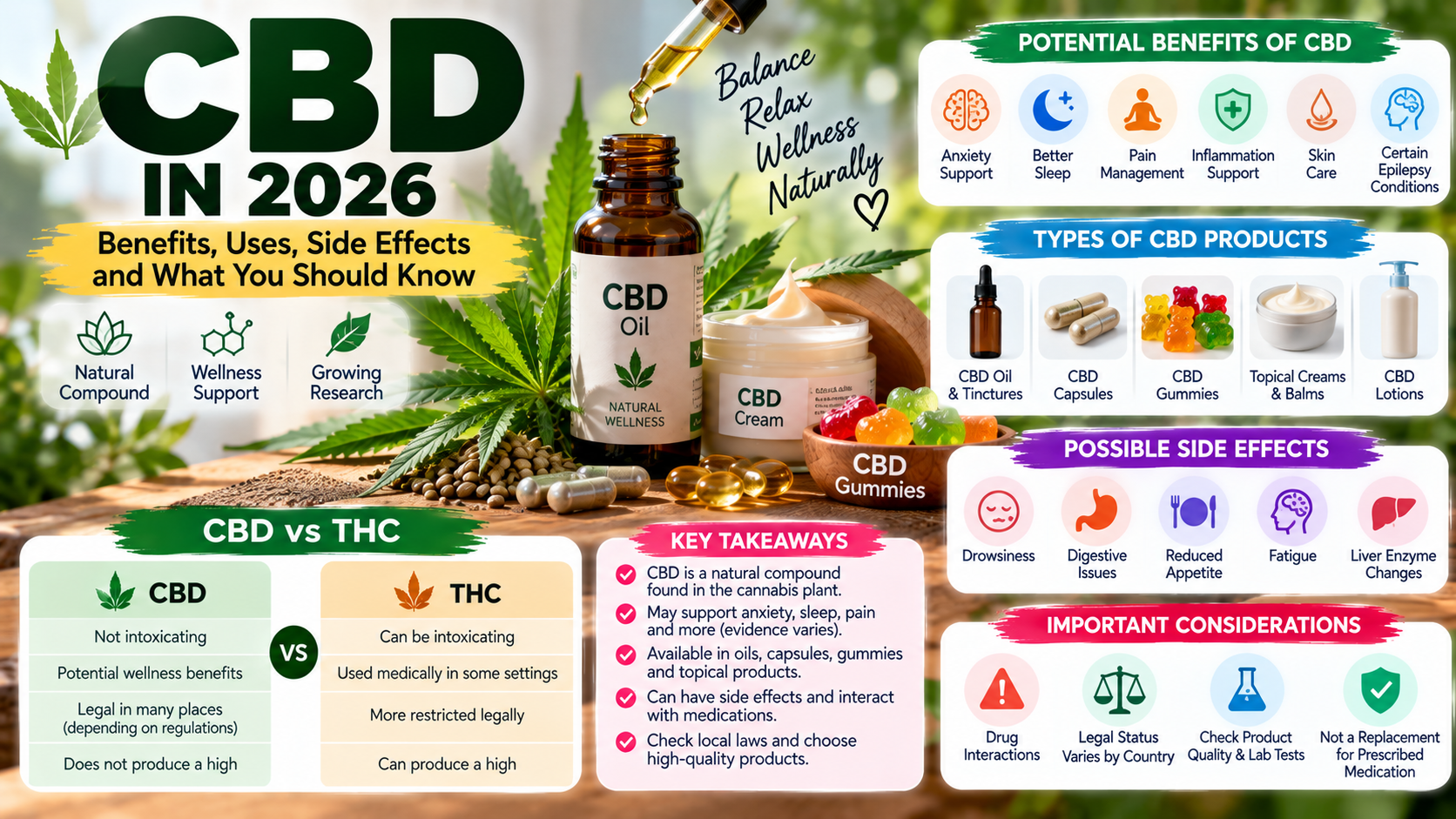
CBD stands for cannabidiol, a naturally occurring compound found in cannabis plants. It is different from tetrahydrocannabinol (THC), the compound primarily responsible for the intoxicating effects associated with cannabis.
Pure CBD is not considered intoxicating in the same way as THC. However, some products marketed as CBD contain THC or other cannabinoids, and their actual composition may differ from the label.
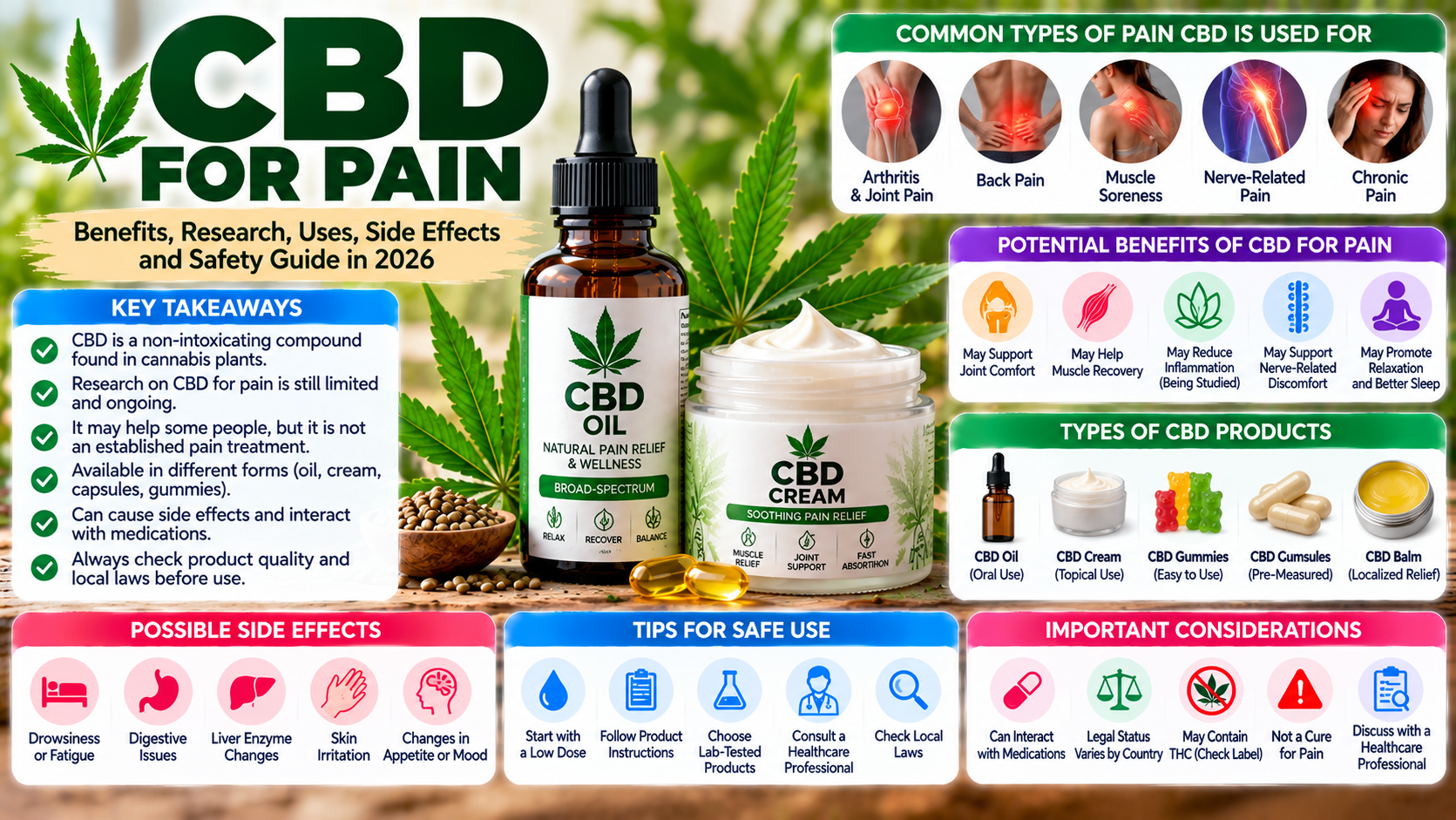
CBD products are available in several forms:
CBD oil: A liquid product taken orally or under the tongue according to its instructions.
CBD cream: A topical product applied to the skin.
CBD balm: A thicker topical formulation commonly marketed for massage and localized discomfort.
CBD capsules: Oral products containing a specified amount of CBD.
CBD gummies: Edible products containing CBD and other ingredients.
Different formulations are absorbed differently, and results from one type of product cannot automatically be applied to another.
How Does CBD Work for Pain?
Researchers are investigating how CBD interacts with biological pathways associated with pain signaling, inflammation, and the endocannabinoid system.
The endocannabinoid system helps regulate several body functions, including aspects of pain perception and nervous-system activity. CBD may influence some of these pathways, but its effects are complex and not fully understood.
Laboratory and animal studies have suggested possible mechanisms that could be relevant to pain. However, these findings do not establish that a CBD product will reduce pain in humans.
The difference between a possible biological mechanism and a proven treatment is important. Clinical trials are needed to determine whether a product provides meaningful relief, how safe it is, and which conditions, if any, may benefit.
Potential Uses of CBD for Pain
CBD products are marketed for many types of discomfort. The available evidence varies by product and condition, and many advertised benefits remain unproven.
1. Chronic Pain
Chronic pain is pain that continues or returns over an extended period. It may be associated with arthritis, nerve damage, previous injuries, or other health conditions.
Although cannabinoids have been studied for chronic pain, findings depend on the specific compound and formulation. A 2026 systematic review found that CBD alone did not significantly improve pain intensity or physical function compared with placebo in the included trials. Some THC-containing cannabinoid medicines showed small benefits for certain pain outcomes but also increased adverse effects. <Cite refs={["turn760440search3","turn760440search6"]}/>
CBD should therefore not be assumed to provide reliable relief for chronic pain.
2. Arthritis and Joint Discomfort
CBD creams and oils are often marketed for arthritis-related discomfort, stiffness, and swelling.
However, there is not enough high-quality evidence to establish that CBD alone reliably relieves arthritis pain. A product's moisturizing ingredients or other active components may also influence how it feels when applied to the skin.
People with persistent joint pain, swelling, or reduced movement should seek medical assessment. Appropriate treatment depends on the type of arthritis and the person's overall health.
3. Muscle Soreness
Some people use CBD balms or creams after exercise or physical activity. These products are often marketed for recovery and localized muscle discomfort.
Current research does not establish that CBD creams reliably reduce muscle soreness or speed recovery. Massage, rest, and other ingredients in a topical formulation may contribute to the experience without demonstrating a specific benefit from CBD.
Persistent, severe, or unexplained muscle pain should be assessed by a healthcare professional.
4. Nerve-Related Pain
Neuropathic pain develops when nerves are damaged or do not function normally. It may feel like burning, tingling, electric shocks, or shooting pain.
Cannabinoid medicines have been studied for neuropathic pain, but results vary according to the product. Evidence for CBD alone remains insufficient to establish it as an effective treatment. Some studies of combined THC and CBD products have reported modest benefits, but those products have different effects and safety considerations. <Cite refs={["turn760440search3","turn760440search10"]}/>
Anyone experiencing persistent tingling, numbness, burning sensations, or weakness should seek medical evaluation to identify the cause.
5. Back Pain
CBD products are frequently promoted for lower-back pain and muscle tension.
However, a treatment that works for one person or one type of pain may not work for another. Clinical trials of CBD alone for acute lower-back pain have not consistently demonstrated benefits over placebo. <Cite refs={["turn760440search0","turn760440search2"]}/>
Depending on the cause, evidence-based care may include staying appropriately active, physical therapy, and treatments recommended by a healthcare professional.
CBD Oil vs. CBD Cream for Pain
CBD oils and creams are marketed for different types of use, but neither is established as a reliably effective CBD-only pain treatment.
Feature | CBD oil | CBD cream |
|---|---|---|
Application | Usually taken orally or under the tongue, depending on the product | Applied to the skin |
Commonly marketed for | General pain and wellness | Localized muscle or joint discomfort |
Absorption | Depends on the oral or sublingual formulation | Depends on the topical formula and skin barrier |
Common concerns | Drug interactions, digestive effects, liver-related risks | Skin irritation, allergic reactions, ingredient quality |
Evidence for pain relief | Limited; CBD alone has not consistently outperformed placebo | Insufficient evidence for many marketed uses |
Do not swallow products labeled for external use. Similarly, do not assume an oral CBD oil is suitable for topical application unless the manufacturer specifically says so.
CBD Creams and Topical Pain Relief
Topical CBD products include creams, gels, balms, and massage oils. Some combine CBD with ingredients such as menthol or other compounds that produce cooling or warming sensations.
These sensations do not prove that CBD itself is relieving pain. The effectiveness and safety of a topical product depend on its complete formulation.
When considering a topical product:
Read the full ingredient list.
Avoid applying it to broken or irritated skin unless specifically directed.
Keep it away from the eyes and other sensitive areas.
Follow the manufacturer's application instructions.
Stop using it if redness, burning, itching, or swelling develops.
If pain persists or worsens, do not use a topical product as a substitute for medical assessment.
Possible Side Effects of CBD
CBD is often promoted as a natural product, but it can still cause unwanted effects.
Possible side effects include:
Drowsiness or fatigue.
Diarrhea and other digestive symptoms.
Reduced appetite.
Changes in alertness.
Interactions with prescription medicines.
Changes in liver blood-test results and possible liver injury.
The risk depends on the product, amount used, frequency of use, other medicines, and individual health factors. Products containing THC may cause additional effects, including intoxication, dizziness, or impaired judgment.
A 2026 review highlighted concerns about dose-related liver toxicity and the need for appropriate safety monitoring, particularly with higher CBD exposures. <Cite refs={["turn760440search0","turn760440search4"]}/>
Seek advice from a qualified healthcare professional before using CBD regularly, especially if you have liver disease or take prescription medicines.
CBD and Medication Interactions
CBD can affect how the body processes certain medicines. This may increase side effects or change how a medication works.
Extra caution is important if you take:
Blood thinners.
Anti-seizure medicines.
Opioid pain medicines.
Sedatives or sleep medicines.
Medicines that affect the liver.
Other prescription drugs with potential interactions.
This is not a complete list. A doctor or pharmacist can review the specific medicines you take and assess possible interactions.
Do not stop prescribed pain medication or reduce your dose without medical guidance. Combining CBD with alcohol or other sedating substances may increase drowsiness and impairment.
How to Choose a CBD Product More Carefully
If CBD products are legal where you live and a healthcare professional considers their use appropriate, evaluate the product carefully before purchasing.
1. Check the CBD Amount
Look for the total amount of CBD in the container and the amount per serving or application, where provided. Products with similar packaging may contain very different concentrations.
A higher concentration does not automatically mean greater effectiveness or safety.
2. Look for Independent Laboratory Testing
A certificate of analysis (COA) from an independent laboratory may help verify the cannabinoid content and identify certain contaminants.
Check that the report matches the exact product and batch. A laboratory report can provide information about composition, but it does not prove that the product treats pain effectively.
3. Check THC Content
Some CBD products contain THC. This may matter for impairment, drug testing, and legal compliance.
Do not assume a product is THC-free simply because its label uses that phrase. Look for reliable testing information.
4. Review All Ingredients
For creams and balms, check for fragrances, essential oils, menthol, and other ingredients that may irritate the skin.
For oral products, review carrier oils, sweeteners, and other additives, especially if you have allergies or dietary restrictions.
5. Avoid Unrealistic Medical Claims
Be cautious of products claiming to cure arthritis, reverse nerve damage, eliminate chronic pain, or replace prescription medication. Such statements are not proof of effectiveness.
Evidence-Based Alternatives for Pain Management
The most appropriate pain treatment depends on the cause, severity, and duration of the symptoms.
Physical Activity and Rehabilitation
Depending on the condition, gentle movement, strengthening exercises, stretching, or physical therapy may help improve function and reduce some forms of pain.
People with injuries or severe symptoms should seek guidance about which activities are appropriate.
Heat or Cold Therapy
Heat or cold packs may provide temporary relief for certain muscle and joint problems. Follow safety instructions and avoid applying extreme temperatures directly to the skin.
Appropriate Medication
A healthcare professional may recommend specific medicines based on the cause of pain, medical history, and potential risks. No single medicine is suitable for everyone.
Sleep and Daily Habits
Adequate sleep, manageable activity levels, and balanced daily routines can support overall well-being. These measures may complement treatment but do not replace medical care when a condition requires it.
Professional Assessment
Persistent pain can have many causes. Getting an accurate diagnosis can help identify effective treatments and avoid delays in care.
Sudden severe pain, chest pain, major injuries, new weakness, or pain accompanied by other serious symptoms may require urgent medical attention.
Is CBD Legal in 2026?
CBD regulations differ by country and may depend on the source of the CBD, THC content, product classification, and intended use.
In the United States, the FDA has not approved CBD products generally as pain treatments. It has approved a specific prescription CBD medicine for certain seizure disorders, which does not establish that commercial CBD products are effective for pain. <Cite refs={["turn760440search4","turn760440search5"]}/>
In Pakistan and other countries with controls on cannabis-related products, check current requirements with relevant official authorities before purchasing, importing, possessing, or using CBD products.
Do not assume that a product sold online or legally available in one country is permitted in another.
Frequently Asked Questions About CBD for Pain
Does CBD help with pain?
Research has not established CBD alone as a reliable treatment for most types of pain. Clinical trials have generally not shown consistent benefits over placebo. Evidence for products combining CBD with THC is different and must be considered separately.
Is CBD oil better than CBD cream for pain?
There is insufficient evidence to conclude that either form is better for pain relief. The products differ in formulation, absorption, and risks.
Can CBD help with arthritis?
CBD is marketed for arthritis discomfort, but evidence is insufficient to establish that CBD alone reliably reduces arthritis pain. A healthcare professional can recommend treatments based on the specific type of arthritis.
Can CBD cream relieve muscle soreness?
CBD creams are commonly marketed for muscle soreness, but CBD-specific benefits have not been firmly established. The cream's other ingredients and the effects of massage may influence the experience.
Does CBD cause a high?
Pure CBD is not considered intoxicating in the way THC is. However, some CBD products contain THC or other cannabinoids, so checking the product's composition is important.
Is CBD safe for daily use?
Daily use is not automatically safe. CBD can cause side effects, interact with medicines, and potentially affect the liver. Long-term safety information remains limited for many commercial products.
Can CBD replace pain medication?
CBD should not replace prescribed pain medication without medical guidance. Stopping or changing treatment without professional advice can worsen symptoms or cause other problems.
What is the best natural option for pain?
There is no single best option for every condition. Depending on the cause, appropriate movement, physical therapy, heat or cold therapy, and other evidence-based approaches may help. Persistent pain should be assessed by a healthcare professional.
Final Thoughts
CBD for pain remains a subject of scientific research, but current evidence does not establish CBD alone as an effective treatment for most pain conditions. Marketing claims about arthritis, muscle recovery, nerve pain, and chronic pain should be evaluated carefully rather than accepted as proven benefits.
Anyone considering CBD should review product ingredients, look for independent laboratory testing, understand possible side effects and medication interactions, and check local laws. For ongoing pain, identifying the underlying cause and discussing evidence-based treatment options with a healthcare professional remain important steps.
Medical disclaimer: This article is for educational purposes only and does not constitute medical advice, diagnosis, or treatment. CBD products can cause side effects and interact with medicines. Consult a qualified healthcare professional before using CBD for pain.