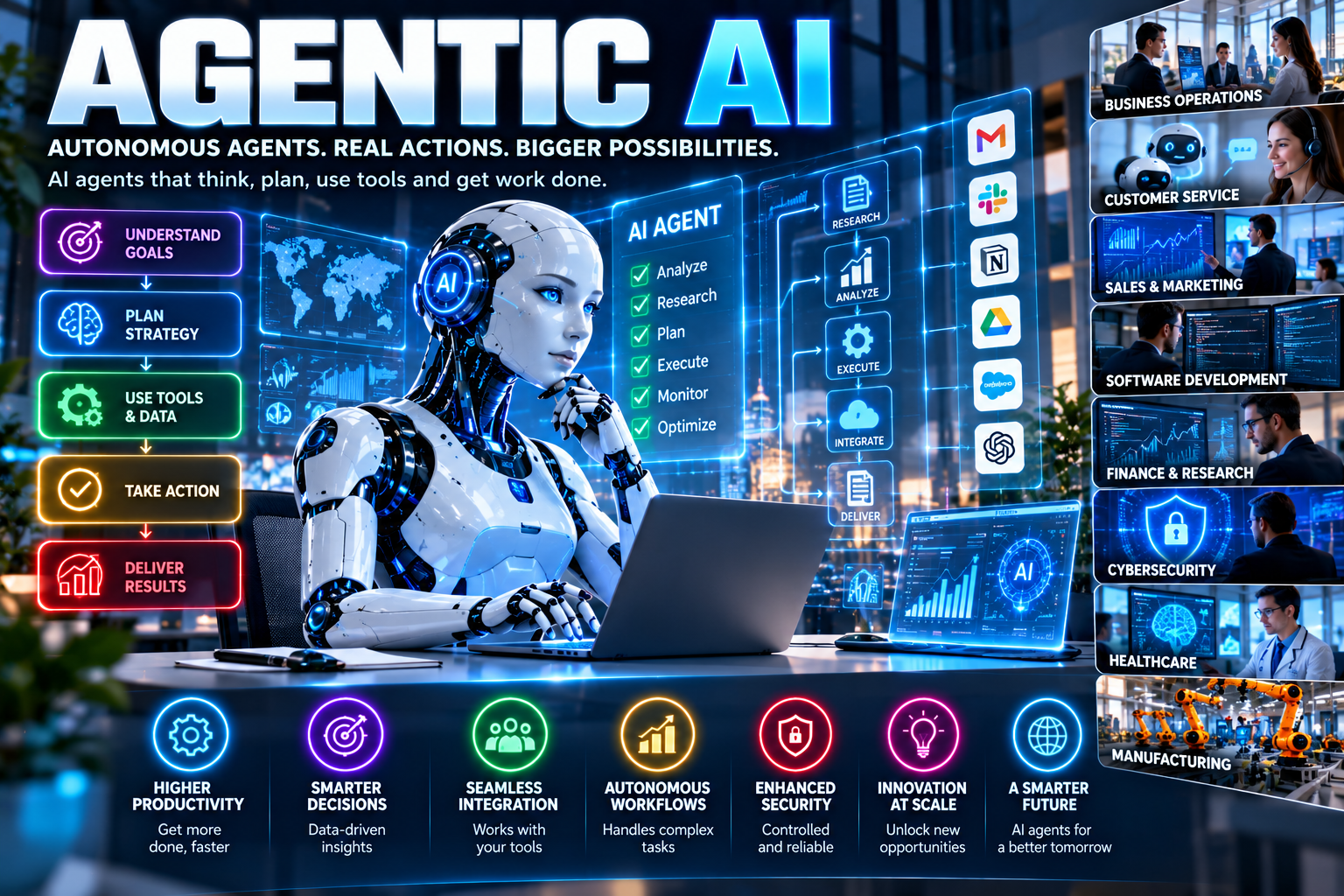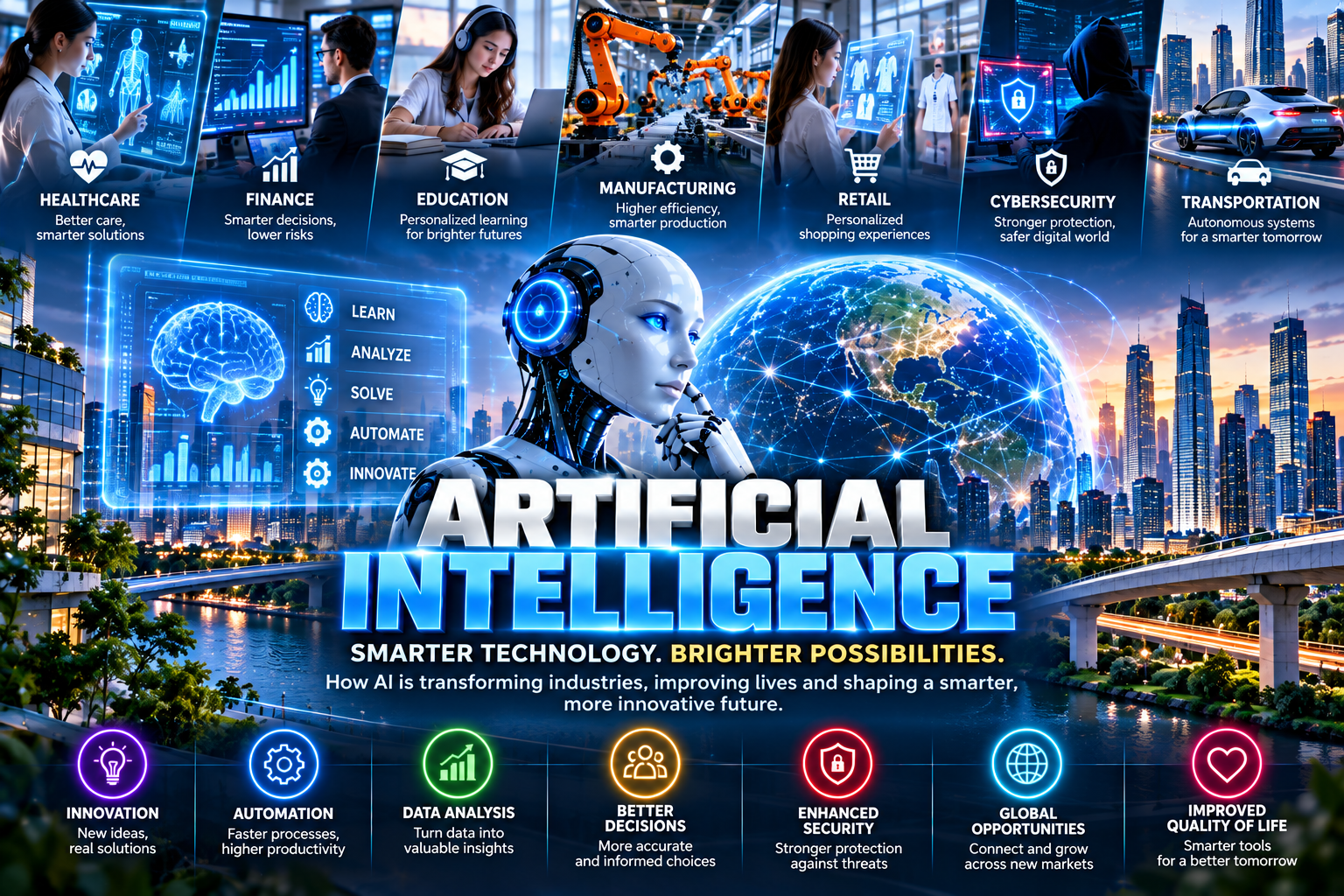
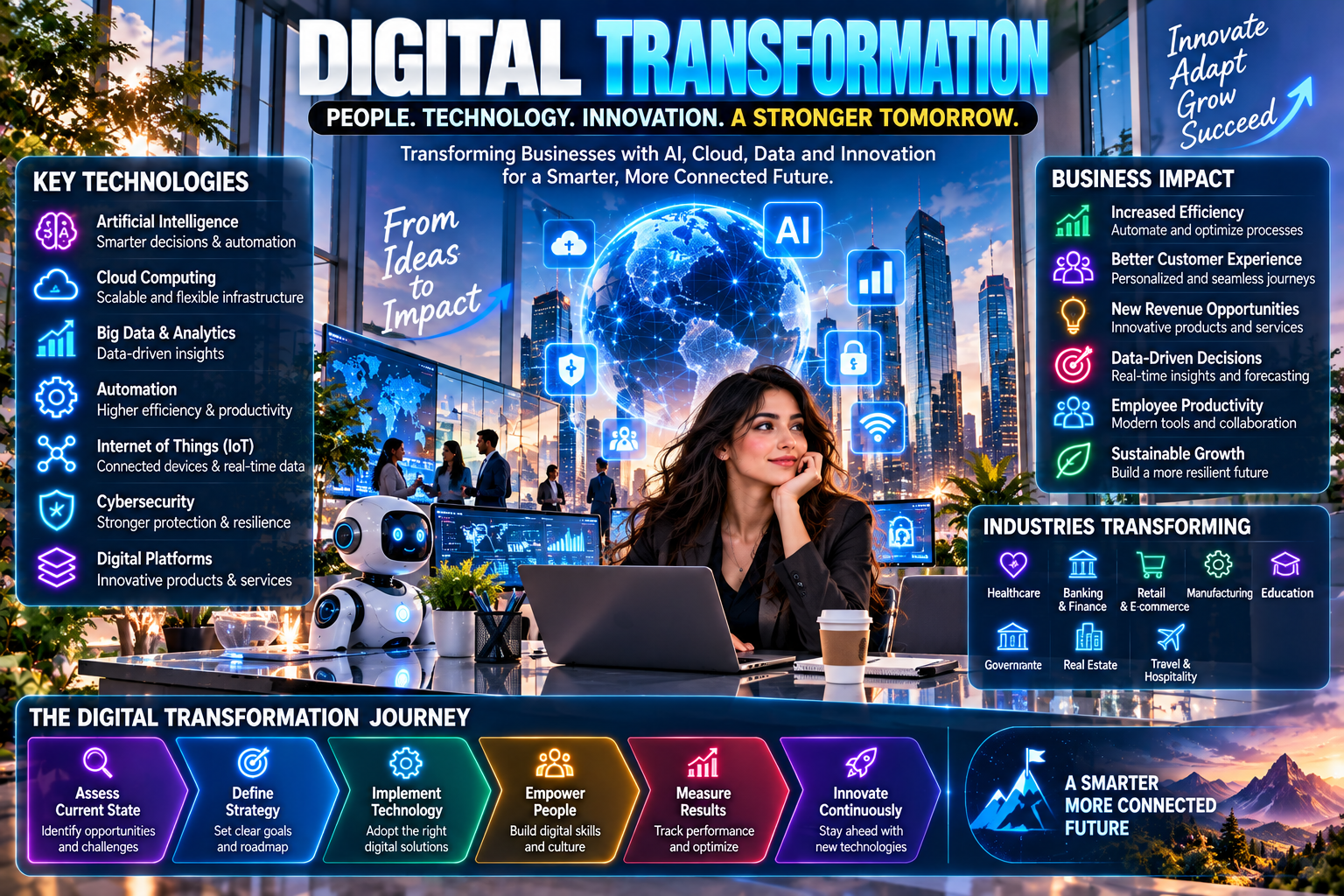
Digital transformation is changing how organizations operate, serve customers, manage employees, develop products, and compete in increasingly connected markets. Businesses across industries are adopting artificial intelligence (AI), cloud computing, Big Data, automation, Internet of Things (IoT) technologies, digital platforms, and advanced analytics to improve efficiency and create new opportunities.
Digital transformation is more than simply replacing paper with software or moving files to the cloud. It involves rethinking business processes, technology infrastructure, customer experiences, organizational culture, and decision-making around digital capabilities.
The OECD describes digital transformation as a broad economic and social shift involving technologies such as AI, cloud computing, Big Data analytics, IoT, advanced connectivity, and other emerging technologies.
What Is Digital Transformation?
Digital transformation is the process of using digital technologies to fundamentally improve how an organization operates and creates value.
IBM describes digital transformation as incorporating digital technology across an organization's activities while modernizing processes, products, operations, and technology systems to support continuous innovation.
It can involve:
Automating manual processes
Moving infrastructure to the cloud
Using AI for analysis and decision-making
Creating digital customer experiences
Using Big Data and analytics
Modernizing legacy software
Implementing digital payment systems
Improving cybersecurity
Connecting physical devices through IoT
Building digital products and services
Using real-time business intelligence
The objective is not simply to introduce more technology. The objective is to use technology to solve business problems and create measurable improvements.
Why Is Digital Transformation Important?
Customers increasingly expect organizations to provide fast, convenient, personalized, and secure digital experiences.
Employees also expect modern tools that allow them to communicate, collaborate, analyze information, and perform their work efficiently from different locations.
At the same time, organizations need to respond to rapidly changing technologies and competitive environments.
Digital transformation can help businesses:
Reduce operational costs
Improve productivity
Automate repetitive work
Improve customer service
Increase decision-making speed
Create new revenue streams
Improve data visibility
Strengthen cybersecurity
Support remote and hybrid work
Scale operations
Develop new products
Improve supply-chain management
The transformation is also affecting entire economies. The OECD's 2026 digital policy work emphasizes access to digital infrastructure, effective use of technologies and data, digital innovation, skills, trust, inclusion, and open digital markets as interconnected elements of digital development.
Key Technologies Driving Digital Transformation
Digital transformation usually combines several technologies rather than relying on one technology.
1. Artificial Intelligence
Artificial intelligence is becoming one of the most important components of digital transformation.
Organizations can use AI to analyze information, automate workflows, generate content, detect patterns, support customer service, assist employees, and improve forecasting.
Examples include:
AI chatbots
AI customer-support agents
Predictive analytics
AI-powered fraud detection
Automated document processing
Recommendation systems
AI marketing tools
Intelligent search
Software development assistants
AI-powered cybersecurity
AI is also increasingly being integrated into operational workflows rather than being used only as an experimental tool.
However, organizations need appropriate governance, security, data controls, and human oversight when deploying AI.
The World Economic Forum's 2026 cybersecurity research highlights the dual role of AI: organizations are using it to strengthen cyber defence while attackers can also use AI to increase the speed and sophistication of attacks.
2. Cloud Computing
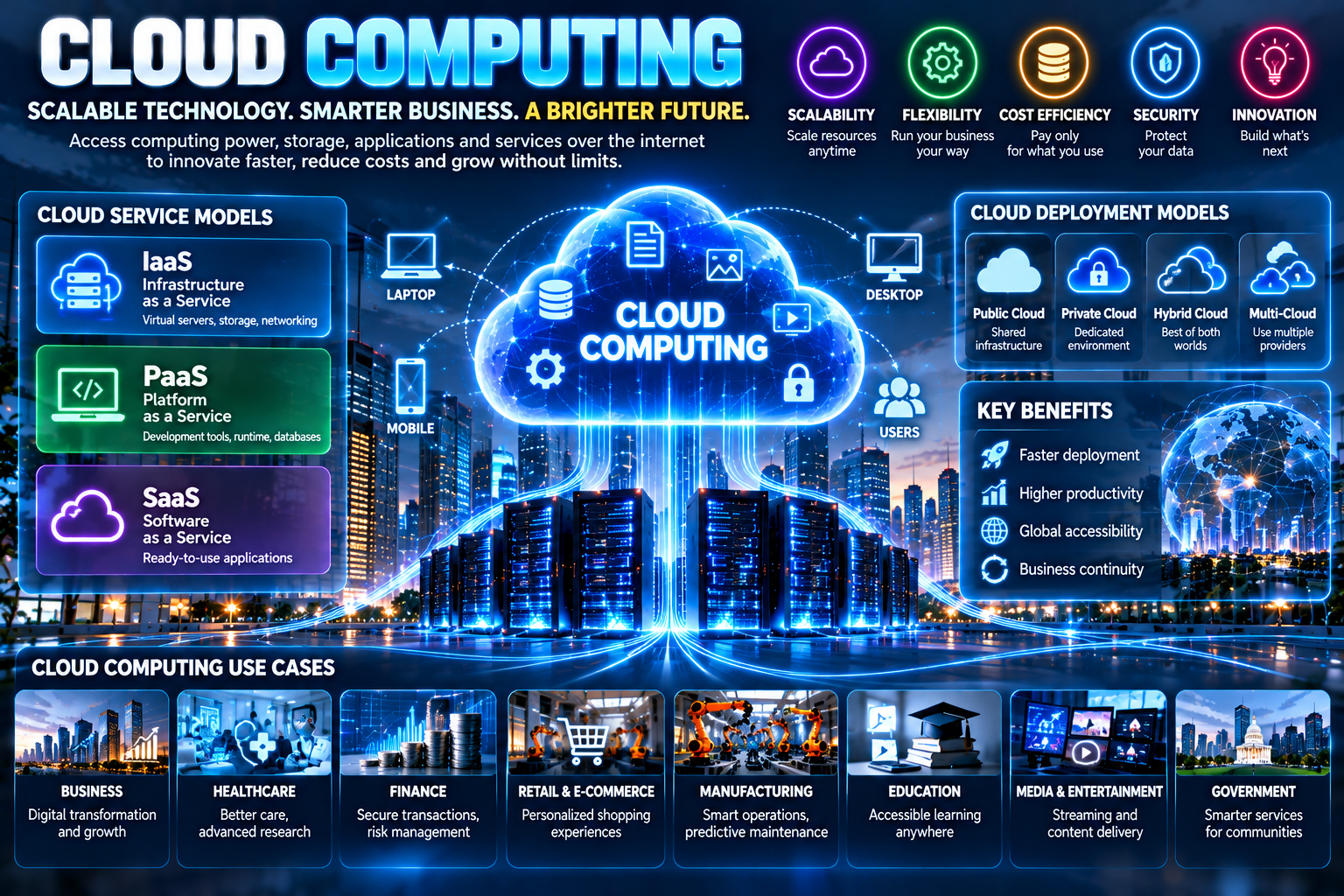
Cloud computing provides organizations with scalable access to computing power, storage, applications, databases, and other infrastructure.
Instead of maintaining all technology resources on physical systems inside an organization, businesses can use cloud platforms to access resources when needed.
Cloud transformation can provide:
Flexible infrastructure
Scalable storage
Remote access
Faster software deployment
Disaster recovery capabilities
Data backup
Application modernization
Collaboration tools
AI infrastructure
Many organizations combine public cloud, private cloud, hybrid cloud, and edge computing depending on their requirements.
Cloud computing is particularly important because it provides infrastructure for other digital technologies, including AI, Big Data analytics, and digital applications.
3. Big Data and Analytics
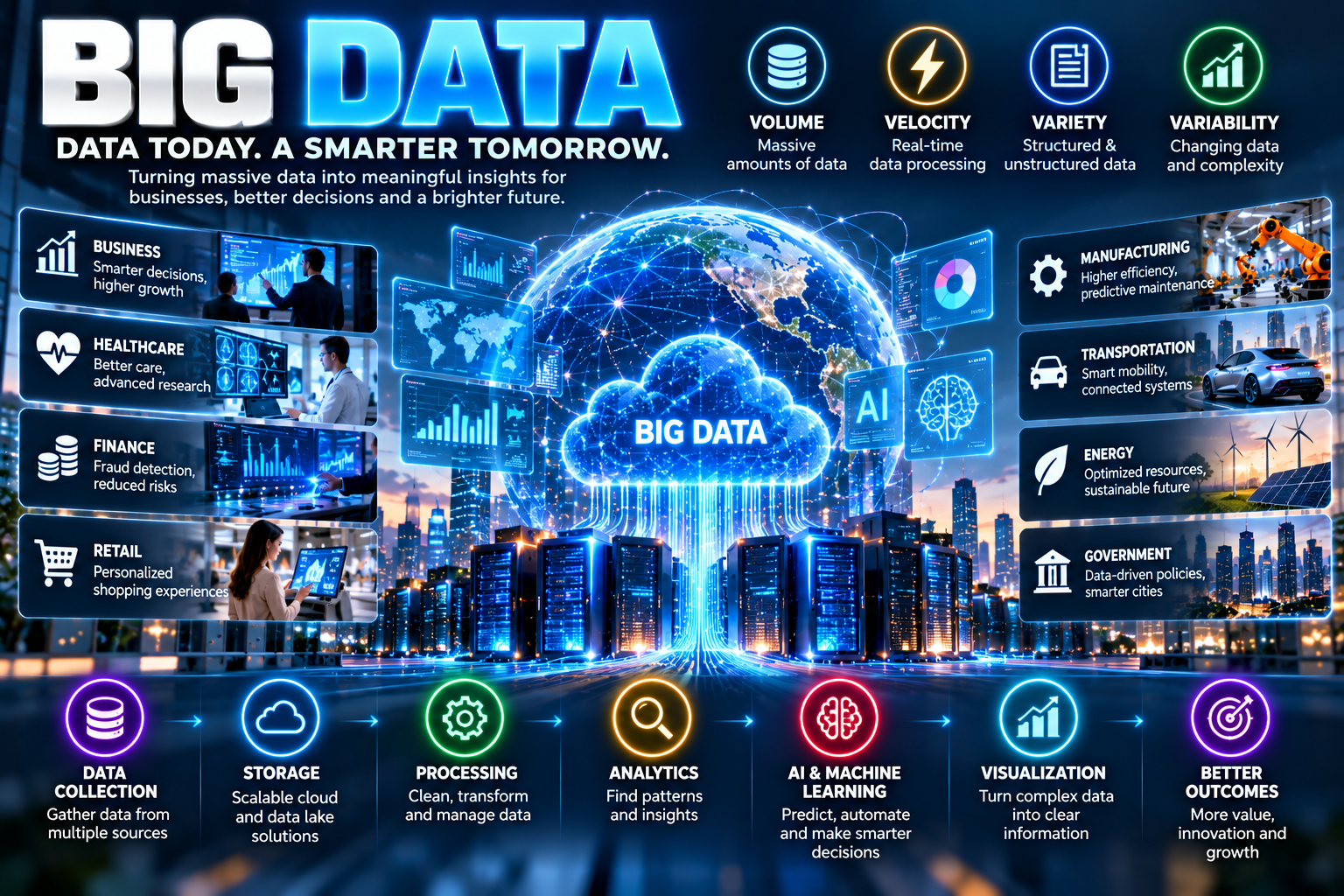
Data is one of the most valuable resources in modern digital organizations.
Businesses generate information from:
Websites
Mobile applications
Customer transactions
Social media
IoT devices
Supply chains
Financial systems
Customer-service interactions
Marketing campaigns
Enterprise applications
Digital transformation allows organizations to bring this information together and analyze it.
Business intelligence dashboards can help executives understand sales, costs, customers, inventory, employee performance, and operational trends.
Advanced analytics can go further by helping organizations forecast future demand, identify unusual behavior, detect risks, and optimize business processes.
The OECD notes that data has become a core input into modern business models as cloud computing and AI adoption expand, although measuring the economic value of data remains challenging.
4. Automation
Automation allows businesses to reduce repetitive manual work.
Traditional automation might involve predefined rules, while newer intelligent automation can combine software, AI, data, and workflow systems.
Examples include:
Automated invoice processing
Customer onboarding
Email classification
Inventory management
Payroll workflows
Appointment scheduling
Marketing automation
Document extraction
Fraud monitoring
IT support
Reporting
Automation does not necessarily mean replacing employees. In many cases, the goal is to allow employees to spend less time on repetitive administrative work and more time on complex or customer-focused activities.
5. Cybersecurity
As businesses become more digital, cybersecurity becomes a fundamental part of transformation.
Digital systems can introduce new risks involving:
Phishing
Malware
Ransomware
Credential theft
Data breaches
Cloud misconfiguration
Supply-chain attacks
API vulnerabilities
AI-related security risks
Organizations therefore need security integrated into digital transformation projects from the beginning.
The World Economic Forum's 2026 research identifies AI, geopolitical risks, and increasingly interconnected supply chains as important factors shaping the cybersecurity environment.
A successful digital transformation strategy should therefore include:
Multi-factor authentication
Identity and access management
Encryption
Secure cloud architecture
Endpoint protection
Network security
Data governance
Backup and recovery
Security monitoring
Employee awareness training
Incident-response planning
Digital Transformation Across Different Industries
Digital transformation affects almost every major sector.
Healthcare
Healthcare organizations can use digital technologies for:
Electronic health records
Telemedicine
Digital appointment systems
Medical data analysis
AI-assisted research
Remote monitoring
Hospital management
Patient communication
The challenge is balancing innovation with privacy, cybersecurity, regulatory requirements, and patient safety.
Banking and Finance
Financial institutions have adopted digital banking, mobile payments, automated fraud detection, AI-based analytics, digital onboarding, and online investment platforms.
Customers increasingly expect financial services to be available through mobile and web platforms.
Retail
Retailers use digital transformation for:
E-commerce
Digital payments
Personalized recommendations
Inventory optimization
Customer analytics
Automated marketing
Omnichannel shopping
AI customer service
Physical stores can also integrate digital technologies with traditional shopping experiences.
Manufacturing
Manufacturers are increasingly connecting machines and production systems.
Industrial IoT, robotics, analytics, digital twins, predictive maintenance, and automation can help companies monitor production and identify operational problems.
Education
Digital transformation has expanded:
Online learning
Digital classrooms
Learning-management systems
AI tutoring tools
Digital assessments
Educational analytics
Remote collaboration
Government
Governments can use digital technologies to improve:
Public services
Digital identity
Online applications
Payments
Records management
Citizen communication
Data analysis
For example, the World Bank approved a $70 million Connected Punjab program in June 2026 aimed at expanding broadband access, improving digital service delivery, and supporting cashless transactions in Punjab, Pakistan.
Digital Transformation and Customer Experience
Customer experience is one of the most visible effects of digital transformation.
Businesses can use technology to provide customers with:
24/7 support
Mobile applications
Personalized recommendations
Faster payments
Self-service portals
Real-time order tracking
Digital onboarding
Automated notifications
Omnichannel communication
For example, an online retailer can connect its website, mobile application, payment platform, warehouse, delivery system, and customer-service platform.
The customer sees a single experience while multiple digital systems work together behind the scenes.
Digital Transformation and Employees
Digital transformation also changes the workplace.
Employees may use:
Collaboration platforms
Cloud applications
AI assistants
Automated workflows
Digital dashboards
Project-management software
Virtual meeting systems
Knowledge-management platforms
However, technology alone does not guarantee better productivity.
Employees need training and support to use new systems effectively.
The OECD's 2026 framework specifically identifies skills as an important cross-cutting issue in digital economies and societies.
Digital Transformation Strategy
A successful transformation requires more than purchasing new software.
Organizations should develop a clear strategy.
Step 1: Identify Business Problems
Start with business needs rather than technology.
Ask:
What processes are inefficient?
Where are customers experiencing problems?
Which tasks consume excessive employee time?
Where is data difficult to access?
Which systems are outdated?
What risks need to be addressed?
Step 2: Define Objectives
Set measurable objectives.
For example:
Reduce processing time by 30%
Improve customer response time
Reduce manual data entry
Increase online sales
Improve system availability
Reduce operational costs
Step 3: Assess Existing Technology
Organizations should examine their current:
Hardware
Software
Cloud infrastructure
Databases
Networks
Security controls
Applications
Legacy systems
This helps identify gaps and unnecessary technology spending.
Step 4: Build a Data Strategy
Data should be accurate, accessible, protected, and governed.
Organizations should establish policies for:
Data ownership
Data quality
Data access
Privacy
Security
Retention
Integration
Analytics
Step 5: Modernize Infrastructure
Depending on business requirements, modernization may involve cloud migration, application modernization, API integration, improved networks, or new digital platforms.
Step 6: Introduce Automation and AI
Automation should focus on processes where technology can create measurable value.
AI should be introduced with appropriate controls for security, privacy, reliability, and human oversight.
Step 7: Train Employees
Employees need training before and during implementation.
Technology adoption improves when employees understand:
Why the transformation is happening
How systems will change their work
How to use new tools
What security practices are required
Where to get support
Step 8: Measure Results
Organizations should track performance after implementation.
Useful metrics include:
Revenue growth
Customer satisfaction
Employee productivity
Processing time
Operating costs
Digital sales
System uptime
Conversion rates
Security incidents
Customer retention
Common Digital Transformation Challenges
Digital transformation can create significant benefits, but it also presents challenges.
Legacy Systems
Older systems may not integrate easily with modern applications.
Replacing them can also be expensive and disruptive.
High Initial Costs
Technology investments may require spending on:
Software
Cloud infrastructure
Cybersecurity
Consultants
Training
Data migration
Hardware
Employee Resistance
Employees may resist new systems because of uncertainty, insufficient training, or concerns about changing responsibilities.
Cybersecurity Risks
More connected systems can create a larger attack surface.
Security should therefore be incorporated into architecture and implementation rather than added at the end.
Data Quality
AI and analytics depend heavily on data quality.
Poor, incomplete, duplicated, or inconsistent data can produce unreliable results.
Skills Gaps
Organizations may lack employees with expertise in:
AI
Cloud computing
Cybersecurity
Data engineering
Analytics
Automation
Digital product development
Integration Problems
A company may use dozens of applications that were never designed to communicate with each other.
APIs, integration platforms, and modern architectures can help connect these systems.
Digital Transformation vs. Digitalization
These terms are related but not identical.
Digitization means converting information from physical or analog formats into digital formats.
Example: scanning paper documents into PDFs.
Digitalization means using digital technology to improve an existing process.
Example: replacing manual paper-based customer applications with an online application system.
Digital transformation is broader. It involves changing how an organization operates and creates value through digital technology.
Example: redesigning the entire customer journey around mobile applications, AI support, cloud systems, automated workflows, data analytics, and digital payments.
The Role of AI in Future Digital Transformation
AI is likely to remain a major component of digital transformation.
Organizations are increasingly exploring AI for:
Business intelligence
Customer service
Marketing
Software development
Cybersecurity
Financial analysis
Supply-chain management
Research
Document processing
Decision support
Workflow automation
The next stage may involve AI agents that can perform multiple steps across business applications instead of simply answering individual questions.
At the same time, AI introduces new requirements around governance, security, data protection, transparency, and human oversight.
The World Economic Forum reported in 2026 that 77% of surveyed organizations were using AI in cybersecurity operations, illustrating how AI is already moving into practical enterprise workflows.
Technology Convergence and Digital Transformation
Digital transformation is increasingly becoming about combining technologies.
AI can work with:
Cloud computing
Robotics
IoT
Big Data
Edge computing
Advanced networks
Digital twins
Cybersecurity
Automation
The World Economic Forum's 2026 technology-convergence research describes the combination of AI, robotics, spatial intelligence, quantum technologies, advanced materials, next-generation energy, and other technology domains as an increasingly important source of innovation.
This means the future digital organization may not depend on one breakthrough technology. Instead, competitive advantages may come from effectively connecting multiple technologies, people, data, and workflows.
The Future of Digital Transformation
The next phase of digital transformation is likely to focus on intelligent, connected, automated, and increasingly autonomous business systems.
Important trends include:
AI-Native Businesses
Organizations will increasingly design workflows around AI from the beginning instead of adding AI to older processes.
Intelligent Automation
AI and automation will increasingly work together to execute complex workflows.
Cloud and Edge Computing
Organizations will combine centralized cloud infrastructure with computing closer to devices and users.
Digital Employees and AI Agents
AI systems may increasingly assist employees with research, analysis, customer communication, software development, and operational tasks.
Stronger Cybersecurity
As organizations become more connected, cybersecurity and resilience will become increasingly important.
Data-Driven Decision Making
Organizations will rely more heavily on real-time analytics and predictive intelligence.
Digital Government
Governments will continue expanding online services, digital identity, electronic payments, and data-driven public administration.
Skills Transformation
Organizations will need employees who can work effectively alongside AI and other digital technologies.
How Businesses Can Prepare for Digital Transformation
Businesses preparing for transformation should focus on several principles:
Start with business problems, not technology.
Build a clear digital strategy.
Invest in reliable data infrastructure.
Modernize legacy systems gradually.
Use cloud technology where appropriate.
Introduce AI with governance and human oversight.
Make cybersecurity part of every digital project.
Train employees continuously.
Measure measurable business outcomes.
Scale successful digital initiatives gradually.
Digital transformation should be treated as an ongoing process rather than a one-time project.
Final Thoughts
Digital transformation is reshaping businesses, governments, industries, and everyday life. AI, cloud computing, Big Data, automation, IoT, cybersecurity, and digital platforms are creating new ways to operate and deliver value.
The most important part of transformation is not simply acquiring advanced technology. It is connecting people, processes, data, technology, and business strategy.
Organizations that approach digital transformation strategically can improve efficiency, create better customer experiences, develop new products, and respond more quickly to changing markets.
At the same time, successful transformation requires attention to cybersecurity, privacy, employee skills, data quality, governance, and responsible technology adoption.
As digital technologies continue to converge, transformation will increasingly become an ongoing capability rather than a single technology project.
Frequently Asked Questions
What is digital transformation?
Digital transformation is the use of digital technologies to fundamentally improve business processes, operations, customer experiences, products, services, and decision-making.
What technologies are used in digital transformation?
Common technologies include artificial intelligence, cloud computing, Big Data analytics, automation, IoT, cybersecurity, digital platforms, APIs, robotics, and advanced connectivity.
Why is digital transformation important?
It can help organizations improve productivity, reduce costs, improve customer experiences, automate processes, create new products, and respond more quickly to market changes.
Is digital transformation only for large companies?
No. Small and medium-sized businesses can also use cloud software, digital payments, automation, AI tools, analytics, e-commerce platforms, and cybersecurity solutions to modernize their operations.
What is the difference between digitization and digital transformation?
Digitization converts analog information into digital formats. Digitalization improves existing processes using digital technologies. Digital transformation is broader and can fundamentally change how an organization operates and creates value.
How does AI support digital transformation?
AI can analyze data, automate tasks, support employees, improve customer service, detect patterns, assist decision-making, and enable new digital products and workflows.
What are the biggest digital transformation challenges?
Common challenges include legacy systems, cybersecurity risks, high implementation costs, employee resistance, poor data quality, integration problems, and shortages of digital skills.
What is the future of digital transformation?
The future is expected to involve greater use of AI, AI agents, intelligent automation, cloud and edge computing, connected devices, advanced analytics, digital platforms, and increasingly integrated technology ecosystems.