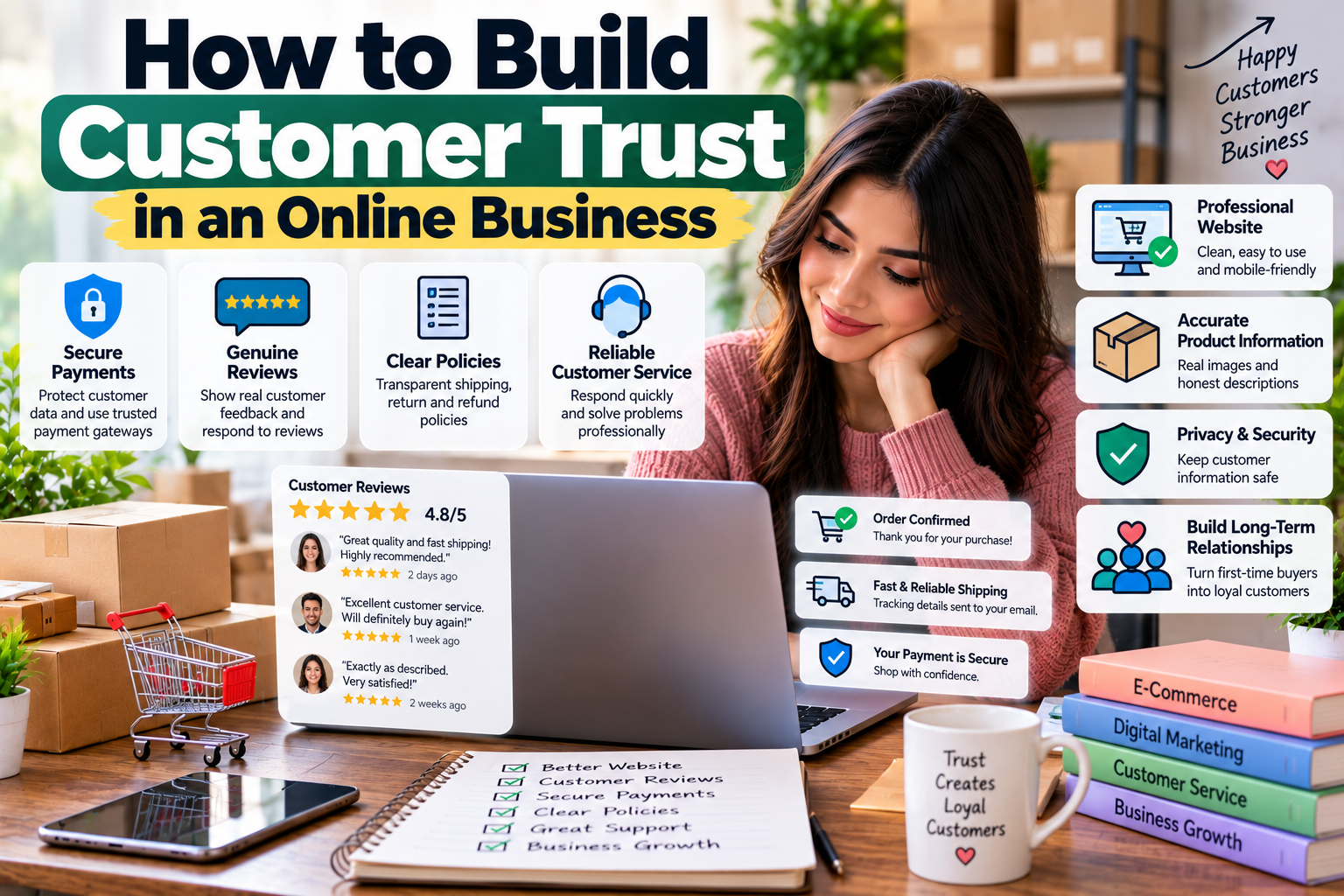
Customer trust is one of the most important factors in building a successful online business. When people shop online, they often cannot physically inspect products, meet the seller, or immediately determine whether a company will deliver what it promises. Before making a purchase, customers may wonder whether the website is legitimate, whether their payment information is secure, and whether they will receive the product or service they expect.
These concerns can influence purchasing decisions. Even if an online store offers competitive prices and attractive products, visitors may leave without buying if the website appears unreliable or important information is missing.
Building trust requires more than adding a professional design or displaying a security symbol. Customers need accurate information, transparent policies, reliable service, secure payment options, and consistent communication throughout their buying journey.
Trust also develops over time. A business that delivers orders as promised, resolves complaints fairly, and treats customers respectfully has a better foundation for encouraging repeat purchases and positive recommendations.
Whether you operate a small e-commerce store, a service-based website, or an online business selling digital products, trust should be part of your business strategy from the beginning.
This guide explains how to build customer trust online, improve website credibility, handle customer concerns, and create a shopping experience that encourages customers to buy with confidence.
What Is Customer Trust in an Online Business?
Customer trust is the confidence people have that a business will act reliably, protect their interests, and deliver what it promises.
In e-commerce, trust influences whether customers feel comfortable sharing their information, making payments, waiting for delivery, and contacting a company when problems arise.
For example, a customer visiting two similar online stores may choose the one that provides clear product specifications, genuine reviews, realistic delivery estimates, accessible contact information, and a straightforward return policy.
The customer may not know everything about the business, but these signals can help reduce uncertainty.
Trust is not created by a single website feature. It develops through the combined effect of a company's presentation, policies, communication, security practices, and actual performance.
Why Is Customer Trust Important?
Customer trust can influence several important aspects of business performance.
Higher purchase confidence: Customers may feel more comfortable completing an order when product details, prices, and policies are clear.
Better customer retention: A reliable experience can encourage customers to return instead of searching for another seller.
Positive word of mouth: Satisfied customers may recommend a business to friends, family, or colleagues.
Stronger reputation: Genuine reviews and consistent service can help establish credibility over time.
Fewer misunderstandings: Clear policies and accurate product information can reduce confusion about delivery, pricing, and returns.
Trust does not guarantee sales, but it helps create the conditions in which customers can make informed purchasing decisions.
1. Create a Professional and Easy-to-Use Website
Your website is often the first point of contact between your business and potential customers. Its design and usability can influence how visitors perceive your company.
A professional website does not need complicated animations or expensive visual effects. It needs to be clear, functional, consistent, and easy to navigate.
Use a Clean Website Layout
Organize your website so visitors can quickly understand what you sell and where to find relevant information.
Use clear navigation menus, readable text, consistent colors, and appropriately sized images.
Avoid overcrowded layouts, excessive pop-ups, confusing menus, and unnecessary distractions that make shopping difficult.
Your homepage should explain your business's purpose and guide visitors toward useful pages, such as product categories, services, customer support, and contact information.
Make Your Website Mobile-Friendly
Many customers browse and shop using smartphones. A website that works well on desktop computers but poorly on mobile devices may create unnecessary frustration.
Check that:
Text is easy to read without excessive zooming.
Buttons are easy to tap.
Product images display correctly.
Navigation works on smaller screens.
Forms are simple to complete.
Checkout functions properly on mobile devices.
Test the complete customer journey, from browsing a product to receiving an order confirmation.
Remove Broken Links and Errors
Broken links, outdated offers, missing images, and malfunctioning forms can make a website appear neglected.
Review important pages regularly and fix technical issues as soon as practical.
If a product is unavailable, explain its status rather than allowing customers to proceed through a confusing purchasing process.
A well-maintained website signals attention to detail, although trust ultimately depends on how the business operates as well.
2. Provide Accurate Product Descriptions and Images
Customers rely heavily on product information when purchasing online. They need to understand what they are buying before committing their money.
Incomplete or exaggerated descriptions can create unrealistic expectations and lead to complaints, returns, or negative reviews.
Write Clear Product Descriptions
Include relevant information such as:
Product dimensions and specifications.
Materials and ingredients where applicable.
Available sizes, colors, or variations.
Compatibility and usage requirements.
Care instructions or maintenance information.
Important limitations or exclusions.
For digital products and services, explain exactly what customers receive, how access is provided, and what support is included.
Use simple language and organize information with headings and bullet points where helpful.
Use Genuine and Relevant Images
Product photographs should accurately represent the item being sold.
Show useful angles, important details, and variations that customers may need to compare.
If you use manufacturer-provided images, ensure that you have permission to use them and that they accurately represent the product you supply.
Avoid editing images in ways that misrepresent color, size, quality, or functionality.
Avoid Unsupported Claims
Do not describe a product as guaranteed, certified, premium, or proven unless the claim can be substantiated.
For example, if you sell a skincare product, avoid making medical or scientific claims that you cannot support.
Honest product information helps customers make informed decisions and reduces the risk of disappointment after delivery.
3. Display Genuine Customer Reviews and Testimonials
Customer reviews can help shoppers understand what other people experienced before making a purchase.
They can provide information about product quality, delivery, ease of use, and customer service that may not be obvious from the product description alone.
However, reviews build trust only when they are authentic and presented honestly.
Encourage Customers to Share Feedback
After an order has been delivered, send a polite request asking the customer to share an honest review.
Make the process straightforward and avoid pressuring customers to provide positive feedback.
If you offer incentives for reviews, follow the platform's rules and applicable disclosure requirements. Never require a positive review in exchange for a reward.
Do Not Buy Fake Reviews
Fake testimonials can damage credibility and may violate platform policies or consumer protection laws.
Avoid inventing customer names, publishing fabricated experiences, or presenting paid endorsements as independent opinions.
A smaller number of genuine reviews is more valuable for long-term credibility than a large collection of misleading testimonials.
Respond to Negative Reviews Professionally
Negative reviews are an opportunity to demonstrate accountability.
Acknowledge the customer's concern, investigate the issue, and explain the next steps without exposing private customer information.
For example, if an order arrived late, apologize for the inconvenience, review the delivery details, and provide a realistic solution where possible.
Do not argue aggressively or make promises that cannot be fulfilled.
A respectful response may reassure other visitors that the company takes complaints seriously.
4. Make Website Security a Priority
Customers need confidence that your website handles their information appropriately.
Security is particularly important when customers create accounts, submit personal information, or make payments.
Use HTTPS
HTTPS encrypts information exchanged between a customer's browser and your website when the connection is properly configured.
An active, valid HTTPS connection is an important baseline for a modern website.
However, HTTPS alone does not prove that a business is legitimate or that every aspect of its website is secure.
Keep your website configuration and software updated, and address security warnings promptly.
Use Reputable Payment Providers
Choose payment processors that support your business model and target market.
Review their eligibility requirements, transaction fees, settlement procedures, and security responsibilities.
Using an established payment provider can reduce the need to handle sensitive card information directly, depending on how the payment integration is implemented.
Do not collect or store sensitive payment details unnecessarily.
Protect Customer Accounts
If your website supports customer accounts, use appropriate access controls and secure authentication practices.
Require strong passwords where appropriate, provide account recovery safeguards, and restrict staff access to information needed for their work.
Keep plugins, themes, and other website components updated.
Create secure backups and prepare a response plan for potential security incidents.
Explain Your Privacy Practices
Publish a privacy notice explaining what information you collect, why you collect it, how it is used, and what choices customers have.
Follow the privacy and data protection requirements that apply to your business and customers.
Collect only the information necessary for legitimate purposes and avoid sharing customer data without an appropriate basis.
5. Display Clear Contact Information
Customers may hesitate to buy from a website if they cannot determine how to contact the business.
Clear contact information makes it easier for visitors to ask questions, verify details, and request support.
Provide Useful Contact Options
Depending on your business, useful options may include:
A dedicated support email address.
A contact form.
A business telephone number.
A support chat feature.
A business address where appropriate.
Published customer service hours.
Only publish information that is accurate and that your business can maintain.
If you provide telephone support during limited hours, explain those hours clearly rather than suggesting that assistance is available around the clock.
Create an About Us Page
An About Us page should explain what your business does, who it serves, and what customers can expect.
Include relevant information about your products, experience, business approach, and service commitments.
Avoid invented company histories, fake team members, or exaggerated claims about your size and reputation.
A genuine explanation of your business is more credible than an elaborate story that cannot be verified.
Set Realistic Response Times
If your team normally responds within one business day, communicate that expectation.
Avoid promising immediate assistance if you cannot consistently provide it.
Customers are more likely to trust a company that sets realistic expectations and follows through.
6. Be Transparent About Pricing and Additional Fees
Unexpected costs are a common source of customer frustration.
If a customer sees one price on a product page but discovers additional charges at checkout, the experience may undermine confidence in the business.
Display Prices Clearly
Show the product price and explain whether applicable taxes, shipping fees, or other charges are included.
If the final amount depends on delivery location, product options, or service requirements, explain this before the customer commits to payment.
Avoid Hidden Charges
Do not add unexpected products, subscriptions, or recurring payments without clear disclosure and appropriate customer consent.
If a service automatically renews, explain the renewal frequency, price, cancellation process, and relevant terms before enrollment.
Explain Discounts Honestly
If you advertise a discount, ensure that the original price and promotional terms are accurate.
Avoid false countdown timers, fabricated scarcity, or claims that an offer expires when it does not.
Honest promotions help customers understand the actual value of a purchase and reduce the risk of misleading them.
7. Create Clear Shipping, Refund, and Return Policies
Customers want to know what happens after they place an order.
Clear policies reduce uncertainty and help customers understand their rights and responsibilities.
Explain Shipping Times
Provide realistic processing and delivery estimates.
Distinguish between the time needed to prepare an order and the time required for transportation.
If delivery times vary by location or product availability, explain those differences.
For international orders, provide relevant information about customs charges, import duties, and other potential delivery considerations where applicable.
Make Return Policies Easy to Find
Your return policy should explain:
Which products are eligible for return.
The applicable return window.
How customers request a return.
Whether return shipping is charged.
How refunds are processed.
Any relevant product-specific exceptions.
Ensure the policy complies with the laws that apply to your business and customers. A website policy cannot remove consumer rights that the law requires you to provide.
Process Refunds Fairly
When a refund is approved, communicate the process and expected timeline clearly.
If a delay occurs, explain the situation and provide an update.
Avoid making customers repeatedly contact you for basic information about a return or refund.
A fair and predictable process can protect customer relationships even when an order does not go as planned.
8. Deliver Excellent Customer Service
Customer service is one of the strongest ways to turn initial confidence into lasting trust.
Customers may need help selecting a product, understanding a service, tracking an order, or resolving a problem.
The quality of your response can influence whether they remain customers.
Respond Promptly and Politely
Acknowledge customer inquiries within a reasonable period.
Use clear language, avoid unnecessarily technical explanations, and focus on resolving the issue.
If you do not have an immediate answer, explain that you are checking the details and provide a realistic update time.
Take Responsibility for Problems
When the business makes a mistake, acknowledge it and work toward a reasonable solution.
Blaming customers or delivery partners without investigating the issue can make a problem worse.
For example, if the wrong product was shipped, explain the available correction process and follow through on the agreed solution.
Train Staff to Handle Complaints
Create simple procedures for common issues such as damaged goods, missing deliveries, incorrect orders, and refund requests.
Staff should understand which problems they can resolve independently and which require escalation.
Consistent procedures help customers receive fair treatment regardless of whom they contact.
9. Keep Your Business Information Consistent
Customers may encounter your business through search engines, social media, marketplaces, advertisements, and your website.
Inconsistent information can create confusion.
For example, different business names, outdated telephone numbers, conflicting opening hours, or different return policies may make customers question whether they are dealing with the same company.
Maintain Consistent Branding
Use the same legitimate business name, logo, and general visual identity across your important channels.
Your website, email communications, social profiles, and customer support materials should present a consistent identity.
Update Business Details
Review contact details, operating hours, product availability, and policy information regularly.
If your business changes its address, support email, or delivery arrangements, update the relevant pages and profiles.
Be Careful With Certifications and Badges
Only display trust badges, professional memberships, awards, or certifications that your business actually holds and is permitted to use.
A genuine certification should be relevant to the claim being made.
Decorative badges that imply security or approval without evidence can mislead customers and damage trust.
10. Use Social Media to Build Credibility
Social media can help customers understand your brand, see your products in use, and communicate with your business.
However, social presence is most useful when it reflects real activity and reliable service.
Publish Helpful Content
Share product demonstrations, answers to common questions, practical guides, behind-the-scenes information, and genuine business updates.
Content should help your audience understand your products or solve relevant problems rather than consist entirely of sales messages.
Respond to Questions Publicly When Appropriate
If customers ask general questions about shipping, product features, or service availability, answer clearly.
For private matters involving order numbers, payment details, or personal information, move the conversation to a suitable private support channel.
Never request sensitive information publicly.
Avoid Artificial Engagement
Do not buy fake followers, fabricate customer conversations, or use misleading engagement tactics.
Large follower numbers do not necessarily indicate a trustworthy business.
Focus on genuine communication, useful content, and a consistent customer experience.
11. Protect Customer Information and Respect Privacy
Trust can be seriously damaged if a business misuses personal information or fails to protect it appropriately.
Customers may provide their names, email addresses, delivery details, purchase histories, and other information during a transaction.
Your business should have a clear reason for collecting each category of information.
Collect Only Necessary Data
Avoid asking for information that is not needed to provide the product or service.
For example, a simple order should not require unrelated personal details unless there is a legitimate and disclosed reason.
Restrict Access to Customer Records
Allow staff to access only the information they need for their responsibilities.
Use secure accounts, appropriate authentication, and documented procedures for handling customer data.
Handle Marketing Consent Properly
Follow the rules that apply to promotional emails, text messages, cookies, and other marketing activities.
Provide appropriate choices and make it easy for customers to withdraw consent where required.
Prepare for Security Incidents
Know how to respond if customer information is exposed or a system is compromised.
Depending on the applicable laws, a business may need to investigate, notify affected individuals, or report the incident to relevant authorities.
Having a response plan before an incident occurs can improve the quality and speed of your response.
12. Build Trust With First-Time Customers
First-time customers may have little information about your business beyond what they see online.
Your goal should be to provide enough clear, verifiable information for them to make an informed decision.
Make the Buying Process Simple
Keep product selection, pricing, checkout, and confirmation straightforward.
Avoid unnecessary account requirements and make it easy to understand the next step.
Show Genuine Evidence of Reliability
Where available, display authentic customer reviews, accurate business information, relevant certifications, and examples of completed work.
For service businesses, a portfolio of genuine projects may help customers evaluate your experience.
For a new business without many reviews, focus on transparent policies, clear communication, and accurate information rather than inventing social proof.
Provide a Clear Order Confirmation
After a customer places an order, send a confirmation containing relevant details, such as the order reference, items purchased, amount paid, and expected next steps.
If shipping information becomes available later, explain how the customer can track the order.
These small details help customers understand what has happened and what to expect next.
13. Turn Customer Trust Into Long-Term Loyalty
Trust is not only about completing the first sale. It also affects whether customers return and recommend your business.
Maintain Consistent Quality
Products and services should continue to meet the expectations set by your marketing and product descriptions.
Monitor recurring complaints and investigate quality problems rather than treating each one as an isolated incident.
Follow Up After Purchases
A useful follow-up can confirm that the order arrived, provide relevant instructions, or explain how to obtain support.
Avoid sending excessive messages or unrelated promotions.
Reward Loyalty Fairly
Where suitable, loyalty programs, repeat-customer offers, and helpful product recommendations can encourage continued engagement.
Explain program conditions clearly and honor the benefits you advertise.
Use Feedback to Improve
Review customer comments and complaints to identify recurring issues.
If several customers report the same problem, investigate whether a change to the product, website, packaging, or service process is needed.
Showing that feedback leads to meaningful improvements can strengthen long-term relationships.
14. Common Mistakes That Damage Online Customer Trust
Even businesses with good products can lose customer confidence through avoidable mistakes.
Fake Reviews and Testimonials
Invented testimonials create a misleading impression of customer satisfaction.
Use genuine feedback and disclose endorsements or incentives where required.
Misleading Product Claims
Exaggerated descriptions can lead to disappointment and complaints.
Ensure that marketing claims are accurate and supported by appropriate evidence.
Hidden Costs
Unexpected fees at checkout can make customers feel misled.
Explain the total price and relevant conditions before purchase.
Poor Communication
Ignoring messages, failing to explain delays, or providing conflicting answers can undermine confidence.
Establish a consistent process for responding to customers.
Difficult Refund Procedures
Unnecessarily complicated return processes can damage customer relationships.
Make policies easy to find, apply them fairly, and follow applicable consumer protection rules.
Neglecting Website Maintenance
Broken pages, outdated policies, and malfunctioning checkout features can create doubts about the business.
Review important website functions regularly.
15. How to Measure Customer Trust
Customer trust is difficult to capture in a single number, but several indicators can help you understand how customers perceive your business.
Repeat Purchase Rate
The repeat purchase rate measures the proportion of customers who make more than one purchase during a defined period.
A rising rate may indicate stronger customer retention, although product type, purchase frequency, and pricing also influence the result.
Customer Reviews
Monitor review ratings, recurring themes, and the way customers describe their experience.
Read the details rather than focusing only on the average rating.
Refund and Complaint Rates
Track refund requests, complaints, damaged orders, and other service problems.
A sudden increase may indicate an issue with product quality, delivery, website information, or customer expectations.
Conversion Rate
Conversion rate measures the percentage of visitors who complete a desired action, such as making a purchase.
If conversion improves after you clarify policies or simplify checkout, that may be useful evidence, but other changes can also affect the result.
Customer Satisfaction
Surveys and feedback forms can help you understand whether customers found the purchasing process clear, secure, and reliable.
Ask focused questions and use the responses to improve specific parts of the customer experience.
Support Response and Resolution Times
Track how quickly customer inquiries receive responses and how long it takes to resolve common problems.
Fast replies are helpful, but accurate and effective resolutions matter as well.
Conclusion
Building customer trust in an online business requires consistent attention to website quality, product accuracy, security, transparent pricing, customer service, and fair policies.
Start by making your website easy to use and ensuring that customers can understand what you offer. Provide genuine product information, secure payment options, clear contact details, and realistic delivery and refund policies.
Encourage authentic reviews, protect customer data, respond to complaints professionally, and keep your business information up to date.
Most importantly, make sure your actual service matches the expectations created by your marketing.
Trust develops when a business repeatedly demonstrates that it is reliable, transparent, and willing to address problems fairly.
By making customer confidence a core part of your operations, you can create a stronger foundation for repeat purchases, positive recommendations, and sustainable online business growth.
Frequently Asked Questions (FAQs)
1. How do I build customer trust in an online business?
Create a professional website, provide accurate product descriptions, display genuine reviews, use secure payment options, publish clear policies, and deliver reliable customer service.
2. Why is customer trust important in e-commerce?
Trust helps customers feel more confident about sharing information, paying for products, and relying on a business to fulfill its promises. It can also support repeat purchases and positive recommendations.
3. How can a new online business build trust without reviews?
Provide accurate product information, transparent pricing, clear contact details, realistic delivery estimates, and fair policies. Use genuine examples of your work where appropriate, and invite honest feedback from real customers after purchases.
4. Do customer reviews increase online sales?
Genuine reviews may help customers evaluate products and reduce uncertainty. Their effect depends on the product, audience, review quality, and other factors. Reviews do not guarantee higher sales.
5. How can I make my website look trustworthy?
Use a clear layout, working links, accurate contact information, genuine product images, readable policies, and a reliable checkout process. Maintain valid HTTPS and avoid fake badges or exaggerated claims.
6. Is HTTPS enough to make an online store trustworthy?
No. HTTPS helps encrypt data exchanged with a properly configured website, but it does not prove that the business is legitimate. Customers should also receive accurate information, transparent policies, and reliable service.
7. How can I protect customer information?
Collect only necessary information, use suitable security controls, limit staff access, keep software updated, and follow applicable data protection requirements. Choose service providers whose privacy and security practices fit your needs.
8. What should an online store include in its return policy?
Explain eligibility, return deadlines, the request process, shipping responsibilities, refund procedures, and relevant exceptions. Ensure that the policy follows the consumer protection laws applicable to your business.
9. How should I respond to negative customer reviews?
Respond politely, acknowledge the concern, investigate the issue, and offer a reasonable solution where appropriate. Avoid sharing private information or arguing with customers publicly.
10. Can social media help build customer trust?
Yes. Genuine content, accurate business information, helpful responses, and transparent communication can support credibility. Fake followers and fabricated testimonials can have the opposite effect.
11. How can I improve customer trust at checkout?
Display the total cost clearly, use reliable payment options, explain delivery expectations, minimize unnecessary steps, and provide an order confirmation. Do not introduce unexpected charges or subscriptions.
12. How do I measure customer trust?
Use several indicators, including customer satisfaction, repeat purchases, genuine reviews, complaints, refunds, conversion rates, and support resolution times. Consider the broader context before interpreting changes.
13. Does offering refunds build customer trust?
A clear and fair refund process can reduce uncertainty and demonstrate accountability. Policies should be easy to understand and comply with applicable legal requirements.
14. How long does it take to build customer trust online?
There is no fixed timeline. Trust develops through repeated interactions, reliable fulfillment, accurate communication, and fair treatment. New businesses can establish a strong foundation from their first customer interaction.
15. What is the biggest mistake businesses make when trying to build trust?
One major mistake is making promises that the business cannot fulfill. Misleading claims, fake reviews, hidden fees, and poor complaint handling can damage credibility. Trust is strongest when marketing matches the real customer experience.