
The retail industry is one of the largest and most dynamic sectors of the global economy. It connects manufacturers, brands, distributors, marketplaces, stores, digital platforms, and consumers through the buying and selling of products and services.
Retail has changed dramatically over the past decade. Traditional physical stores now operate alongside e-commerce websites, mobile applications, social commerce platforms, marketplaces, automated warehouses, digital payment systems, and increasingly sophisticated artificial intelligence tools.
In 2026, the industry is entering another major transformation. Retailers are dealing with changing consumer expectations, demand for value, supply-chain complexity, artificial intelligence, personalization, automation, and the growing influence of AI-powered shopping assistants.
Deloitte's 2026 global retail outlook identifies five major forces shaping the industry: value-seeking consumers, AI in commerce, AI-enabled marketing and customer experience, supply-chain transformation, and stronger financial discipline. Its survey of 330 retail executives found that 96% expected industry revenue growth in 2026, while 81% expected margin expansion.
What Is the Retail Industry?
The retail industry consists of businesses that sell products or services directly to consumers or, in some cases, through consumer-facing channels.
Retail businesses can operate through:
Physical stores
E-commerce websites
Mobile applications
Online marketplaces
Social commerce
Direct-to-consumer websites
Subscription services
Automated retail
Omnichannel platforms
Retail products can include:
Food and beverages
Clothing and fashion
Electronics
Furniture
Beauty products
Healthcare products
Home improvement products
Luxury goods
Automotive products
Sporting goods
Consumer packaged goods
Retail can also include services, such as travel-related retail, financial services, entertainment, and other consumer-facing offerings.
Major Types of Retail
The retail industry contains many different business models.
1. Department Stores
Department stores offer multiple product categories under one retail organization.
They may sell:
Clothing
Cosmetics
Home products
Electronics
Accessories
Household goods
Their large-format model allows consumers to shop across multiple categories in one location.
2. Supermarkets and Grocery Retail
Grocery retail focuses on food, beverages, household products, personal care, and everyday necessities.
This segment increasingly combines physical stores with:
Online ordering
Delivery
Click-and-collect
Digital loyalty programs
Personalized promotions
Automated fulfillment
3. Specialty Retail
Specialty retailers concentrate on a specific category.
Examples include:
Electronics stores
Beauty retailers
Sports retailers
Furniture stores
Jewelry businesses
Pet retailers
Specialization allows retailers to develop deeper product expertise and more targeted customer experiences.
4. Discount Retail
Discount retailers compete primarily through value, affordability, efficient operations, private-label products, or a combination of these factors.
Value has become especially important in 2026 as consumers in many markets remain price-conscious. Deloitte reports that retailers are responding by expanding value-priced assortments, strengthening private labels, improving omnichannel experiences, and investing in loyalty programs.
5. Luxury Retail
Luxury retail focuses on premium products and experiences.
Luxury retailers often emphasize:
Brand heritage
Exclusivity
Design
Customer service
Personalization
Store experience
Digital storytelling
6. E-Commerce
E-commerce allows consumers to purchase products through websites, applications, marketplaces, and other digital channels.
It has become a fundamental part of modern retail rather than simply an alternative to physical stores.
Physical Retail Is Still Important
The growth of e-commerce has not eliminated physical retail.
Physical stores continue to provide experiences that digital channels cannot always replicate, including:
Product inspection
Immediate purchase
Human assistance
Demonstrations
Fitting
Community experiences
Brand environments
Modern retailers increasingly treat stores as part of an integrated customer journey rather than isolated sales locations.
A customer might:
Discover a product through social media.
Research it through a mobile device.
Visit a store.
Test the product.
Purchase online.
Receive delivery at home.
Return it through a physical location.
This is an example of omnichannel retail.
Omnichannel Retail
Omnichannel retail connects physical and digital channels into a more unified customer experience.
Important omnichannel capabilities include:
Buy online, pick up in store
Buy online, return in store
Real-time inventory visibility
Mobile shopping
Digital loyalty programs
Personalized offers
Store-based fulfillment
Home delivery
Mobile payments
Unified customer accounts
The goal is not simply to operate many channels. The goal is to make those channels work together.
Artificial Intelligence in Retail
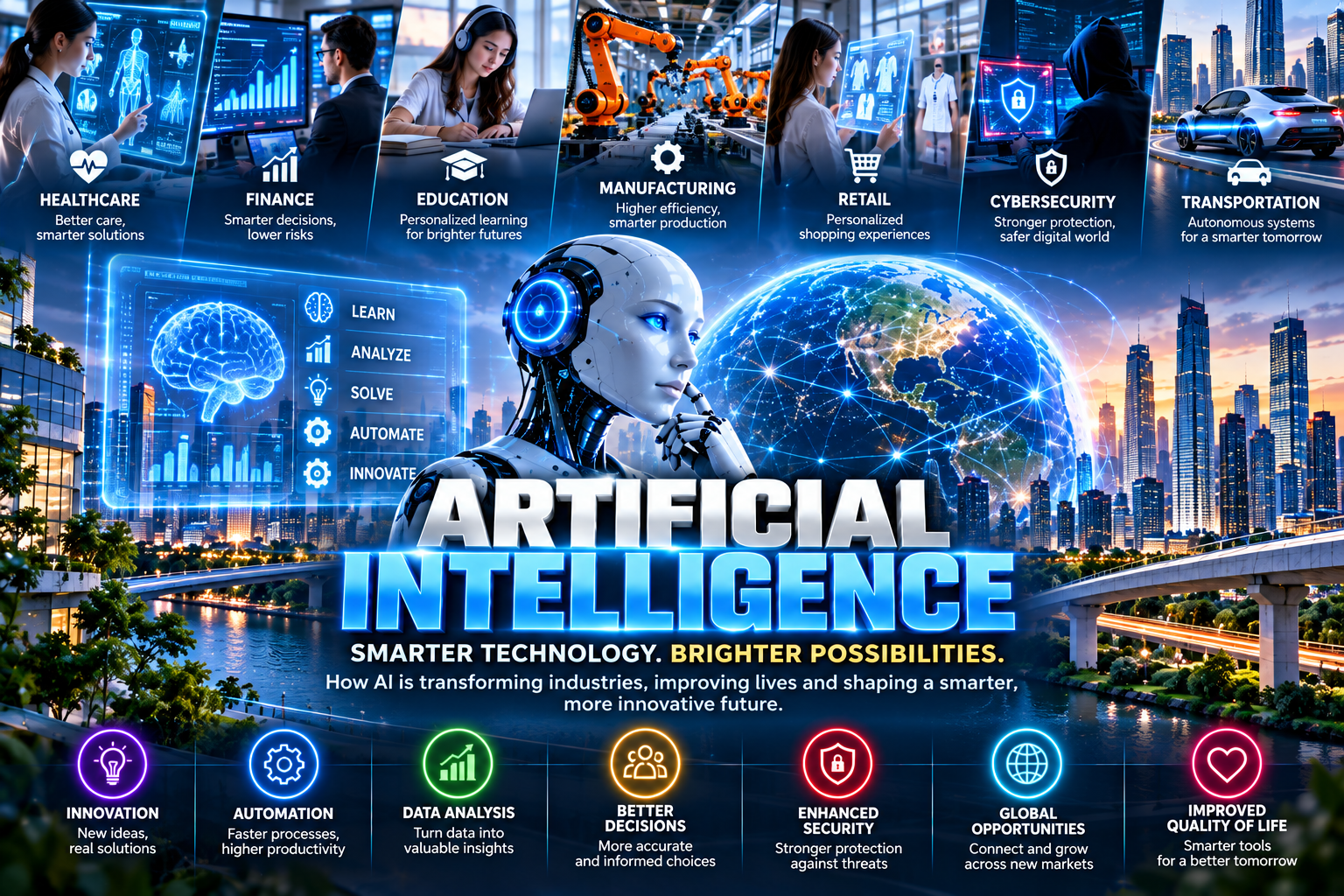
Artificial intelligence is becoming one of the most important technologies in the retail industry.
Retailers are applying AI to:
Product recommendations
Customer service
Demand forecasting
Inventory management
Pricing
Marketing
Fraud detection
Supply-chain planning
Product descriptions
Search
Merchandising
Workforce management
NRF's 2026 retail trends report describes AI as increasingly important across retail operations and customer engagement, including AI-powered customer service, personalization, shopping assistance, and supply-chain applications.
Deloitte's 2026 outlook found that nearly 68% of surveyed retail executives expected to deploy agentic AI for key operational or enterprise activities within 12 to 24 months.
Agentic Commerce
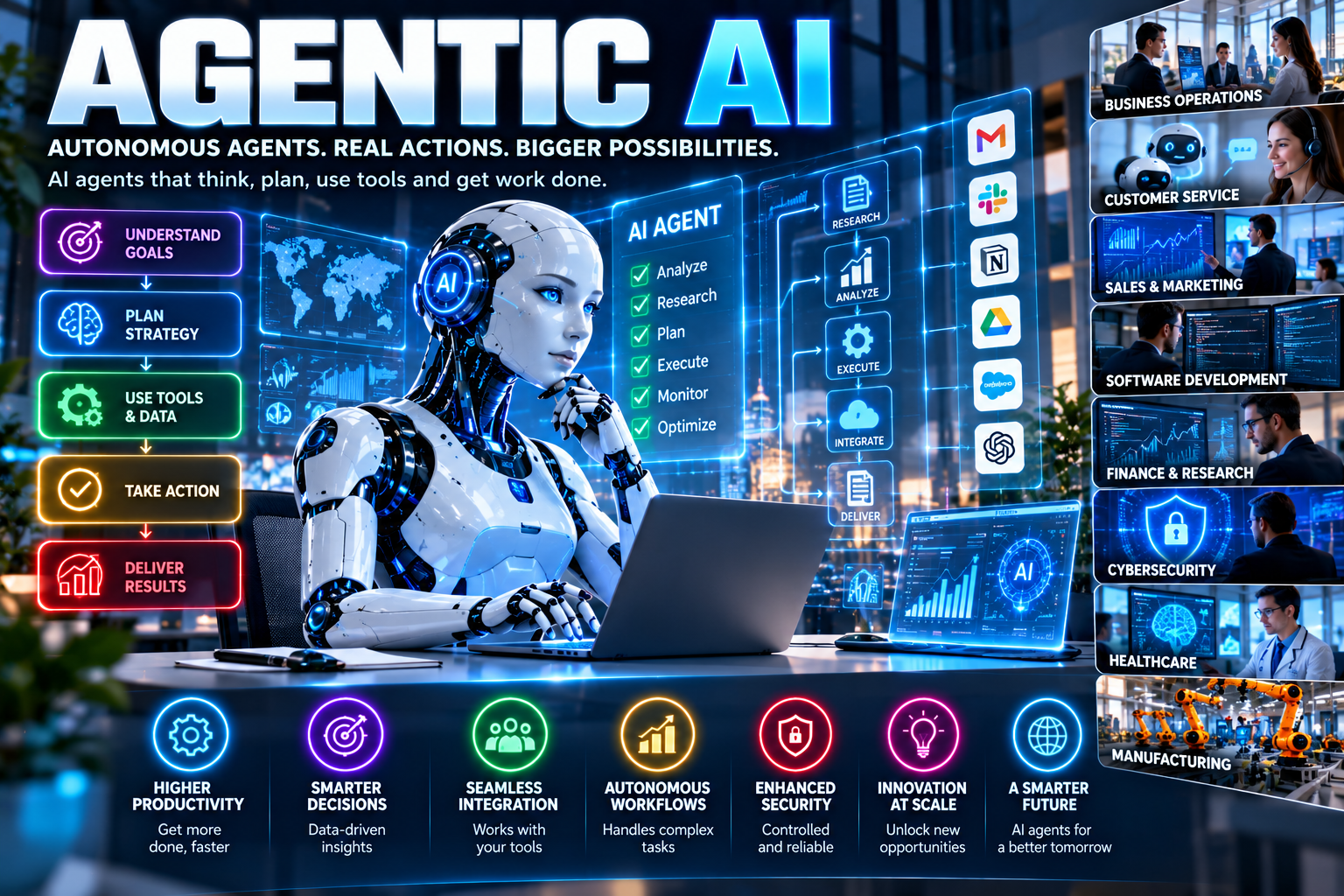
One of the emerging developments in retail is agentic commerce.
Traditional online shopping often requires consumers to:
Search for products.
Compare options.
Read reviews.
Check prices.
Add products to a cart.
Complete checkout.
AI agents may increasingly perform some of these steps on behalf of consumers.
For example, a shopper could tell an AI assistant:
"Find me a laptop under my budget with at least 16GB of RAM and good battery life."
The system could potentially search products, compare specifications, identify suitable options, and assist with purchasing.
Deloitte describes agentic commerce as an emerging shopping channel in which consumers delegate tasks such as searching, comparing, and purchasing to AI agents.
This could change how retailers approach product data, search visibility, pricing, customer relationships, and digital marketing.
Retail and Personalization
Consumers increasingly expect relevant experiences.
Retailers can use customer data and AI systems to personalize:
Product recommendations
Discounts
Email campaigns
Search results
Advertising
Loyalty rewards
Shopping experiences
Product discovery
Deloitte's 2026 retail outlook found that 67% of surveyed retail executives expected to have AI-driven personalization capabilities within the following year.
However, personalization also creates responsibilities around privacy, transparency, data security, and consumer trust.
Retail Media Networks
Retailers are increasingly turning their digital platforms into advertising businesses.
A retailer with a large customer base can use its website, application, search results, and other digital properties to display advertising from brands.
These systems are commonly known as retail media networks.
Retail media can generate revenue through:
Sponsored product listings
Display advertising
Search advertising
Brand campaigns
Audience targeting
Off-site advertising
Deloitte reported that 88% of surveyed retail executives with retail media networks expected them to be crucial for revenue and profitability in 2026, while 79% expected expansion into non-endemic advertising.
Supply Chain Transformation
Retail depends heavily on supply chains.
A retailer must coordinate:
Suppliers → Manufacturing → Transportation → Warehousing → Stores/E-commerce → Customer
Disruptions at any stage can create:
Product shortages
Higher costs
Delivery delays
Excess inventory
Lost sales
Customer dissatisfaction
Modern retailers are therefore investing in supply-chain visibility and resilience.
Deloitte's 2026 survey found that 66% of surveyed retail executives planned to restructure supply chains through measures such as onshoring, nearshoring, or supplier diversification if input costs increased.
Inventory Management
Inventory is one of the most important components of retail profitability.
Too much inventory can create:
Storage costs
Markdown requirements
Waste
Cash-flow pressure
Too little inventory can cause:
Stockouts
Lost sales
Customer dissatisfaction
Retailers increasingly use:
AI forecasting
Demand planning
Real-time inventory systems
Automated replenishment
Sales analytics
RFID
Internet of Things devices
to improve inventory decisions.
Retail Automation
Automation is transforming both stores and warehouses.
Examples include:
Automated checkout
Robotic picking
Warehouse robots
Automated sorting
Inventory scanning
Digital shelf labels
AI customer-service agents
Automated pricing systems
Robotic delivery systems
Automation can help retailers improve productivity while reducing repetitive manual work.
However, successful implementation requires appropriate infrastructure, workforce training, cybersecurity, and process redesign.
E-Commerce and Mobile Commerce
Consumers increasingly use smartphones throughout the shopping journey.
Mobile commerce enables consumers to:
Discover products
Compare prices
Read reviews
Watch product demonstrations
Make purchases
Track deliveries
Contact customer service
Retailers therefore need websites and applications that are:
Fast
Mobile-friendly
Secure
Easy to navigate
Personalized
Accessible
Mobile shopping also connects retail with social media, digital advertising, influencer marketing, and AI-powered product discovery.
Social Commerce
Social platforms have become important retail discovery channels.
Consumers can discover products through:
Short-form videos
Influencers
Creator content
Livestream shopping
Product reviews
Brand communities
Social advertisements
The distinction between entertainment, discovery, marketing, and shopping is becoming less clear.
Retailers therefore need content strategies that can work across multiple digital environments.
Customer Experience
Retail competition is not only about price.
Customer experience can involve:
Product quality
Store environment
Website usability
Checkout speed
Delivery
Returns
Customer service
Loyalty programs
Personalization
Brand trust
Deloitte notes that non-price factors such as quality, service, checkout ease, loyalty, and employee interactions can contribute significantly to consumers' perceptions of value.
This means retailers need to think about value as a broader customer proposition rather than simply offering the lowest price.
Retail Loyalty Programs
Loyalty programs can help retailers build stronger relationships with customers.
Common features include:
Points
Discounts
Personalized offers
Membership benefits
Early access
Rewards
Exclusive products
Personalized recommendations
Modern loyalty systems increasingly use customer data and analytics to deliver more relevant experiences.
The challenge is ensuring that data collection remains transparent and that consumers understand the value they receive.
Retail Data and Analytics
Retail generates enormous amounts of data.
Sources include:
Point-of-sale systems
E-commerce transactions
Customer accounts
Loyalty programs
Website behavior
Mobile applications
Supply-chain systems
Inventory systems
Social media
Advertising platforms
Retail analytics can help answer questions such as:
Which products are selling?
Which stores are performing?
What products are frequently purchased together?
Which customers are returning?
Where are stockouts occurring?
Which promotions generate results?
How much inventory is needed?
Data becomes particularly valuable when it is integrated across different parts of the organization.
Retail Cybersecurity
As retail becomes increasingly digital, cybersecurity becomes more important.
Retailers handle sensitive information involving:
Customer accounts
Payment transactions
Personal information
Loyalty programs
Employee records
Supplier systems
E-commerce platforms
Potential threats include:
Phishing
Ransomware
Account takeover
Payment fraud
Data breaches
Malware
Supply-chain attacks
Retailers need strong authentication, access controls, encryption, monitoring, employee training, incident response, and regular security assessments.
Sustainability in Retail
Sustainability is becoming increasingly important across the retail value chain.
Retailers can address environmental impacts through:
Energy-efficient stores
Renewable energy
Sustainable packaging
Recycling
Reduced waste
Efficient transportation
Responsible sourcing
Circular business models
Product repair
Resale and secondhand markets
Sustainability can also create operational benefits when it reduces material use, energy consumption, transportation costs, or waste.
The Growth of Secondhand and Resale Retail
Resale and secondhand retail have become increasingly visible across fashion, electronics, furniture, luxury goods, and other categories.
Digital marketplaces make it easier for consumers to:
Sell unwanted products
Purchase used products
Extend product lifecycles
Participate in circular commerce
For brands, resale can create new customer relationships while supporting circular business models.
Private-Label Products
Retailers increasingly use private-label products as part of their value strategy.
Private-label products are developed or sourced for sale under a retailer's own brand.
Potential advantages include:
Greater control over pricing
Product differentiation
Brand development
Potentially higher margins
Customer loyalty
Deloitte identified strengthening private-label products as one of the major growth opportunities retailers are pursuing in response to value-conscious consumers.
Retail Workforce
Retail remains highly dependent on people.
Employees contribute to:
Customer service
Merchandising
Inventory management
Store operations
Product expertise
Logistics
Online fulfillment
Management
Technology is changing retail jobs rather than simply eliminating the need for workers.
Employees increasingly need skills in:
Digital tools
Customer experience
Data
AI-assisted workflows
Inventory systems
Cybersecurity awareness
Omnichannel operations
Retailers therefore need to invest in workforce training alongside technology.
Retail Industry in 2026
The 2026 retail environment combines economic uncertainty with continued technological development.
In the United States, the National Retail Federation forecasts that retail sales will increase 4.4% in 2026 to $5.6 trillion. NRF describes this as stronger than the 3.6% average annual growth rate over the previous decade excluding the pandemic period.
This forecast applies to U.S. retail sales, not the global retail industry.
At the global level, Deloitte's research points to several major themes:
Consumers are increasingly focused on value.
AI is moving from experimentation toward operational use.
Marketing is becoming more personalized.
Supply chains are being redesigned for resilience.
Financial discipline remains important.
Challenges Facing the Retail Industry
Despite its opportunities, retail faces significant challenges.
Economic Uncertainty
Changes in inflation, interest rates, employment, currencies, and consumer confidence can affect spending.
Supply-Chain Disruption
Transportation problems, geopolitical developments, trade policies, and supplier concentration can increase costs or reduce availability.
Technology Investment
AI and automation require investment in:
Data
Infrastructure
Software
Talent
Cybersecurity
Integration
Customer Expectations
Consumers increasingly expect convenience, speed, personalization, transparency, and competitive prices.
Cybersecurity
More digital transactions create more opportunities for cyberattacks.
Competition
Retailers compete with physical stores, e-commerce platforms, marketplaces, direct-to-consumer brands, social commerce, and increasingly AI-powered shopping interfaces.
The Future of the Retail Industry
The future of retail is likely to combine physical experiences, digital commerce, artificial intelligence, automation, data, and human interaction.
Several developments could become increasingly important.
AI Shopping Agents
Consumers may increasingly delegate product discovery, comparison, and purchasing tasks to AI systems.
Smarter Stores
Physical stores may use computer vision, sensors, robotics, smart shelves, and digital interfaces.
Predictive Supply Chains
AI could help retailers forecast demand and identify potential supply disruptions earlier.
Personalized Commerce
Products, offers, recommendations, and marketing may become increasingly tailored to individual customers.
Automated Fulfillment
Robotics and AI could continue transforming warehouses and delivery networks.
Sustainable Retail
Circular commerce, resale, recycling, and resource-efficient operations may become increasingly integrated into retail models.
Unified Commerce
The distinction between online and offline shopping is likely to become less important as retailers connect all channels.
How Retailers Can Prepare for the Future
Retailers can build resilience by focusing on several fundamentals.
1. Understand the Customer
Use research and data to understand changing consumer needs.
2. Build Strong Digital Infrastructure
Modern retail requires reliable e-commerce, data, cloud, security, and integration systems.
3. Use AI With a Clear Purpose
AI should solve measurable business problems rather than simply be adopted because it is fashionable.
4. Improve Supply-Chain Visibility
Real-time data and diversified sourcing can help retailers respond to disruptions.
5. Connect Physical and Digital Retail
Stores and digital channels should complement one another.
6. Invest in Employees
Technology works better when employees understand how to use it.
7. Protect Customer Data
Privacy and cybersecurity should be integrated into retail technology strategies.
8. Measure Results
Retailers should track revenue, margins, inventory, customer satisfaction, conversion, retention, and technology ROI.
Retail Industry vs. E-Commerce
Feature | Traditional Retail | E-Commerce | Modern Omnichannel Retail |
|---|---|---|---|
Main channel | Physical stores | Websites/apps | Stores + digital |
Customer experience | In-person | Digital | Integrated |
Inventory | Store-focused | Warehouse-focused | Shared/connected |
Convenience | Immediate physical access | Home shopping | Multiple fulfillment options |
Personalization | Staff-based | Data-driven | AI + human |
Payments | POS | Digital checkout | Unified payments |
Returns | Store-based | Shipping/online | Multiple options |
Technology | Store systems | Digital platforms | Connected ecosystem |
The future is increasingly moving toward integrated retail rather than a simple choice between physical and digital commerce.
Final Thoughts
The retail industry is undergoing one of its most significant transformations as consumers, technology, and business models evolve.
Physical stores remain important, but they now operate within a much larger ecosystem involving e-commerce, mobile commerce, social platforms, marketplaces, digital payments, AI, automation, data analytics, and connected supply chains.
In 2026, artificial intelligence is moving deeper into retail operations, from personalization and customer service to merchandising, forecasting, supply-chain management, and emerging agentic commerce. At the same time, value-conscious consumers and operational pressures are forcing retailers to balance innovation with financial discipline.
The future of retail will not simply belong to businesses with the most technology. It will depend on how effectively retailers combine technology, customer understanding, operational excellence, data, human expertise, and trust to create convenient and valuable experiences.
Frequently Asked Questions
What is the retail industry?
The retail industry consists of businesses that sell products or services through physical stores, e-commerce platforms, marketplaces, mobile applications, and other consumer-facing channels.
What are the main types of retail?
Major types include department stores, supermarkets, specialty stores, discount retailers, luxury retailers, convenience stores, direct-to-consumer brands, and e-commerce businesses.
How is AI changing retail?
AI is being used for personalization, customer service, demand forecasting, inventory management, marketing, pricing, fraud detection, merchandising, and supply-chain operations.
What is omnichannel retail?
Omnichannel retail connects physical stores, websites, mobile applications, marketplaces, and other channels to create a more integrated customer experience.
What is agentic commerce?
Agentic commerce is an emerging model in which AI agents can help consumers search for products, compare options, and potentially execute purchasing tasks on their behalf.
Why is supply-chain management important in retail?
Retailers need products to reach stores, warehouses, and customers at the right time and cost. Supply-chain disruptions can create shortages, delays, higher expenses, and lost sales.
Is physical retail disappearing?
No. Physical stores continue to provide product experiences, immediate purchasing, customer service, fulfillment, and brand experiences. Modern retail increasingly combines physical and digital channels.
What are the biggest retail trends in 2026?
Major trends include AI adoption, agentic commerce, value-focused consumers, personalization, omnichannel retail, supply-chain transformation, retail media, automation, private labels, and stronger cost management.
What is the future of retail?
The future is likely to combine AI, physical stores, e-commerce, automation, personalized experiences, connected supply chains, digital payments, data analytics, and human customer service.
How can retailers stay competitive?
Retailers can focus on customer needs, value, strong digital infrastructure, AI with measurable use cases, supply-chain resilience, cybersecurity, employee training, omnichannel experiences, and continuous improvement.