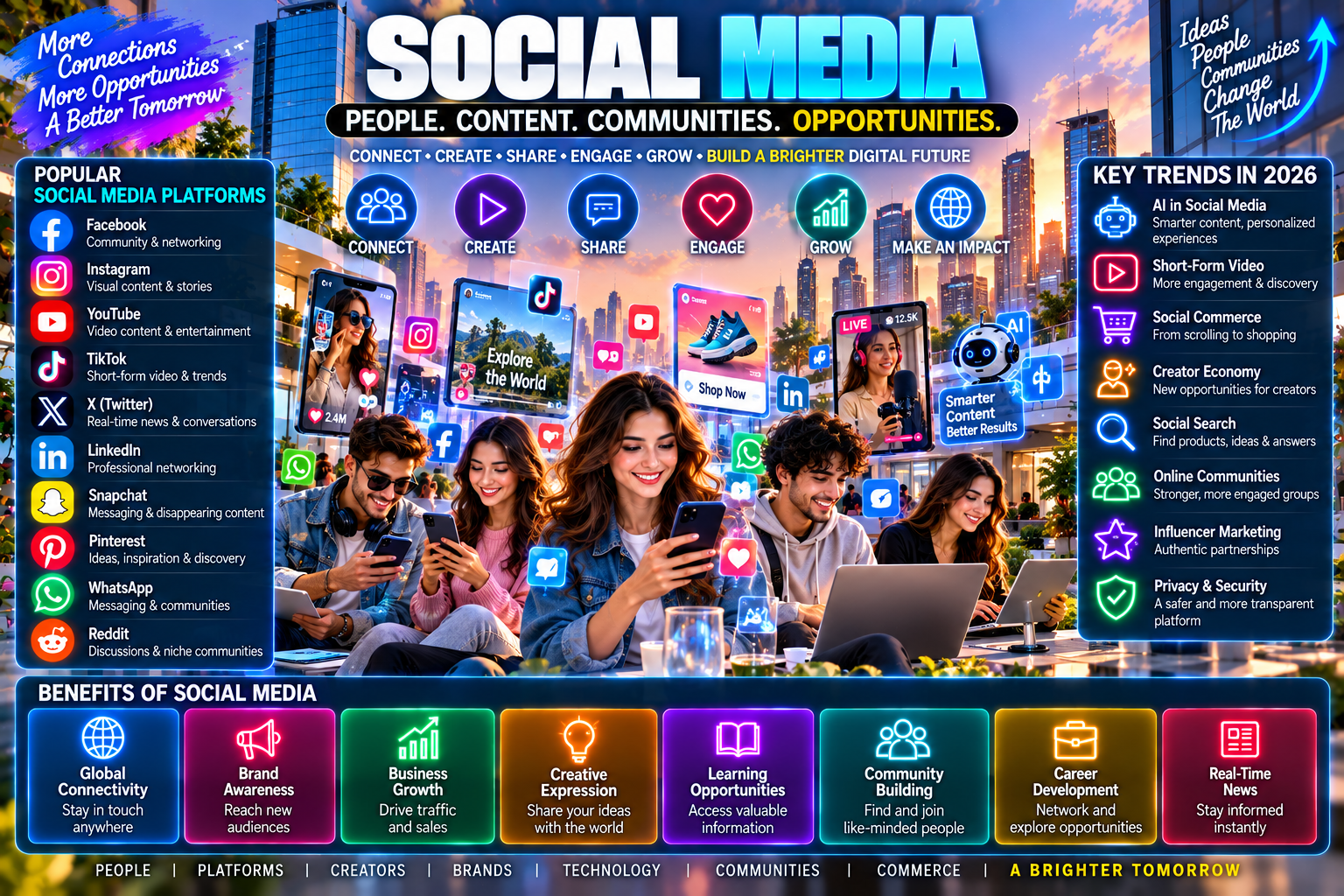
Social media has become one of the most influential parts of the modern digital ecosystem. What began primarily as a way for people to connect with friends and share personal updates has evolved into a global environment for communication, entertainment, business, news discovery, creator content, customer service, advertising, and commerce.
In 2026, social media is becoming even more integrated with artificial intelligence, search, shopping, messaging, and creator economies. DataReportal's Digital 2026 analysis estimates that there were 5.66 billion active social media user identities worldwide, equivalent to 68.7% of the global population, although the organization cautions that user identities do not necessarily represent unique individual people.
The role of social media is therefore expanding beyond simple social networking. Platforms increasingly function as discovery engines, entertainment services, marketing channels, marketplaces, communication tools, and customer-service environments.
What Is Social Media?
Social media refers to digital platforms and services that allow people and organizations to create, share, discover, discuss, and interact with content.
Social media can include:
Social networking platforms
Short-form video platforms
Professional networks
Messaging communities
Discussion platforms
Image-sharing services
Livestreaming platforms
Creator platforms
Social commerce platforms
Users can interact through:
Text
Images
Videos
Stories
Livestreams
Comments
Direct messages
Polls
Communities
Audio
Interactive content
The combination of user-generated content and algorithmic recommendations has made social media one of the most important digital communication systems in the world.
Why Social Media Matters
Social media affects individuals, businesses, creators, organizations, and communities.
People use social platforms to:
Communicate
Find entertainment
Discover products
Follow creators
Learn new information
Participate in communities
Share experiences
Discover news and trends
Contact businesses
Businesses use social media to:
Build brand awareness
Reach customers
Generate leads
Promote products
Provide customer service
Conduct market research
Build communities
Drive website traffic
Sell products
Work with creators
The scale is significant. DataReportal's 2026 global analysis reports that social media user identities grew by about 4.8% over the previous year, adding roughly 259 million identities.
Major Types of Social Media
1. Social Networking
Social networking platforms allow users to connect with individuals, organizations, communities, and brands.
They commonly support:
Profiles
Posts
Comments
Groups
Messaging
Video
Images
Communities
2. Short-Form Video
Short-form video has become a major format for entertainment, education, marketing, and product discovery.
Short videos can include:
Tutorials
Reviews
Comedy
Educational content
Product demonstrations
Behind-the-scenes content
Creator videos
News and commentary
3. Professional Social Media
Professional platforms focus more heavily on careers, business networking, recruitment, industry discussions, and professional content.
They can help users:
Build professional networks
Find employment
Recruit employees
Share expertise
Promote companies
Generate business leads
4. Discussion Communities
Discussion-based platforms allow people to participate in conversations around specific interests, questions, industries, hobbies, and communities.
These environments can be valuable for:
Research
Community building
Customer feedback
Knowledge sharing
Niche marketing
5. Image and Visual Platforms
Visual platforms emphasize:
Photography
Graphics
Short videos
Product imagery
Design
Inspiration
Lifestyle content
6. Messaging Platforms
Messaging has become closely connected to social media and commerce.
Businesses can use messaging for:
Customer support
Product questions
Order updates
Sales conversations
Community communication
Personalized offers
Social Media in 2026
The social media environment is changing from a follower-centered model toward broader interest-based discovery.
HubSpot's 2026 research describes a shift toward social platforms functioning as discovery, search, shopping, and customer-service environments rather than simply networks based on who users follow.
This means a creator or brand can potentially reach people who have never followed its account if its content is relevant to their interests.
Content quality, relevance, watch time, engagement, sharing, and platform-specific behavior can therefore influence distribution.
Dash Social's 2026 research similarly emphasizes that social discovery is increasingly driven by creative quality and content tailored to the behavior of each platform rather than one universal content formula.
Social Media and Artificial Intelligence
Artificial intelligence is transforming social media in several ways.
AI can assist with:
Content creation
Caption generation
Video editing
Image creation
Audience analysis
Personalization
Advertising
Customer service
Content moderation
Recommendation systems
Social listening
Trend detection
HubSpot's 2026 research reports that 73% of marketers surveyed were already using AI in their content workflows.
AI can therefore increase the speed at which businesses create and test content.
However, social media teams still need human judgment because automated content can become repetitive, inaccurate, insensitive, or disconnected from a brand's identity.
Human Content Still Matters
AI-generated content is becoming easier to produce, but audiences can still value authenticity and human perspective.
Sprout Social's 2026 content strategy research found that consumers surveyed wanted brands to prioritize human-generated content, while using AI to support audience insights and operational efficiency rather than simply replacing human creativity.
A practical approach is therefore:
Human creativity + AI assistance + audience feedback
rather than:
AI-generated content at maximum volume
The goal should be useful, distinctive, relevant content.
Short-Form Video
Short-form video remains one of the most important social media formats.
It works particularly well for:
Entertainment
Education
Product discovery
Tutorials
Storytelling
Reviews
Brand awareness
Creator marketing
Video can communicate visual information quickly and can be distributed through recommendation systems beyond a creator's existing follower base.
For brands, effective short-form video often combines:
A strong opening
Clear value
Fast pacing
Captions
Visual storytelling
Authentic presentation
A simple call to action
Social Search
Social platforms are increasingly being used for discovery.
People may search social platforms for:
Restaurants
Products
Travel ideas
Tutorials
Beauty advice
Fashion
Technology
Reviews
Local businesses
Creators
HubSpot's 2026 research identifies social search as an important shift, particularly among younger consumers.
This means businesses should think about social content as searchable information rather than temporary posts.
Useful practices include:
Clear captions
Relevant keywords
Descriptive titles
Useful hashtags
Natural language
Accurate profiles
Helpful videos
Frequently asked questions
Social Commerce
Social commerce combines social media with product discovery and purchasing.
A typical social-commerce journey can look like:
Discover → Watch → Explore → Compare → Click → Purchase
Social commerce can involve:
Shoppable posts
Product tags
Creator recommendations
Livestream shopping
In-app stores
Affiliate links
Direct messaging
Social advertisements
Sprout Social's 2026 research describes social commerce as moving toward a combination of AI-led discovery, native shopping tools, creator content, video, livestreams, and conversational commerce.
EMARKETER likewise identifies creators, TikTok, AI, and built-in checkout as important forces shaping U.S. social commerce in 2026.
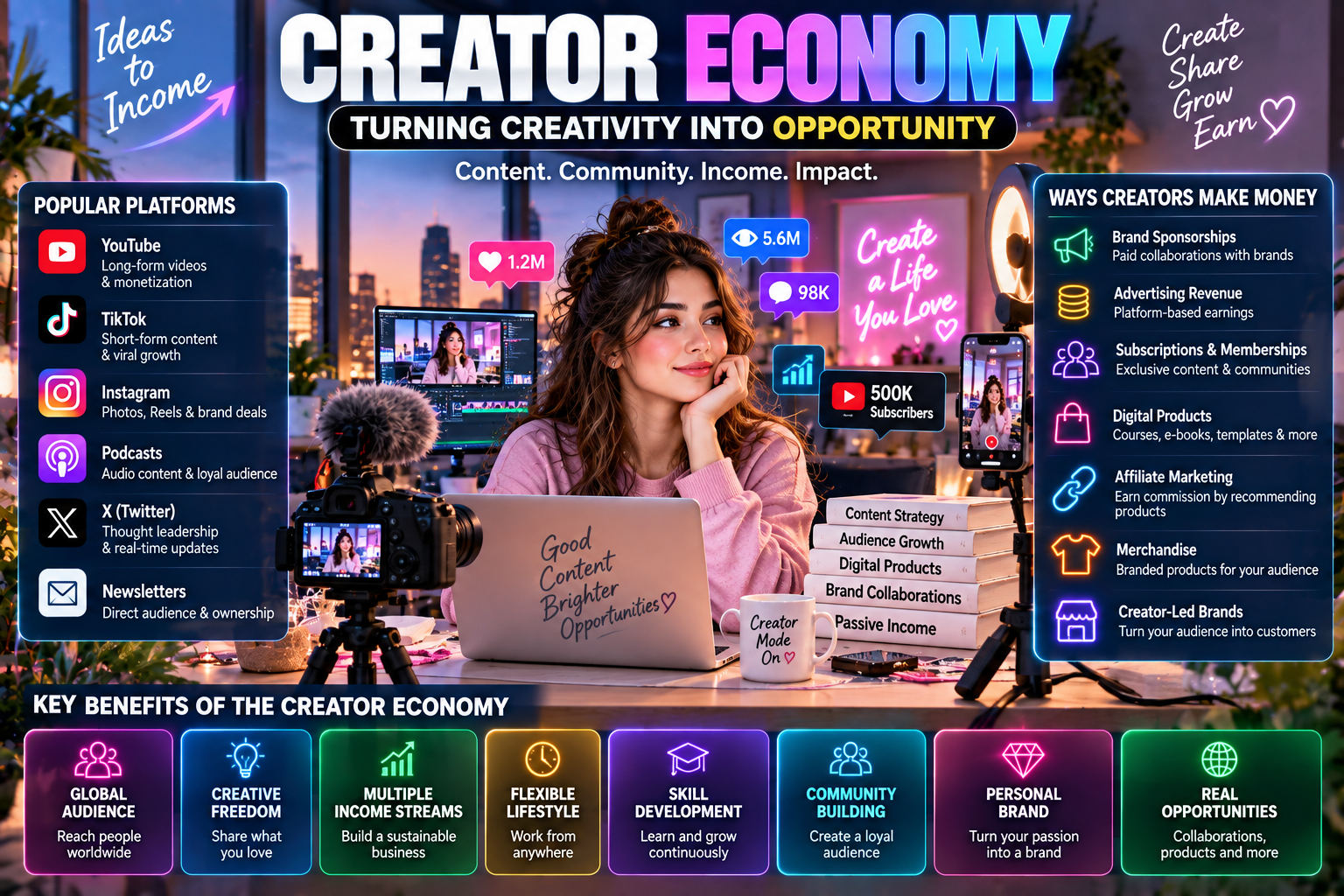
Creator Economy
Creators have become an important part of the social media ecosystem.
Creators can monetize through:
Sponsorships
Advertising
Affiliate marketing
Subscriptions
Digital products
Merchandise
Brand partnerships
Livestreaming
Creator-led businesses
Creators also influence product discovery.
For brands, creator partnerships can provide access to specific communities and audiences that may be difficult to reach through traditional advertising alone.
Micro-creators can be particularly useful when a brand wants to reach niche communities with specialized interests.
Influencer Marketing
Influencer marketing involves working with people who have established audiences and influence within a particular niche.
Common categories include:
Fashion creators
Beauty creators
Technology creators
Fitness creators
Travel creators
Finance creators
Gaming creators
Food creators
Education creators
Successful influencer marketing depends on more than follower count.
Brands may consider:
Audience relevance
Engagement
Content quality
Trust
Brand alignment
Conversion
Audience demographics
Creator credibility
Social Media Marketing
Social media marketing involves using social platforms to achieve business objectives.
Common goals include:
Awareness
Engagement
Website traffic
Lead generation
Sales
Customer retention
Community growth
A basic social media marketing process can be:
Research → Strategy → Content → Distribution → Engagement → Measurement → Optimization
Social Media Content Strategy
A strong content strategy should define:
Audience
Who are you trying to reach?
Objective
What should the content accomplish?
Platform
Where does the audience spend time?
Format
Should the content be a video, image, carousel, article, livestream, or text post?
Message
What useful information or emotion should the audience receive?
Distribution
How will the content reach people?
Measurement
How will success be evaluated?
Content Pillars
Many brands organize social media around several recurring content pillars.
For example:
Educational content
Product content
Entertainment
Customer stories
Behind-the-scenes content
Industry insights
Community content
Content pillars help prevent a social feed from becoming repetitive or overly promotional.
Community Building
Social media is increasingly about communities rather than broadcasting.
Strong communities can encourage:
Conversations
User-generated content
Loyalty
Feedback
Peer recommendations
Repeat engagement
Businesses can build communities by:
Responding to comments
Asking questions
Highlighting customers
Creating discussions
Hosting events
Sharing useful information
Recognizing loyal followers
Social Media Customer Service
Customers increasingly expect brands to respond through digital channels.
Social customer service can involve:
Answering questions
Resolving complaints
Providing product information
Explaining policies
Tracking support issues
Directing customers to appropriate resources
Fast responses can improve the customer experience, but businesses also need clear processes for handling sensitive or complex cases privately.
Social Media Analytics
Social media generates large amounts of performance data.
Important metrics include:
Reach
Impressions
Views
Watch time
Engagement rate
Likes
Comments
Shares
Saves
Click-through rate
Conversion rate
Follower growth
Cost per result
Return on advertising spend
Metrics should be connected to business objectives.
For example, a brand focused on awareness may prioritize reach and video views, while an e-commerce business may focus more heavily on conversions and revenue.
Social Media Advertising
Paid social advertising allows businesses to target audiences using platform-based advertising systems.
Campaign objectives can include:
Awareness
Traffic
Engagement
Leads
App installs
Sales
Advertising can be combined with organic content.
A business might use organic content to build trust and paid advertising to expand distribution.
Social Media and SEO
Social media and search engine optimization are different channels, but they can support one another.
Social content can:
Increase brand awareness
Generate referral traffic
Encourage content sharing
Build communities
Introduce people to a brand
Create searchable content
As social search becomes more important, businesses also need to optimize content for how people search inside social platforms.
Social Media and E-Commerce
Social media is becoming increasingly integrated with online shopping.
A consumer may:
Discover a product in a video.
Watch a creator review it.
Read comments.
Ask questions through messaging.
Visit a product page.
Purchase the product.
Meta's 2026 research on commerce in India describes a similar shift toward scroll-led discovery, creators, AI, video, and conversational messaging.
The exact shopping experience varies by market and platform, but the broader trend is toward reducing the distance between discovery and purchase.
Social Media and Small Businesses
Social media can be particularly useful for small businesses because it provides relatively accessible tools for:
Brand building
Customer communication
Local discovery
Product promotion
Content marketing
Community development
Customer feedback
A small business can use a combination of:
Organic content + local discovery + creator partnerships + targeted advertising + customer service
to build a digital presence.
Social Media in Pakistan
Social media is also an important part of Pakistan's digital ecosystem.
DataReportal's Digital 2026: Pakistan report states that there were 79.9 million social media user identities in Pakistan in October 2025, equivalent to 31.2% of the country's total population. The report also notes that these figures represent social media user identities rather than necessarily unique individuals.
The same report recorded approximately:
117 million internet users
194 million cellular mobile connections
79.9 million social media user identities
in late 2025.
This makes social platforms relevant to Pakistani businesses, creators, publishers, freelancers, and entrepreneurs.
Social Media Risks and Challenges
Social media provides major opportunities, but it also creates challenges.
Privacy
Platforms collect and process significant amounts of user and behavioral data.
Cybersecurity
Accounts can be targeted through:
Phishing
Credential theft
Malware
Social engineering
Account takeover
Misinformation
False or misleading information can spread rapidly.
Harassment
Users may encounter bullying, harassment, or abusive behavior.
Platform Dependence
Businesses that rely heavily on one platform can be affected by algorithmic, policy, or product changes.
Content Saturation
The enormous volume of content makes it increasingly difficult to capture attention.
AI-Generated Content
AI can increase content production, but large amounts of low-quality automated content can reduce trust and make discovery more difficult.
Social Media and Authenticity
Authenticity has become an increasingly important theme.
Consumers can encounter thousands of pieces of branded content every day.
Content that feels overly scripted or promotional may struggle to create meaningful connections.
Brands can improve authenticity by:
Showing real people
Sharing behind-the-scenes content
Answering questions honestly
Acknowledging mistakes
Using customer stories
Providing useful information
Avoiding unnecessary promotional language
The objective is not to make every post informal. It is to make communication credible and relevant.
Social Media Algorithms
Social platforms use recommendation systems to determine which content users see.
Signals can include:
User interests
Previous interactions
Watch time
Engagement
Content relevance
Sharing behavior
Search behavior
Platform-specific signals
Because algorithms differ, a strategy that works on one platform may not produce the same result on another.
This is why platform-specific content strategy is increasingly important.
Social Media and Data Privacy
Businesses using social media should understand privacy requirements applicable to their audiences and markets.
Important considerations include:
Data collection
Consent
Advertising targeting
Customer information
Cookies and tracking
Data storage
Third-party tools
Account security
Responsible data practices can help protect customers and maintain trust.
The Future of Social Media
Social media is likely to become increasingly connected to AI, commerce, search, entertainment, and messaging.
AI-Powered Social Discovery
AI may increasingly personalize feeds, search results, recommendations, and shopping experiences.
AI Shopping Assistants
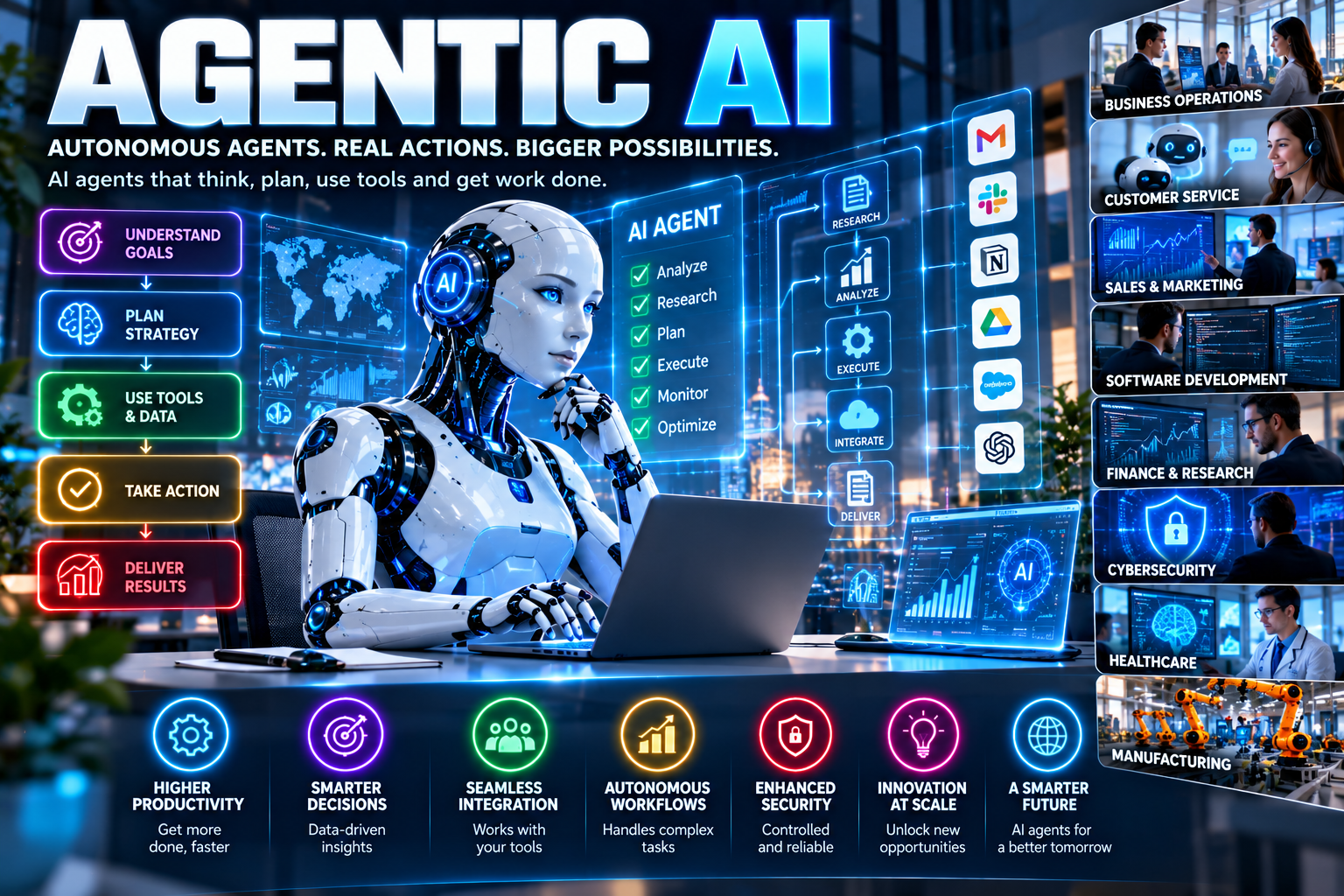
AI agents could help consumers discover products, compare options, and complete parts of the purchasing journey.
EMARKETER's 2026 research identifies AI agents as an important part of the emerging next phase of social commerce.
More Creator-Led Commerce
Creators are likely to become increasingly integrated into product discovery and commerce.
Social Search
People may increasingly use social platforms as search engines for products, services, tutorials, reviews, and recommendations.
More Interactive Video
Livestreams, interactive video, short-form content, and shoppable video may continue expanding.
Community-Centered Marketing
Brands may place greater emphasis on building communities instead of simply accumulating followers.
AI-Assisted Customer Service
Chatbots and AI agents may handle more routine customer questions while human employees manage complex cases.
How Businesses Can Build a Strong Social Media Strategy
A practical strategy can follow these steps:
1. Define the Audience
Understand who you want to reach.
2. Choose the Right Platforms
Focus on platforms where your target audience is active.
3. Establish Content Pillars
Create several recurring categories.
4. Produce Valuable Content
Teach, entertain, inspire, inform, or solve problems.
5. Adapt Content to Each Platform
Avoid automatically publishing identical content everywhere.
6. Build Community
Respond, interact, ask questions, and encourage discussion.
7. Use AI Carefully
Use AI for research, ideation, analysis, and efficiency while maintaining human oversight and originality.
8. Test Different Formats
Experiment with videos, images, carousels, articles, livestreams, and interactive content.
9. Measure Results
Track metrics connected to your objectives.
10. Continuously Improve
Use performance data and audience feedback to refine the strategy.
Social Media Trends to Watch
The most important developments to monitor include:
Artificial intelligence
Agentic commerce
Social search
Creator-led commerce
Short-form video
Livestream shopping
Personalized content
Community building
Social customer service
AI-generated content
Digital creators
Social advertising
Conversational commerce
Social marketplaces
Data privacy
Platform diversification
These trends indicate that social media is becoming less of a standalone communication channel and more of an integrated digital ecosystem.
Final Thoughts
Social media has evolved from a simple networking tool into a global infrastructure for communication, entertainment, discovery, marketing, commerce, customer service, and community building.
In 2026, the industry is being reshaped by AI, short-form video, social search, creators, social commerce, personalized discovery, and messaging. Global usage has reached billions of social media user identities, while businesses increasingly use platforms to connect discovery directly with customer relationships and sales.
The future of social media will not depend only on how many followers an account has. Relevance, creativity, trust, community, useful content, platform-specific strategy, and the ability to adapt to emerging technologies will all remain important.
For businesses and creators, the fundamental principle is simple:
Create something useful, make it relevant to the audience, build genuine relationships, measure what works, and continuously adapt.
Frequently Asked Questions
What is social media?
Social media consists of digital platforms that allow people and organizations to create, share, discover, and interact with content and communities.
Why is social media important for businesses?
Businesses can use social media for brand awareness, customer engagement, marketing, lead generation, customer service, community building, and commerce.
What are the biggest social media trends in 2026?
Major trends include AI, social commerce, social search, creator-led commerce, short-form video, personalized discovery, livestreaming, community building, and conversational commerce.
How is AI changing social media?
AI is being used for content creation, recommendations, personalization, advertising, analytics, customer service, moderation, and shopping assistance.
What is social commerce?
Social commerce is the integration of social media and shopping, allowing users to discover, research, and sometimes purchase products through social platforms.
What is social search?
Social search refers to using social platforms to discover information, products, businesses, reviews, tutorials, and recommendations.
What is the creator economy?
The creator economy consists of individuals and businesses that create digital content and monetize their audiences through advertising, sponsorships, subscriptions, affiliate marketing, products, and other revenue streams.
Is short-form video important?
Yes. Short-form video is a major format for entertainment, education, discovery, marketing, and creator content across many social platforms.
How can businesses grow on social media?
Businesses can focus on a clear audience, valuable content, platform-specific strategies, consistent publishing, community engagement, analytics, and continuous testing.
What are the risks of social media?
Important risks include privacy concerns, cybersecurity threats, misinformation, harassment, content saturation, platform dependence, and the spread of low-quality or misleading AI-generated content.
What is the future of social media?
Social media is likely to become increasingly integrated with AI, search, shopping, messaging, entertainment, creators, and personalized digital experiences.