Finding the right business loan can help a company manage cash flow, purchase equipment, hire employees, expand operations, or launch a new product. However, choosing financing requires careful comparison because interest rates, fees, repayment schedules, and eligibility requirements can vary considerably between lenders.
In the United States, businesses can explore traditional bank loans, Small Business Administration (SBA) loans, online business loans, business lines of credit, and equipment financing. Some options offer longer repayment periods and competitive rates, while others prioritize convenience or faster access to funds.
In this guide, we compare some of the best business loan options in 2026, explain how different financing products work, and outline the factors business owners should evaluate before borrowing.
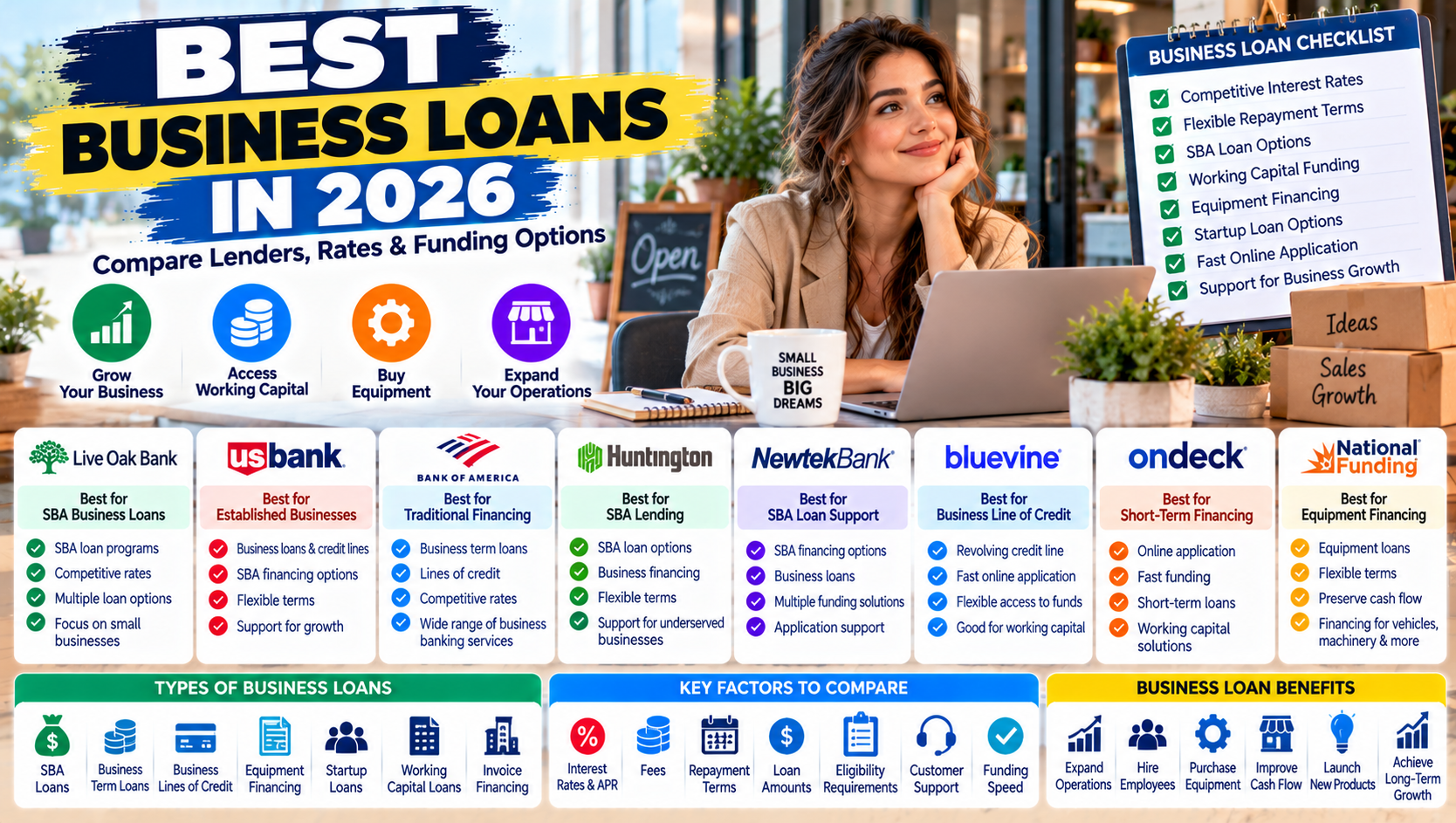
Best Business Loans in 2026: Top Lenders Compared
The best business loan depends on your company's revenue, credit history, time in business, funding needs, and intended use of the money. The following lenders are worth considering for different financing requirements.
Lender | Best For | Financing Consideration |
|---|---|---|
Live Oak Bank | SBA lending | SBA loan programs and business financing |
U.S. Bank | Established businesses and eligible newer businesses | Bank lending and SBA financing |
Bank of America | Businesses seeking traditional bank financing | Business loans and lines of credit |
Huntington National Bank | SBA lending and underserved businesses | SBA-backed financing options |
Newtek Bank | SBA loan application support | Small business financing |
Bluevine | Business lines of credit | Revolving working capital |
OnDeck | Short-term business financing | Online applications and short-term loans |
National Funding | Equipment financing | Financing business equipment |
These are lenders to investigate, not a guarantee of the lowest rates or approval. Products, availability, fees, and underwriting requirements can change. Compare personalized offers before making a decision.
1. Live Oak Bank — Best for SBA Business Loans
Live Oak Bank is known for its focus on small business lending, including SBA-backed financing. SBA loans can be useful for eligible businesses that need capital for expansion, equipment, working capital, or other approved purposes.
Key Features
SBA lending options for eligible businesses.
Financing for qualifying business purposes.
Options for businesses seeking longer-term financing.
Specialized lending resources for certain industries.
What to Consider
SBA loans require an application and underwriting process. Approval depends on the business's financial position, eligibility, repayment ability, and the requirements of the selected program.
Best for: Eligible businesses exploring SBA financing for growth or larger expenses.
Official website: https://www.liveoak.bank/
2. U.S. Bank — Best for Comparing Bank and SBA Financing
U.S. Bank offers business banking and financing products, including loans and lines of credit for qualifying businesses. Its options may be worth comparing if you want to explore traditional bank financing.
Potential Benefits
Business lending products.
Options for eligible companies seeking term financing.
Business lines of credit, depending on eligibility.
SBA-related financing options where available.
What to Consider
Traditional bank lenders often evaluate credit history, cash flow, time in business, existing debt, and financial documentation. Newer businesses may need a strong business plan and financial projections.
Best for: Businesses that want to compare conventional bank financing and eligible SBA programs.
Official website: https://www.usbank.com/business-banking.html
3. Bank of America — Best for Traditional Business Financing
Bank of America offers business financing options for qualifying companies, including term loans and lines of credit. Established businesses may find it useful when comparing lending products from major banks.
Key Features
Business term loan options.
Business lines of credit for eligible applicants.
Business banking services.
Financing options for qualifying companies with documented financial activity.
What to Consider
Eligibility and terms depend on the product and applicant. Some products may require a minimum period in business, established revenue, or other qualifications.
Review current requirements before applying, especially if your business is new or has limited operating history.
Best for: Established businesses comparing traditional bank financing.
Official website: https://www.bankofamerica.com/smallbusiness/
4. Huntington National Bank — Best for Exploring SBA Lending
Huntington National Bank is an established bank with SBA lending experience. It may be worth considering for eligible businesses looking for financing backed by an SBA guarantee.
Potential Advantages
SBA lending options.
Financing for qualifying small businesses.
Access to bank lending services.
Options to discuss business funding needs with a lender.
What to Consider
The bank's products and geographic availability may vary. Ask about the specific loan program, required documents, collateral, fees, and repayment conditions.
Best for: Small businesses exploring SBA financing through an experienced participating lender.
Official website: https://www.huntington.com/
5. Newtek Bank — Best for SBA Loan Support
Newtek Bank offers business financing services, including SBA-related lending options. Its products may appeal to companies looking for structured financing for eligible business needs.
Potential Benefits
SBA financing options.
Business lending services.
Funding opportunities for eligible business purposes.
Resources for navigating a loan application.
What to Consider
SBA lending can involve substantial documentation and underwriting. Confirm the available loan programs, funding timelines, interest rate, fees, and requirements directly with the lender.
Best for: Businesses seeking to explore SBA financing and related application support.
Official website: https://www.newtekone.com/
6. Bluevine — Best for a Business Line of Credit
Bluevine offers business financing products, including a business line of credit for qualifying companies. A line of credit can help a business manage short-term cash flow needs or handle expenses that fluctuate over time.
How It Can Help
Access to a revolving credit facility, if approved.
Potential flexibility for working capital.
Online application tools.
Financing that can be useful for eligible short-term business expenses.
What to Consider
A business line of credit is not the same as a term loan. Costs may depend on the amount drawn, repayment schedule, and product terms. Review the APR or applicable fee structure and check whether payments are required weekly, monthly, or on another schedule.
Best for: Eligible businesses seeking flexible access to working capital.
Official website: https://www.bluevine.com/
7. OnDeck — Best for Short-Term Business Financing
OnDeck provides online business financing options for eligible businesses. Short-term financing may help companies cover time-sensitive expenses, but it is important to compare its total cost with longer-term alternatives.
Potential Benefits
Online application process.
Business financing options for qualifying companies.
Potential access to working capital.
Financing that may suit specific short-term needs.
What to Consider
Short-term business loans can have higher borrowing costs than some traditional loans. Frequent repayments may also put pressure on cash flow.
Before accepting an offer, calculate the total repayment amount and confirm that your business can comfortably meet the payment schedule.
Best for: Businesses that need short-term financing and can manage the repayment terms.
Official website: https://www.ondeck.com/
8. National Funding — Best for Equipment Financing
National Funding offers financing products for businesses, including equipment financing for eligible applicants. Equipment loans can help a company acquire machinery, vehicles, technology, or other assets needed for operations.
Potential Benefits
Equipment financing options.
Funding for eligible business purchases.
Alternative financing for companies comparing bank loans.
Options for businesses that need to preserve cash for other expenses.
What to Consider
Equipment financing may use the purchased asset as collateral. Review the total cost, deposit requirements, repayment term, and consequences of missed payments.
Best for: Businesses seeking financing to purchase eligible equipment.
Official website: https://www.nationalfunding.com/
What Is a Business Loan?
A business loan is financing provided to a company or business owner under an agreement to repay the borrowed amount, interest, and any applicable fees.
Lenders assess factors such as the company's revenue, cash flow, credit history, time in business, industry, and ability to repay. Depending on the loan, they may also require collateral or a personal guarantee.
Businesses commonly use loans to:
Purchase inventory and supplies.
Hire employees.
Cover payroll or other operating expenses.
Buy equipment or vehicles.
Expand into new locations.
Improve or renovate commercial premises.
Refinance eligible business debt.
Manage temporary cash flow gaps.
Borrowing can support growth, but the repayment obligation remains even if sales decline. Business owners should estimate future cash flow before taking on new debt.
Types of Business Loans
1. SBA 7(a) Loans
The SBA 7(a) program is the Small Business Administration's primary loan guarantee program. Participating lenders provide the loans, and the SBA guarantees a portion of eligible loans under program rules.
The program can support various approved business purposes, including working capital, equipment, eligible real estate costs, business acquisition, and certain refinancing.
The maximum loan amount under the standard 7(a) program is $5 million, subject to program rules and borrower eligibility.
Best for: Eligible businesses seeking flexible financing for a range of business purposes.
Official information: https://www.sba.gov/loans/7a-loans/
2. SBA 504 Loans
SBA 504 loans provide long-term financing for eligible major fixed assets, such as commercial real estate and certain equipment.
The program is delivered through Certified Development Companies and participating lenders. It is generally designed for qualifying investments in business assets rather than everyday operating expenses.
Best for: Eligible businesses financing qualifying property, facilities, or equipment projects.
Official information: https://www.sba.gov/loans/504-loans
3. SBA Microloans
The SBA Microloan program provides smaller loans through approved intermediary lenders. Loans can be used for eligible purposes such as working capital, inventory, supplies, furniture, and equipment.
The maximum SBA microloan amount is $50,000. Intermediary lenders set the terms and make credit decisions.
SBA microloans generally cannot be used to purchase real estate or pay existing debt.
Best for: Smaller businesses and eligible startups that need modest amounts of financing.
Official information: https://www.sba.gov/loans/microloans
4. Business Term Loans
A business term loan provides a lump sum that is repaid according to an agreed schedule. The loan may have a fixed or variable interest rate, depending on the lender and product.
Term loans can be suitable for planned expenses with a clear cost, such as a business renovation, expansion, or large purchase.
Best for: Businesses that need a defined amount of capital and prefer a structured repayment plan.
5. Business Lines of Credit
A business line of credit allows an approved company to borrow up to a set limit and draw funds as needed. Depending on the agreement, repaid amounts may become available to borrow again.
It can help manage seasonal expenses, unexpected costs, or timing gaps between payments and customer receipts.
Best for: Businesses with fluctuating working capital needs.
6. Equipment Financing
Equipment financing helps businesses purchase eligible machinery, vehicles, computers, and other assets. The equipment may serve as collateral for the loan.
Repayment periods often reflect the asset's useful life and the lender's policies.
Best for: Companies acquiring equipment without paying the full purchase price upfront.
7. Invoice Financing
Invoice financing lets a business access funds against eligible unpaid invoices. Depending on the arrangement, the provider may advance a portion of the invoice value and collect fees or repayment when the customer pays.
This can help companies that sell to other businesses and regularly wait for invoices to be paid.
Best for: Businesses with outstanding invoices and predictable customer payment arrangements.
8. Short-Term Business Loans
Short-term loans provide capital that must be repaid over a relatively brief period. They may be used for inventory, urgent repairs, or other immediate business needs.
These loans can be expensive, particularly when fees are high or repayments occur frequently.
Best for: Businesses with a specific short-term need and a reliable plan to repay the financing.
Business Loan Interest Rates in 2026
Business loan interest rates vary by lender, loan program, creditworthiness, collateral, repayment term, and business financial performance.
Traditional bank loans and certain SBA-backed loans may offer competitive pricing to qualifying borrowers. Online loans and short-term financing can have higher borrowing costs, particularly for businesses with limited credit histories or unstable cash flow.
Instead of relying only on an advertised interest rate, compare the full cost of each offer.
Factors That Affect Business Loan Rates
Credit history: Both business and personal credit may be relevant, particularly for smaller businesses.
Annual revenue: Lenders may assess whether the business earns enough to support loan payments.
Time in business: Established businesses often have more financial records for lenders to evaluate.
Cash flow: Consistent cash flow can help demonstrate repayment ability.
Collateral: Secured financing may offer different terms from unsecured borrowing.
Loan term: The repayment period affects the size of payments and total interest paid.
Loan type: SBA loans, equipment financing, term loans, and lines of credit use different pricing structures.
How to Choose the Best Business Loan
Compare APR and Total Borrowing Costs
Review the interest rate, origination fees, documentation fees, guarantee fees where applicable, and any other charges.
Some short-term lenders use factor rates or fixed fees rather than a conventional APR presentation. Ask for the total amount repayable and the annualized cost where available so you can compare financing options more accurately.
Match the Loan to Your Business Need
Choose financing that suits the intended expense. For example, equipment financing may fit a machinery purchase, while a line of credit may be more appropriate for recurring working capital needs.
Using long-term financing for a short-lived cash flow problem—or short-term financing for a long-lived asset—can create unnecessary financial pressure.
Review Repayment Frequency
Some business loans require daily or weekly payments, while others use monthly payments. Check how the payment schedule aligns with your sales and cash flow.
Check Collateral and Personal Guarantees
Some lenders require collateral, a personal guarantee, or both. Understand which assets may be at risk if the business cannot repay the loan.
Evaluate Eligibility Requirements
Check minimum credit score expectations, annual revenue requirements, time-in-business criteria, and required documents before applying.
Compare Multiple Lenders
Request offers from several lenders, including banks, SBA lenders, credit unions, and reputable online providers. Compare equivalent loan amounts and repayment terms whenever possible.
Example: Calculating the Cost of a Business Loan
Suppose a company borrows $50,000 at a fixed annual interest rate of 10% and repays the loan over three years through equal monthly payments.
Item | Illustrative Amount |
|---|---|
Loan amount | $50,000 |
Annual interest rate | 10% |
Repayment period | 36 months |
Approximate monthly payment | $1,613 |
Approximate total interest | $8,080 |
These figures are illustrative estimates, not a lender quote. They assume a standard amortizing loan with monthly payments and exclude fees.
Actual payments depend on the loan's APR, interest calculation, repayment structure, and any additional costs.
Before borrowing, confirm that projected business cash flow can cover the payments while leaving sufficient funds for payroll, inventory, taxes, and unexpected expenses.
How to Apply for a Business Loan
The application process varies by lender, but these steps can help you prepare.
Define your funding need. Determine how much capital you need and how the funds will be used.
Review your finances. Check revenue, operating costs, existing debt, and expected cash flow.
Compare loan products. Evaluate SBA loans, bank loans, lines of credit, equipment financing, and other relevant options.
Check eligibility. Review credit, revenue, business age, collateral, and industry requirements.
Prepare documents. Gather tax returns, financial statements, bank statements, business registration details, and projections as requested.
Submit your application. Provide complete and accurate information.
Review the offer. Confirm interest rates, fees, repayment frequency, collateral, guarantees, and prepayment terms.
Plan for repayment. Build the scheduled payments into your cash flow forecast before accepting the loan.
SBA's Lender Match tool can help eligible U.S. small businesses connect with participating lenders. A match is not a loan approval or guarantee of funding.
Official resource: https://www.sba.gov/loans/lender-match/
Documents Needed for a Business Loan
Lenders may request different documents depending on the loan amount, business structure, and financing program. Common requests include:
Business tax returns.
Personal tax returns for owners, when required.
Recent business bank statements.
Profit and loss statements.
Balance sheets.
Cash flow projections.
Business plan.
Government-issued identification.
Business registration documents.
Details of existing loans and liabilities.
Equipment quotes or purchase agreements, when relevant.
Collateral information, if applicable.
Startups may need a detailed business plan, estimated expenses, market research, and realistic revenue projections because they have limited operating history.
Business Loans for Startups
Startup financing can be challenging because a new company may not have established revenue or a lengthy credit history.
Potential options include eligible SBA microloans, certain SBA 7(a) loans, business credit products, equipment financing, and other financing offered by lenders willing to work with newer businesses.
However, not every lender funds pre-revenue startups, and some require owners to contribute personal funds or provide a personal guarantee.
Tips for Startup Applicants
Prepare a realistic business plan.
Estimate startup costs and working capital needs.
Explain how the business will generate revenue.
Document available personal or business funds.
Research lenders that accept new businesses.
Borrow only what the business can reasonably repay.
Avoid relying on optimistic sales projections to justify a loan amount that the business cannot support.
Common Business Loan Mistakes to Avoid
Focusing Only on the Interest Rate
A loan with a low advertised rate may include fees or other conditions that increase its overall cost. Compare the total repayment amount.
Borrowing More Than Necessary
Excessive borrowing increases interest costs and repayment obligations. Base the loan amount on a clear funding plan.
Ignoring Cash Flow
Even a profitable business can experience cash shortages if customers pay late or expenses arrive before revenue. Forecast the timing of loan payments against expected cash receipts.
Accepting Unclear Loan Terms
Understand the interest rate, payment frequency, fees, collateral requirements, and consequences of missed payments before signing.
Applying Without Checking Eligibility
Review lender criteria in advance to reduce wasted time and unnecessary applications.
Using Risky Financing Without Understanding the Cost
Merchant cash advances and certain short-term products may have high effective borrowing costs. Compare alternatives and understand how repayment is calculated before agreeing to any financing arrangement.
Frequently Asked Questions
What is the best business loan in 2026?
The best option depends on your company's needs and qualifications. SBA 7(a) loans may suit eligible businesses seeking flexible financing, SBA 504 loans may fit qualifying fixed-asset projects, and business lines of credit can help manage working capital. Compare the full costs and requirements before choosing.
How much can a small business borrow?
Loan amounts depend on the lender, loan type, financial position, and eligibility. SBA 7(a) loans can reach $5 million under program rules, while SBA microloans are capped at $50,000. Other lenders may offer smaller or larger amounts.
Can I get a business loan with bad credit?
Some lenders consider businesses or owners with weaker credit, but approval is not guaranteed. Offers may involve higher rates, additional fees, lower loan amounts, or collateral requirements. Compare the total borrowing cost carefully.
Can a startup get a business loan?
Some lenders and SBA programs may support eligible startups, but requirements vary. A detailed business plan, realistic financial projections, credit history, and evidence of repayment capacity can strengthen an application.
Are SBA loans better than traditional bank loans?
Not in every situation. SBA-backed loans may offer useful terms to eligible businesses, but applications can require additional documentation and processing time. A conventional bank loan may be more appropriate for a business that qualifies for competitive terms and wants a different financing structure.
How long does business loan approval take?
The timeline depends on the lender, loan type, application completeness, underwriting, and collateral requirements. Some online products may be processed quickly, while SBA-backed and larger bank loans may take considerably longer.
What credit score is needed for a business loan?
There is no single credit score requirement across all lenders and programs. Lenders may assess personal credit, business credit, revenue, cash flow, and existing debt. Ask the lender about its criteria before applying.
What can a business loan be used for?
Depending on the loan agreement, funds may be used for working capital, inventory, equipment, expansion, commercial property, business acquisition, or other approved purposes. Some products restrict how the money can be spent, so confirm the permitted uses before borrowing.
Final Thoughts
The best business loans in 2026 offer financing that matches a company's goals, repayment capacity, and stage of growth. Live Oak Bank, U.S. Bank, Bank of America, Huntington National Bank, Newtek Bank, Bluevine, OnDeck, and National Funding are options to investigate based on your funding needs.
Before choosing a lender, compare APR or other applicable pricing measures, total fees, repayment frequency, eligibility, collateral, and personal guarantee requirements. A financing offer should support your business plan without putting unnecessary pressure on cash flow.
The right business loan is not simply the one that provides money fastest. It is the one your business can afford to repay while continuing to operate and grow.