Credit cards have become an important financial tool for managing everyday expenses, making online purchases, booking travel, and building a credit history. When used responsibly, a credit card can offer convenience, purchase protection, rewards, and greater flexibility in managing payments.
However, credit cards can also lead to expensive debt when balances are not paid on time. Interest charges, late-payment fees, annual fees, and other costs can make borrowing more expensive than expected.
Whether you are applying for your first credit card or comparing options for better rewards, understanding how credit cards work can help you make informed financial decisions.
In this guide, we explain credit card basics, different types of cards, their benefits and risks, common fees, and practical tips for choosing the right credit card in 2026.
What Is a Credit Card?
A credit card is a payment card issued by a bank or another financial institution that allows an approved customer to borrow money up to a specified credit limit.
Instead of paying the full cost of a purchase immediately from a bank account, you use the card issuer's credit and repay the amount according to the card agreement.
Credit cards typically have a billing cycle, a statement date, and a payment due date. At the end of a billing cycle, the issuer provides a statement showing transactions, the outstanding balance, the minimum payment, and the due date.
If you pay the full statement balance by the due date, you can generally avoid interest on eligible purchases when the card offers a grace period and you meet its terms. Cash advances and certain other transactions may accrue interest immediately.
Credit card terms, consumer protections, and reporting practices vary by country and issuer, so it is important to review the agreement before applying.
How Do Credit Cards Work?
Understanding the basic payment process can help you avoid unnecessary charges.
1. You Receive a Credit Limit
When you apply for a credit card, the issuer evaluates your application and may consider factors such as income, existing debts, credit history, and repayment ability.
If approved, you receive a credit limit, which is the maximum amount you can generally borrow on the account.
For example, a card with a $2,000 credit limit allows you to borrow up to that amount, subject to available credit and the card's terms.
2. You Make Purchases
You can use your credit card for eligible purchases in stores, online, and at other participating merchants. Some cards also support contactless payments and digital wallets.
Each transaction reduces your available credit until payments restore some or all of it.
3. You Receive a Monthly Statement
Your statement summarizes purchases, payments, fees, interest, and the balance owed during the billing period.
Reviewing this statement helps you identify unfamiliar transactions, monitor spending, and understand your payment obligations.
4. You Make a Payment
You usually have to pay at least the required minimum amount by the due date. Paying only the minimum can keep the account current under the agreement, but it may leave a balance that continues to accrue interest.
Paying the full statement balance is generally the better option when possible, particularly if you want to avoid interest on purchases eligible for a grace period.
Types of Credit Cards
Credit cards are designed for different financial needs. The right option depends on your spending habits, credit profile, repayment ability, and financial goals.
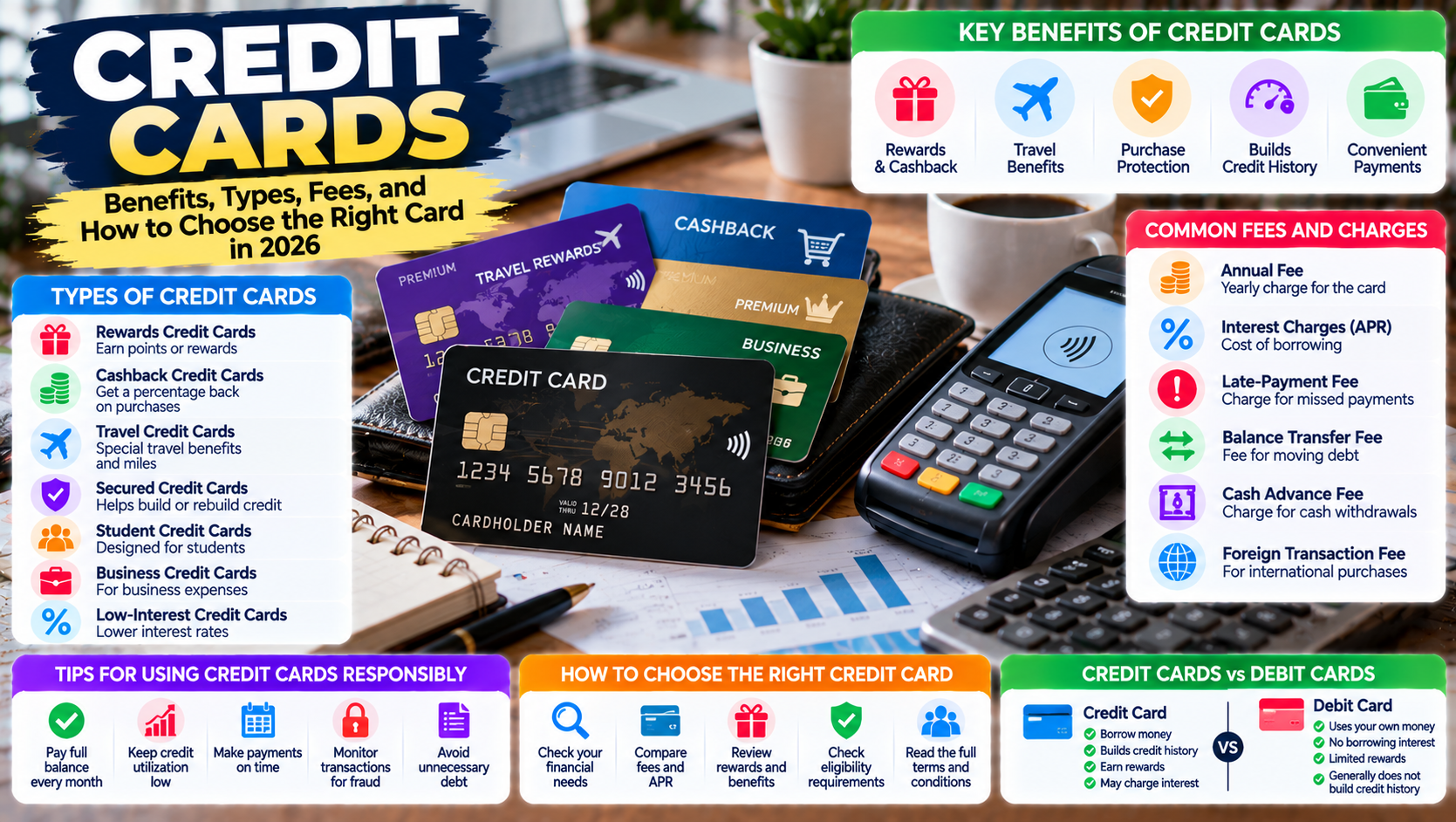
Credit card type | Main feature | Potentially suitable for |
|---|---|---|
Rewards credit card | Earns points or other rewards on eligible spending | People who pay their balances responsibly |
Cashback credit card | Returns a percentage of eligible purchases | Everyday shoppers |
Travel credit card | Offers travel-related rewards or benefits | Frequent travelers |
Secured credit card | Requires a refundable security deposit in many cases | Some people building or rebuilding credit |
Balance transfer card | Offers a promotional rate on qualifying transferred balances | People who can repay debt within the promotional period |
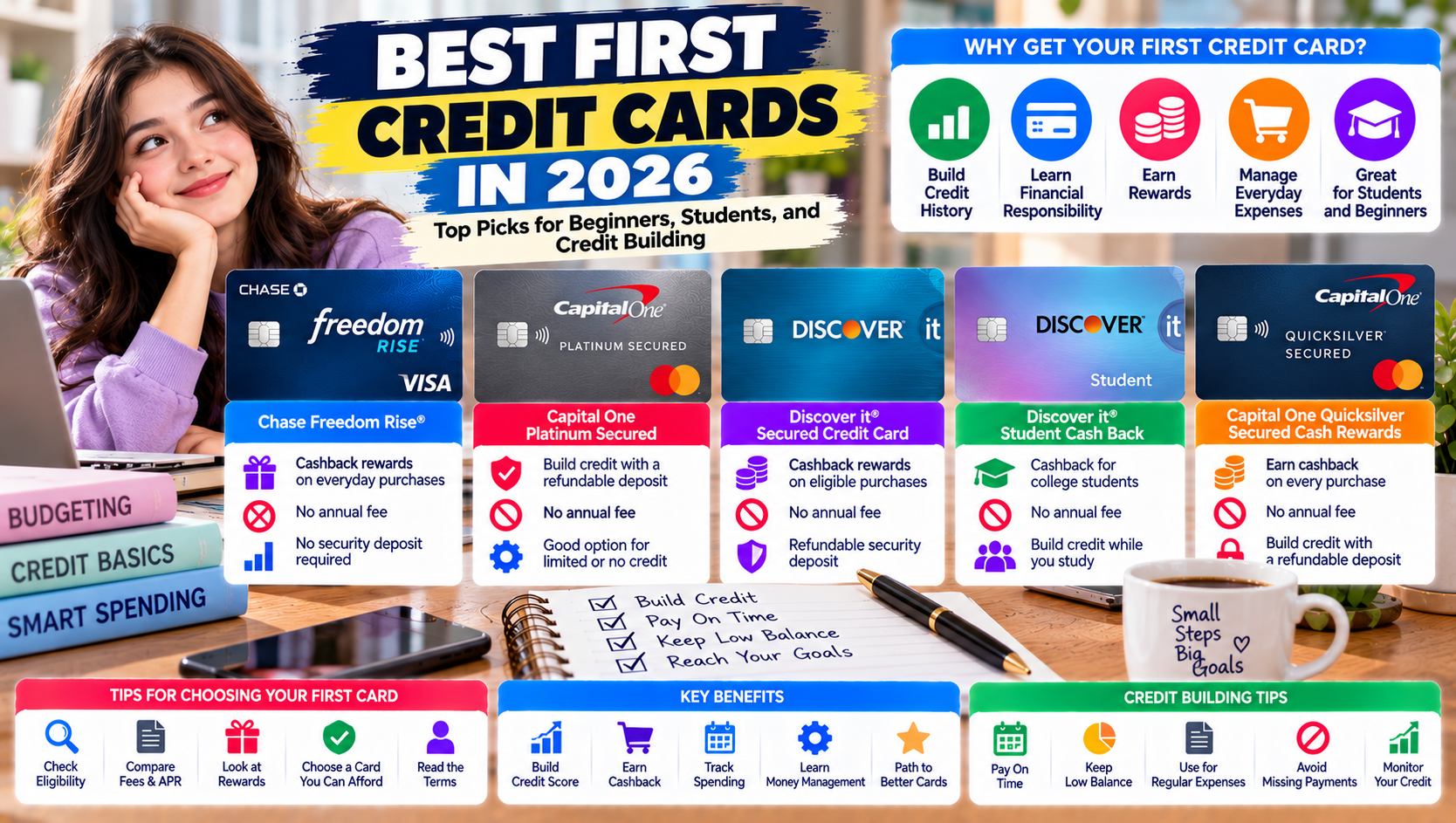
Student credit card | Designed for eligible students or people with limited credit history | Students beginning to build credit |
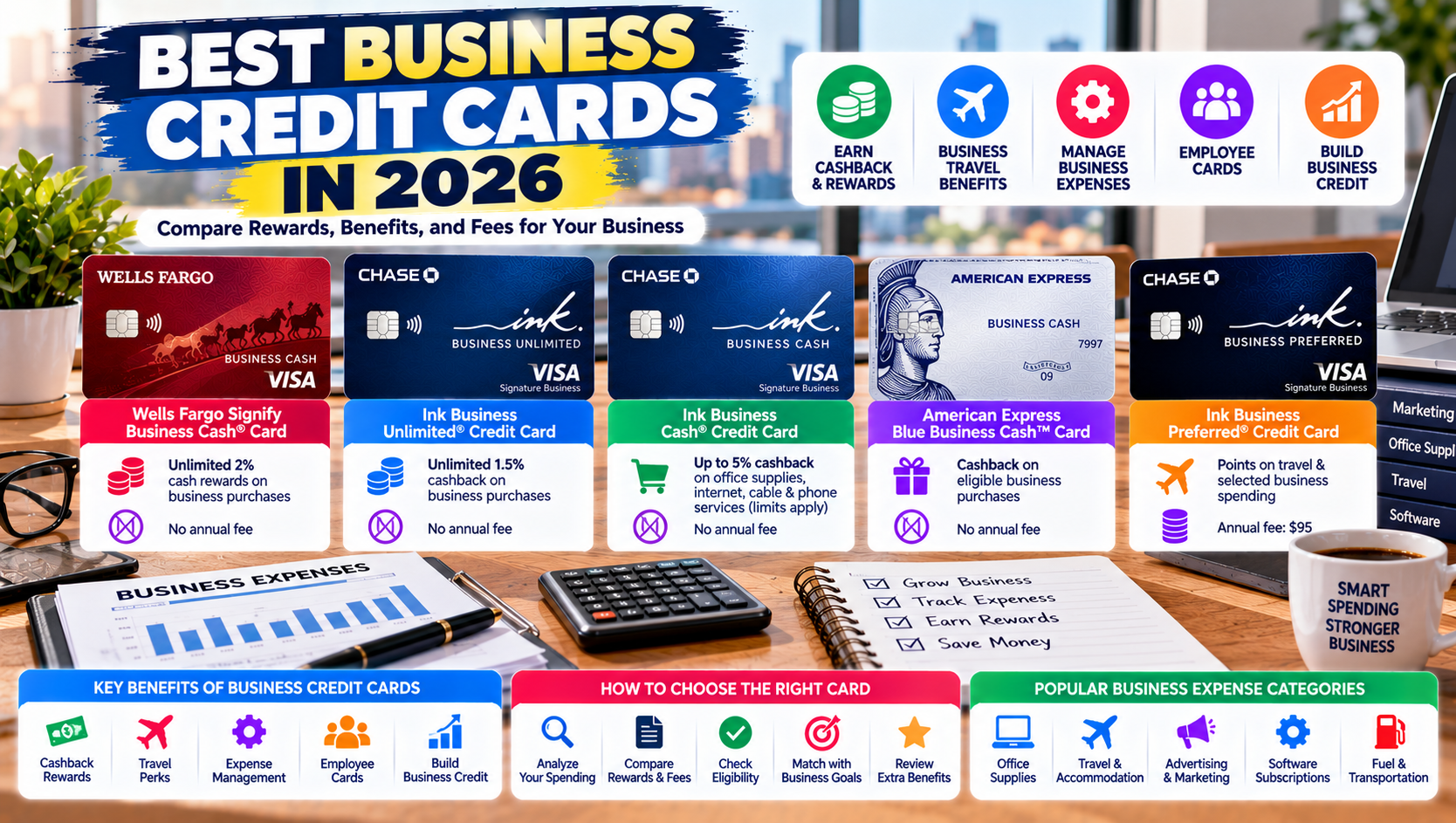
Business credit card | Helps separate business spending and may offer business-focused rewards | Business owners |
Low-interest credit card | Offers a comparatively low interest rate, subject to terms | People who may occasionally carry a balance |
Not every card is available to every applicant. Approval criteria, fees, benefits, and eligibility requirements vary by issuer and country.
Benefits of Using a Credit Card
Credit cards can offer several advantages when managed carefully.
1. Convenient Payments
Credit cards make it easier to pay for purchases without carrying large amounts of cash. They are also widely accepted by many online retailers, hotels, travel providers, and service businesses.
2. Building a Credit History
In countries where credit card activity is reported to credit bureaus, responsible use may help establish or strengthen a credit history.
Making payments on time, managing balances, and keeping accounts in good standing can contribute to a healthier credit profile.
However, opening a credit card does not automatically improve a credit score. Late payments, high balances, and other negative information can have the opposite effect.
3. Rewards and Cashback
Some cards offer cashback, points, miles, or other benefits for eligible purchases.
These rewards may be useful when the card's annual fee, interest charges, and other costs do not outweigh the value received.
Spending more than you can afford just to earn rewards can quickly eliminate their financial benefit.
4. Purchase Protection and Dispute Options
Depending on the card agreement and applicable laws, credit cards may provide certain protections for unauthorized transactions, billing errors, or disputed purchases.
Some issuers also offer additional purchase protection, extended warranties, or travel-related coverage. These benefits are not universal, so check the terms before relying on them.
5. Short-Term Payment Flexibility
A credit card can provide temporary payment flexibility between the purchase date and payment due date.
This flexibility works best when you already have a plan to repay the full statement balance. Treating available credit as additional income can lead to long-term debt.
Common Credit Card Fees and Charges
Before choosing a credit card, understand the costs associated with using it.
Fee or charge | What it means |
|---|---|
Annual fee | A yearly charge for maintaining the card |
Purchase interest | Interest charged on eligible unpaid purchase balances |
Late-payment fee | A charge that may apply when a required payment is late |
Balance transfer fee | A fee for moving eligible debt from one account to another |
Cash advance fee | A charge for obtaining cash through a credit card |
Foreign transaction fee | A possible fee for transactions processed in foreign currencies or outside the issuer's market |
Returned-payment fee | A possible charge when a payment is rejected or returned |
Some cards have no annual fee, while others charge substantial fees in exchange for specific benefits. A card advertised as free may still involve interest and transaction charges.
What Is an APR?
APR stands for annual percentage rate. It represents the annualized cost of borrowing under the applicable terms and may include certain fees depending on the product and jurisdiction.
Credit cards can have different APRs for purchases, cash advances, and balance transfers. Promotional rates may also apply for a limited period.
Read the card agreement carefully to understand when interest begins, how it is calculated, and what happens when a promotional period ends.
Understanding Credit Utilization
Credit utilization generally describes how much of your available revolving credit you are using.
For example, if your credit card has a $1,000 limit and your reported balance is $300, your utilization for that account is 30%.
The calculation is:
Credit utilization = (Credit card balance ÷ Credit limit) × 100
In the United States, credit utilization can be an important factor in credit scoring models. Lower utilization is often preferable, although the impact varies by scoring model and overall credit profile.
Paying down balances and avoiding unnecessary spending can help keep utilization under control. Remember that a low balance does not replace the need to make payments on time.
Risks of Using Credit Cards
Credit cards can be useful, but careless use can create financial difficulties.
1. High Interest Charges
Credit card interest rates can be higher than those on some other forms of borrowing. If you carry a balance, interest may accumulate and increase the amount you owe.
Paying only the minimum can make repayment take much longer and increase the total cost.
2. Overspending
Because credit cards do not require immediate payment from a bank account, it can be easy to spend more than you can comfortably repay.
Setting a monthly spending limit based on your actual budget can help reduce this risk.
3. Late Payments
Missing a payment can result in fees, interest, and potentially negative credit reporting, depending on the circumstances and applicable rules.
Payment reminders and automatic payments for at least the required minimum may help, provided sufficient funds are available.
4. Credit Score Impact
High balances, missed payments, and certain applications for new credit may affect your credit profile.
The effect depends on the information reported and the scoring model used. Check your credit reports for errors where reporting services are available in your country.
5. Fraud and Unauthorized Transactions
Credit cards can be targeted by scammers, phishing messages, and unauthorized transactions.
Use strong account passwords, enable transaction alerts where available, avoid sharing verification codes, and contact your issuer promptly if you notice suspicious activity.
How to Choose the Right Credit Card
Choosing a credit card involves more than selecting the card with the biggest rewards or the highest credit limit.
Step 1: Check Your Financial Situation
Consider your income, monthly expenses, existing debts, and ability to repay the full statement balance.
If you already have difficulty managing debt, opening another credit card may make the situation worse.
Step 2: Identify Your Main Goal
Decide what matters most to you. You may want to build a credit history, earn cashback, travel more affordably, or obtain a lower interest rate.
Choosing a card that matches your main goal makes comparisons easier.
Step 3: Compare Fees and Interest Rates
Review the annual fee, APR, foreign transaction fee, late-payment charges, and any balance transfer or cash advance fees.
Do not focus exclusively on the advertised introductory offer. Understand the ongoing terms as well.
Step 4: Review Rewards and Benefits
Check how rewards are earned, whether spending categories have limits, and whether points or cashback expire.
If a card offers travel benefits, verify restrictions, eligibility requirements, exclusions, and any additional costs.
Step 5: Check Eligibility Requirements
Issuers may consider credit history, income, residency, age, existing debt, and other factors.
Use official issuer information to understand eligibility and avoid submitting unnecessary applications.
Step 6: Read the Full Agreement
Before accepting a card, review the interest terms, payment rules, fees, promotional conditions, and account policies.
If anything is unclear, ask the issuer for an explanation.
Tips for Using a Credit Card Responsibly
Good habits can help you enjoy the convenience of a credit card while minimizing unnecessary costs.
Pay the full statement balance by the due date whenever possible.
Spend according to your budget rather than your available credit limit.
Monitor statements and transaction alerts regularly.
Avoid cash advances unless you understand the associated fees and interest.
Keep track of promotional interest rates and their expiration dates.
Do not apply for multiple cards without a clear reason.
Contact your issuer promptly if you are struggling to make a payment.
Review your credit report for errors where such reports are available.
Never share your PIN, password, or one-time verification code with someone who contacts you unexpectedly.
Credit Cards vs. Debit Cards
Although credit cards and debit cards may look similar, they work differently.
Feature | Credit card | Debit card |
|---|---|---|
Source of funds | Credit provided by the issuer | Usually funds in a linked bank account |
Borrowing | Creates a balance that must be repaid | Generally does not involve borrowing |
Interest | May apply to unpaid balances | Typically no borrowing interest on purchases |
Credit history | May be reported to credit bureaus | Ordinary debit card use generally does not build credit history |
Spending limit | Depends on the credit limit and available credit | Depends on available funds and account rules |
Potential rewards | May offer cashback or points | Rewards vary by bank and product |
The choice depends on your financial goals and spending habits. A debit card can help limit spending to available funds, while a credit card can provide additional payment features when used responsibly.
Frequently Asked Questions
What is the main purpose of a credit card?
A credit card allows you to borrow money from an issuer for eligible purchases and repay it according to the card's terms. It may also offer rewards, purchase protections, and an opportunity to establish credit history where applicable.
Is it better to pay the full credit card balance?
Generally, yes. Paying the full statement balance by the due date can help you avoid interest on purchases eligible for a grace period. Paying only the minimum can lead to interest charges and a longer repayment period.
Does using a credit card improve your credit score?
Responsible use may help build credit history where card activity is reported to credit bureaus. However, results depend on payment history, balances, account age, applications, and the credit scoring model.
What is a good credit utilization ratio?
In the United States, lower utilization is generally preferable for many credit scoring models. Keeping utilization below 30% is a commonly cited guideline, not a universal rule or guarantee of a particular score. Lower utilization may be beneficial, and scoring systems differ.
Can a credit card charge interest if I pay on time?
If you pay the full statement balance by the due date and qualify for the purchase grace period, you can generally avoid interest on eligible purchases. Cash advances and certain other transactions may accrue interest immediately. Check your agreement for the exact rules.
What should beginners look for in a credit card?
Beginners should compare fees, interest rates, eligibility requirements, repayment terms, and any rewards or protections. A straightforward card with manageable costs may be more useful than a premium card with benefits they will rarely use.
Are credit cards safe for online shopping?
They can be safe when used with reputable merchants and appropriate security practices. Use secure websites, enable transaction alerts, avoid suspicious links, and contact the card issuer promptly about unauthorized transactions.
Final Thoughts
Credit cards can be valuable financial tools when their features and costs match your needs. They may provide convenient payments, rewards, credit-building opportunities, and certain consumer protections.
However, high interest rates, late fees, fraud risks, and overspending can create serious financial problems. Before applying, compare card terms, understand the repayment requirements, and select a product that fits your budget.
The most effective way to use a credit card is to treat it as a payment method rather than extra income, monitor your spending, and repay your statement balance responsibly.
Disclaimer: This article is for educational purposes only and does not constitute personalized financial or legal advice. Credit card terms, fees, eligibility requirements, and consumer protections vary by country and issuer. Review the applicable card agreement and consult an appropriately qualified professional when needed.